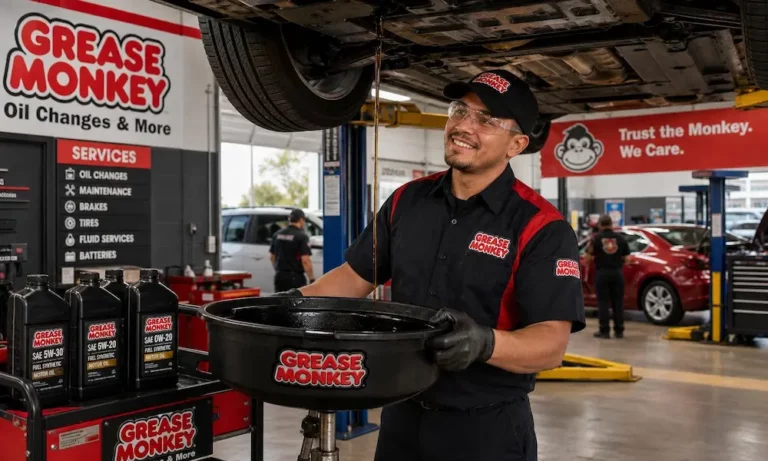
Picking the right place for an oil change feels simple—until you’re staring down a $140 air filter quote you didn’t ask for. Quality lubrication oil change and auto center reviews paint a complicated picture of speed, trust, and mechanical risk. This post breaks down what the data says, what consumers actually experience, and how to protect yourself. Read to the end before you book your next appointment.
The State of Oil Change Satisfaction in 2026
The U.S. automotive aftermarket is enormous, and your oil change shop is a big part of it. Independent research firm J.D. Power tracks customer satisfaction across three service segments—quick oil change, full-service maintenance, and tire replacement—using a 1,000-point satisfaction index.
Seven factors shape that score:
- Ease of scheduling
- Fairness of charges
- Service advisor courtesy
- Service advisor knowledge
- Facility quality
- Time to complete service
- Quality of work performed
After a rough patch in 2023—where quick oil change satisfaction dropped 18 points due to longer wait times, ruder staff, and dirtier facilities—the industry bounced back hard. By 2026, the quick oil change segment averaged 818 out of 1,000.
That recovery matters. But 818 out of 1,000 still leaves plenty of room for bad experiences.
2026 Quick Oil Change Rankings: Who’s Actually Winning?
Here’s how the top quick oil change providers ranked in 2026 according to J.D. Power:
| Provider | Satisfaction Score (Out of 1,000) |
|---|---|
| Express Oil Change & Tire Engineers | 854 |
| Take 5 Oil Change | 833 |
| Jiffy Lube | 823 |
| Valvoline Instant Oil Change | 823 |
| Industry Average | 818 |
| Grease Monkey | 812 |
| Walmart Auto Care Centers | 782 |
Express Oil Change topped the segment for four consecutive years. Their model keeps technicians visible, processes standardized, and customers moving fast. Take 5’s stay-in-your-car approach completes services in 10–15 minutes without you ever opening the door—genuinely impressive engineering around a simple pit-stop concept.
But scores don’t tell the whole story.
What Quality Lubrication Oil Change and Auto Center Reviews Actually Say Online
Look past the J.D. Power index and into real consumer reviews on Reddit, Trustpilot, and the Better Business Bureau. The picture gets messy fast.
The Upsell Problem Is Real
Quick lube margins on a basic oil change are razor thin. That service is a loss leader designed to get your car into the bay. The real money? Aggressive upselling of air filters, cabin filters, wiper blades, and fluid flushes.
Consumers consistently report:
- Being quoted $140 for a basic engine and cabin air filter swap—parts you can buy for $25 at any auto parts store
- Spark plug replacement charges stacking individual “installation fees” per plug on top of inflated parts prices
- Recommendations for transmission flushes and differential services on nearly new vehicles that absolutely don’t need them
Some franchise locations have faced legal action from state attorneys general for advertising cheap specials, then holding vehicles for hundreds of dollars in unneeded repairs. That’s not a one-off. It’s a documented pattern.
Mechanical Errors That Destroy Engines
The speed-first model creates a serious mechanical risk. Many quick lube bays hire entry-level workers with minimal automotive training. That combination of pressure and inexperience produces costly errors:
- Stripped oil pan drain plugs from impact wrenches set too high
- Cross-threaded wheel studs during tire rotations
- Double-gasketed oil filters that leak massively on the highway
- Overfilled crankcases—the most dangerous error
That last one needs emphasis. If a technician overfills your engine, the excess oil rises until the spinning crankshaft physically beats it into foam. A foam the oil pump can’t circulate. Your valvetrain starves of lubrication and the engine destroys itself from the inside. That’s not a dramatic exaggeration—it’s basic physics.
Take 5, despite its high satisfaction ranking, accumulated nearly 1,200 formal BBB complaints over three years—heavily centered around cracked oil pans, overfilled engines, and franchise managers refusing liability claims.
Full-Service Auto Centers: Better Results, Same Franchise Problem
The full-service segment shows stronger consumer trust, especially for complex work. J.D. Power’s 2026 data shows Goodyear Auto Service leading this category:
| Provider | Satisfaction Score (Out of 1,000) |
|---|---|
| Goodyear Auto Service | 846 |
| Tuffy Tire and Auto Service Centers | 843 |
| Christian Brothers Automotive | 833 |
Christian Brothers Automotive earns genuinely warm reviews for relationship-based service—testimonials describe free brake repairs for struggling customers and complimentary rides to work. That’s the kind of service that builds loyalty for life.
But read enough quality lubrication oil change and auto center reviews and you’ll find the opposite, too. Different location, same brand name—consumer gets quoted thousands for cooling system work that an independent mechanic fixed with a $10 radiator cap.
Decentralized franchises mean wildly inconsistent outcomes. The brand on the sign doesn’t guarantee the quality inside.
Dealership vs. Quick Lube vs. Independent Shop: The Real Comparison
| Service Model | Key Advantages | Key Disadvantages | Best For |
|---|---|---|---|
| Franchised Dealership | OEM parts, factory-trained techs, premium amenities, warranty backing | Highest cost, slow for basic services—only 17% complete oil changes within an hour | Complex repairs, recalls, warranty work |
| Quick Lube Chain | Fast (15–30 min), no appointment needed, stay-in-car options | Inexperienced staff, aggressive upselling, higher error risk | Time-pressed drivers needing a basic fluid change |
| Independent Repair Shop | Certified mechanics, thorough inspections, honest pricing, community trust | Requires appointments, longer service time, fewer amenities | Long-term vehicle owners wanting real preventive care |
Independent mechanics typically hold advanced ASE certifications and catch long-term wear patterns—brake fade, suspension degradation, subtle differential leaks—that chain shops routinely miss while rushing to turn over the bay.
The Severe vs. Normal Driving Myth That’s Wrecking Engines
Most drivers assume they drive “normally.” They don’t. Up to 80% of vehicles on American roads operate under severe conditions daily—and most of those drivers have no idea.
“Normal” driving means:
- Consistent highway speeds
- Moderate climate, clean air
- Long continuous trips with no towing
“Severe” driving means:
- Short trips under 10 miles, especially in cold weather
- Heavy stop-and-go urban traffic
- Prolonged idling
- Towing or carrying heavy loads
- Dusty or heavily salted road environments
| Schedule | Conditions | Recommended Interval |
|---|---|---|
| Normal (Ideal) | Highway driving, moderate climate, long trips | 7,500–10,000 miles or every 12 months |
| Severe (Reality for Most) | Short trips, extreme temps, heavy traffic, towing, dusty roads | 3,000–5,000 miles or every 3–6 months |
Here’s why it matters physically: short cold-weather trips don’t let the engine reach the temperature needed to burn off moisture. That moisture mixes with combustion blow-by to form sludge that clogs oil passages and starves the valvetrain. Additive packages—detergents, dispersants, corrosion inhibitors—deplete long before the oil looks dirty. Trusting the “normal” interval while driving in severe conditions is one of the most common causes of premature engine failure.
What’s Actually Inside a Quality Oil Change: Filters and Fluids
The components used during your service matter as much as who performs it.
Synthetic vs. Conventional Oil
Synthetic lubricants are engineered for molecular uniformity. Conventional oil leaves molecules of varying sizes that oxidize and evaporate under heat. Synthetics resist breakdown far longer, flow immediately in freezing temperatures, and support extended intervals up to 10,000–15,000 miles under ideal conditions. Most modern vehicles require them by design.
Oil Filter Construction: What Separates Good from Dangerous
| Component | Standard/Budget | Premium/Extended | What It Means |
|---|---|---|---|
| Filter Media | Cellulose (wood pulp) | Synthetic glass fibers | Glass captures 99% of microscopic debris with better flow and dirt-holding capacity |
| Anti-Drainback Valve (ADBV) | Nitrile rubber | Silicone | Nitrile hardens and cracks under engine heat; silicone stays elastic through 10,000-mile synthetic cycles |
The Anti-Drainback Valve holds oil inside the filter when the engine is off. Without it working correctly, the next cold start runs dry—metal grinding on metal before pressure builds. Nitrile valves degrade with heat over time. Silicone holds its seal across extreme temperatures and extended intervals.
Budget filters at quick-lube chains don’t always spec silicone valves. That’s a detail worth asking about.
What Your Warranty Actually Covers (The Law Is on Your Side)
Here’s a fear dealerships sometimes exploit: “If you don’t service here, your warranty is void.” That statement is illegal under federal law.
The Magnuson-Moss Warranty Act of 1975, enforced by the Federal Trade Commission, prohibits manufacturers from requiring consumers to use specific parts or service facilities to keep a factory warranty intact—unless those parts and services are provided for free.
The FTC took action against BMW’s MINI division specifically for claiming that oil changes performed outside authorized dealers would void the 50,000-mile warranty. That practice was ruled deceptive and ordered to stop immediately.
If a mechanical failure occurs under warranty, the burden of proof falls on the manufacturer. They must prove that a specific aftermarket part or service directly caused the defect. Even if they prove that, only the affected component’s claim can be denied—the rest of your warranty stays intact.
How to Protect Yourself During a Warranty Dispute
Keep every service invoice. Each one should clearly show:
- The date and exact mileage at service
- Specific part numbers (filter model, drain plug)
- The manufacturer-approved fluid specification code printed on the receipt (e.g., Dexos1 for GM, VW 504.00 for Volkswagen)
That documentation is your legal defense if a dealer attempts to deny a warranty claim.
One important distinction: private extended service contracts and CPO warranties are separate from factory warranties. These are private agreements, not governed by Magnuson-Moss, and may contain clauses requiring pre-authorization or in-network facilities. Read the fine print before signing.
What Actually Moves Satisfaction Scores (and What Shops Keep Ignoring)
The data from J.D. Power reveals two ridiculously simple levers that most shops ignore:
Text messaging: Consumers who prefer texts and receive them show satisfaction scores of 854. When shops call instead? Scores drop to 840. Shops that send digital photo documentation of worn parts see repair approval rates of 41%—versus 17% for verbal-only recommendations.
Basic amenities: A device charging station in a quick lube waiting room can boost satisfaction by up to 101 points. Snacks and beverages at tire shops add 103 points. Yet fewer than 15% of U.S. aftermarket facilities offer these things.
First impressions hit hardest: customers greeted immediately versus waiting more than three minutes show a satisfaction gap of up to 219 points. That’s not a small gap—that’s catastrophic for repeat business.
Frequently Asked Questions
What should I do if a quick lube shop damages my vehicle during a routine service?
Don’t start or move the vehicle—further engine operation deepens the damage. Demand a written incident report from the on-duty manager and get the corporate claims contact information. Tow the vehicle at the franchise’s expense to a certified independent shop or dealership. Get high-resolution photographs and written diagnostics from that third party. That documentation is what forces the franchise’s liability insurance to cover repairs without dispute.
Can I switch back and forth between synthetic and conventional oil without hurting my engine?
Yes. Synthetics and conventional oils are fully cross-compatible. Mixing them won’t harm seals or cause leaks—that’s outdated myth. But mixing does dilute synthetic performance significantly. If you top off a synthetic system with conventional oil, revert to the shorter conventional change interval until you do a full flush and switch back.
Is high-mileage oil actually necessary once I hit 75,000 miles?
It’s not mandatory, but it’s smart. High-mileage formulas contain seal conditioners that swell aging rubber gaskets, slowing the slow weeping leaks that develop as heat cycles take their toll. If your vehicle shows no leaks or burning oil symptoms, standard synthetic works fine. But switching proactively can delay expensive gasket and main seal replacements considerably.
How is the shift toward electric vehicles changing the oil change business?
EVs don’t need engine oil, spark plugs, or engine air filters. That’s an existential threat to quick lube chains built around those services. The pivot is toward EV-specific needs: frequent tire rotations (EVs eat tires fast due to battery weight and instant torque), brake fluid changes, cabin air filters, and battery thermal management system servicing.
Why do some newer vehicles no longer have an oil dipstick?
Manufacturers removed dipsticks to prevent overfilling errors and contamination from outside air. Instead, ultrasonic or thermal sensors at the oil pan base measure fluid level and report directly to the dashboard or infotainment screen. Accurate and tamper-resistant—but it means you’re relying entirely on electronic diagnostics, which complicates hands-on inspection for independent mechanics.