
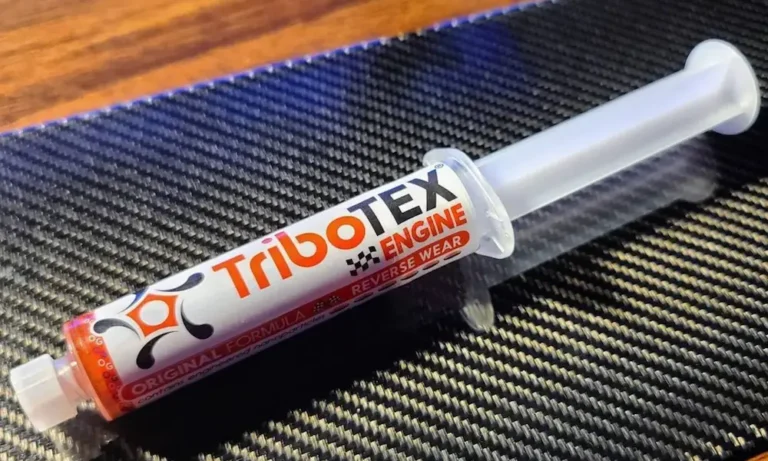
Your engine ticks. It burns oil. And it’s got way more miles than you’d like to admit. So you started Googling “engine repair additives” and landed here, staring at a product called TriboTEX that claims to use space-age nanotech to heal your engine from the inside.
Sounds like a scam, right? That’s what a lot of people think too. But before you write it off, let’s dig into what TriboTEX actually is, what the lab data shows, and what real drivers say after using it. By the end, you’ll know if it’s worth your money.
What Is TriboTEX, Really?
TriboTEX is an engine and transmission treatment built from synthetic nanoparticles, not your typical thick, gunky oil additive. It doesn’t just change your oil’s texture. It claims to actually rebuild worn metal surfaces inside your engine using microscopic particles that bond to damaged spots.
This isn’t some garage chemist’s side project either. The tech got its start through NASA-backed research, originally designed to keep satellite and wind turbine gearboxes running smoothly in places nobody can send a mechanic to.
The Science Behind TriboTEX
The story starts with Dr. Pavlo Rudenko, a materials scientist at Washington State University. He wanted to build a nanoparticle that could patch up metal damage in tough, high-friction spots without taking anything apart.
That idea caught NASA’s attention through a fellowship with the Washington Space Grant Consortium. Space agencies need lubricants that survive brutal temperature swings, and traditional oils just can’t cut it up there.
From there, the Department of Energy, National Science Foundation, and even the Air Force chipped in over a million dollars to help refine the material. Just to be clear, none of these agencies officially endorse the retail product. But the underlying research is legit and well-funded, which already puts TriboTEX ahead of most “miracle” additives you’ll find on a gas station shelf.
How TriboTEX Actually Works Inside Your Engine
The active ingredient is a lab-made material called synthetic magnesium silicate hydroxide. Say that five times fast. Here’s the simple version:
- The nanoparticles float around in your oil, doing nothing, until they hit a spot with intense heat and friction.
- One side of each particle is sticky and grabs onto bare, worn metal.
- The other side is smooth and slick.
- These particles pile up in scratches and pits, then fuse together into a diamond-like carbon coating using heat generated by the engine itself.
This coating only builds where friction is highest, like camshaft lobes, piston rings, and crankshaft bearings. Once the gap is filled, the buildup stops on its own. The coating tops out around 40 microns thick, roughly the width of a human hair, so there’s zero risk of it clogging oil filters or tiny lifters.
You can read the full technical breakdown straight from the TriboTEX science page if you want the nerdy details.
Lab Test Results: Does the Hype Match Reality?
Marketing claims are cheap. Lab data isn’t. TriboTEX has been run through two standard industry tests that tribologists (yes, that’s a real job) use to measure wear and friction.
Four-Ball Wear Test: This test spins one steel ball against three stationary ones under pressure, then measures the scar left behind. Oil treated with TriboTEX showed a 40-fold drop in wear compared to the same oil without it. That’s not a small number.
Block-on-Ring Friction Test: This one simulates the kind of grinding metal contact that causes pistons to seize. After about four hours of running, friction dropped by 10 times compared to plain synthetic oil. The coating had fully formed by that point, and the interface shifted into what’s called elastohydrodynamic lubrication, basically the gold standard for smooth-running parts.
Real-World Fleet Testing: Numbers From Actual Cars
Lab results are great, but road tests tell you more. Here’s what happened during real-world trials:
| Vehicle | Result After Treatment |
|---|---|
| VW Passat (208,000+ miles) | 5–6% fuel economy increase |
| 2015 Ford Mustang (turbo V6) | 3.1% horsepower gain on the dyno |
| Hybrid vehicles (mountain routes) | 4% fuel efficiency improvement |
The pattern is clear: high-mileage engines see the biggest gains. New engines with tight factory tolerances don’t have much worn metal to fix, so the improvement is smaller. If your car’s past 100,000 miles, you’re more likely to notice restored compression, quieter operation, and better fuel economy, often in the 6–8% range.
TriboTEX Products and Pricing
TriboTEX splits its lineup by oil capacity, not by car brand. That keeps things simple. Here’s the full rundown:
| Product | Oil Capacity | Best For | Price |
|---|---|---|---|
| Single Cylinder Formula | Under 1 quart | Lawn mowers, generators | $29 |
| Mini Formula | 1–4 quarts | Compact cars, motorcycles | $49 |
| Original Formula | 4–8 quarts | Standard cars, light SUVs | $99 |
| Diesel Formula | 8–16 quarts | Heavy-duty trucks | $179 |
| Big Rig Formula | 16–48 quarts | Semi-trucks | $399 |
There’s also a drivetrain lineup for transmissions, differentials, and power steering systems, priced between $49 and $99 depending on the system. Check the product selection guide to find the right one for your ride.
Yes, it’s pricier than a $10 bottle of stabilizer from the auto parts store. But it’s meant to be a one-time fix that lasts through multiple oil changes, not something you dump in every service.
TriboTEX for Transmissions and Other Drivetrain Parts
The same nanotech gets used in transmission fluid, differentials, and power steering systems. Drivers dealing with rough shifting, torque converter shudder, or slipping gears have reported major improvements after treatment.
One standout example: the Miss Madison hydroplane racing team used TriboTEX in a gearbox that converts 15,000 RPM down to 7,500 RPM. After treatment, gearbox temps dropped 20 degrees Celsius. That team went on to break a 10-year speed record and win a national championship. You can read the full racing gearbox story straight from the source.
A common worry with transmission additives is that they’ll make wet clutches slip. TriboTEX addresses this by saying the coating only forms on load-bearing metal, not on clutch pack linings, as long as you avoid heavy towing or hard launches during the first 500 miles.
Because transmission fluid stays sealed away from combustion byproducts, the transmission formula lasts up to 80,000 miles, twice as long as the engine treatment.
TriboTEX vs Other Oil Additives
There are three main types of additives on the market, and TriboTEX doesn’t fit neatly into any of them:
| Additive Type | Example | How It Works | Downside |
|---|---|---|---|
| Viscosity stabilizers | Lucas Oil Stabilizer | Thickens oil to mask worn parts | Can starve tight-tolerance engines |
| Solid boundary lubricants | Liqui Moly Cera Tec, Archoil AR9100 | Uses molybdenum or boron nitride for friction reduction | Washes out at every oil change |
| Revitalizant gels | Xado 1 Stage | Claims metal restoration | Limited scientific documentation |
| Nanotech coating | TriboTEX | Bonds permanently to worn metal | Higher upfront cost |
The biggest difference? TriboTEX forms a permanent coating that survives oil changes. Other products need to be re-dosed every time you drain your oil. Over a 40,000-mile lifespan, the cost-per-mile actually evens out compared to constantly buying boron or moly additives.
Is TriboTEX Snake Oil? What the Skeptics Say
Car forums are brutal, and TriboTEX gets its fair share of side-eye. On sites like BobIsTheOilGuy and various Reddit car communities, critics argue that physical wear can’t be reversed with a liquid, period. Some point out that if this stuff really worked, automakers would use it straight from the factory.
Those are fair questions to ask. But here’s the thing: none of the skeptics are disputing the lab data. They’re mostly disputing whether lab results translate to your driveway. And that’s where actual owner feedback comes in.
What Real Owners Actually Say
Across Amazon, eBay, and enthusiast forums, TriboTEX pulls in consistently high ratings, often above 4 out of 5 stars across thousands of reviews. Here’s what pops up again and again:
- Lifter tick and valvetrain noise quiets down within 15 minutes of idling after treatment
- Diesel truck owners report smoother idle and less vibration
- Drivers with oil-burning issues see less (or zero) blue smoke after highway drives
- Transmission users report smoother shifting and less torque converter shudder
Not every review is glowing. Some owners with newer, low-mileage cars say they noticed no difference at all. That tracks with what the lab data shows. If your engine’s parts are already in good shape, there’s not much for the nanoparticles to fix.
How to Apply TriboTEX (It’s Easier Than You Think)
No tools. No mechanic. No taking anything apart. Here’s the process:
- Warm your engine to normal operating temperature, then shut it off.
- Pop the oil fill cap and pour in the syringe.
- Start the car and let it idle for 15 minutes so the nanoparticles spread evenly.
- Drive normally for 500 miles without changing your oil.
That 500-mile window matters. The coating needs sustained heat and pressure to fully form. Camshaft bearings coat up fast, often within 200-300 miles, while piston rings take the full stretch. Skip an oil change too early, and you’ll wash out particles before they’ve done their job. Full step-by-step instructions live on the official engine guide.
Once the break-in period ends, go back to your regular oil change schedule. The coating sticks around and keeps protecting your engine for roughly 40,000 miles before it wears down and needs another dose.
Is TriboTEX Safe for Your Engine and Warranty?
Good news here. TriboTEX doesn’t use harsh solvents or high zinc content, so it won’t eat rubber seals or clog your catalytic converter. It plays nice with conventional, synthetic-blend, and full-synthetic oils.
Because the particles are microscopic, there’s no risk of clogging oil filters or getting stuck in hydraulic lifters. And thanks to the Magnuson-Moss Warranty Act, dealerships can’t void your powertrain warranty just because you used an aftermarket treatment.
The company also backs every purchase with a 180-day, 100% money-back guarantee. If you don’t notice quieter running, better mileage, or smoother shifting, you can get a refund. That’s a pretty low-risk way to test the claims yourself. Full safety details are listed on the official MSDS sheet.
Final Thoughts
So, does TriboTEX actually work? Based on the lab tests, federal research backing, and thousands of consumer reviews, it looks like a real, science-backed way to reduce friction and restore worn metal, especially in high-mileage engines. It’s not going to turn your 200,000-mile beater into a brand-new car, and if your engine’s already in great shape, you probably won’t notice much difference.
But if your engine ticks, burns oil, or feels sluggish after a lot of miles, this is one of the few additives with actual data behind the claims instead of just a shiny bottle and bold promises. Given the money-back guarantee, it’s a low-risk way to see if it fixes what’s bugging you.