Replacing a leaky gasket is stressful enough without wondering if the part you bought will hold. So, are Fel-Pro gaskets good, or are you rolling the dice? This post breaks down the engineering, the real-world reputation, and the specific situations where Fel-Pro shines — and where it doesn’t. Stick around, because the answer might surprise you.
The Short Answer: Yes, But Context Matters
Fel-Pro gaskets are genuinely excellent for most applications — especially domestic engines. Professional mechanics on forums consistently rank them as the go-to aftermarket sealing solution for Ford, GM, and Chrysler platforms.
But “good” isn’t a blanket statement. Fel-Pro’s real strength is solving problems that factory gaskets created in the first place. That’s a different job than simply swapping like-for-like.
Here’s what separates Fel-Pro from cheap alternatives:
- They’re engineered specifically for worn, high-mileage engines
- Their materials actively compensate for warped surfaces and pitted metal
- They include every seal and o-ring you need, so there are no mid-job parts runs
- Many designs genuinely outperform the original equipment parts
Why “Designed for the Repair Environment” Actually Means Something
Most gasket manufacturers design parts for brand-new engines fresh off an assembly line. Fel-Pro doesn’t.
Their entire philosophy centers on what they call the repair environment — engines that have survived years of heat cycles, vibration, and chemical exposure. That means warped decks, pitted surfaces, and deformed flanges.
To validate their designs in real conditions, Fel-Pro runs a Field Test Garage using over 1,200 employee-owned vehicles as test platforms. These aren’t lab cars. They’re daily commuters accumulating nearly a million miles of real-world driving annually. If a prototype gasket weeps after 50,000 miles of stop-and-go winter driving, engineers tear it down, analyze the failure, and adjust the formula before it hits the market.
That’s a meaningfully different development process than what budget brands use.
Breaking Down the Technology: What’s Actually Inside a Fel-Pro Gasket
PermaTorque Multi-Layer Steel Head Gaskets
These are Fel-Pro’s flagship head gaskets, and they’re where the engineering gets impressive.
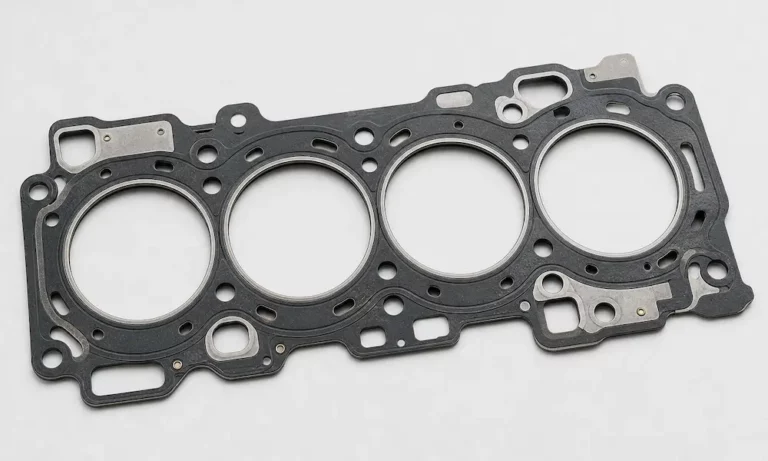
PermaTorque MLS gaskets use stacked layers of full-hard stainless steel with embossed sealing beads that act like springs. As your cylinder head micro-lifts during combustion — a totally normal phenomenon called head lift — the beads flex and rebound to maintain constant contact pressure. No leak path opens up.
Two features make these stand out:
- LaserWeld stopper layer: A welded steel ring surrounds each combustion bore. It physically stops you from over-torquing the head bolts and crushing the active sealing layers flat. It’s a direct defense against blowout
- NextGen polymer coating: This coating softens under engine heat and flows into surface scratches and imperfections. It can seal surface finishes as rough as 80 micro-inches — meaning less machine shop work and lower repair costs
PermaDryPlus Gaskets for Oil Pans, Valve Covers, and Intake Manifolds
Standard rubber gaskets on valve covers and oil pans fail because they shrink, crack, or get squeezed out when someone over-tightens the bolts.
PermaDryPlus gaskets solve this with a rigid steel or aluminized steel core bonded to proprietary molded rubber. The metal backbone prevents the gasket from getting sucked into the engine under vacuum or blown out by crankcase pressure.
They also include built-in metal torque limiters around the bolt holes. Tighten the bolts until the fastener contacts the stop — the gasket can’t compress further. This eliminates one of the most common DIY installation mistakes entirely.
Print-O-Seal for Performance and Racing
If you’re building a high-performance engine and need to port-match your intake manifold gaskets, Print-O-Seal is the answer.
Instead of a full metal face, these gaskets use a rubber-fiber composite base with raised elastomeric beads deposited directly around the critical ports. The beads do all the sealing work. The surrounding material? You can trim it to match enlarged cylinder heads without compromising the seal.
It’s a clever solution that stock replacement gaskets simply can’t offer.
Fel-CoPrene and Blue Stripe for Classic Engines
Got a vintage V8 with thin stamped steel valve covers? Natural cork gaskets eventually dry out and crack — that’s just physics.
Fel-CoPrene is a synthetic rubber compound built specifically for these applications. It stays flexible through repeated disassembly cycles, which makes it ideal for solid-lifter performance engines that need regular valve lash adjustments.
For oil pans with severely warped or deformed flanges, the Blue Stripe cork-rubber hybrid offers the extreme compressibility needed to fill irregular gaps — something a modern silicone gasket can’t do reliably.
Fel-Pro’s Technology at a Glance
| Technology | Material | Key Feature | Best For |
|---|---|---|---|
| PermaTorque MLS | Stainless steel + NextGen coating | LaserWeld stopper, handles 80 micro-inch surfaces | Late-model, high-compression, or turbo engines |
| PermaDryPlus | Steel core + molded elastomer | Built-in torque limiters, vacuum/pressure resistant | Intake manifolds, oil pans, valve covers |
| Print-O-Seal | Rubber-fiber composite | Trimmable for port-matching | Racing and high-performance builds |
| Fel-CoPrene | Synthetic rubber | Flexible through repeated removal | Classic V8 valve covers needing routine access |
| Blue Stripe | Cork-rubber hybrid | High compressibility for warped flanges | Vintage oil pans with deformed geometry |
Where Fel-Pro Fixes What the Factory Broke
This is where Fel-Pro earns its reputation. They don’t just copy original parts — they correct original design flaws.
GM V6 and V8 Intake Manifold Failures
If you’ve ever owned a late-1990s or early-2000s GM truck or minivan, you know this nightmare. The factory intake manifold gaskets used a plastic carrier frame that became brittle from heat cycling and coolant exposure. Once the plastic cracked, coolant mixed with engine oil — destroying bearings and totaling engines.
Fel-Pro’s response was to scrap the plastic entirely. Their replacement uses an aluminized steel carrier with advanced synthetic rubber beads, metal torque limiters, and metal locating tabs that don’t snap off inside cylinder heads. It permanently corrects the failure rather than repeating it.
Subaru 2.5L Boxer Head Gaskets
The Subaru horizontally opposed engine layout means fluids rest directly against the lower gasket edge every time the engine shuts off. Factory single-layer gaskets degraded quickly under this constant chemical exposure, leading to coolant leaks and overheating.
Fel-Pro’s replacement uses multi-layer stainless steel with a specialized blue polymer coating that resists the unique thermal scrubbing caused by the split-block aluminum design. It doesn’t just replace the original — it meaningfully outlasts it.
Honda B-Series Oil Pan Leaks
Honda’s B-series oil pan is famously difficult to seal. The thin stamped metal pan, combined with exhaust heat directly below, causes standard rubber gaskets to extrude outward when the bolts are tightened.
Fel-Pro’s PermaDryPlus oil pan gasket uses a full-perimeter steel core with torque limiters around every bolt hole. Even if the pan flanges are already deformed from previous over-tightening, the gasket holds. It works equally well on stock rebuilds and boosted setups where crankcase pressure would blow out a conventional gasket.
Solved OEM Failures: Quick Reference
| Factory Failure | Root Cause | Fel-Pro Fix | Result |
|---|---|---|---|
| GM V6/V8 Intake Manifolds | Plastic carrier embrittlement causing internal coolant leak | Aluminized steel carrier, synthetic rubber beads, metal torque limiters | Permanently eliminates carrier cracking and coolant intrusion |
| Subaru 2.5L Head Gaskets | Horizontal layout allows fluids to pool on gasket edge | MLS stainless steel with abrasion-resistant blue polymer coating | Resists chemical degradation and thermal scrubbing |
| Honda B-Series Oil Pans | Thin stamped pan causes rubber extrusion under clamping | PermaDryPlus with full-perimeter steel core and torque stops | Eliminates extrusion even on previously damaged flanges |
The Installation Mistakes That Void All of This
Even the best gasket fails if you install it wrong. Fel-Pro is strict about a few things:
Don’t Use RTV Sealant on Modern Gaskets
This is the most common — and most damaging — mistake. Many mechanics assume adding liquid silicone sealant gives extra insurance. It doesn’t.
Fel-Pro’s technical guidance is firm: install PermaDry, PermaDryPlus, and PermaTorque gaskets clean and dry. The polymer coatings and molded rubber need to grip bare metal surfaces. Liquid silicone acts as a lubricant, causing the gasket to slide or split under torque load.
Excess silicone also squeezes inside the engine, breaks into chunks, and clogs the oil pump pickup screen — which starves the engine of oil and causes catastrophic failure fast.
The only approved use of liquid sealant is a small dab at specific T-joints where three castings meet at a sharp angle. No gasket material can fill a multi-axis corner — that’s the exception, not the rule.
Use SnapUps for Oil Pan Gaskets
Replacing an oil pan with the engine still in the car is genuinely miserable. You’re on your back, covered in oil, fighting gravity while holding a floppy gasket, a heavy pan, and a bolt at the same time.
Fel-Pro invented and patented the SnapUps alignment tool specifically to fix this. These threaded plastic dowels screw into the four corners of the engine block. The gasket snaps onto them and stays put. The pan slides up and locks in place. Both hands are free to thread the actual bolts.
Installing oil pan gaskets with SnapUps cuts labor time significantly and eliminates the misalignment that causes leaks right after a job.
Are Fel-Pro Gaskets Good for Import Vehicles?
Here’s where the answer gets slightly more nuanced. Mechanics on engine building forums are nearly unanimous on domestic platforms — Fel-Pro is the standard.
For European vehicles like BMW, Audi, and Volkswagen, some specialists prefer Victor Reinz or Mahle, which have deeper roots in those engineering traditions. For complex Japanese engine geometries, some technicians stick with OEM parts.
Isolated fitment issues have been reported — one example involves a Hyundai Genesis coupe gasket that lacked a specific mold protrusion for the variable valve timing system. These cases are rare, but they’re worth knowing about.
The practical takeaway:
- Domestic engines (Ford, GM, Chrysler): Fel-Pro is the benchmark — often better than OEM
- Japanese platforms (Honda, Toyota, Nissan): Fel-Pro works well in most cases; verify fitment on complex VVT applications
- European platforms (BMW, Audi, VW): Consider Mahle or Victor Reinz for specialized applications
Fel-Pro for Performance and Racing
For extreme builds pushing serious power, Fel-Pro’s 1000 Series Performance Head Gaskets handle cylinder pressures between 1,500 and 3,000 PSI. They use a pre-flattened wire ring inside a stainless steel armor shell around each bore — a near-uncompressible barrier that bites into both mating surfaces and holds under nitrous injection or heavy boost.
The exterior anti-stick coating lets race mechanics tear down and reassemble engines between events without hours of scraping.
Marine Fel-Pro gaskets use all-stainless construction throughout, since raw water cooling from oceans and lakes would rust standard components quickly.
The Bottom Line on Fel-Pro Gaskets
Are Fel-Pro gaskets good? For the vast majority of vehicles and applications, yes — they’re not just good, they’re among the best options available. They’re built in a one-million-square-foot facility in Skokie, Illinois, validated on real vehicles, and engineered to fix problems that factory parts created.
If you’re working on a domestic engine, a classic V8, or a high-performance build, Fel-Pro is the reliable choice. For specialized imports, verify application-specific fitment first. And regardless of what you’re sealing — follow the installation instructions, skip the RTV, and use the SnapUps.