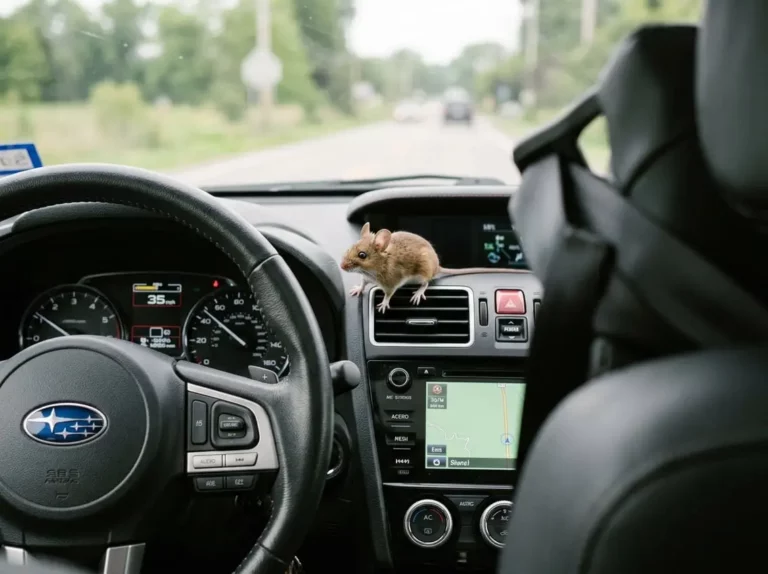
Mice don’t knock before moving in. They slip into your engine bay, shred your wiring, and nest inside your dashboard — often before you notice a single sign. The repair bill? Easily over $2,000. This guide covers exactly how to keep mice out of your car, why they target vehicles in the first place, and what to do if they’ve already moved in.
Why Mice Target Your Car
Your car is basically a five-star hotel for rodents. It’s warm, sheltered, and packed with soft materials perfect for nesting.
Here’s the thing — a rodent’s teeth never stop growing. They can grow up to 1mm per day. To keep them from overgrowing, mice must chew constantly. Your wiring insulation, rubber hoses, and plastic engine covers are perfect for this.
The engine bay also holds heat for hours after you park. During cold months, a warm engine cavity is far more attractive than a frozen field. And modern vehicles use soy-based bioplastic wiring insulation — a material some experts believe rodents find especially chewable (more on that below).
The Rodents Most Likely Damaging Your Car
Not all rodents behave the same way. Knowing which species lives near you helps you target your defenses.
| Species | Where They’re Common | How They Get In | What They Damage |
|---|---|---|---|
| Norway Rat | Nationwide | Ground level, wheel wells | Fuel lines, heavy plastic, main wiring harness |
| Roof Rat | Coastal & Southern U.S. | Climbs tires, drops from trees | Upper engine wiring, speed sensors |
| Deer Mouse | Rural & wooded areas | Tight gaps, HVAC intakes | Ductwork, cabin filters — main hantavirus carrier |
| Squirrels & Chipmunks | Widespread | Engine bay access | Air filter boxes, engine block valleys — fire risk from hoarded food |
The Soy Wire Problem Nobody Warned You About
Over the past two decades, automakers switched from petroleum-based wiring insulation to soy-based bioplastics. The goal was sustainability and cost savings. The result? A surge in rodent-related electrical damage.
Multiple class-action lawsuits have been filed against Toyota, Honda, and others. Plaintiffs argue the soy content attracts rodents like a food source, especially in winter when natural food is scarce.
Manufacturers disagree. Honda and Toyota both state that rodents have always chewed wiring, regardless of what it’s made from. Some experts support this, pointing out that wires physically resemble the twigs and grasses mice gather for nests. There’s also a theory that electrical micro-vibrations in active wires mimic trapped insects, triggering a predatory response.
Whatever the cause, the practical takeaway is the same: once a mouse gets inside a warm engine bay, the soft insulation is an easy, convenient target.
How Mice Actually Get Into Your Car
Understanding their entry routes is the first step to blocking them.
The undercarriage highway: Mice climb the textured rubber of your tires, move up through the suspension components, and slip through the gap between your plastic fender liner and the metal chassis. That gap leads directly into your engine bay.
The HVAC fresh air intake: This is their most dangerous route. The exterior cowl at the base of your windshield draws outside air into your heating and cooling system. Most vehicles don’t come with fine mesh over this opening. Mice slip right through the wide plastic grille and land directly on your cabin air filter — inside your car.
Firewall grommets: The metal firewall separates your engine from your cabin. Rubber grommets seal the holes where cables pass through. These degrade over time. A determined mouse chews through them easily.
Rear pressure vents: Hidden behind the rear bumper are one-way rubber flaps designed to release air pressure when you slam a door. A rat can push these open from the outside and walk right in.
Signs Mice Are Already in Your Car
Catch this early and you’ll save yourself a serious repair bill. Waiting even a few weeks can turn a $150 sensor fix into a $2,000+ wiring harness replacement.
Smell: A musty odor or strong smell of urine when you turn on the heater is a red flag. If a mouse died inside the blower motor, you’ll know immediately — the smell is unmistakable.
Visual evidence:
- Shredded paper, grass, or insulation in the engine bay
- Dark granular droppings on the battery cover or inside the air filter housing
- Visible gnaw marks on plastic components or wire coating
- Greasy smear marks along tight passages
Mechanical symptoms:
- Weak or restricted airflow from your vents
- Rattling or vibrating noise from behind the dashboard
- Foggy interior windows that won’t clear — a clogged cabin filter stops moisture removal
Electrical symptoms:
- Random dashboard warning lights
- Infotainment screen glitches
- Complete ignition failure
These electrical faults are notoriously tricky to diagnose. A single severed data wire can disable multiple systems at once. In some hybrid vehicles, debris from the air intake box has contaminated the Mass Air Flow sensor, triggering hybrid system failure codes that leave the car completely dead.
How to Keep Mice Out of Your Car: A Layered Approach
No single method works on its own. You need multiple layers working together. Here’s how to build a real defense.
Start With Your Parking Environment
Rodents only approach your car if the environment lets them. Strip that safety away.
- Cut back all vegetation within three feet of your parking space. Mice are prey animals. They won’t cross open ground if they can avoid it.
- Trim overhanging branches. Roof rats drop directly from trees onto your hood, bypassing everything at ground level.
- Eliminate cover near the car: wood piles, leaf litter, stacked materials — these are nesting grounds right next to your vehicle.
- Remove all food sources. Birdseed, pet food, and bulk grains stored in a garage guarantee a rodent presence. Store them in galvanized metal or thick chew-proof containers. Use lidded, rodent-proof garbage cans.
Fortify Your Garage
Your garage is the first line of defense. Most garages fail at the basics.
Turn the lights off inside during daylight and look for sunlight coming through the walls. Any light means a mouse-sized gap.
When you find gaps, don’t just stuff them with foam or rubber — mice shred both for nesting material. Pack gaps tightly with copper mesh or steel wool first, then seal over with rigid caulk or concrete mortar.
Fit your garage door with a heavy-duty metal-reinforced sweep that creates a continuous seal against the floor. Check that the door tracks are aligned — side gaps are a common entry point.
Drive Your Car Regularly
Mice prefer undisturbed spaces. A car that moves daily rarely gets nested in because the vibration, heat, and movement interrupt nesting attempts.
If your car sits for extended periods, start it and move it a short distance at least once a week. Honk the horn when you do — the acoustic shock disrupts any nesting in progress.
Also, never leave food wrappers, crumbs, or pet food inside the cabin. Even a tiny amount of odor draws rodents through the ventilation system.
Physical Barriers That Actually Work
Scent sprays and ultrasonic gadgets get a lot of marketing attention. They do work — but only partially, and only temporarily. Physical barriers don’t rely on changing a desperate animal’s behavior. They simply block access.
Honda Rodent Tape on Vulnerable Wiring
Honda makes an OEM capsaicin-impregnated electrical tape (part number 4019-2317) specifically for this problem. It looks like standard friction tape, but it’s loaded with concentrated capsaicin — the compound that makes chili peppers burn. When a mouse bites down, it gets an instant mouthful of extreme heat and abandons the wire immediately.
Apply it using the half-wrapping method: each wrap overlaps the previous layer by exactly half the tape’s width. This creates a continuous double-layered barrier. A roll runs roughly $40–$60 and covers about 65 feet.
The limitation is that you can’t wrap every wire in a modern vehicle. Focus on easily accessible, known problem areas — or apply it over any freshly repaired sections to prevent repeat attacks.
Hardware Cloth Over the HVAC Intake
This is the most impactful single modification you can make. It permanently blocks the main route into your cabin.
Remove the windshield wiper arms, unclip the exterior cowl panel, and lift it away from the base of the windshield. You’ll see the large intake opening leading into your HVAC system. Cut a piece of industrial stainless steel or galvanized hardware cloth with a grid no larger than a quarter-inch. Fold the edges to prevent scratching. Secure it with high-temperature adhesive, screws, or zip ties anchored to the existing grille.
Don’t use window screening or flimsy aluminum mesh. Mice chew through lightweight metals quickly. Use heavy-duty hardware cloth only.
This modification costs very little and takes less than an hour. It fully blocks the most dangerous entry point while allowing completely unrestricted airflow.
Weighted Perimeter Car Cover for Storage
Standard car covers leave a gap at ground level. Mice run underneath and access the tires and undercarriage freely.
The CoverSeal system solves this with a sand-weighted hem stitched into the bottom edge. When placed on a flat concrete or asphalt surface, the weighted hem lies flat and seals the perimeter completely — no gaps, 360 degrees around the car. No electricity required, no maintenance. It’s pure physics, which makes it one of the most reliable passive solutions for stored vehicles.
Scent and Sonic Deterrents: Useful, But Know Their Limits
These products aren’t useless — they’re just not enough on their own.
Peppermint oil and capsaicin sprays do irritate rodents. Concentrated peppermint spray or cayenne-based products applied to wheel wells and the engine bay create an unpleasant barrier. The problem is the engine bay evaporates volatile oils rapidly, and rain washes powders and sprays away within days. A mouse facing starvation or a snowstorm will push through the discomfort. These sprays need constant reapplication to stay effective.
Ultrasonic devices emit high-frequency sound waves that initially agitate rodents. Some units wire directly to your 12V battery for continuous coverage while parked. The problem is biological acclimation — rodents learn the sound carries no real threat and eventually ignore it. High-frequency sound also gets blocked by dense engine components, creating silent pockets right where mice like to shelter.
Use these as a secondary layer. Don’t rely on them as your primary defense.
If Mice Have Already Moved In: Biohazard Cleanup
Discovering a mouse nest in your car isn’t just a nuisance — it’s a health emergency. Deer mice carry the Sin Nombre hantavirus, which causes Hantavirus Pulmonary Syndrome. It spreads through aerosolized dried droppings and urine — exactly what happens when you switch on your heater and blow air across a contaminated cabin filter.
Never vacuum, sweep, or use compressed air on rodent debris. These actions blast viral particles directly into the air you breathe.
Follow these CDC-compliant cleanup steps:
- Ventilate first. Move the car outside. Open all doors, the hood, and the trunk. Let it air out for at least 20 minutes before you get close.
- Disconnect the battery. Remove both terminals before applying any liquid to the engine bay.
- Wear PPE. Nitrile gloves, long sleeves, and an N95 mask minimum. For heavy infestations, use a half-mask respirator with HEPA filters.
- Mix a disinfectant solution. One part bleach to nine parts water, or use an EPA-registered hospital-grade disinfectant.
- Saturate, don’t disturb. Spray the solution directly onto nests, droppings, and contaminated areas. Let it sit for a full five minutes.
- Remove with paper towels. Gather saturated debris gently. Place it into a heavy-duty plastic bag. Knot it shut. Put that bag inside a second bag and knot it too. Dispose in a covered outdoor bin.
- Secondary wipe-down. Spray and wipe all surrounding surfaces — filter housings, plastic cowls, battery cover.
- Wash hands immediately. Wash gloves while still on your hands, then remove and discard them. Wash bare hands with soap and warm water.
| Cleanup Category | Use This | Never Use This |
|---|---|---|
| Sanitizing agent | 10% bleach solution, EPA-registered disinfectant | Water alone, household multi-surface spray |
| Removal tools | Paper towels, disposable rags | Brooms, vacuums, compressed air |
| Protective gear | Nitrile gloves, N95 mask, long sleeves | Bare hands, standard dust mask |
| Contaminated fabrics | Hot wash + dry at 115°F minimum | Shaking out dry floor mats |
If the infestation is severe — multiple dead rodents, heavy fecal contamination deep in the ductwork — this is a job for professional biohazard remediation combined with mechanical disassembly. Don’t risk it.
The Bottom Line on Keeping Mice Out
The real answer to how to keep mice out of your car is layers. Strip the environment of cover and food. Seal your garage properly. Drive the car regularly. Install hardware cloth over the HVAC intake. Wrap vulnerable wiring in capsaicin tape. If you’re storing a vehicle long-term, use a weighted perimeter cover.
Scent sprays and ultrasonic devices can reinforce these measures, but they can’t replace them. A mouse that’s cold, hungry, and determined will push through a scent barrier. It can’t push through steel mesh.
Get the physical barriers in place first, and you’ll spend far less time dealing with everything else.