Thinking about ceramic coating your car but not sure if AvalonKing is the real deal or just clever marketing? You’ve landed in the right place. This review breaks down exactly how Armor Shield IX performs, what real users think, how it stacks up against the competition, and the mistakes you absolutely need to avoid. Stick around — the answer might surprise you.
What Is AvalonKing, and Why Does Everyone Keep Talking About It?
AvalonKing is a US-based company that turned the ceramic coating world upside down by making professional-grade paint protection accessible to regular people. Before brands like AvalonKing entered the scene, professional ceramic coating cost anywhere from $1,000 to $3,000 per vehicle. Not exactly pocket change.
AvalonKing changed that by engineering formulations that give beginners more working time during application and packaging everything you need inside a single, comprehensive kit. No detailing shop required. No intimidating jargon. Just you, your car, and a glass bottle of serious chemistry.
The result? A brand that dominates DIY ceramic coating conversations — and occasionally infuriates professional detailers. More on that shortly.
How Ceramic Coating Actually Works (Without the Science Degree)
Here’s the simple version: traditional car wax sits on top of your paint like a temporary film. Ceramic coating bonds directly into your clear coat at a microscopic level.
The Silicon Dioxide Bond
The active ingredient in AvalonKing’s coatings is silicon dioxide — the same compound found in quartz and sand. When you apply it to a properly prepared surface, the liquid solvents evaporate, and the silicon dioxide particles cross-link with your paint’s microscopic pores. The result is a hardened, glass-like shield that becomes part of your car’s exterior.
AvalonKing’s Armor Shield IX uses a silicon dioxide concentration of over 80%. That’s intentional. That specific concentration is hard enough to last years but still soft enough for a beginner to level and buff before it hardens completely.
Why Water Beads Like Crazy
Ceramic coatings create extreme hydrophobicity — a fancy word for serious water repellency. When water hits the cured surface, it can’t grip the paint. It beads up into tight spheres and rolls off, taking dirt with it. AvalonKing claims this non-stick barrier repels up to 70% of typical road dirt, which makes washing your car far less frequent and far less painful.
The Truth About the “9H Hardness” Claim
You’ll see 9H stamped all over ceramic coating marketing. Here’s what it actually means: a pencil hardness rating, not the mineral hardness scale. No liquid coating will stop a rock chip at highway speed or prevent someone from keying your car. What ceramic coating does is reduce surface friction so that abrasive particles and contaminants glide off instead of embedding into your clear coat. Think of it as a sacrificial layer — it takes the hit so your factory paint doesn’t have to.
Armor Shield IX vs. Armor Shield IX MAX: Which One Should You Buy?
AvalonKing offers two flagship products. Here’s how they compare:
| Feature | Armor Shield IX (Original) | Armor Shield IX MAX |
|---|---|---|
| Claimed Durability | 2 to 5 Years | 3+ Years |
| Full Cure Time (Water Avoidance) | 24 to 48 Hours | 4 Hours |
| Touch Dry Time | Not Specified | 2 Hours |
| Applicator Design | Standard Rigid Sponge | Flexible, Liquid-Proof Barrier |
| Hydrophobic Properties | Standard | Up to Double the Original |
| Best For | Garage applications | Outdoor or time-constrained applications |
Armor Shield IX: The Original
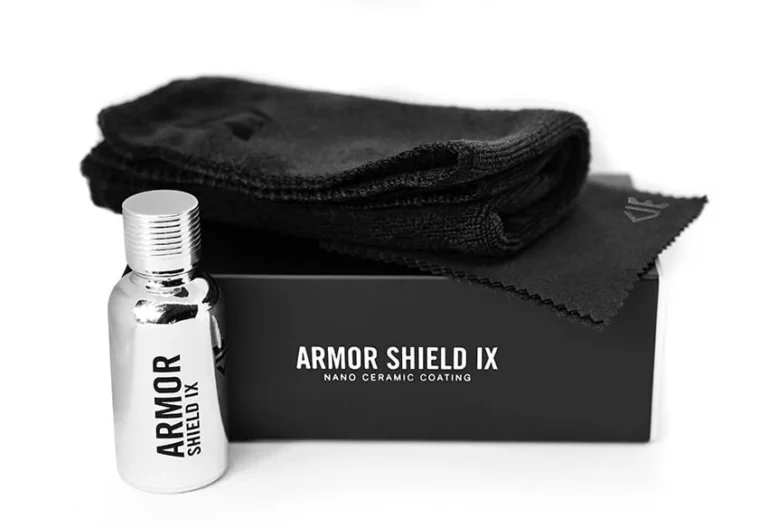
The original Armor Shield IX comes in a 30ml glass bottle. Reviewers consistently praise the unboxing experience — it includes an applicator block, suede application cloths, a high-pile microfiber buffing towel, nitrile gloves, and detailed instructions. The problem? You need to keep the car bone dry for up to 48 hours after application and away from soap for at least 7 days. That’s a tough ask if you don’t have a climate-controlled garage.
Armor Shield IX MAX: The Upgrade
Armor Shield IX MAX addresses the original’s biggest weakness: the agonizingly long curing window. The MAX formula cuts the water exposure window from 48 hours down to just 4 hours, with a touch-dry time of only 2 hours. That’s a game-changer for anyone applying the coating outdoors or in unpredictable weather.
The MAX also features a redesigned applicator block with a liquid-proof inner barrier that stops expensive product from soaking into the sponge uselessly. That means one 30ml bottle covers significantly more surface area. Less waste, more car covered.
If you’re a first-timer without a garage, the MAX is the smarter buy.
What Real Users Think About AvalonKing Ceramic Coating
Here’s where it gets interesting. AvalonKing polarizes the detailing community in a way few brands do.
What Beginners Say
For first-timers and weekend enthusiasts, AvalonKing reviews are overwhelmingly positive. Users transitioning from spray wax describe the water-beading effect as genuinely impressive. The Drive’s hands-on review noted the product smells intensely chemical — think acrylic nail salon — but delivers real, visible results. Many reviewers specifically praise the clarity of the instructions and the quality of the included materials. The brand’s customer service also earns consistent compliments, including stories of AvalonKing replacing glass bottles accidentally dropped and shattered by clumsy users.
What Professionals Say
Professional detailers are significantly less enthusiastic. The core criticism isn’t necessarily the product chemistry — it’s the marketing. AvalonKing leans heavily on paid sponsorships with automotive YouTubers and influencers, which pro detailers in communities like Reddit’s AutoDetailing forum associate with hype over substance. Heritage brands like CarPro and Gtechniq built their reputations through professional use and organic word-of-mouth — not paid media. That matters deeply to the veteran crowd.
Durability claims also generate debate. The 2-to-5-year lifespan claim is realistic — but only under optimal conditions. A garage-kept car in Southern California can hit five years easily. A daily driver on salt-heavy Northeast winter roads might see hydrophobic properties degrade within 6 to 12 months. That variability frustrates professionals who see rapid real-world failures and blame the coating rather than the environment.
AvalonKing vs. The Competition: How It Really Stacks Up
| Metric | AvalonKing Armor Shield IX | CarPro CQuartz UK 3.0 | Gtechniq Crystal Serum Light | Adam’s Advanced Graphene |
|---|---|---|---|---|
| Primary Base | Silicon Dioxide (>80%) | Silicon Dioxide (~70%) | Silicon Dioxide / Silicon Carbide | Graphene-Infused Ceramic |
| Claimed Durability | 2 to 5 Years | Up to 2 Years | 3 to 5 Years | Up to 9 Years (Claimed) |
| Application Difficulty | Beginner Friendly | Intermediate | Advanced | Intermediate |
| Temperature Tolerance | Narrow (50–80°F) | Wide (40–100°F) | Moderate | Moderate |
| Layers Required | Single Layer | Dual Layers Recommended | Single Layer | Single Layer |
| Brand Positioning | DIY / Direct-to-Consumer | Pro-Sumer | Professional | Enthusiast |
AvalonKing vs. CarPro CQuartz UK 3.0
CarPro CQuartz UK 3.0 uses a lower silicon dioxide concentration (~70%), which makes it more forgiving across a much wider temperature range — from 40°F all the way up to 100°F. That’s a massive advantage for outdoor applications in unpredictable climates. The tradeoff? CarPro recommends two full layers to achieve a comparable lifespan. AvalonKing’s higher concentration gets you there in a single coat. Less labor, less product, similar result.
AvalonKing vs. Gtechniq Crystal Serum Light
Gtechniq runs on a hybrid silicon dioxide and silicon carbide formula, giving it extraordinary resistance to harsh chemicals across a pH range of 2 to 12. Professionals widely consider it the top-shelf option for absolute durability and gloss retention. The catch: Gtechniq punishes mistakes. A missed high spot often requires wet-sanding to fix. AvalonKing is far more forgiving — a light machine polish usually sorts out any errors. That forgiveness is the entire point for DIY users.
AvalonKing vs. Adam’s Advanced Graphene
Graphene coatings are the newest marketing frontier. They claim superior heat dissipation and reduced water spotting from hard water. While some enthusiasts genuinely prefer graphene for its slickness, AvalonKing has deliberately stuck with pure silicon dioxide, focusing resources on ease of use and faster curing instead of chasing unproven chemistry trends.
The Preparation Process — Don’t Skip This
Preparation is everything. Ceramic coating acts like a permanent magnifying glass — it locks in whatever condition your paint is in at the moment of application. Scratched paint stays scratched. Dull paint stays dull.
Step 1: Strip and Decontaminate
Wash the car with AvalonKing’s Ceramic Prep Shampoo, a heavy-duty alkaline detergent designed to strip old wax and sealants completely. Follow up with an iron remover to eliminate embedded brake dust and road fallout, then exfoliate the clear coat using a clay bar or synthetic clay towel.
Step 2: Polish (Seriously, Don’t Skip This)
Paint correction via machine polishing physically flattens the clear coat so light reflects uniformly. The ceramic coating doesn’t create gloss — it preserves the gloss that’s already there. If you skip polishing, you’re permanently sealing in every swirl mark and scratch.
Step 3: Sterilize With IPA
AvalonKing’s Isopropyl Alcohol Prep Spray removes polishing oils and lubricants trapped in your paint’s pores. If you skip this step, the coating bonds to oil instead of clear coat — and it fails fast. Apply it to every panel before coating begins.
Application Tips That Save You From Disaster
Applying ceramic coating requires focus. Here’s what you need to know:
- Work in a 2×2 foot section at a time. Apply using a strict cross-hatch pattern — horizontal first, then vertical over the same area.
- Watch for the rainbow flash. The coating will develop an iridescent, oil-slick appearance as the solvents evaporate. That’s your signal to buff it off.
- Buff before it hardens. Don’t wait too long. If the coating fully cures before you level it, you get “high spots” — cloudy, gritty patches that require machine polishing to remove.
- Ventilate the workspace. The chemical fumes are intense. Wear a mask.
The Environmental Conditions That Will Ruin Everything
AvalonKing explicitly warns against these conditions:
- Below 40°F: The cross-linking process stops entirely. The product just sits on your paint as a greasy, useless film.
- Direct sunlight or hot panels: The solvents evaporate almost instantly, leaving you zero time to level. Permanent streaks result.
- High humidity: Slows curing and causes smearing.
- Any moisture before curing: Rain, dew, or even a premature test with a hose will destroy the finish before it hardens.
Aim for an indoor application at around 70°F. That’s your sweet spot.
Maintaining Your Coating So It Actually Lasts
Ceramic coatings aren’t maintenance-free — they just make maintenance easier. Here’s the reality: when water stops beading on your coated car, the coating usually isn’t gone. It’s clogged with traffic film and mineral deposits. Clean it properly and the hydrophobic properties come right back.
Rules for keeping your coating alive:
- Never use automated car washes with spinning brushes. Those inflict thousands of micro-scratches and destroy the coating’s optical clarity fast.
- Avoid acidic or highly alkaline soaps. These chemically degrade the coating over time. Stick to pH-neutral shampoos.
- Use a two-bucket hand wash method or apply thick foam with a foam cannon and pressure washer.
- Apply a maintenance spray every few months. Armor Shield Lite deposits a thin sacrificial layer on top of the base coating, instantly restoring water beading and UV protection. AvalonKing also offers Psycho Ceramic Detail Spray for quick wipe-downs between washes — it adds six months of ceramic protection without any curing time.
Does Ceramic Coating Void Your Car Warranty?
Short answer: probably not, but there’s one specific risk worth knowing. Research across major US automaker policies shows that no major manufacturer explicitly voids paint or corrosion warranties due to ceramic coating. However, one documented Honda case saw a warranty claim denied after a dealer argued the coating altered the paint surface under a vague “unauthorized cleaning and polishing” clause. That’s an outlier — but it’s a real risk on new cars with factory paint defects.
The bigger, more universal risk: never apply ceramic coating to brake calipers or rotors. A hardened silicon dioxide layer on safety-critical friction surfaces can alter your car’s stopping power, and it gives dealers instant grounds to void your mechanical warranty.
So — Is AvalonKing Worth It?
Here’s the straight answer: yes, for most car owners.
If you’re a professional detailer with access to high-end chemistry, climate-controlled bays, and decades of experience, heritage brands like Gtechniq or CarPro may serve you better for absolute performance. But that’s not who AvalonKing is for.
AvalonKing is for the person who wants to stop paying $200 every six months for wax that lasts three weeks. It’s for the person who wants professional-grade protection on a daily driver without a four-figure labor bill. And with the Armor Shield IX MAX solving the original product’s biggest limitation — the brutal curing window — there’s never been a better time to try it. Just prep your paint properly, respect the environmental conditions, and maintain it correctly. Do those three things, and AvalonKing ceramic coating delivers exactly what it promises.