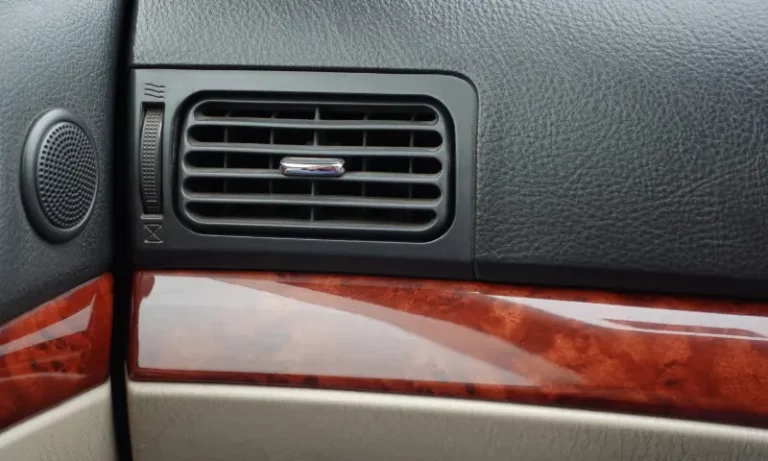
That hissing sound from your car’s AC is either totally fine or a sign of real trouble. The tricky part? It can be hard to tell which. This guide breaks down every possible cause, so you know exactly what you’re dealing with — and what to do next. Read to the end before you panic (or ignore it).
First, Is the Hissing Actually Normal?
Believe it or not, your car AC making a hissing noise is sometimes completely harmless.
When you switch off the engine or turn off the AC, the compressor stops. That kills the pressure difference between the high and low sides of the system. The refrigerant then slowly pushes through the expansion valve to balance itself out — and that makes a soft hissing or whooshing sound.
It’s like releasing air from a balloon slowly. Totally expected.
This is normal if:
- The sound happens right after you turn off the AC or the engine
- It fades within 5 to 30 seconds
- Your AC still blows cold air
- The sound is gentle, not harsh or loud
| What You Hear | When You Hear It | Normal or Not? |
|---|---|---|
| Soft hiss or whoosh | Right after shutting off AC | ✅ Normal pressure equalization |
| Continuous loud hiss | While AC is running | ❌ Needs diagnosis |
| Bubbling or gurgling | During operation | ❌ Likely low refrigerant |
| Aggressive hiss from engine bay | Anytime AC is on | ❌ Possible pressure relief venting |
| Hissing from dashboard | Even with compressor off | ❌ Possible vacuum leak |
If your sound matches the normal column, you can relax. If it doesn’t, keep reading.
Your Car AC Is Making a Hissing Noise While Running — Here’s Why
1. Refrigerant Leak
This is the most common culprit. Your AC system is a sealed loop. When a hose cracks, an O-ring wears out, or a fitting loosens, refrigerant escapes — and it hisses as it goes.
The pressurized refrigerant forcing through a tiny crack makes the same sound as gas escaping a punctured tire. It doesn’t stop on its own.
Signs you’ve got a refrigerant leak:
- Hissing continues while the AC runs
- Air from the vents gets warm or barely cool
- Oily, greasy residue on hoses or fittings (refrigerant carries oil with it)
- Compressor clicks on and off rapidly instead of running steadily
- Fluorescent green stain glows under UV light near the leak
Left untreated, a refrigerant leak destroys your compressor. As fluid drops, lubrication disappears. The compressor then runs dry, overheats, and seizes. That turns a $200 fix into a $1,200+ job fast.
2. Faulty Expansion Valve
The expansion valve is a microscopic restriction point that converts high-pressure liquid refrigerant into a cool mist. When it fails, you get a hiss directly behind the dashboard or glove box.
Two ways it fails:
Stuck closed or clogged: The refrigerant can’t get through properly. Pressure builds up before the valve. The system struggles, hisses, and the evaporator freezes solid. You’ll notice almost no airflow from the vents — just weak, warm air.
Starved by low refrigerant: When there isn’t enough liquid refrigerant, a chaotic mix of gas and liquid hits the valve simultaneously. The valve rattles and hisses as it tries to meter something it can barely measure.
Both scenarios produce a persistent hissing or whistling sound centered in the dashboard area.
3. Compressor Internal Failure
Your compressor has internal reed valves that keep refrigerant flowing in one direction. When those valves crack or warp, compressed gas leaks backward inside the compressor on every piston stroke.
The result is a mechanical hissing, groaning, or whistling — coming from the engine bay, not the dashboard.
Other clues pointing to compressor failure:
- AC blows warm even with the system fully charged
- Rough idle when you turn the AC on
- Fast tapping noise under the hood
- Compressor clutch engages but doesn’t maintain cold air output
A failing compressor almost always needs full replacement, not a quick fix. And when it goes, it sends metal debris through the whole system. Every component needs flushing before the new compressor goes in.
4. Over-Pressurization
Too much refrigerant is just as bad as too little. When the system is overcharged — usually from a DIY recharge kit used without pressure gauges — internal pressure spikes dangerously.
Your car has a high-pressure relief valve for exactly this reason. When pressure exceeds the safety limit, that valve opens and vents refrigerant and oil violently into the engine bay. The result is a loud, aggressive hiss that’s impossible to miss.
The same thing happens if your condenser fan fails or the condenser fins get packed with debris. The refrigerant can’t shed heat, pressure skyrockets, and the relief valve fires.
Check these if you suspect over-pressurization:
- Did you recently recharge the AC yourself?
- Is the condenser fan spinning when the AC runs?
- Are the front grille and condenser fins caked with debris?
The Hissing Is Behind the Dashboard — But It’s Not the AC
Here’s something that trips up a lot of people. A hissing sound from behind the dash doesn’t always mean refrigerant trouble.
Vacuum Line Leak
Many vehicles use engine vacuum to move the airflow direction doors inside the dashboard — the ones that switch air between your feet, face vents, and defroster. These vacuum lines run from the engine through the firewall into the dashboard.
Over time, those rubber lines crack. When the engine runs and vacuum is applied to a cracked line, air gets sucked through the gap — creating a persistent hissing behind the dash.
How to tell it’s a vacuum leak and not a refrigerant issue:
- The hissing continues even with the AC compressor turned off
- Your vents blow air in the wrong direction no matter what setting you choose
- Air defaults stubbornly to the defroster (that’s the system’s failsafe)
- Your engine idles rough or the check engine light comes on
A vacuum leak doesn’t affect how cold the air is — it affects where the air goes. If your AC blows cold but won’t redirect properly, a broken vacuum line is almost certainly the reason.
Clogged Cabin Air Filter
A clogged cabin air filter forces the blower motor to pull air through a blocked passage. High-velocity air whistling through the clogged fibers or gaps in a warped filter frame sounds a lot like hissing.
This one’s easy to fix. Pull the filter (usually behind the glove box) and check it. If it looks like a dusty carpet pad, replace it. Manufacturers recommend swapping it every 12,000 to 15,000 miles.
What a Mechanic Actually Does to Diagnose It
Knowing a hiss exists isn’t enough. A technician needs to find why it’s happening before touching anything. ASE A7-certified technicians follow a structured process.
Step 1 — Listen and look first. Where exactly is the hiss coming from? Engine bay points to the compressor or condenser. Dashboard points to the expansion valve or vacuum system. They also look for oily residue on hoses and check if the compressor clutch engages properly.
Step 2 — Temperature test. A probe goes into the center vent. Under full load, discharge air should reach 40–50°F. Warm air confirms a thermodynamic problem.
Step 3 — Manifold gauge test. This is the most important step. A gauge set connects to the high and low-pressure service ports and shows exactly what the refrigerant is doing.
| Low-Side Reading | High-Side Reading | What It Means |
|---|---|---|
| Normal | Normal | System is fine — hiss is probably normal equalization |
| Low | Low | Refrigerant leak somewhere in the system |
| Low | High | Expansion valve stuck closed or frozen |
| High | High | System overcharged or condenser not cooling |
| High | Low | Compressor internal valve failure |
Step 4 — UV dye or electronic sniffer. If the gauges confirm a leak, UV dye under a blacklight pinpoints the exact location. Electronic leak detectors sniff out refrigerant molecules that are invisible to the eye.
Important: Refrigerant Can’t Just Be Released Into the Air
Before any repair opens the AC system, the refrigerant must be recovered properly. Under Section 609 of the Clean Air Act, it’s a federal violation to intentionally vent refrigerant into the atmosphere.
A certified shop uses recovery equipment to pull the refrigerant out safely, recycle it, and store it. After repairs, the system gets pulled into a deep vacuum for at least 30 minutes to remove moisture and air. Then it’s recharged to the exact factory-specified weight.
This isn’t optional. It’s the law — and it protects your repair from failing all over again.
Keep Your AC Quiet With These Simple Habits
You don’t need to wait for a hiss to take care of your AC system.
- Run the AC for 10 minutes weekly, even in winter. This circulates oil and keeps seals from drying out and cracking.
- Replace the cabin air filter every 12,000–15,000 miles. It takes five minutes and costs under $20.
- Rinse the front grille during car washes. Clearing the condenser fins prevents thermal overload and pressure spikes.
- Get an annual AC inspection before summer. A technician can catch a slow pressure drop early — before it destroys the compressor.
A small hiss today can mean a dead compressor by August. Catch it early, fix it cheap.