Noticed a sweet smell coming from your engine bay? Maybe your temperature gauge is creeping up, or there’s a mysterious puddle under your car? A coolant reservoir cracked even slightly can spiral into a very expensive engine repair fast. This guide breaks down exactly what’s happening, what to look for, and what you need to do about it before your engine pays the price.
What Does a Coolant Reservoir Actually Do?
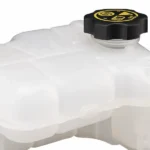
Your coolant reservoir isn’t just a plastic bottle sitting in your engine bay for decoration. It’s a critical part of your cooling system, and understanding its job helps you appreciate why a crack is such a big deal.
There are two types of reservoirs, and they work very differently:
Non-pressurized overflow bottle: Common on older domestic and Asian vehicles. The pressure cap sits on the radiator itself. When coolant expands, it flows into the reservoir. When the engine cools, it gets sucked back in. A crack here causes slower fluid loss, but air pockets will eventually enter the engine block and shut down heat transfer completely.
Pressurized expansion tank: This is the design on most modern European cars, turbocharged engines, and hybrids. The cap sits on the reservoir itself, making it a fully active, high-pressure component. A crack here means immediate pressure loss and rapid fluid expulsion. The coolant can flash-boil inside your cylinder head within minutes.
| Feature | Non-Pressurized Overflow Bottle | Pressurized Expansion Tank |
|---|---|---|
| Pressure cap location | On the radiator | On the reservoir |
| Part of pressurized loop? | No | Yes |
| Crack consequence | Slow fluid loss, delayed overheating | Immediate pressure drop, rapid overheating |
| Common vehicles | Older domestic, Asian | European, modern turbo, hybrids |
Why Do Coolant Reservoirs Crack in the First Place?
Plastic doesn’t last forever, especially plastic that lives in your engine bay. Here’s what’s actually destroying your reservoir:
Thermal cycling: Every time you drive, the reservoir heats past 200°F and then cools back down. This constant expansion and contraction breaks down the plastic at a molecular level. The plasticizers in the polymer degrade over time, turning a flexible tank into a brittle one. You’ll often see this as the reservoir turning cloudy yellow or brown.
Vibration stress: Once the plastic is brittle, normal engine vibration does real damage. Cracks tend to form at the weakest spots — the welded seams, hose nipple connections, mounting tabs, and the filler neck under the pressure cap.
Tap water contamination: This one surprises people. Topping off your reservoir with municipal tap water introduces chlorine compounds that aggressively attack polyamide plastic, breaking down the internal hydrogen bonds and opening microscopic voids in the material. Always use distilled water mixed with the correct antifreeze.
Symptoms of a Cracked Coolant Reservoir
Catching this early saves you thousands. Here’s what to look for:
Visual signs:
- Crusty, colored deposits (white, green, pink, or orange) along the tank’s seams or on components below it
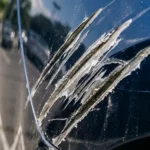
- A network of tiny surface cracks called micro-crazing — this means the plastic is nearly done
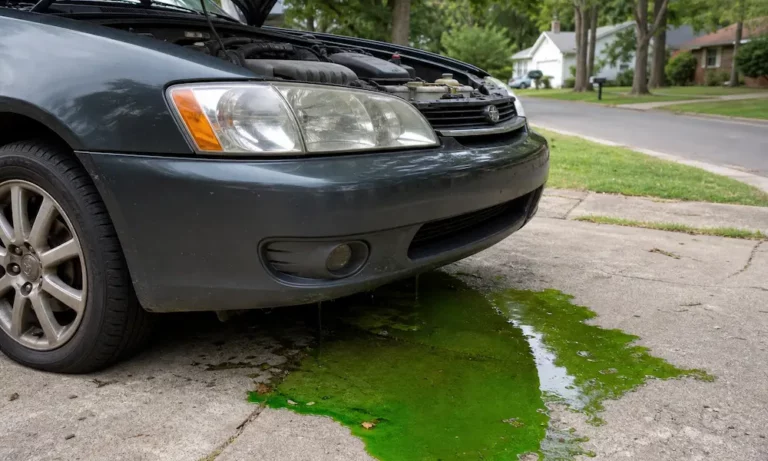
- Fluid pooling under the front of your parked car that feels slightly oily and has a bright, unnatural color
Smell: Heated glycol has a distinctly sweet, syrupy smell. If you catch this near your front grille or coming through your climate control vents, you’ve got coolant vapor escaping the sealed system.
Inside the car: Your heater suddenly blows cold air at highway speeds. Air pockets from fluid loss reach the heater core under your dashboard, and air can’t transfer heat the way coolant does.
Dashboard warnings:
- Low coolant warning that keeps coming back after you top it off
- Temperature gauge climbing toward the red zone
- Check engine light illuminated
What Your Car’s Computer Is Telling You
Modern vehicles don’t just display a warning light. They store specific fault codes that point directly at a cooling system problem. Here’s what they mean:
P0128 – Coolant Temperature Below Thermostat Regulating Temperature: This code often gets blamed on a bad thermostat, but severe fluid loss from a cracked reservoir can trigger it too. When the coolant level drops, the temperature sensor sits in an air pocket instead of liquid. Air transfers heat poorly, so the sensor reports a falsely low temperature. Your computer sees this as the engine running too cold and sets P0128.
P2181 – Cooling System Performance: Heavy on European vehicles, this code means your cooling system isn’t hitting its expected thermal targets. A cracked expansion tank bleeding off pressure disrupts heat transfer enough to trigger it, often before your temperature gauge reaches the danger zone.
P00B7 – Engine Coolant Flow Low/Performance: This is the serious one. Your computer compares temperatures at the engine block and the radiator outlet. If the engine is boiling hot but the radiator stays cool, it knows fluid isn’t circulating. P00B7 often triggers your cooling fans to run at full blast, creating a loud roaring from the front of your car as the system fights to survive.
A vehicle with any active cooling system trouble code will fail the OBD portion of your state emissions test. You legally can’t register it until the reservoir is replaced and the system verifies clean.
If You Drive a Hybrid or EV, Pay Close Attention
Electric and hybrid vehicles use complex multi-loop cooling systems — sometimes one loop for the cabin and electronics, and a completely separate loop for the high-voltage battery pack. Each loop has its own reservoir.
A crack in the battery cooling loop is especially dangerous. The fluid used here has ultra-low electrical conductivity for a reason — standard coolant leaking onto high-voltage components can cause a catastrophic short circuit.
When this loop loses fluid, your car’s computer detects the impending thermal runaway and responds immediately:
- The dashboard shows an Electrical Drive Error or reduced propulsion warning
- The vehicle enters limp mode or shuts down entirely to protect the battery
- DC fast charging gets disabled, because the chiller that cools the battery during rapid charging can’t function without fluid
In the worst cases, a depleted cooling loop can allow pressurized refrigerant from the air conditioning system to back-feed into the coolant loop. This refrigerant contamination requires full replacement of the chiller unit, the reservoir, and the refrigerant charge — a very expensive outcome from what started as a cracked plastic tank.
Why You Can’t Patch a Cracked Coolant Reservoir
Epoxy, JB Weld, fiberglass patches, plastic welding kits — people try all of these. They almost all fail. Here’s why:
The plastics used in reservoirs, typically nylon and polypropylene, have extremely low surface energy. Standard adhesives can’t grip them properly. On top of that, the plastic is already saturated with glycol by the time you find the crack. Glycol acts as a permanent anti-bonding agent, preventing adhesives from curing against the surface.
Even if a patch holds temporarily, it has a different thermal expansion rate than the surrounding tank. As the reservoir heats up and flexes under 15–20 PSI of pressure, the patch shears off. This typically happens at highway speed under full engine load — the worst possible moment.
Replace the reservoir. That’s the only real fix.
What Does a Coolant Reservoir Replacement Actually Cost?
| Vehicle Type | Part Cost | Labor & Fluid | Total Estimate |
|---|---|---|---|
| Standard domestic sedan (non-pressurized) | $40–$75 | $115–$180 | $155–$255 |
| Modern Asian SUV/crossover (pressurized) | $75–$140 | $150–$250 | $225–$390 |
| European luxury/performance (pressurized) | $140–$250+ | $250–$450 | $390–$700+ |
| Electric/hybrid vehicle (dual-loop) | $100–$200 | $300–$500 | $400–$700+ |
When choosing a replacement, OEM parts are engineered to exact factory specs — right mounting tabs, correct sensor floats, proper hose fittings. Budget aftermarket tanks often use inferior recycled plastics and can leak from the connections immediately after installation. For pressurized systems especially, spend the extra money on quality.
Always replace the pressure cap at the same time. It’s a wear item, and a weak cap causes the same symptoms as a cracked reservoir.
Disposing of Coolant the Legal Way
The fluid that drains out during this repair isn’t safe to dump. Ethylene glycol is highly toxic to pets and children, and it smells sweet enough to attract both. Used coolant also carries heavy metals like lead, chromium, and cadmium absorbed from years of circulating through your engine.
Under the federal Resource Conservation and Recovery Act, dumping coolant into drains, septic systems, or soil is illegal. You must:
- Store it in sealed, labeled, leak-proof containers
- Transport it to a certified recycling facility or auto parts store that accepts it
- Never mix it with oil or other fluids, as this contaminates the recycling stream
The EPA actively encourages recycled coolant procurement because industrial facilities can strip the heavy metals and reclaim the base glycol for reuse. It’s a genuine environmental win when handled correctly.
Frequently Asked Questions
Can I use tap water to top off a cracked reservoir in an emergency?
In a true roadside emergency where your engine is overheating, plain tap water can get you to a shop. But stop there. Tap water contains minerals that scale up your radiator and engine passages, slashing cooling efficiency. The chlorine in municipal water also chemically attacks polyamide plastic, accelerating future cracking. As soon as the reservoir is replaced, flush the system completely and refill with distilled water and the correct antifreeze ratio.
What if the pressure cap fails instead of the reservoir cracking?
A weak cap vents pressure prematurely, dropping the system’s boiling point and causing coolant to steam out through the relief valve — identical symptoms to a cracked reservoir. A seized cap that won’t vent is actually worse. Pressure builds until the weakest component fails violently, often the aging plastic reservoir itself. Always replace the cap when you replace the reservoir.
Can a cracked coolant reservoir damage my automatic transmission?
Yes, indirectly. Many automatic transmissions route their fluid through a heat exchanger inside the radiator. If a cracked reservoir causes the engine to overheat and lose thermal regulation, the transmission fluid overheats too. Overheated transmission fluid breaks down chemically, causing slipping clutches, harsh shifts, and eventual transmission failure.
Does altitude make this worse?
Significantly. Higher altitude means lower atmospheric pressure, which lowers the boiling point of your coolant. A sealed, pressurized reservoir compensates for this by maintaining internal pressure. With a cracked reservoir that can’t hold pressure, your coolant hits its boiling point at a much lower temperature while climbing mountain roads. Flash-boiling inside the cylinder head can occur before your temperature gauge even registers the problem.