Your coolant reservoir is bone dry, but the temperature gauge sits perfectly in the middle. Weird, right? This specific combo isn’t random — it’s actually pointing to something fixable before it gets expensive. Stick around, because understanding this now could save you thousands later.
Why Your Coolant Reservoir Empty But Not Overheating Is a Real Warning Sign
Here’s the thing: a dry reservoir doesn’t always mean your engine is about to melt down right now. But it does mean something in your cooling system is broken.
Your cooling system works as a closed loop. When the engine heats up, coolant expands and pushes into the reservoir. When it cools down, that fluid gets pulled back in. If the reservoir keeps emptying, that cycle has broken somewhere — and air is creeping into the system instead.
Air doesn’t carry heat like liquid does. So while your temperature gauge might still read normal, localized hot spots can quietly cook your cylinder heads from the inside out.
Two Types of Cooling Systems (And Why It Matters)
Before you diagnose anything, you need to know which type of system your car uses. They behave differently and fail differently.
The Unpressurized Overflow Bottle
Most Japanese cars and older domestic vehicles use this setup. The pressure cap sits on the radiator, and the plastic overflow bottle connects via a small hose. The bottle stays at atmospheric pressure — it’s just a holding tank.
Here’s the cycle:
- Engine heats up → coolant expands → pushes into the bottle
- Engine cools down → coolant contracts → vacuum pulls fluid back to the radiator
- Cap fails → vacuum sucks air instead → bottle stays full but radiator goes empty
The Pressurized Expansion Tank (Degas Bottle)
European cars and many modern domestic vehicles use this instead. The expansion tank IS part of the pressurized system — the cap goes on the tank, not the radiator. It actively bleeds air bubbles out of the coolant stream.
If this tank empties, your entire system is critically low. That’s more urgent than an empty overflow bottle.
The #1 Culprit: Your Radiator Cap
A bad radiator cap causes most cases of a coolant reservoir empty but not overheating. Seriously — a $20 part causes thousands in engine damage when ignored.
The cap has two jobs:
- Hold pressure to raise coolant’s boiling point
- Open a return valve when the engine cools, pulling fluid back from the reservoir
When the vacuum return valve inside the cap fails, the fluid pushed into the reservoir during your drive just… stays there. The cooling engine creates a vacuum, but instead of pulling heavy liquid up from the bottle, it takes the easy route — sucking air past degraded rubber seals.
Result: reservoir slowly empties over multiple drives. Radiator stays full. Engine temperature looks fine. You have no idea.
Other cap failure symptoms:
- Upper radiator hose collapses inward (massive vacuum with nowhere to go)
- Coolant boils over more than normal
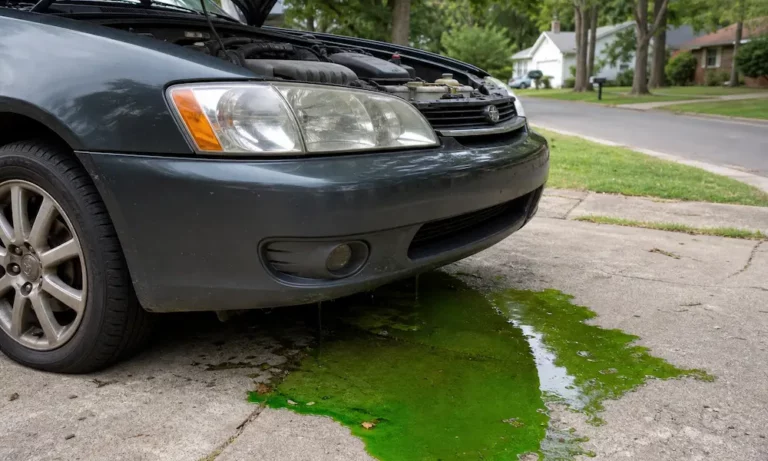
- Fluid weeping from the overflow tube onto the ground
External Leaks: What to Look (and Smell) For
External leaks leave evidence — if you know where to look. Check these spots first.
Water Pump
The water pump circulates all your coolant. Behind its seal sits a weep hole — an intentional escape hatch that drips coolant when the internal seal starts failing. Spot this early and you’ll avoid a broken water pump that snaps your serpentine belt.
Look for crusty white residue on the pump housing or a small drip directly below it.
Radiator Seams
Modern radiators use aluminum cores crimped to plastic end tanks. Over years of heat cycles, those plastic tanks go brittle and the rubber gaskets flatten. You get a slow seep along the seams that highway airflow blows back across the engine — hiding the true leak source.
Heater Core
A leaking heater core is sneaky. The coolant drips inside your dashboard, not on the ground. Watch for:
- Wet, sticky passenger-side floor carpet
- Greasy fog on the inside of your windshield
- Sweet maple syrup smell from the vents
Hose Clamps and Connections
Rubber hoses shrink with age — a process called cold flow. This creates tiny gaps that only leak under peak pressure, then evaporate instantly against the hot engine block. No puddle forms, and you’re left baffled by disappearing fluid.
Internal Leaks: The Expensive Ones
Internal leaks don’t leave puddles. The coolant goes somewhere inside the engine — and that’s a much bigger problem.
Blown Head Gasket
The head gasket seals combustion pressure while keeping oil and coolant completely separate. When it fails, coolant gets sucked into the combustion chamber. The engine tries to burn it.
Dead giveaway: thick white sweet-smelling smoke from the tailpipe.
Check your oil dipstick too. Coolant mixing with oil creates a frothy chocolate milkshake texture. If you see that, stop driving immediately.
Cracked Engine Block
Thermal shock — pouring cold fluid into an overheating engine, or running without proper antifreeze — can physically crack cast iron or aluminum. Coolant weeps into the crankcase, destroying lubrication.
Transmission Cooler Failure
Many vehicles route transmission fluid through a cooling coil inside the radiator. If that barrier ruptures, you get a cross-contamination event that destroys both your cooling system and your transmission’s friction clutches simultaneously.
What Happens If You Keep Driving With an Empty Reservoir
Ignoring a coolant reservoir empty but not overheating situation is gambling with your engine. Here’s what you’re risking:
Air Pockets Create Hot Spots
Air trapped in the cylinder head area acts as insulation — the exact opposite of what you need. The temperature sensor might sit in a pocket of relatively cool liquid, or be surrounded entirely by air. Either way, your dashboard gauge reads normal while aluminum warps at destructive temperatures.
Catalytic Converter Destruction
If a head gasket leaks, burning coolant sends silicates and phosphates through your exhaust system. These permanently contaminate the precious metals inside the catalytic converter and clog the ceramic honeycomb. Signs include rotten egg smell, sluggish acceleration, and power loss on hills. By the time you notice, the converter is done.
How Mechanics Actually Find These Leaks
Pressure Testing
A hand-pump pressure tester replaces the radiator cap with a sealed adapter. The tech pumps air to the cap’s rated pressure with the engine cold and off. Any compromised seal, gasket, or hose reveals itself under a flashlight. If pressure drops but nothing drips externally, the leak is internal.
Testing the Cap Separately
The same tester checks the cap independently. A cap rated for 15 PSI that releases at 9 PSI gets thrown out. A loose, rattling center valve gets thrown out. Caps cost $15–$35. Replace it first — it’s the easiest, cheapest fix.
Bleeding Air From the System
After any repair, trapped air must go. Technicians use a spill-free funnel kit that locks onto the filler neck and creates a gravity-fed reservoir. The engine runs with heat set to maximum, the thermostat opens, and air bubbles rise out through the funnel while fresh coolant drops in to fill the void.
Some cars have dedicated bleeder valves on the thermostat housing or upper hose — open them while filling, close them when solid fluid flows out. Raising the front of the car on a jack helps too, forcing air toward the highest exit point.
Coolant Types: Don’t Mix Them
The fluid in your system isn’t just water. It’s an engineered compound that prevents freezing, raises the boiling point, and coats internal metal surfaces against corrosion. Using plain tap water deposits mineral scale that insulates the radiator and turns into abrasive rust sludge.
Here’s how the main coolant technologies compare:
| Coolant Type | Inhibitor Chemistry | Typical Vehicles | Service Life |
|---|---|---|---|
| IAT | Silicates & Phosphates | Pre-2000 domestic vehicles | 2 years / 30,000 miles |
| OAT | Organic Acids (Carboxylates) | GM post-1995, VW, Saab | 5 years / 150,000 miles |
| HOAT | Organic Acids + low inorganic salts | Ford, Chrysler, most post-2000 | 5 years / 100,000+ miles |
| Phosphate-Free HOAT | Silicates + Organic Acids | BMW, Volvo, Mercedes, Audi | 5 years / 100,000+ miles |
| P-HOAT | Phosphates + Organic Acids | Toyota, Honda, Nissan, Hyundai | 5 years / 100,000+ miles |
Mixing incompatible coolant types — say, an old IAT with a modern OAT — causes silicates to drop out of suspension and form a thick gel that clogs your heater core and radiator. Always use what your manufacturer specifies, not just the cheapest green jug on the shelf.
Repair Cost Breakdown (2025–2026)
Here’s what you’re looking at financially at an independent shop. Dealerships typically add 30–40% on top.
| Repair | Economy/Midsize | Truck/SUV | European Luxury |
|---|---|---|---|
| Radiator Cap | $15–$25 | $20–$35 | $30–$60 |
| Thermostat | $150–$300 | $250–$450 | $350–$600 |
| Radiator | $400–$700 | $600–$900 | $900–$1,400+ |
| Water Pump (serpentine) | $370–$600 | $500–$850 | $900–$1,500 |
| Water Pump (timing belt) | $600–$900 | $800–$1,200 | $1,200–$2,200 |
| Head Gasket | $1,500–$2,200 | $2,000–$3,000 | $3,500–$6,000+ |
A $20 radiator cap, ignored long enough, creates the exact conditions for a $3,000 head gasket job. That math should make the decision easy.
Don’t Pour Used Coolant Down the Drain
Used coolant contains ethylene glycol, heavy metals, and degraded chemical inhibitors. It’s a federally regulated hazardous waste material. Ethylene glycol smells and tastes sweet, which makes it lethal to pets and wildlife.
Never pour it on the ground, into a storm drain, or into your septic system. Collect it in a sealed, labeled container and drop it at an auto parts store or recycling center. Improper disposal carries fines that can reach tens of thousands of dollars.
FAQs
Is there a real difference between an OEM radiator and an aftermarket replacement?
Yes, though not always dramatic. OEM radiators hit the exact thermal specs your car needs. Quality aftermarket units usually match that performance. Budget aftermarket options often use fewer cooling tubes or thinner plastic tanks, which can mean slightly higher running temps under heavy loads like towing.
Can a dying water pump snap my serpentine belt?
Absolutely. When the pump’s internal bearings seize, the pulley locks up. The engine keeps forcing the belt over a frozen pulley — and the friction melts and snaps the rubber fast. You lose power steering, alternator charging, and engine cooling all at once.
Does humidity outside affect my cooling system?
Not directly. Your cooling system is a closed loop, so outside humidity doesn’t change how it works. High humidity does make your air conditioning work harder, though — and since the AC condenser sits in front of the radiator, it dumps more heat toward the engine, making the cooling system work slightly harder.
Do I need a block heater to stop coolant from freezing?
No. A proper 50/50 mix of ethylene glycol and distilled water protects down to about -34°F. Block heaters keep your engine oil warm for immediate lubrication on startup and speed up cabin heating in extreme cold — that’s their actual job.
Does parking on a hill affect my coolant level reading?
Yes. The fluid shifts inside the reservoir, giving you a false reading against the min/max marks. Always check your coolant level on flat ground with a completely cold engine. In older unpressurized systems, a steep nose-down angle can even cause slight fluid loss through the atmospheric vent.