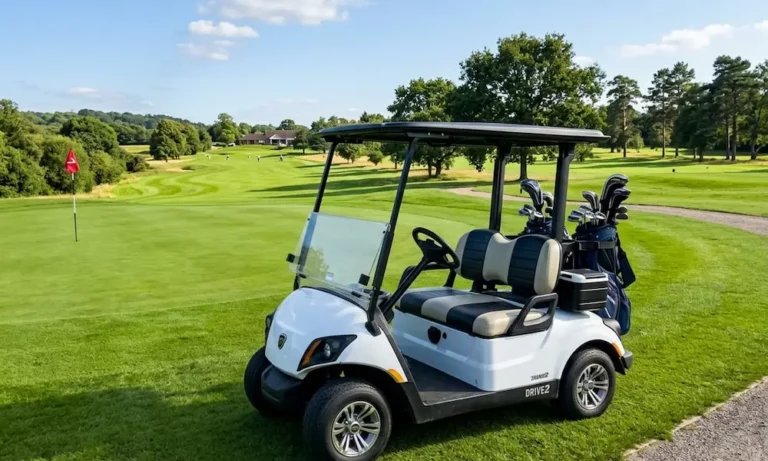
Your golf cart battery dying mid-round — or worse, mid-commute — is genuinely frustrating. This guide breaks down exactly how long a golf cart battery lasts, what kills it early, and how to squeeze every last mile out of it. Stick around, because the answer depends heavily on which battery type you have.
The Short Answer: It Depends on Your Battery Type
There’s no single number here. How long a golf cart battery lasts ranges from 3 years to well over a decade, depending on the chemistry, how you use it, and how well you maintain it.
Here’s the quick breakdown before we go deeper:
| Battery Type | Average Lifespan | Cycle Life | Maintenance |
|---|---|---|---|
| Flooded Lead-Acid | 3–5 years | 300–700 cycles | High (regular watering) |
| AGM (Sealed) | 4–7 years | 500–800 cycles | Low (maintenance-free) |
| Gel (Sealed) | 4–7 years | 500–800 cycles | Low (maintenance-free) |
| Lithium-Ion | 8–12+ years | 2,000–6,000 cycles | Zero |
Now let’s dig into what actually makes each one tick — and die.
Flooded Lead-Acid Batteries: The Old Reliable
Flooded lead-acid batteries are the most affordable option in the golf cart market. They run on lead plates submerged in a liquid electrolyte mix of water and sulfuric acid.
What you get:
- 3 to 5 years of typical service life
- Up to 6–7 years with meticulous care (rare, but possible)
- Roughly 500 to 1,500 hours of driving time
The catch? They demand constant attention. The charging process evaporates water from the electrolyte. Skip the top-ups and the lead plates dry out, oxidize, and fail fast. Miss a few months of maintenance and you’ve essentially thrown money away.
They’re also heavy. We’re talking hundreds of extra pounds on your cart, which increases wear on everything mechanical below the battery tray.
AGM and Gel Batteries: The Low-Maintenance Middle Ground
AGM (Absorbent Glass Mat) and Gel batteries solve the watering problem entirely. In an AGM battery, the electrolyte soaks into fiberglass mats between the plates. Gel batteries suspend the electrolyte in a silica paste. Both are fully sealed.
What you get:
- 4 to 7 years of reliable service
- 500 to 800 charge cycles
- Zero water maintenance required
- Better vibration resistance than flooded batteries
Gel batteries specifically shine in extreme climates — both hot summers and cold winters.
Watch out for one thing: Because they’re sealed, they can’t vent excess gas from overcharging. Push too much voltage into an AGM or gel battery and the internal pressure relief valve ruptures. Once that happens, capacity drops permanently. Always use a charger matched to your battery chemistry.
Lithium-Ion Batteries: The Long Game
Lithium-ion, specifically lithium iron phosphate (LiFePO4), is the biggest shift in golf cart power in decades. The chemistry is thermally stable, far safer than consumer electronics lithium, and built for deep cycling.
What you get:
- 8 to 12 years under daily use
- Premium models pushing 15–20 years in light private use
- 2,000 to 6,000+ charge cycles
- 1,700 to 3,500+ hours of actual driving time
Beyond just lasting longer, lithium delivers consistent power until nearly depleted. Lead-acid batteries sag and slow down as they drain. Lithium stays strong. You also shed up to 70% of the weight compared to lead-acid packs, which means better acceleration, less suspension wear, and more range per charge.
Yes, the upfront cost is higher. But the total cost of ownership over a decade? Lithium frequently wins.
What a “Charge Cycle” Actually Means
A charge cycle equals one full depletion and recharge. But you rarely drive from 100% to 0% in one trip. Two half-drains equal one full cycle. That’s the math that matters.
A manufacturer’s cycle life rating tells you how many full cycles the battery survives before dropping below 70% of its original capacity — the industry’s official “end of life” mark.
Here’s where usage frequency changes everything. The same 500-cycle lead-acid battery might last 3 years on a commercial golf course running multiple rounds daily. That same battery could last 6 years for a weekend-only private owner. The calendar lifespan is elastic. Cycle consumption is not.
Depth of Discharge: The Single Biggest Lifespan Factor
How deeply you drain the battery before charging matters enormously — arguably more than any other variable.
For lead-acid batteries:
- Routinely draining below 50% capacity damages the plates
- A complete drain to zero can instantly shave months off battery life
- A battery rated for 500 cycles at 50% depth might only survive 200 cycles if you drain it to 20% regularly
- Rule of thumb: recharge when you hit the halfway point
For lithium-ion batteries:
- Deep cycling doesn’t cause the same structural damage
- Many technicians recommend the 80/20 rule — keep charge between 20% and 80% whenever possible
- Staying in this middle band can stretch cycle counts past 5,000, pushing towards decades of theoretical use
Does Your Cart’s Voltage Actually Matter?
Yes — significantly. Most modern golf carts run on 36-volt or 48-volt systems, with high-performance utility carts occasionally using 72-volt architectures.
A 48-volt system uses roughly one-third less electrical current than a 36-volt system to move the same cart at the same speed. Less current means less heat. Less heat means less chemical degradation and less structural wear on every component in the drivetrain.
The result? A 48-volt battery pack consistently outlasts a 36-volt pack performing identical work. It also means a longer-living motor, controller, and wiring harness. Every major U.S. golf cart manufacturer stopped producing 36-volt carts years ago. The 48-volt system is the current industry standard for good reason.
| System Voltage | Efficiency | Battery Heat Stress | Industry Status |
|---|---|---|---|
| 36-Volt | Lowest | High | Legacy / Discontinued |
| 48-Volt | High | Low | Current Standard |
| 72-Volt | Highest | Lowest | High-Performance / Utility |
What’s Actually Killing Your Battery Early
Heat and Cold
Extreme heat accelerates internal corrosion and speeds up water evaporation in flooded batteries. It also causes active plate materials to shed faster. Even lithium batteries age prematurely under sustained high heat.
Cold weather drops your range temporarily by increasing internal resistance. For lead-acid batteries, the real danger is specific: a deeply discharged lead-acid battery left in freezing temperatures has electrolyte that’s mostly water. It freezes, expands, shatters the plates, and cracks the casing. The battery is destroyed instantly.
Terrain, Payload, and Accessories
Flat paths with two passengers — easy on the battery. Steep hills with four people plus a heavy payload — brutal. High-amperage sustained draws generate serious heat inside the cells and burn through capacity fast.
Aftermarket accessories make this worse. LED light bars, audio systems, and GPS screens create constant parasitic draws that force more frequent charging — burning through your finite cycle count at an accelerated rate.
How to Make Your Golf Cart Battery Last as Long as Possible
Charge It Right After Every Single Use
For lead-acid batteries, this is non-negotiable. Letting a depleted battery sit triggers sulfation — lead sulfate crystals harden on the plates and block future charging. Soft crystals dissolve during a normal recharge. Hardened crystals don’t. Leave your battery discharged for a few weeks and sulfation can ruin it permanently.
Lithium batteries don’t suffer from sulfation, but you should still charge them regularly to keep the cart ready. Avoid storing lithium packs at 100% for months — it creates minor but persistent chemical stress inside the cells.
Always match the charger to your battery chemistry. An incorrect charger is one of the fastest ways to destroy an expensive battery pack.
Water Your Flooded Batteries Correctly
Check fluid levels monthly — weekly in summer heat. Use only distilled or deionized water. Tap water contains minerals that poison the chemistry and short out the plates.
Critical detail: Always add water after a full charge, not before (unless plates are exposed and dry). Water expands during charging. Fill before charging and you’ll push corrosive sulfuric acid over the top of the battery onto your cables, frame, and yourself.
The correct level is roughly a quarter to a half inch above the plates — below the bottom lip of the vent well.
Clean and Tighten the Terminals
Corroded terminals increase resistance. High resistance forces the battery to work harder, generates heat, and drains capacity faster. Check terminals every few weeks. Clean corrosion with a baking soda and water solution, rinse clean, dry completely, then coat with dielectric grease.
Check cable connection torque regularly too. Vibration from uneven terrain loosens bolts over time. Loose connections arc, voltage drops, and sparks near venting hydrogen gas are genuinely dangerous.
Store It Properly in Winter
- Lead-acid: Charge to 100% before storage. Connect to an automatic trickle/maintenance charger throughout winter. If that’s not possible, manually recharge at least once a month. Disconnect the main cables to stop parasitic drains from the cart’s onboard electronics.
- Lithium: Discharge to around 50–60% before long storage. Disconnect the cables. Self-discharge is very slow, so monthly top-offs aren’t required, but check it every couple of months.
Warning Signs Your Battery Is Dying
Don’t get stranded. Watch for these:
- Dramatically shorter range — a cart that used to go 30 miles now struggles past 10
- Sluggish acceleration and hill-climbing — severe voltage sag under load
- Charger shuts off abnormally fast — sulfation is tricking the smart charger into thinking it’s full
- Charger runs for 16+ hours without stopping — a shorted cell is preventing proper voltage, creating an overheating and fire risk
- Swollen, bulging casing — internal pressure buildup; remove from service immediately
- Visible cracks or leaking fluid — structural failure; handle carefully and recycle safely
If one battery in your pack tests bad, replace all of them at the same time. Mixing a new battery with old, degraded ones in a series circuit creates an imbalance that destroys the new battery in weeks. It’s a waste of money every single time.
Why Lithium Batteries Last So Much Longer: The BMS Factor
The extraordinary lifespan of lithium-ion golf cart batteries isn’t just chemistry — it’s the Battery Management System (BMS) built into every quality pack.
This internal computer continuously monitors voltage, current, and temperature across every individual cell. It cuts power before deep discharge damages the cells. It blocks overcharging voltage from a malfunctioning charger. It shuts down in extreme temperatures to prevent thermal runaway. It actively rebalances individual cells during every charge to ensure they age uniformly.
Many modern BMS units include Bluetooth connectivity, letting you check battery health, temperature, and estimated range from your phone. The BMS removes human error from the equation entirely — which is exactly why lithium batteries can hit 10+ years of reliable service while lead-acid batteries depend heavily on owner discipline to survive even five.