
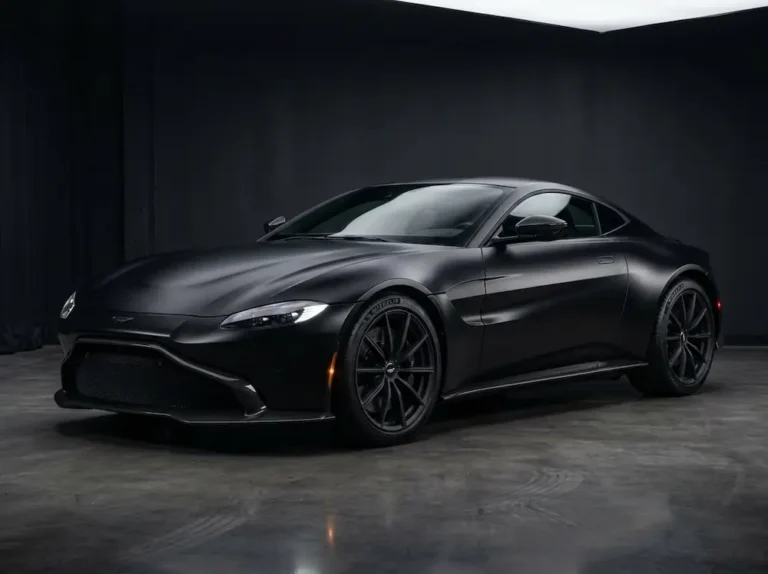
Thinking about going matte black? You’re probably wondering if it’ll destroy your wallet — or if it’s actually worth it. This guide breaks down exactly how much to wrap a car in matte black, what drives the price up (or down), and what nobody tells you before you commit. Stick around, because the details at the end could save you thousands.
How Much Does It Cost to Wrap a Car Matte Black?
The short answer: a full professional matte black car wrap costs between $2,000 and $6,500 for most vehicles. Exotic cars and large commercial vehicles push that figure past $10,000.
That’s a wide range, right? The final price depends on your vehicle’s size, how complex its body panels are, which vinyl brand gets used, and where you live.
Here’s the key thing to understand: the vinyl itself isn’t the expensive part. Raw premium cast vinyl runs about $2.00 to $3.50 per square foot. For a standard sedan, that’s roughly $500 to $600 in materials. The rest of the bill? Skilled labor, surface prep, and the shop’s overhead.
Matte Black Wrap Cost by Vehicle Type
Your vehicle’s size and shape directly determine how much vinyl gets used and how many labor hours the job requires.
| Vehicle Type | Cost Range (USD) | Key Factors |
|---|---|---|
| Compact Cars & Small Sedans | $2,000 – $3,200 | Flattest panels, least material (~50–55 linear feet) |
| Mid-Size to Large Sedans | $2,500 – $4,000 | Larger hoods, wider rear quarters (~60–65 linear feet) |
| Coupes & Sports Cars | $2,500 – $4,500 | Deep air intakes, severe curves demand extra labor |
| Crossovers & Mid-Size SUVs | $3,000 – $4,800 | Taller doors, big liftgates (~70–75 linear feet) |
| Full-Size SUVs & Trucks | $3,500 – $6,800+ | Cab/bed separation, elevated rooflines (~75–80+ linear feet) |
| Luxury, Exotic & Fleet Vehicles | $5,000 – $10,000+ | Delicate trim, extreme aero, maximum liability |
Sports cars often cost more than larger vehicles despite being smaller. Why? Aggressive aerodynamics, deep vents, and compound curves eat up labor hours fast.
How Location Affects Your Matte Black Wrap Price
Where you get it done matters almost as much as what you’re wrapping. Labor rates and shop overhead vary dramatically across the US.
| City | Average Full Wrap Range (USD) |
|---|---|
| San Diego, CA | $1,400 – $6,500 |
| Los Angeles, CA | $500 – $5,100 |
| New York, NY | $2,600 – $3,100 |
| Chicago, IL | $2,100 – $5,000 |
| Phoenix, AZ | $1,600 – $5,100 |
| Dallas, TX | $900 – $3,600 |
| Houston, TX | $900 – $3,100 |
New York’s high floor price reflects brutal real estate costs and strong demand for flawless finishes. Texas markets benefit from lower overhead and fierce competition, so you’ll find more accessible pricing options in cities like Dallas and Houston.
The Three Installation Tiers: Economy, Standard, and Luxury
Not all wraps are created equal. The industry runs on three service tiers, and each one produces very different results.
Economy Tier ($2,000 – $3,500)
Installers stretch vinyl around existing door handles, trim, and emblems without removing them. The edges get tucked just past the visible panel lines. It’s fast and budget-friendly, but you might see the original paint color peeking through at odd angles or inside gaps.
Standard Premium Tier ($3,000 – $5,500)
This is the industry benchmark. Technicians remove door handles, side mirrors, headlights, taillights, and exterior badges before laying the film. The vinyl wraps deep into panel gaps, completely hiding the original paint. The edges stay protected from high-pressure washing and wind.
Luxury Tier ($6,000 – $10,000+)
Full teardowns. Bumpers come off, aero kits get pulled, sometimes interior door panels too. Hundreds of labor hours go into achieving perfection on even the most aggressive body panels. This tier is reserved for exotics, show builds, and people who simply won’t tolerate imperfection.
The Door Jamb Detail Most People Forget
Here’s a cost that catches almost everyone off guard. Open the door on a wrapped car, and the inner frames, hinges, and sills are fully visible. If your car was originally white or red and you’ve wrapped it matte black, that bright frame creates a jarring contrast.
Standard wrap quotes don’t include the door jambs. Wrapping them means navigating hinges, latches, rubber seals, and tight plastic molding — all of which requires painstaking hand work.
Expect to add $500 to $1,500 for door jamb coverage. That’s why vehicles with black factory paint are the most economical candidates for a matte wrap — the factory jambs already match, so you skip that cost entirely.
Partial Matte Black Wraps: Great Value, Big Impact
You don’t have to wrap the whole car to get the matte black look. Accent wraps are popular precisely because they deliver maximum visual punch for minimal spend.
| Partial Wrap Component | Cost Range (USD) |
|---|---|
| Hood Wrap | $200 – $600 |
| Roof Wrap | $250 – $700 |
| Upper-Half Two-Tone Wrap | $500 – $1,200 |
| Mirrors & Chrome Deletes | $100 – $300 |
Many shops bundle hood and roof wraps together as a package, which often comes in around $500 to $900. That two-tone look — black roof and hood over the factory color — is one of the most cost-effective ways to completely transform how a car looks.
DIY Matte Black Wrap: Can You Save Money?
Technically, yes. A full vinyl roll for a sedan runs $350 to $900, plus $100 to $300 for tools like a heat gun, squeegees, knifeless tape, and isopropyl alcohol. Total DIY spend lands around $500 to $1,500.
But here’s the honest truth: DIY wrapping is genuinely hard. The main risks include:
- Overstretching the vinyl around corners, thinning the adhesive and causing it to peel after sun exposure
- Trapped air bubbles and hard wrinkles from improper squeegee technique
- Knife scores on your paint — the most common and most expensive DIY mistake
Cutting directly on the vehicle requires surgical precision. Pressing too hard leaves permanent gouges in your clear coat. Most manufacturers won’t honor their warranty on DIY installs either. Unless you’ve done it before, the savings usually don’t survive contact with reality.
Matte Black vs. Satin Black: Which One Should You Pick?
These two finishes get confused constantly. They look different, behave differently, and demand very different upkeep.
True Matte Black absorbs maximum light. Its microscopic porous surface scatters reflections in all directions, creating that flat, aggressive, stealthy silhouette. The trade-off? A single fingerprint shows immediately. Water spots stand out. Any contaminant that fills the surface texture creates a shiny patch. It’s the most demanding finish to maintain.
Satin Black sits between matte and gloss. It has a soft controlled sheen that actually highlights body lines and curves dynamically as light changes. It conceals fingerprints and dust far more forgivingly. For a daily driver, most professional installers recommend satin black — you get the dark, aggressive look with significantly less anxiety over every parking lot touch.
Which Vinyl Brand Is Worth the Money?
Premium cast vinyl is the only material worth using for a long-term matte black wrap. Cheap calendered vinyl shrinks and peels within two to three years. Here’s how the top brands stack up:
| Brand | Thickness | Best For | Lifespan |
|---|---|---|---|
| 3M 2080 Series | 3.5 mil | Complex aero, deep recesses, aggressive curves | 7+ years |
| Avery Dennison SW900 | 3.2 mil | Large flat panels, high-volume installs | 5–7 years |
| TeckWrap | Calendered-hybrid | Short-term DIY projects | 3–5 years |
| KPMF | Premium | Metallic and pearlescent finishes | 5–7 years |
| VinylFrog | Budget | Temporary changes, limited budget | 2–4 years |
3M’s Comply and Controltac technologies handle air bubbles and precise repositioning exceptionally well. Avery’s Easy Apply RS system uses glass beads to let large panels glide during positioning — making it the favorite for efficiency-focused installers.
How to Maintain a Matte Black Wrap
This is where most owners get caught off guard. Matte wraps demand a completely different maintenance approach than standard paint.
Banned completely:
- Automated car washes with friction brushes — they scratch the film and peel seams
- Touchless automated washes — harsh chemicals dry out and degrade the vinyl
- Carnauba wax, polishes, or abrasive compounds — they fill the matte texture and create permanent shiny patches
- Circular scrubbing motions — they cause micro-swirls that ruin the flat effect
What you must do instead:
- Use the two-bucket hand wash method — one bucket of matte-specific soap, one of rinse water
- Wash only with straight linear strokes — up/down or side/side, never circular
- Use a matte-specific shampoo with zero wax or gloss enhancers
- Dry immediately using forced air or gentle patting — never rub
- Spot-treat bird droppings, sap, and fuel spills immediately with a 50/50 isopropyl alcohol and water solution
- Apply only synthetic protectants formulated specifically for matte vinyl
Bird droppings are especially dangerous — they’re acidic and will permanently etch the vinyl if left sitting. Deal with them the moment you spot them.
How Long Does a Matte Black Wrap Last?
With premium cast vinyl and proper care, you’re looking at five to seven years. But that’s under reasonable conditions.
In high-UV climates — Arizona, Florida, Texas — horizontal panels like the hood and roof can begin failing in two to three years if the car lives outside. Vertical side panels typically survive the full lifespan since they receive far less direct radiation.
The fix? Park in a garage or covered spot whenever possible. It’s the single biggest factor in wrap longevity.
How Much Does Wrap Removal Cost?
Removal within the intended lifespan costs $500 to $1,500 for professional labor. The tech uses a heat gun to pull the film off in clean sheets, leaving the factory paint untouched.
Wait too long, and the film bakes onto the surface, becoming brittle and flaking into tiny shards. At that point, removal costs can escalate past $2,500, requires industrial chemical solvents, and risks permanent paint damage. Don’t leave a wrap on past its lifespan. It’s not worth it.
Does a Matte Black Wrap Protect the Original Paint?
Yes — when the original paint is in good shape. The vinyl acts as a sacrificial barrier against UV rays, rock chips, road salts, and minor scratches, essentially freezing the factory paint in its current condition.
The critical caveat: the wrap must go onto healthy, fully cured paint. If the paint is already peeling, rusting, or poorly applied, the vinyl adhesive will bond to the failing layer. When removed, it takes that compromised paint with it. Inspect the paint thoroughly before committing to a wrap.
Legal Requirements: DMV and Insurance
Wrapping your car matte black isn’t purely an aesthetic decision — it carries legal obligations in many states.
State DMV regulations vary widely:
- Indiana: As of January 1, 2026, you must update your registration within 30 days of any full wrap or color change. Non-compliance escalates to a Class C misdemeanor if the vehicle is involved in an incident.
- Texas & Missouri: Reporting required within 30 days for changes deemed permanent.
- New York: Mismatched registration colors can result in license points during traffic stops.
- California: No explicit statute covers passenger vehicles specifically, despite widespread misinformation. However, carrying your installation invoice in the glovebox is strongly advised for any traffic stop.
Small accents like a matte black roof or racing stripes that don’t change the dominant color generally don’t trigger reporting requirements anywhere.
Insurance is non-negotiable. Standard policies only cover the vehicle as it left the factory. If a wrapped car gets hit, the insurer legally owes you the factory paint repair — not the cost of new vinyl. To protect your investment, contact your provider and add a Custom Parts and Equipment (CPE) endorsement to your policy. You’ll need to submit the installation invoice, the vinyl brand details, and photos of the completed vehicle.
Ignoring this step risks full claim denial, policy cancellation, and serious complications when selling the car.
FAQ: How Much to Wrap a Car in Matte Black
Is wrapping a car in matte black cheaper than a custom paint job?
Yes, significantly. A professional matte black wrap runs $2,000 to $6,000, while a high-quality permanent matte paint job typically starts at $6,000 and climbs well past $10,000 for show-quality results. The wrap is also reversible and protects the factory paint, helping preserve resale value.
How much does it cost to wrap just the hood or roof in matte black?
A hood wrap runs $200 to $600. A roof wrap costs $250 to $700. Bundle both and most shops charge $500 to $900. Mirror caps and chrome deletes add another $100 to $300. Partial wraps are the most cost-efficient way to get the matte black aesthetic.
Can I take a matte black wrapped car through an automated car wash?
No. Friction car washes scratch the vinyl and peel the edges. Even touchless washes use harsh chemicals and high-pressure jets that degrade the film and force water under the seams. Hand washing only.
What happens if I apply standard car wax to a matte black wrap?
It permanently ruins the finish. Wax fills in the microscopic texture that creates the matte effect, leaving behind an uneven, greasy, shiny patch. Use only synthetic protectants specifically formulated for matte vinyl.
Does a vinyl wrap damage the original factory paint?
Not if the paint is healthy. A quality wrap actually protects the paint beneath it. However, wrapping over peeling, rusting, or poorly cured paint means the adhesive bonds to the failing layer — and pulls it clean off during removal.
Do I legally have to notify my DMV and insurance company?
In many states, yes. Indiana mandates a 30-day registration update by law. Texas and Missouri require reporting for permanent color changes. You must notify your insurer and add a CPE endorsement regardless of your state — otherwise, the wrap isn’t covered in a collision.
How long does a matte black wrap last, and what does removal cost?
Premium cast vinyl lasts five to seven years with proper care. In extreme sun climates, horizontal panels may degrade faster. Timely removal costs $500 to $1,500. A neglected, over-baked wrap can push removal costs past $2,500 and risks serious paint damage.


