Searching for how to change a VIN number on a car? You’re probably dealing with a damaged plate, a theft recovery, or a rebuilt vehicle — and you need answers fast. Here’s the truth: you can’t just swap a VIN yourself. But there is a legal path forward. Read to the end and you’ll know exactly what to do.
First, Let’s Clear Something Up
You can’t privately change a VIN number on a car. Full stop.
Under 18 U.S.C. Section 511, knowingly tampering with, removing, or altering a vehicle identification number is a federal crime. Penalties include up to five years in prison and heavy fines.
But here’s the thing — the law does allow for legal VIN replacement through official state channels. That’s the process we’re covering today.
What Is a VIN and Why Can’t You Touch It?
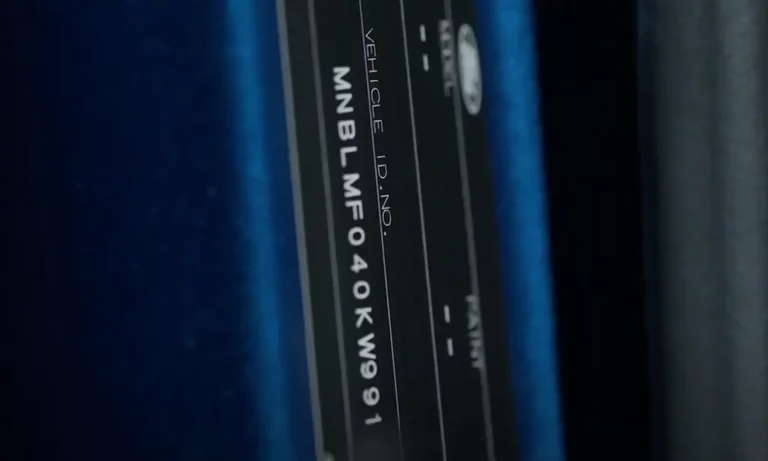
The VIN is your car’s permanent fingerprint. Since 1981, the NHTSA has required all vehicles sold in the U.S. to carry a standardized 17-character alphanumeric code.
That code encodes:
- The manufacturer and country of origin
- Engine type and body style
- Safety feature configuration
- A check digit to verify authenticity
- The model year, assembly plant, and production sequence
Law enforcement, insurance companies, and DMV offices all use this number to verify ownership, track history, and flag stolen vehicles. Mess with it privately, and you’re committing fraud — even if your intentions are good.
When Can You Legally Change a VIN Number on a Car?
The law recognizes that legitimate situations can destroy or compromise a factory VIN. In those cases, your state’s DMV can issue a state-assigned replacement VIN. This is the only legal way to change a VIN number on a car.
Here are the four main triggers:
1. Theft Recovery and VIN Swapping
Auto theft rings often strip the dashboard tag and replace it with one from a legally wrecked car. This is called VIN swapping or vehicle cloning. Once police recover the stolen vehicle and confirm its true identity using hidden stamps, the state issues a replacement VIN to restore its legal status.
2. Collision, Fire, or Environmental Damage
Severe crashes can destroy the dashboard assembly where the primary VIN plate lives. Intense fires melt the aluminum tag entirely. Heavy rust on older frame-body vehicles can eat through the steel where the VIN is stamped. In these cases, the state steps in to issue a replacement.
3. Gray Market Imports
Japanese Domestic Market vehicles use a 10-digit chassis number — not the U.S.-standard 17-character format required under 49 CFR Part 565. To legally register these cars in the U.S., a registered importer must federalize the vehicle through crash and emissions testing. After that, the DOT assigns a compliant 17-character VIN.
4. Custom Builds, Kit Cars, and Assembled Vehicles
Vehicles built from scratch or assembled from multiple donor cars don’t have a single factory VIN. The state assigns one to officially recognize the vehicle for registration and road use.
The Legal Loopholes: Who Can Remove a VIN Without Getting Arrested?
Federal law carves out narrow exemptions for specific businesses — but only under strict conditions.
| Exempt Entity | When It’s Legal | Key Condition |
|---|---|---|
| Scrap processors | Crushing or recycling a vehicle | Must comply with state disposal laws and surrender the title |
| Repair facilities | Structural repairs requiring component removal | Removal must be necessary for the repair itself |
| State-authorized restorers | Rebuilding classic vehicles | Must follow state administrative law exactly |
The catch? Even repair shops must leave original markings intact on donor parts. They can’t routinely obliterate factory stamps to avoid identifier mismatches on invoices. Law enforcement uses those stamps to trace stolen components.
Where Are VINs Actually Hidden on Your Car?
Your car doesn’t just have one VIN — it has several. Manufacturers stamp hidden “confidential VINs” (CVINs) in secret locations throughout the vehicle. These became standard practice starting with the 1968 model year.
State auto theft investigators use these hidden markers to verify your car’s true identity before issuing a replacement VIN. The exact locations are kept secret — shared only with the National Insurance Crime Bureau and authorized law enforcement.
| Hidden VIN Location | How It’s Used |
|---|---|
| Internal frame rails | Stamped inside boxed sections; survives fires that melt the dashboard tag |
| Engine and transmission casings | Confirms the powertrain is factory-original (“numbers matching”) |
| Firewall and floorboards | Hidden under insulation and carpet; checked with borescopes and mirrors |
If a fire melts your dashboard tag into slag, the frame rail stamps can still survive. That’s how investigators rebuild a vehicle’s identity from scratch.
How to Legally Get a Replacement VIN: Step by Step
Every state handles this slightly differently, but the process follows the same framework nationwide.
Step 1: Gather Your Documents
You’ll need:
- Current title or notarized bill of sale
- Government-issued photo ID
- Police reports (if theft-related)
- Insurance documents or total loss letters
- Repair receipts listing donor parts by their original factory VINs
No title? You’ll likely need a bonded title first (more on that below).
Step 2: Pass a Law Enforcement Inspection
This isn’t a routine mechanic’s check. A specialized auto theft investigator or state trooper physically examines your vehicle. They:
- Confirm the original VIN plate is destroyed or illegible
- Locate and decode the hidden confidential stamps
- Cross-reference their findings against your documents
- Sign a sworn affidavit confirming your car’s true identity
If the hidden stamps match a different stolen vehicle, the car gets impounded immediately.
Step 3: Submit Your Application
The complete, certified file goes to your state’s DMV headquarters or a specialized regional office. Staff checks national databases for active theft alerts, liens, or conflicting title claims in other states.
Here’s how requirements vary by state:
| State | Required Form | Inspection Authority |
|---|---|---|
| Texas | VTR-68-A and VTR-68-N | Auto Theft Task Force |
| California | REG 124 | California Highway Patrol |
| Ohio | BMV 3713 | State Highway Patrol |
| Utah | TC-162 | Motor Vehicle Division |
| Massachusetts | Replacement VIN Application | State Police / RMV |
Step 4: Get the Plate Attached — Officially
The state provides a tamper-evident replacement plate. The American Association of Motor Vehicle Administrators recommends attaching it to the lower B-pillar rather than the dashboard. In many states, the officer physically rivets it on with non-removable rosette hardware.
What About Electronic VINs in the Computer?
Modern vehicles store the VIN digitally in the Powertrain Control Module (PCM). When you swap in a used PCM from a salvage yard, it broadcasts the donor vehicle’s VIN — not yours.
This creates two real problems:
- Inspection failures — Emissions testing computers flag the mismatch between the digital VIN and your dashboard tag. This check exists specifically to catch fraud.
- Security lockouts — Advanced vehicles interpret the module mismatch as a theft attempt and prevent the engine from starting.
Installing a used module for legitimate repair is legal under the federal repair exemption. But you must keep the purchase receipt showing the donor module came from a legally scrapped vehicle. If your state flags the mismatch during inspection, that receipt is your proof.
Actively hacking or re-soldering chips to forge a digital VIN? That’s federal tampering territory.
What If You Have No Title Either?
No VIN and no title is a tough spot, but not a dead end. States use the bonded title process to bridge the gap.
Here’s how a surety bond works:
- You buy a certificate of title surety bond from a licensed underwriter
- The bond amount is typically 1.5 to 2 times the vehicle’s appraised value
- The state issues a title marked “Bonded” — a public warning that the ownership history has a gap
- If no prior owner files a claim within 3 to 5 years, you can apply for a clean, unbranded title
The “Bonded” brand disappears after the holding period. But the record of the state-assigned VIN stays on the vehicle’s history permanently.
How a State-Assigned VIN Affects Your Car’s Value
Getting a legal replacement VIN solves your registration problem. But it does create lasting financial consequences.
The replacement gets logged immediately in NMVTIS — the National Motor Vehicle Title Information System. Any buyer, insurer, or auction house can pull this history. You can’t wash it away by moving the car to another state.
For classic and collector cars, the impact is brutal. Buyers in that market treat an original, unmolested factory tag as proof of authenticity. A state-assigned replacement plate can drop the value by 25% or more compared to an identical car with its original stamp.
For custom builds, restomods, and hot rods, buyers care about performance — not factory provenance. The administrative VIN assignment is basically just a formality.
If you own a restored classic with a replaced VIN, consider an “Agreed Value” specialty insurance policy. That locks in a payout amount upfront instead of relying on depreciated market comps after a total loss.
FAQs
Can I export a car with a state-assigned VIN?
Yes, but expect serious scrutiny. U.S. Customs flags any vehicle with a non-standard VIN sequence. You’ll need the complete administrative history — the law enforcement inspection report, branded title, and assignment paperwork — to prove the replacement was legal. Without that documentation, Customs can impound the vehicle indefinitely.
Does window etching count as a legal substitute for a missing VIN plate?
No. Window etching is a great anti-theft deterrent, but it holds no legal weight as a primary identifier. State DMVs require the VIN to be permanently affixed to a structural component using tamper-evident fasteners. A missing dashboard plate means you need to go through the official state replacement process — etching doesn’t fix that.
How does insurance calculate a payout if my car has a state-assigned VIN?
Standard policies use actual cash value, and the secondary market prices branded-title cars lower than clean-title equivalents. Your payout will likely reflect that depreciation. If you’re restoring a classic, ask your insurer about an “Agreed Value” policy — you and the carrier agree on the payout amount upfront, which sidesteps standard depreciation entirely.
What happens if I unknowingly buy a car with an illegally swapped VIN?
The vehicle is contraband and subject to immediate seizure — even if you had no idea. You lose the car and your money. Your best legal options are civil litigation against the seller (if you can find them) or negotiating to buy the recovered asset from the insurance carrier at salvage value, then running it through the state VIN assignment process to make it road-legal again.