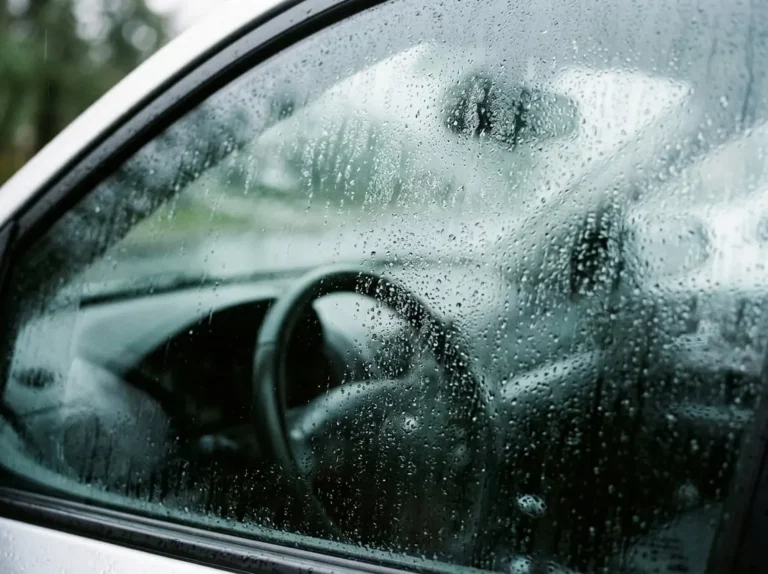
Foggy windows are annoying — and surprisingly dangerous. This guide covers exactly how to get rid of condensation inside car windows fast, what’s causing it, and how to stop it from coming back. Stick around, because a few of these fixes might surprise you.
Why Do Your Windows Fog Up Inside?
Condensation forms when warm, humid air hits a cold surface. Inside your car, that surface is your glass.
Every time you breathe, you exhale warm, moisture-heavy air. In winter, your cold windshield chills that air instantly, causing water vapor to turn into tiny liquid droplets — the fog you see.
Here’s the kicker: a dirty windshield fogs up faster than a clean one. Dust, fingerprints, and off-gassing from plastic trim all create microscopic anchor points where moisture clings. More passengers means more breath, which means more fog.
In summer, the situation flips. Your AC cools the glass, and humid outside air condenses on the exterior surface instead. Two different problems, two different fixes.
How to Get Rid of Condensation Inside Car Windows Fast
When your windshield fogs up mid-drive, here’s the fastest fix that actually works.
Don’t wipe it with your hand. Skin oil smears across the glass, makes future fogging worse, and creates dangerous glare from headlights at night. Keep a clean microfiber cloth in your glove box for emergencies.
Follow these steps instead:
- Hit the front defroster — this redirects airflow directly onto the windshield
- Turn on the AC — even in winter, your AC acts as a dehumidifier, pulling moisture out of the air before it reaches the glass
- Crank the heat to max — hot air absorbs moisture faster
- Blast the fan on high — more airflow means faster clearing
- Turn off recirculation — recirculating damp air keeps your windows foggy; pull in fresh outside air instead
- Activate rear defrost and heated mirrors — total visibility, not just the front
Cracking a window slightly can also speed things up by equalizing the humidity between inside and outside the cabin.
| Condition | Temperature | AC | Recirculation | Extra Step |
|---|---|---|---|---|
| Cold/Winter | Max heat | ON | OFF | Crack a window; activate rear defroster |
| Warm/Humid | Match outside temp | Reduce or OFF | OFF | Use wipers on exterior fog |
Why Does My Car Keep Fogging Up? (It Might Be a Bigger Problem)
If you’re fighting fog every single morning, something’s introducing extra moisture into your car. Here are the most common culprits.
A Leaking Heater Core
Your heater core is a small radiator sitting inside your dashboard. It circulates hot engine coolant to heat the cabin. When it leaks, it sprays vaporized coolant straight into your ventilation system.
Warning signs:
- Sweet, syrupy smell when the heat is on
- Greasy, oily film on the inside of your windshield that smears badly
- Wet, slimy passenger-side floor carpet (often green, orange, or pink-tinged fluid)
- Engine running hotter than normal
This isn’t a fix-it-later situation. A leaking heater core slowly drains your engine coolant, and breathing vaporized coolant in a closed cabin is genuinely harmful. Get it looked at immediately.
A Blocked AC Evaporator Drain
Your AC removes moisture from cabin air by condensing it onto cold coils, then draining it out through a rubber tube under the car. That small puddle of clear water under a parked car on a hot day? Totally normal.
When that drain tube clogs with dirt and debris, water backs up inside the HVAC housing. The blower motor then sprays that standing water into the cabin as humid mist, soaking the front floor mats and maxing out the humidity inside. Clearing the blockage usually means pushing a flexible wire or compressed air through the drain tube from underneath the car.
A Clogged Cabin Air Filter
Most cars built after 2000 have a cabin air filter — usually behind the glove box or under the windshield cowl. When it’s clogged with pollen, dust, and road grime, it starves your defrost system of airflow.
No airflow means no defogging. A musty smell from the vents is your first clue. Replace it every 10,000–15,000 miles or annually — it’s usually a 10-minute job and costs under $25.
Is Water Getting Into Your Car?
Persistent condensation combined with damp carpet or a mildew smell means water is physically entering your car. Here’s where to look.
Blocked Sunroof Drains
Your sunroof isn’t fully waterproof — it’s designed to catch water in a gutter channel and drain it through tubes running down the roof pillars. Leaves, pine needles, and debris block these drains constantly.
When blocked, that gutter overflows behind the headliner, soaks the pillars, and floods your footwells.
To test: Open the sunroof and pour a small cup of water into the corner of the gutter. It should drain within seconds. If it doesn’t, you’ve found your problem.
To clear it safely: Use a flexible nylon string trimmer line fed gently down the drain hole. Never use a rigid metal wire or coat hanger — you’ll puncture the rubber tube hidden inside the roof lining, and reattaching it means removing the entire headliner. Use short bursts of low-pressure compressed air if needed, but avoid high-pressure shop air for the same reason.
Blocked Cowl Drains
The cowl is the plastic-covered trough at the base of your windshield that catches rain runoff and houses the wiper motor. It has drain holes at the bottom, but leaves and debris pack in there constantly.
When the cowl fills up like a bathtub, water spills over the firewall directly into the cabin, flooding the HVAC housing and passenger footwell. Remove the wiper arms and cowl cover periodically and flush it out with a hose.
Failing Door and Windshield Seals
Rubber weatherstripping dries out, cracks, and shrinks over time from UV exposure and temperature swings. Run your hand along door seals — hard, brittle sections mean water’s getting in.
Windshield seal failures are sneakier. Microscopic pinholes in the urethane adhesive around the glass allow water to creep behind the dashboard silently, shorting out electronics before pooling on the floor. If you’ve had an aftermarket windshield replaced recently and suddenly have wet carpets, that’s where to start.
How to Dry Out a Wet Car Interior
If water got into your car, you need to act within 24–48 hours. After that, mold and mildew take hold in the carpet underlayment — and you’ll be fighting foggy windows and a foul smell indefinitely.
What you need:
- A wet-dry shop vacuum (never use a regular vacuum on liquid — serious electrocution risk)
- Box fans or a portable dehumidifier
- Baking soda
The process:
- Use the shop vac with the nozzle pressed firmly into the carpet, dragging it in slow overlapping rows. Empty the tank often.
- Pull the plastic door sill trim and lift the carpet edges to expose the soaked underlayment beneath.
- If the padding is completely saturated and won’t extract, cut it out and replace it — it won’t dry on its own and will grow mold.
- Position fans inside the car to blow air across all surfaces, with doors open for cross-ventilation.
- In humid climates, park in a garage with a portable dehumidifier running inside the car, windows closed — it pulls moisture out of the upholstery far faster than fans alone.
- Once carpet is damp (not soaked), sprinkle baking soda generously, brush it deep into the fibers, leave it 12–24 hours, and vacuum thoroughly.
Preventative Tips to Stop Condensation Before It Starts
Remove wet stuff from your car. Wet umbrellas, gym bags, snow-soaked boots, and damp floor mats continuously release moisture overnight, maxing out the cabin humidity by morning.
Use a silica gel moisture absorber. Pour crystal cat litter (silica-based only — not clay) into a cotton sock, tie it off, and tuck it under the seat or on the dashboard. It pulls ambient humidity out of the air 24/7, intercepting moisture before it hits the glass. Cheap and surprisingly effective.
Keep your windows clean. A properly cleaned interior windshield fogs up slower because there are fewer nucleation sites for water droplets to cling to. Dirty glass fogs faster — full stop.
Anti-Fog Treatments That Actually Work
Anti-fog coatings work by applying a hydrophilic film to the glass. Instead of water beading into opaque droplets, moisture sheets out flat and stays transparent.
Application steps for commercial anti-fog spray:
- Clean and fully dry the glass first — no coating sticks to a contaminated surface
- Apply product to a dry paper towel (not microfiber — it absorbs the product rather than transferring it)
- Wipe in an overlapping crosshatch pattern for even coverage
- Let it haze for a few minutes, then buff clear with a dry microfiber towel
- Stubborn haze? A light mist of water helps buffing
Quick DIY fix: Smear a small amount of shaving cream on the glass and buff it completely dry. The surfactants prevent water from beading. It’s short-term, but it works in a pinch.
Avoid dish soap overkill. A single drop buffed in works fine. Too much leaves an oily, iridescent glare that’s blinding at night — worse than the fog itself.
If You Have Window Tint, Read This First
Aftermarket tint film lives on the inside of your glass. Any cleaner containing ammonia will permanently destroy the adhesive, causing bubbling, peeling, and that familiar purple discoloration.
Only use:
- Ammonia-free automotive glass cleaner
- A drop of mild dish soap in distilled water
Never use:
- Vinegar solutions
- Razor blades or abrasive scrubbers
- Rough paper towels
Microfiber towels only on tinted glass. And if tint was recently installed, don’t touch it, clean it, or roll down the window for several days while the adhesive fully cures.
Is It Actually Illegal to Drive with Foggy Windows?
Yes — and it’s more serious than most people realize.
California Vehicle Code Section 26708 explicitly bans driving with anything obstructing the driver’s clear view through the windshield, including fog, snow, and ice. Michigan’s Vehicle Code Section 257.709 covers the same ground broadly.
In Virginia, Section 46.2-855 classifies driving with an obstructed view as reckless driving — a misdemeanor criminal offense carrying fines, license demerit points, potential suspension, and a permanent criminal record entry. Not a traffic ticket. A criminal charge.
Beyond fines, causing an accident with fogged windows puts you fully at fault for negligence. The simple rule: don’t move the car until every window is completely clear.
If visibility drops while you’re already driving, the National Weather Service recommends activating your hazard lights immediately, slowing down significantly, and pulling safely off the road. Once stopped on a shoulder, turn off your headlights but keep hazards on — other drivers instinctively follow brake lights and taillights in low visibility, which causes high-speed rear-end collisions with stationary vehicles.