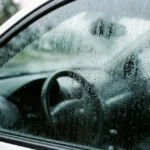
Foggy windows outside your car aren’t just annoying — they’re a real safety hazard. The good news? There’s a clear fix. This guide walks you through exactly why it happens, how to clear it fast, and how to stop it from coming back. Stick around — the prevention tips alone are worth it.
Why You’re Getting Condensation on the Outside of Your Car Windows
Here’s what’s actually happening: your AC is chilling the glass from inside. Then the hot, humid air outside hits that cold surface and — boom — condensation forms on the exterior of your windshield.
It’s pure physics. Warm air holds moisture. When that warm air touches a surface that’s colder than its dew point, the moisture drops out of the air and sticks to the glass.
This is most common during:
- Hot, humid summer mornings
- After overnight parking in humid climates
- Any time your AC has been blasting
It’s the opposite of winter fogging. In winter, the fog is inside. In summer, it’s outside. That difference matters because the fix is different too.
The 3 Fastest Ways to Clear Outside Window Condensation Right Now
1. Hit Your Windshield Wipers First
Your wipers physically shear the water off the glass in seconds. It’s the fastest immediate fix for exterior condensation. Add a squirt of washer fluid while you’re at it — it helps strip away dirt that’s acting as a landing pad for more moisture.
The catch? The fog comes back almost instantly if you don’t address the root cause. Wipers buy you time. That’s it.
2. Turn Your AC Down (or Off)
This one surprises people, but it makes complete sense. Your AC is what’s over-cooling the glass in the first place. Reducing or disengaging the AC compressor lets the glass warm up naturally and match the outdoor temperature. Once the glass surface isn’t colder than the dew point, condensation stops forming.
3. Blast Warm Air Through Your Defroster
Yes, blasting heat in summer feels wrong. Do it anyway. Selecting your front defroster and running warm air is the single fastest way to raise the glass temperature above the dew point and permanently break the condensation cycle.
Combine all three steps and you’ll have a clear windshield in under two minutes.
Use Your Climate Controls Smarter
Your car’s climate system is your biggest weapon against condensation. Here’s how to configure it correctly for each situation:
| Condensation Type | Primary Cause | Best Climate Setting |
|---|---|---|
| Exterior fog (summer/humid) | Cold glass meets hot, humid outside air | Wipers ON · AC OFF or reduced · Heat/defrost ON · Recirculation OFF |
| Interior fog (winter/cold) | Warm cabin air hits freezing glass | AC ON · Heat/defrost ON · Recirculation OFF |
| Interior fog (rainy/mild) | Wet passengers, wet gear inside car | AC ON · Moderate heat · Recirculation OFF · Windows cracked |
The Recirculation Button Actually Matters
That little button with the car-and-arrow icon on it? It’s doing more than you think.
When you’re fighting exterior condensation in summer, turn recirculation off. This pulls warm outside air into the cabin, accelerating the temperature equalization between the cabin and the glass. It helps the glass warm up faster.
If the humidity outside is extreme and your cabin keeps getting swampy, flip recirculation on. It forces the same trapped cabin air over the cold AC evaporator repeatedly, wringing the moisture out and creating a drier environment you can actually control.
Cracking the Windows Works Too
No working AC? Opening your windows slightly floods the cabin with ambient air, rapidly equalizing the temperature and humidity inside with the air outside. It’s low-tech, but it works fast.
Clean Your Windshield Properly — It Makes a Huge Difference
A dirty windshield fogs up faster. Full stop. Road grime, pollen, and oily film all create microscopic nucleation sites where water molecules love to cling. A grimy windshield attracts condensation far more aggressively than a clean one.
What’s Making Your Glass Dirty
Outside: traffic grime, insect residue, road salt, bird droppings.
Inside: a filmy substance called windshield haze — that greasy, opaque layer caused by plastics and vinyls off-gassing in a hot parked car. Add fingerprints, breath moisture, and smoke, and you’ve got a condensation magnet.
How to Clean It Correctly
- Always use ammonia-free automotive glass cleaner. Ammonia degrades window tints and leaves a film that fights against anti-fog treatments.
- Spray onto a microfiber cloth, not the glass. Prevents overspray landing on dashboard plastics (which accelerates off-gassing).
- Wipe in overlapping vertical and horizontal strokes. Circular motions leave swirl marks that catch headlight glare.
- For stubborn grime or hard water spots, use a detailing clay bar or automotive glass polish to lift embedded contaminants without scratching.
- Strip heavy grease first with isopropyl alcohol before your final wipe-down.
Apply the Right Chemical Treatment to the Right Side
Once your glass is clean, you can dramatically reduce how often condensation forms by applying an engineered glass treatment. There are two types, and using the wrong one on the wrong side creates a dangerous mess.
| Treatment Type | How It Works | Use It On | Examples |
|---|---|---|---|
| Hydrophobic (water repellent) | Forces water into tight beads that roll off at speed | Exterior glass only | Rain-X Original, Aquapel, ceramic coatings |
| Hydrophilic (anti-fog) | Prevents droplets forming — water sheets flat and transparent | Interior glass only | Rain-X Anti-Fog, Sheen Genie, Ori-Fog |
Hydrophobic Treatments for the Outside
These treatments alter the surface energy of your windshield so water can’t grip the glass. Instead, it beads up and rolls off as you drive.
Silicone-based products like Rain-X are easy to apply and provide solid immediate results. Spray on, let it haze, buff it off. The downside is they wear off in a few weeks with wiper use and harsh weather.
Fluorinated compound treatments like Aquapel bond directly to the silicone dioxide in your glass at a molecular level. They’re more demanding to apply — the glass must be fully decontaminated first, and you need to buff the product off quickly before it flashes. Get it wrong and you’ll have a permanent hazy film. Get it right and it lasts up to six months.
One important warning: don’t use silicone products on your interior glass. Without wind to blow the beads away, thousands of tiny stationary water drops will sit on your windshield and scatter light in every direction. Your visibility will be worse than with no treatment at all.
Hydrophilic Treatments for the Inside
Anti-fog coatings work by breaking down water’s surface tension. Instead of forming droplets, moisture spreads into a flat, invisible film. No beads, no scatter, no fog.
Products like Rain-X Anti-Fog and Sheen Genie apply easily — wipe on with a cloth, let dry, buff lightly. Reapply every few weeks as the coating gradually wears away.
DIY Hacks: What Actually Works
| DIY Method | Does It Work? | The Honest Reality |
|---|---|---|
| Shaving cream | Sort of | Decent short-term anti-fog barrier, but leaves a slight film that causes glare |
| Dish soap / bar soap | Barely | Leaves thick soapy residue that attracts dirt and kills night visibility |
| Raw potato | Not really | Starchy coating is uneven, streaky, and attracts insects |
| Vinegar and water | Great for cleaning | Removes haze brilliantly, but does nothing to prevent future fogging |
The honest takeaway: vinegar is excellent prep work before applying a real treatment. Everything else is a stopgap at best.
Keep Your Side Mirrors Clear Too
Obscured mirrors create genuine blind spots. Here’s how to handle them:
Use Your Rear Defroster
Most cars link the rear defroster circuit directly to the side mirror heating elements. Hit the defroster button and both systems activate together. The heated wires raise the mirror surface temperature and evaporate condensation within minutes. Most vehicles have a built-in timer that cuts the circuit after 10–15 minutes to protect the elements.
The Warm Air Trick (For Unheated Mirrors)
No heated mirrors? Direct your outermost dashboard vents at the side windows near the A-pillars and set the climate to warm. Then crack the side window down 1–2 centimetres. Pressurized warm cabin air flows out directly at mirror level, raising its surface temperature and stripping away the damp boundary layer without you touching the glass.
Cut Interior Humidity to Stop the Problem at the Source
Your cabin’s moisture load directly affects how hard your climate system has to work. A wet floor mat or damp gym bag evaporates moisture all day long, overwhelming your AC’s ability to dehumidify.
Remove these moisture sources first:
- Wet floor mats, umbrellas, and damp clothing
- Check door and sunroof weatherstripping for leaks
- Inspect whether your AC evaporator drain tube is blocked (a clogged drain pools water under the dash)
Use Desiccants Overnight
Your climate system is off while the car’s parked. These passive options absorb moisture while you sleep:
- Silica gel packets — tuck under seats or on the dash. Cheap, effective, reusable.
- Automotive dehumidifier bags — often contain calcium chloride with a color-changing indicator. Microwave to recharge.
- Silica cat litter in a cotton sock — fill a clean athletic sock with crystal silica litter, tie it off, place it on the dashboard. Surprisingly effective and costs almost nothing. Just make sure it’s silica-based litter — clumping clay litter turns to mud in high humidity and makes a mess.
Replace Your Cabin Air Filter
This is one most drivers ignore. A clogged cabin air filter starves your defroster of airflow, making it almost useless against stubborn condensation. A damp, rotting filter also pumps extra moisture directly into your cabin. Replace it every 12–15 months, or more often if you drive on dusty roads or park near heavy vegetation.
One More Reason to Stay on Top of This
Modern cars rely on forward-facing cameras and sensors mounted behind the windshield to run ADAS features like automatic emergency braking and lane departure warning. When exterior condensation or glass haze blocks those sensors, the system disables itself — sometimes without warning. Dashboard warning lights come on, automated safety features drop out, and you’re driving without the backup you paid for.
Keeping your glass clean and treated isn’t just about visibility. It keeps your car’s safety systems working the way they’re supposed to.