
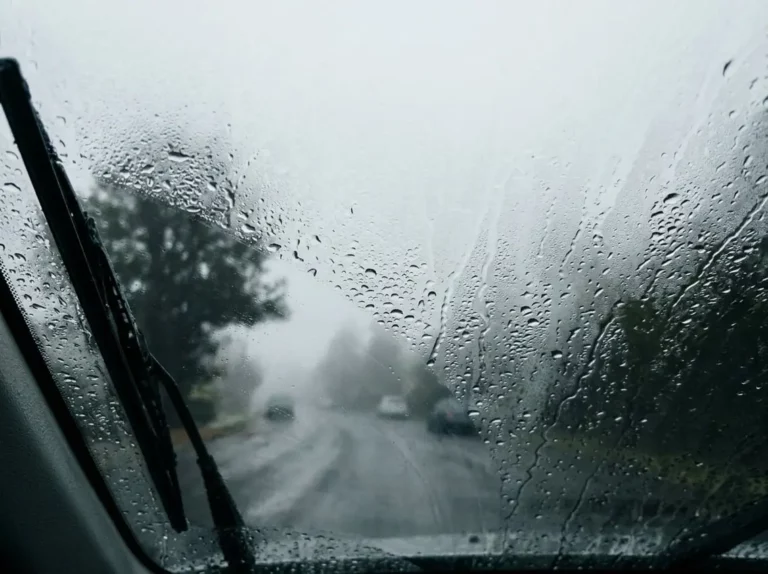
A foggy windshield is more than annoying — it’s a genuine safety hazard. The fix isn’t always obvious, and the wrong move makes it worse. This guide covers every proven method to clear your windshield fast, keep it clear, and stop fog from coming back. Stick around — the prevention tips at the end are genuinely game-changing.
Why Your Windshield Fogs Up in the First Place
Before you can fix it, you need to understand what’s actually happening.
Your windshield fogs because of a temperature clash. Warm, moist air hits a cold glass surface, cools down, and dumps its moisture as tiny water droplets. Those droplets scatter light, turning clear glass into a milky wall.
The thermodynamics are simple: air can only hold so much moisture. Push it past its limit — called the dew point — and that moisture lands on whatever cold surface is nearby. In winter, your windshield is usually the coldest thing in the car.
But here’s the twist: fog doesn’t always form on the inside.
Interior vs. Exterior Fog — Know the Difference
Getting this wrong wastes your time completely.
Interior fog forms in cold weather. Your warm, humid breath hits the cold glass from inside the cabin. Every passenger makes this worse — more people, more moisture, faster fog.
Exterior fog happens in hot, humid weather. You’ve been blasting the AC, the glass gets ice-cold, and then hot, humid outside air condenses on the exterior surface. The fix is completely different — and using the wrong method won’t work at all.
Quick test: Touch the glass. If it’s wet on the side your fingers touch, that’s where the fog is forming.
How to Get Rid of a Foggy Windshield Fast: The Right HVAC Setup
Most drivers configure their climate controls wrong. That’s why the fog takes forever to clear. Here’s the exact sequence that works.
Cold Weather (Interior Fog): The 4-Step Fix
This is the setup that clears interior fog fastest:
- Hit the front defroster button. It looks like a curved windshield with three upward arrows. This routes all airflow directly to the windshield vents.
- Crank the fan to maximum. High-velocity air physically pushes moisture off the glass.
- Turn the temperature to full heat. Hot air absorbs moisture far better than cold air. It evaporates the condensation right off the glass.
- Turn the AC on. Yes, in winter. The AC compressor strips humidity from the air before it gets heated and blown onto the glass. This is the step most people skip — and it’s the most important one.
- Turn recirculation OFF. The recirculation button (a car silhouette with a circular arrow inside) traps damp cabin air in a loop. Turn it off and pull in fresh, dry outside air instead.
Cracking a window slightly speeds this up even more. The humid air inside escapes faster.
Hot Weather (Exterior Fog): A Much Simpler Fix
Exterior fog clears with one swipe of your wipers. But if it keeps coming back, the temperature gap between your cold glass and the hot outside air is too extreme.
Dial back the AC slightly. Route cold air toward the floor or torso vents instead of the windshield. This lets the glass warm up and match the outside temperature — no more condensation forming on the exterior surface.
Got Automatic Climate Control? Press One Button
Modern vehicles from brands like Volvo, GMC, and Chevy have a Max Defrost button. Press it once and the car automatically engages every system simultaneously: max heat, max fan, AC on, recirculation off. Once the fog clears, press Auto to return to your normal settings.
HVAC Quick-Reference Table
| Condition | Fog Location | Temperature | AC | Recirculation | Key Action |
|---|---|---|---|---|---|
| Cold winter day | Interior | Max heat | ON | OFF | Max front defroster blower |
| Hot humid summer | Exterior | Moderate/warm | ON | OFF | Use windshield wipers |
| Warm rainy day | Interior | Moderate | ON | OFF | Front defroster blower |
The Dirty Secret Behind Stubborn Fog: Off-Gassing Film
Here’s something most drivers never learn: a dirty windshield fogs faster and worse than a clean one.
That greasy haze you see on the inside of your windshield? It’s not just dust. It’s a chemical film produced by your dashboard, seats, and interior plastics. When your car sits in the sun, the interior heats up like an oven. The volatile organic compounds and plasticizers baked into your dashboard literally vaporize. They float around the cabin and eventually settle — mostly on the windshield, which sits right above the heat-absorbing dash.
This film is oily, sticky, and hydrophobic. Moisture from your breath clings to it. Dust, pollen, and exhaust particles stick to it. Standard glass cleaner doesn’t remove it — it just smears it around, creating the blinding glare you get driving into sunlight or oncoming headlights.
Other culprits that make the film worse:
- Smoking or vaping inside the car
- Chemical air fresheners
- Household cleaners with ammonia or fabric softener residue
How to Actually Clean Your Windshield (The Right Way)
Standard glass cleaner and paper towels won’t cut it. You need the right tools and the right method.
What You Need
- Ammonia-free automotive glass cleaner — Ammonia destroys window tint and damages dashboard plastics. Don’t use household Windex.
- Waffle-weave microfiber towels — Terry cloth and paper towels shed lint fibers onto the glass, creating perfect nucleation sites for fog. Waffle-weave lifts oils without depositing anything behind.
- Isopropyl alcohol — For heavy film, this cuts through oily residue fast without leaving a residue of its own.
The Two-Towel Method
This is how detailing professionals do it — and it’s the only reliable way to get streak-free interior glass.
- Clean in the shade. Hot glass causes cleaner to evaporate before you can wipe it, leaving streaks.
- Spray the cleaner on the towel, not the glass. Spraying directly creates overspray on your dashboard and electronics.
- Sit in the passenger seat for better reach around the steering wheel.
- Wipe in horizontal, then vertical strokes (cross-hatch pattern). Avoid circles — they create visible swirl marks.
- Immediately switch to the dry second towel and buff aggressively. Don’t let it air-dry.
For the hard-to-reach lower corners, a window cleaning wand or squeegee helps.
For Severe Off-Gassing: The Melamine Foam Technique
If your windshield smears no matter what you do, standard cleaner won’t fix it. The film is too thick. Melamine foam — sold as Magic Eraser in the US — is a microscopic abrasive that physically shears the film off the glass.
Critical rules before you use it:
- Always wet the foam thoroughly first. Dry melamine foam on glass causes permanent scratches.
- Keep it away from window tint, gauge cluster plastic, and interior trim. It will destroy them instantly.
- Scrub lightly in sections. A white, milky residue will appear — that’s the film breaking down.
- Wipe away the residue immediately with a dry microfiber towel before it dries.
- Follow with a standard ammonia-free glass cleaner pass to restore perfect clarity.
Anti-Fog Treatments That Actually Work
Once your glass is clean, a surface treatment stops fog from clinging in the first place.
These treatments work by changing how moisture behaves on glass. Instead of forming light-scattering beads, water spreads into an invisible flat sheet. You still get moisture — you just can’t see it.
Commercial Anti-Fog Sprays
These are the most effective and longest-lasting option. They deposit an engineered polymer coating that lasts weeks to months. They’re also safe for window tint, unlike ammonia-based products. Apply to clean glass, buff clear, and you’re done.
The Baby Shampoo Method
This one comes straight from the scuba diving world, where mask defogging is a genuine safety issue. Baby shampoo contains mild surfactants that create a durable anti-fog barrier without the mess of shaving cream.
How to apply it: Mix one part baby shampoo with ten parts water. Lightly mist the solution onto clean glass. Wipe until clear. That’s it. Field testing shows it often outperforms shaving cream with far less residue and hours to days of effective protection.
The Shaving Cream Method
Shaving cream works — the glycerin and soap in the formula leave a surfactant layer on the glass. Smear a thin coat across the interior windshield, buff it completely dry with a clean cloth, and the glass is treated.
The downsides are real though: it’s messy, it can leave streaks that cause nighttime glare if not buffed perfectly, and it wears off within days.
What Doesn’t Work (And What’s Dangerous)
Some internet hacks are useless or actively harmful:
- Raw potato — The starch smears badly and introduces organic matter that can mold inside your car
- Hand sanitizer — Evaporates too quickly to leave a protective film
- Toothpaste — Contains micro-abrasives that scratch glass and destroy tint
- Mouthwash or bar soap — Leave sticky residues that distort vision
Anti-Fog Treatment Comparison
| Treatment | How It Works | Longevity | Downsides |
|---|---|---|---|
| Commercial spray | Engineered polymer coating | Weeks to months | Needs perfectly clean glass to bond |
| Baby shampoo | Mild surfactant barrier | Hours to days | Slight haze if over-applied |
| Shaving cream | Glycerin/soap surfactant | Hours to days | Messy; can cause nighttime glare |
| Raw potato | Starch barrier | Temporary | Leaves smears; mold risk |
| Chalkboard eraser | Physical removal only | Immediate | Doesn’t prevent future fog |
The Chalkboard Eraser Trick
Keep a felt chalkboard eraser in your glove box. It sounds weird, but it works better than a cloth or your hand.
When you wipe fog with your bare hand, you transfer skin oils onto the glass. Those oils guarantee the fog returns faster, in the exact shape of your handprint. A cloth just pushes moisture around. The absorbent felt of a chalkboard eraser lifts the moisture away cleanly without leaving oils or lint — and your visibility is restored in seconds.
It doesn’t prevent fog, but it’s the best fast-response tool you can have on hand.
Overnight Fog Prevention: The Cat Litter Hack
This one sounds strange, but the science behind it is solid.
Non-clumping, crystal-based cat litter is made almost entirely of silica gel — the same material in those little white packets packed with electronics to prevent moisture damage. Silica gel is a powerful passive desiccant. It pulls water vapor out of the air and traps it.
Here’s how to set it up:
- Get a clean cotton sock with no holes.
- Fill it halfway with crystal-based cat litter only. Don’t use clay clumping litter — it turns to mud. Don’t use dry rice — it attracts rodents and doesn’t actually absorb moisture chemically.
- Tie it off and wrap a second sock over the top.
- Place it on your dashboard or near the windshield when you park overnight.
The silica continuously draws moisture out of your cabin air all night, reducing the conditions needed for fog to form. When the silica becomes saturated, leave it in the sun or warm it gently in an oven to recharge it. It’s reusable indefinitely.
Vehicle Maintenance That Stops Fog at the Source
No surface treatment holds up if your car has a moisture problem baked into its systems.
Replace Your Cabin Air Filter
Most cars have a cabin air filter behind the glove box or under the windshield cowl. When it’s clogged — and after 12,000–15,000 miles, it usually is — your defroster loses most of its power. You’re getting reduced airflow, which means less hot, dry air hitting the glass. Worse, damp organic debris trapped in the filter grows mold and injects moisture back into the cabin every time the fan runs. Replace it annually.
Clear Your Cowl Drain and HVAC Evaporator Drain
The plastic grate at the base of your windshield (the cowl) is the fresh air intake for your entire HVAC system. Leaves and debris block the drainage channels, causing water to pool and get sucked into the cabin as humidity. Clear it regularly.
Inside the dashboard, the AC evaporator drains condensation through a rubber hose to the ground. If that hose clogs, standing water builds up inside the dash, evaporates back into the ductwork, and fogs your windshield the moment you turn the fan on.
Eliminate Moisture Sources Inside the Cabin
- Remove wet umbrellas, damp gym gear, and snow-covered boots from the car — they evaporate for weeks
- Empty heavy rubber floor mats that collect melted snow
- Check your door weatherstripping for cracks or gaps — failed seals soak the carpet and padding beneath the floor, which releases moisture slowly for months
- If you smell something sweet coming from your vents, get your heater core checked immediately — a leaking heater core sprays toxic antifreeze vapor directly into the cabin and coats the windshield in a thick, oily, poisonous film
Safe Winter Windshield De-Icing (Without Cracking Your Glass)
Learning how to get rid of a foggy windshield in winter often goes hand in hand with dealing with exterior ice. A few rules keep your glass intact.
Never pour hot or warm water on a frozen windshield. The rapid thermal expansion cracks the glass instantly, especially around any existing chips or stress fractures.
Use plastic scrapers only. Metal tools and improvised substitutes like credit cards permanently scratch the glass.
Lift your wiper blades before freezing weather. Frozen wipers that activate automatically can tear the rubber or burn out the wiper motor.
Make a DIY de-icer by combining two parts isopropyl alcohol, one part water, and a few drops of dish soap in a spray bottle. Isopropyl alcohol has a freezing point far below water, so it melts ice on contact. Note that frequent use strips automotive wax, so re-wax affected areas periodically.
Clear your exhaust pipe before idling. A blocked tailpipe forces carbon monoxide back into the cabin while you sit waiting for the windows to defrost. It’s invisible and potentially fatal.
The Lasting Fix
Getting rid of a foggy windshield for good takes three things working together: the right HVAC settings, genuinely clean glass, and active moisture management. Fix your cabin air filter, deploy a silica desiccant sock overnight, clean the interior glass properly with waffle-weave microfiber, and apply a commercial anti-fog treatment.
Do those four things once, and you’ll spend far less time squinting through fog — and a lot more time actually seeing the road.


