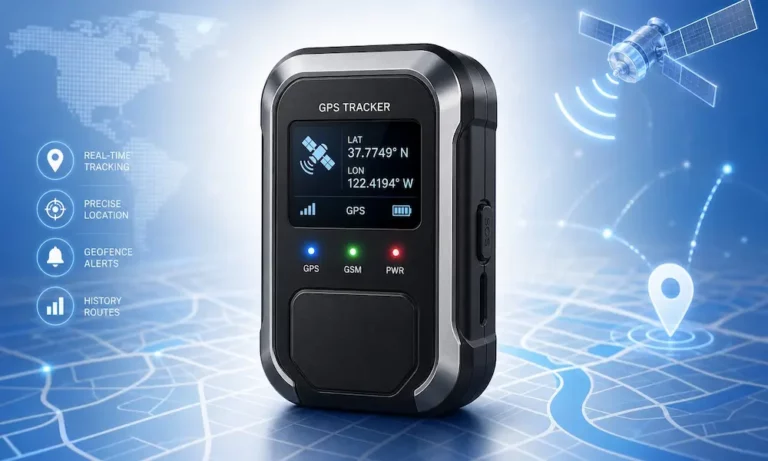
Found something suspicious under your car? You might be dealing with a hidden GPS tracker. This guide walks you through how to find it, remove it safely, and avoid legal trouble in the process. Stick around — the legal section alone could save you from a very expensive mistake.
First, Figure Out What Type of Tracker You’re Dealing With
Not all trackers are the same, and removing the wrong type incorrectly can fry your car’s electronics or void a loan agreement.
Here’s a quick breakdown of the four main types:
| Tracker Type | Power Source | How It Hides | Hardest Part |
|---|---|---|---|
| OBD-II Plug-in | Your car’s diagnostic port | Behind dash via Y-cable | Easy to miss if extension is used |
| Hardwired | Spliced into your car’s wiring | Deep inside dashboard | Risky to remove without electrical knowledge |
| Magnetic Battery-Powered | Internal battery | Stuck to your undercarriage | Goes to sleep when parked — easy to miss |
| Bluetooth Beacon (AirTag, etc.) | Coin battery | Seat cushions, trunk, spare tire well | Tiny, no wires, almost invisible |
Knowing which type you have determines everything — your tools, your approach, and your legal risk.
How to Find a Hidden GPS Tracker on Your Car
A proper search uses two methods together: physical inspection and electronic scanning. Relying on just one will likely miss something.
Search the Exterior First
Grab a flashlight and a telescoping mirror. Start at the wheel wells — statistically, that’s where most magnetic trackers end up. Run your hand along the inner metal lip behind the plastic liner. Feel for anything box-shaped that doesn’t belong.
Next, check:
- Front and rear bumpers — Look in the gap between the plastic fascia and the metal support beam
- Frame rails — Shine your light under the car along both sides of the chassis
- Fuel tank straps — Flat metal surface, perfect for magnetic attachment
- Crossmembers — Any horizontal beam under the car is a prime spot
One subtle tell: a patch of undercarriage that looks suspiciously clean compared to the surrounding road grime. Someone may have wiped the surface to get a stronger magnetic grip.
Search the Interior and Engine Bay
Inside the car, start with the OBD-II port under your steering column. Don’t just look at it — trace the wiring harness backward. If a Y-cable splitter is hiding a tracker behind the dash panels, you’ll find it by following the wire, not just looking at the port.
Also check:
- Seat rails (slide seats fully forward and back)
- Glove compartment and center console
- Trunk side panels and spare tire well
- Under-hood battery terminals and fuse box for non-factory wiring
In the engine bay, look for freshly applied electrical tape, mismatched zip ties, or wires that don’t follow the factory loom. Those are red flags.
Use an RF Scanner for Active Trackers
A radio frequency scanner detects cellular signals from active trackers. Here’s the catch — magnetic trackers go dormant when your car sits still to save battery. Scanning a parked car often gives you a false negative.
Do this instead:
- Drive your car for several minutes to wake up any sleeping devices
- Park somewhere with low radio traffic
- Turn off your phone, car Bluetooth, and infotainment system
- Slowly walk the RF scanner around the entire car
- A sustained signal spike near one area points you to the tracker’s location
Scan for Bluetooth Beacons
For coin-sized trackers like AirTags, your smartphone is your best tool.
- iPhone users: The built-in Find My network alerts you automatically if an unknown tracker travels with you
- Android users: Google’s unknown tracker alerts work similarly
- Both platforms: Apps like nRF Connect or BLE Scanner show every Bluetooth device nearby, including signal strength — walk around your car and watch the signal value climb as you get closer to the hidden device
How to Remove a GPS Tracker from a Car (By Type)
Before you touch anything, photograph everything. The tracker’s location, how it’s wired, serial numbers, FCC codes — all of it.
Removing a Magnetic Tracker
This is the simplest removal. Since it’s not connected to your car’s electrical system, there’s no risk of causing electrical damage.
Grip the housing firmly and pull it straight off with steady, perpendicular force. Once it’s off:
- Check the same area for a second backup tracker — some installers use two
- Place the device immediately into a metal tin or wrap it in aluminum foil to block its signal (a makeshift Faraday cage)
That last step matters. It stops the tracker from pinging its last known location to whoever put it there.
Removing an OBD-II Tracker
Pull the device straight back along the axis of the connector pins. Don’t twist it or wiggle it sideways — you’ll break the pins in your diagnostic port, and fixing that gets expensive fast.
If the tracker uses a Y-cable extension hidden behind the dash, you’ll need to remove the lower knee panel, unplug the tracker from the hidden branch, remove the fake port from the factory bracket, and remount your original OBD-II connector in its proper location. Cut any aftermarket zip ties carefully — avoid nicking the factory wiring around them.
Removing a Hardwired Tracker
Stop. Disconnect your negative battery terminal first. Always. Live wires + wrong tool placement = electrical fire.
Once the power is off, trace the tracker’s wiring back to where it splices into your factory harness. Hardwired trackers typically use a three-wire setup:
| Wire Color | Function |
|---|---|
| Red | Constant 12V power |
| Black | Chassis ground |
| White, Yellow, or Green | Ignition sense (switched circuit) |
Cut one wire at a time, and fully insulate each cut end before moving to the next. Use heat-shrink tubing or quality electrical tape on every exposed copper end. Reconnect your battery only after everything is insulated and checked.
Dealing with a Starter Interrupt Relay
Buy-here-pay-here dealerships commonly install these alongside trackers. The relay sits in your starter circuit — the factory wire is cut and the relay bridges the gap. If the lender sends a disable command, it opens the relay and your car won’t start.
To restore your starting circuit:
- Locate the relay and follow its wires to the splice points in your ignition harness
- Cut the relay wires away from both splice points
- Strip both ends of your severed factory starter wire
- Crimp them back together using a heavy-gauge butt connector
A weak connection here means intermittent starting failures or worse. Make it solid.
If you can’t remove it immediately, some devices have a manual bypass: turn the key to crank for three seconds, off for three seconds, and repeat twice. This forces an internal relay reset that temporarily restores the start circuit.
Know the Law Before You Remove Anything
Here’s where people get themselves into real trouble. Removing a tracker isn’t always legal — it depends on who put it there and why.
If a Lender Installed It
Roughly 40% of hardwired trackers found by drivers were legally installed — buried in subprime loan contracts under terms like “collateral protection device.” Removing it doesn’t get you arrested, but it gives the lender grounds to immediately demand full repayment or repossess the vehicle.
Check your contract first. If the tracker wasn’t disclosed properly, states like California require separate written consent under California Civil Code before a dealer can use tracking technology. That’s a potential consumer protection claim.
If It’s Law Enforcement
After United States v. Jones (2012), police need a valid warrant to place a GPS tracker on your car. If you suspect the tracker is from law enforcement, do not remove it. Tampering with it can result in felony charges for obstruction of justice or evidence tampering.
If It’s Stalking or Harassment
Unauthorized tracking is illegal in every U.S. state — but laws vary significantly:
| State Category | What It Means | Example States |
|---|---|---|
| Strict consent required | Even vehicle owners need explicit consent to track a driver | California, Maryland, New York, Nevada |
| Ownership exceptions apply | Tracking is legal if you own the vehicle | Texas, Illinois, Missouri, Pennsylvania |
| Criminal stalking integration | Unauthorized tracking is a specific criminal offense | Alaska, Arizona, Connecticut, Wyoming |
If someone planted a tracker to stalk or harass you, don’t rip it out immediately. Legal experts recommend a 72-hour documentation window — photograph everything, note serial numbers, and report it to law enforcement before removal. The physical device is evidence.
Bluetooth trackers are especially traceable. They link to user accounts, which gives police a direct digital trail to subpoena.
What to Do After You Remove It
Don’t throw the device away. Put it in a metal container and keep it safe — it’s physical evidence.
After removal, test your car:
- Start the engine and let it run
- Check for new warning lights on the dashboard
- Test your electronics: windows, locks, radio, lights
- Confirm no diagnostic fault codes appeared (you can check with a basic OBD-II reader)
If anything looks off after removing a hardwired device, have a mechanic verify the wiring before driving it regularly. One bad splice can cause problems that take months to diagnose.
And if the tracker pointed to stalking or harassment — take your documentation, the device itself, and any history of suspicious behavior to local law enforcement. Even if criminal prosecution is unlikely, that evidence supports civil restraining orders and privacy tort claims.