Your car’s idling like a jackhammer, or it’s surging forward without warning? A miscalibrated throttle position sensor is often the culprit. This guide walks you through exactly how to reset throttle position sensor systems — from simple battery disconnects to brand-specific relearn tricks. Stick around, because the fix you need is probably simpler than you think.
What Does a Throttle Position Sensor Actually Do?
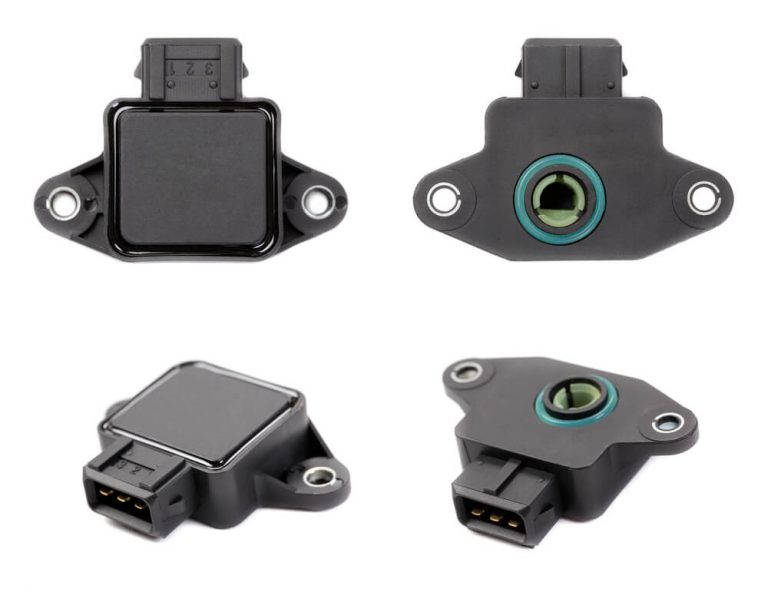
The throttle position sensor (TPS) tells your engine’s computer — called the Powertrain Control Module (PCM) — exactly how far open your throttle plate is. Every time you press the gas pedal, the TPS sends a voltage signal between 0.5V at idle and 4.5V at wide-open throttle.
Your PCM uses that data to calculate:
- How much fuel to inject
- When to fire the spark plugs
- When your automatic transmission should shift
Lose that signal accuracy, and your engine has no idea what you’re asking it to do.
Drive-By-Wire Changed Everything
Older cars used a physical cable from your pedal to the throttle. Modern vehicles use Electronic Throttle Control (ETC) — also called drive-by-wire. There’s no cable. Instead, a sensor reads your pedal input and sends a digital command to a small electric motor that physically opens the throttle plate.
The TPS then confirms the plate actually moved to the requested angle. It’s a closed-loop system. When that loop gets out of sync, you’ll feel it immediately.
Why Would You Need to Reset Throttle Position Sensor?
Your PCM doesn’t just use factory settings forever. It constantly adapts and learns new baselines to compensate for wear, dirty air, and aging components. That learned data lives in Keep-Alive Memory (KAM) — a type of RAM that needs battery power to survive.
Three common events wipe or corrupt that memory:
1. Cleaning the Throttle Body
Carbon builds up on the throttle plate over time. Your PCM gradually opens the plate wider to compensate. After you clean off that carbon, the plate is suddenly way too open. The engine idles at 2,000–3,000 RPM and might lurch forward in park.
2. Battery Disconnection or Failure
Dead battery? Replaced it? The KAM gets wiped. The PCM forgets everything it learned and reverts to factory baselines — which may not match the current condition of your throttle body.
3. New Sensor or Throttle Body Installation
A brand-new sensor has slightly different voltage characteristics than the old one. The PCM needs to register the new zero point before it can run properly.
Symptoms That Tell You a Reset Is Needed
Don’t start resetting things randomly. These symptoms specifically point to a TPS calibration problem:
- High idle — engine revs above 1,500 RPM with no input
- Stalling — especially right after a battery replacement or cleaning
- Hesitation — noticeable jerk when you accelerate from a stop
- Surging — RPMs climbing and dropping on the highway
- Rough shifting — automatic transmission clunking or hunting for gears
- Check Engine Light with codes like P0121, P0507, or P2135
If you’re seeing a P0122 code specifically, that’s almost always a wiring or hardware failure — not a calibration issue. A software reset won’t fix a dead or shorted sensor.
Check This Before You Reset Anything
Resetting a dirty or damaged throttle body is a waste of time. Do these checks first.
Clean the Throttle Body (The Right Way)
Use a throttle-body-specific cleaner on a microfiber cloth. Don’t spray directly into the intake.
⚠️ Never use carburetor cleaner or harsh solvents. Modern throttle bodies have a specialized molybdenum coating that prevents carbon buildup. Harsh chemicals strip that coating permanently — and no reset will fix the air leak that follows.
Don’t pry the butterfly valve open with a screwdriver either. You’ll strip the plastic gears on the actuator motor.
Quick Electrical Test With a Multimeter
Back-probe the sensor connector with the ignition ON, engine OFF:
| Wire | What You Should See |
|---|---|
| Reference wire | Steady 5.0V |
| Ground wire | 0V / full continuity to battery negative |
| Signal wire (closed) | ~0.5V |
| Signal wire (WOT) | ~4.5V |
Slowly press the pedal by hand. The voltage should rise smoothly and continuously. Any sudden drops or spikes mean the sensor’s internal resistive track is damaged — replace it before attempting a reset.
How to Reset Throttle Position Sensor: 2 Core Methods
Method 1: Scan Tool Reset (Best Option)
This is the most reliable way to reset throttle position sensor on any modern vehicle, especially drive-by-wire systems.
What you need: A bi-directional OBD-II scan tool (basic code readers won’t work)
Steps:
- Park on a flat surface. Set the parking brake.
- Turn the ignition ON — don’t start the engine.
- Connect your scan tool to the OBD-II port under the dashboard.
- Navigate to Engine Control → Special Functions.
- Look for options labeled: Throttle Valve Adaptation, TPS Calibration, or Idle Relearn.
- Run the command. You’ll hear clicking from the throttle body as the motor sweeps open and closed.
- Once complete, turn the ignition OFF. You’re done.
The whole process takes under five minutes. The PCM records the new minimum and maximum voltage points automatically — no guesswork involved.
Method 2: Battery Disconnect Method (Older Vehicles)
This works well on pre-2010 vehicles with less complex computer networks. On newer cars, it can accidentally erase transmission adaptations, power window calibrations, and radio security codes — creating new headaches.
Steps:
- Turn the ignition completely OFF.
- Remove the negative battery terminal.
- Wait 15–20 minutes. (Capacitors inside the PCM hold charge — don’t rush this.)
- Reconnect the negative terminal.
- Turn ignition to ON — don’t start the engine yet. Wait 30 seconds.
- Slowly press the accelerator to the floor and hold for 10 seconds.
- Slowly release the pedal.
- Start the engine and let it idle for several minutes.
Brand-Specific Reset Procedures
Generic methods don’t always work. Here’s what each manufacturer actually wants you to do.
General Motors (GM)
GM uses a time-based idle relearn after throttle body cleaning. Expect the idle to be rough at first — that’s normal.
- Start the engine. Let it idle in Park for exactly 3 minutes.
- Turn ignition OFF for 60 seconds (lets the PCM write to long-term memory).
- Restart and idle in Park for another 3 minutes.
- If idle is still rough, take it for a drive over 44 mph with several coasting deceleration events.
- Return to idle for a final 5 minutes.
Ford
Ford uses an aggressive capacitor-discharge method to completely wipe KAM before relearning.
- Disconnect the negative battery cable.
- Cover the negative battery post with a towel (don’t touch it).
- Connect a jumper wire between the disconnected negative cable terminal and the positive terminal. This safely drains the PCM’s internal capacitors.
- Wait 2 full minutes.
- Remove the jumper. Reconnect the battery (positive first).
- Turn OFF all accessories — AC, radio, lights.
- Start the engine. Let it idle untouched for exactly 15 minutes. Don’t touch the pedal, steering wheel, or AC during this window — it’ll abort the relearn.
Honda and Acura
Honda ties its relearn to coolant temperature thresholds, not time.
- Turn all accessories OFF.
- Turn ignition ON for 2 seconds, then start the engine.
- Hold RPMs at approximately 3,000 using the accelerator pedal.
- Wait until the radiator cooling fan cycles on and off twice — this confirms the engine reached full operating temp.
- Release the pedal. Let the engine idle naturally for 5–7 minutes.
- If fans turn on again during this window, pause your timer — only fan-off idle time counts.
Honda systems are stubborn. If the P0507 code returns, a bi-directional scan tool is the only reliable fix.
Chrysler, Dodge, Ram, and Jeep
These vehicles use an auditory confirmation from the throttle motor itself.
- Close all doors. Turn ignition to ON — don’t start the engine.
- Listen near the engine bay for a soft buzzing or whining from the throttle body. The PCM is sweeping the throttle plate through its full range.
- Wait for the buzzing to completely stop (usually 3–5 minutes).
- Turn the ignition OFF and remove the key entirely.
- Restart the engine and idle for 10–15 minutes.
- Test drive to confirm smooth response and no surging during shifts.
Volkswagen and Audi (VAG)
No manual key-turning trick works here. VW and Audi systems require a proper scan tool — period.
Access Basic Settings through your VAG-compatible scan tool and trigger the throttle alignment sequence. The tool forces a full open-close sweep. If the basic settings routine fails to complete, the throttle body’s internal gears or potentiometer are physically damaged — replacement is the only fix.
Common TPS Fault Codes and What They Mean
| Code | Definition | What It Usually Means |
|---|---|---|
| P0120 | TPS Circuit A Malfunction | Voltage wildly outside expected range — check wiring first |
| P0121 | TPS A Range/Performance | Throttle data doesn’t match airflow data — often carbon buildup |
| P0122 | TPS A Circuit Low Input | Voltage below 0.2V — broken wire or dead sensor |
| P0123 | TPS A Circuit High Input | Voltage above 4.8V at idle — short to 5V reference |
| P0124 | TPS A Circuit Intermittent | Erratic signal — loose connector or worn track |
| P0507 | Idle RPM Higher Than Expected | Classic post-cleaning symptom — relearn needed |
| P2135 | TPS A/B Voltage Correlation | Sensors disagree — limp mode triggered, scan tool required |
P0121 doesn’t always mean a broken sensor. It often means the throttle angle data doesn’t match what the Mass Airflow Sensor is reporting — a classic sign of carbon buildup or a missed relearn after cleaning.
If the Reset Doesn’t Work
A failed relearn almost always points to one of three hardware problems:
Vacuum Leaks
Air sneaking into the intake through a cracked hose bypasses the throttle entirely. The PCM tries to close the plate to drop idle speed, but the rogue air keeps it high. Use a smoke machine to find leaks.
Corroded Wiring
Just a few ohms of added resistance from a water-damaged connector skews the TPS voltage reading enough to confuse the PCM. Run a voltage drop test on every wire in the circuit.
Worn Resistive Track
Billions of tiny movements across years of driving wear grooves into the sensor’s internal carbon track. The PCM detects the voltage dropout mid-sweep and aborts the relearn automatically. At that point, the sensor — or the entire throttle body assembly — needs replacing.
Knowing how to reset throttle position sensor systems properly saves you a lot of unnecessary parts-swapping. Clean the hardware first, pick the right reset method for your make, and verify the results with a short test drive. If the idle stays rough after two relearn attempts, the problem is physical — not digital.