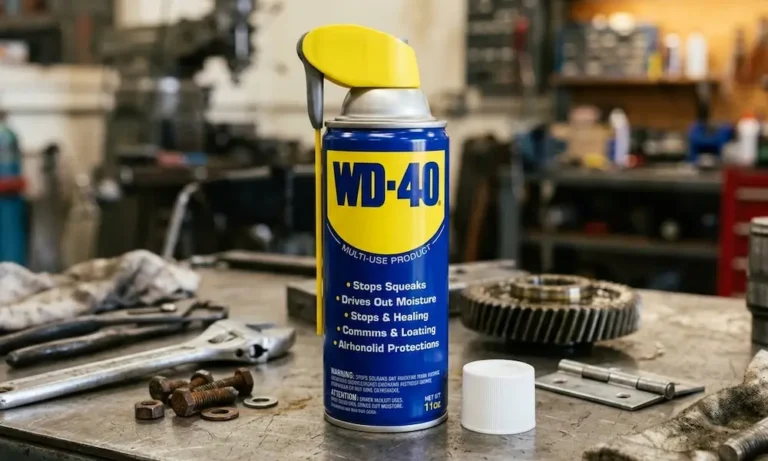
You’ve probably grabbed a can of WD-40 to fix something on your car and wondered — will this wreck my paint? It’s a fair question, and the answer isn’t a simple yes or no. Stick around, because what you learn here could save you from an expensive repaint.
The Short Answer (With a Big “But”)
WD-40 won’t instantly destroy your car’s paint. On a healthy, modern clear coat, a quick, targeted application is generally safe — if you wash it off fast.
But “safe” comes with conditions. The wrong surface, the wrong amount, or leaving it on too long? That’s when things go sideways.
Why WD-40 Was Never Made for Your Car
Here’s something most people don’t know. WD-40 wasn’t invented for cars at all. It was created in 1953 to protect the ultra-thin steel skin of the Atlas intercontinental ballistic missile from rust and moisture. The name literally stands for Water Displacement, Fortieth Formula — because it took 40 attempts to get it right.
It only ended up in garages because aerospace workers started sneaking cans home. By 1958, it hit retail shelves. By the early 1990s, it was in four out of five American households.
Useful product? Absolutely. Designed for car paint? Never.
What’s Actually in WD-40?
The exact formula lives in a bank vault and was never patented — intentionally, to avoid disclosing the ingredients. But gas chromatography tests have identified the key components:
- Volatile aliphatic hydrocarbons — aggressive carrier solvents that break down contaminants and displace moisture
- Petroleum distillates — help the liquid penetrate tight spaces and dissolve grease
- Heavy mineral oils — left behind after the solvents evaporate, creating a persistent lubricating film
That oily residue is what makes WD-40 useful for loosening stuck bolts. It’s also what makes it a problem on paint.
How Modern Car Paint Actually Works
To understand whether WD-40 is safe on car paint, you need to know what paint you’re actually dealing with.
Modern automotive finishes aren’t just one layer of color. They’re a multi-layer system:
- Metal substrate — treated with rust-inhibiting primer
- Base coat — your car’s actual color, with metallic or pearl effects
- Clear coat — a transparent, protective top layer made from cross-linked polyurethane
That clear coat is tough. It’s baked at extreme heat during manufacturing, which triggers a chemical reaction that creates a dense, hard, non-porous plastic layer. This is specifically engineered to resist UV rays, acid rain, bird droppings, and brief chemical exposure.
When WD-40 touches your car, it’s touching that hardened plastic layer — not the color beneath it. That’s why a quick application doesn’t instantly strip the finish.
When WD-40 Is Safe on Car Paint
Detailing professionals acknowledge a few specific scenarios where WD-40 earns its place in the garage:
Removing Road Tar
Petroleum-based tar bonds aggressively to clear coats. Scrubbing it off with a wash mitt risks deep scratches. A targeted application of WD-40 breaks down the tar’s molecular bonds without aggressive friction. Apply to a microfiber cloth — never spray directly onto the panel — hold it against the tar for 30-60 seconds, then wipe gently.
Lifting Tree Sap and Bug Residue
Fresh sap and baked-on insect proteins respond well to WD-40’s solvent properties. Same method applies: cloth first, brief dwell time, gentle wipe.
Erasing Paint Transfer
Foreign paint deposited from parking lot scrapes sits on top of your clear coat rather than bonding into it. WD-40 softens the transferred paint while its mineral oil component lubricates the surface, letting a microfiber towel lift the residue away. Important note: this removes paint sitting on your clear coat. It does nothing for actual scratches in your clear coat.
Dissolving Adhesive Residue
Old bumper stickers, dealership decals, and wheel weight tape leave behind sticky residue. WD-40’s hydrocarbons break down acrylic and rubber-based adhesives, removing the need for metal scrapers that would destroy your paint.
The Critical Rule: Always Wash It Off Immediately
This part isn’t optional. WD-40 strips every layer of protective wax or sealant on contact. After any application, you must:
- Wash the entire panel with a pH-neutral automotive shampoo
- Rinse thoroughly with plenty of water
- Reapply carnauba wax, synthetic sealant, or ceramic coating to the treated area
Skip this step and you’re leaving your clear coat bare, unprotected, and covered in a mineral oil film that magnets road grit like velcro.
When WD-40 Damages Car Paint
The risk profile changes dramatically in these situations:
Old, Oxidized, or Chipped Paint
Aging clear coats develop microscopic cracks as UV exposure breaks down the polymer chains. WD-40’s low surface tension allows it to wick deep into those cracks, reaching the vulnerable base coat beneath. The solvents then soften the underlying paint, accelerating delamination and peeling. If your paint already looks chalky, flaky, or faded — keep WD-40 away from it entirely.
Matte and Satin Finishes
This is the most expensive mistake you can make. Matte paint creates its flat appearance through a microscopically rough surface that scatters light in multiple directions. WD-40’s mineral oils fill in those microscopic valleys, permanently leveling the texture and creating glossy, oily patches you can’t remove. Because matte finishes can’t be machine-polished, the only fix is a full repaint. Don’t apply WD-40 to matte paint under any circumstances.
Fresh Body Shop Paint
Factory paint cures at extreme heat before leaving the assembly line. Body shop repairs cure at lower temperatures through a chemical process that takes weeks to complete. Applying petroleum distillates to fresh, uncured paint disrupts the curing process, potentially leaving you with a permanently soft, gummy finish. Wait at least 60-90 days after any body shop work before using strong chemical solvents nearby.
Prolonged Exposure on Any Paint
Even on pristine factory paint, leaving WD-40 on for hours creates real problems. The persistent mineral oil attracts road dust, brake dust, and particulate matter. When you wipe or wash the car, that trapped grit drags across the clear coat like sandpaper, creating swirl marks and deep scratches.
What WD-40 Won’t Actually Fix (Despite What the Internet Says)
The Scratch Myth
A very popular internet claim says WD-40 repairs scratches. It doesn’t. The heavy mineral oil pools inside the scratch and temporarily matches the refractive index of the clear coat, making the scratch appear to disappear. The first rainstorm washes the oil away and the scratch returns — exactly as deep as before. Meanwhile, you’ve stripped the surrounding paint protection.
The Wax Replacement Myth
Applying WD-40 across entire body panels as a wax substitute strips your existing protection while coating the paint in dirt-attracting grease. It offers zero UV protection and zero durability. This is the opposite of paint care.
The Collateral Damage WD-40 Can Do Around Your Paint
Modern vehicles aren’t just painted metal. The materials surrounding your paint panels react badly to petroleum solvents:
| Component | Risk | What Happens | Safe Alternative |
|---|---|---|---|
| Rubber weatherstripping | High | Solvents leach internal plasticizers, causing swelling then severe cracking | Pure silicone-based lubricant |
| Polycarbonate headlights | Misleading | Temporary optical clarity, but zero UV protection — oxidation returns fast | Professional wet-sanding + UV clear coat |
| Paint Protection Film (PPF) | Very high | Solvents wick under film edges, dissolving adhesive and causing irreversible lifting | Dedicated PPF-safe cleaning sprays |
| Unpainted black trim | High | Petroleum strips protective oils, leaving permanent chalky white residue | Dedicated plastic trim restorer |
| Chrome-plated plastic trim | High | Solvents attack plastic substrate behind thin chrome plating, causing bubbling | Purpose-built chrome cleaner |
Better Alternatives for Specific Jobs
If WD-40 is a multi-tool you’re using as a scalpel, the detailing industry has actual scalpels:
For tar and adhesive: Products like Stoner Tarminator or 3M Specialty Adhesive Remover use highly volatile solvents that flash off rapidly, leaving no oily residue and requiring less aggressive post-wash.
For widespread surface contamination: An automotive clay bar physically shears embedded contaminants from the clear coat through mechanical action rather than chemical exposure — no solvent risk at all.
For pre-ceramic coating prep: Isopropyl alcohol diluted to 15-25% with distilled water strips residual oils and wax without leaving behind the mineral film that would prevent a ceramic coating from bonding properly.
The Environmental Reality of Solvent Use
One more thing worth knowing: California’s Air Resources Board mandated in 2013 that aerosol products contain 25% or less volatile organic compounds by weight. The original WD-40 formula didn’t meet that standard, pushing manufacturers to develop compliant alternatives for regulated markets.
And wherever you detail your car, the EPA prohibits solvent-laden rinse water from entering storm drains. Those drains typically bypass treatment and flow directly into waterways — so always rinse properly and responsibly.
Is WD-40 Safe on Car Paint: A Quick-Reference Summary
| Scenario | Safe to Use? | Required Follow-Up |
|---|---|---|
| Road tar on healthy clear coat | Yes — brief, targeted use | Immediate detergent wash + re-wax |
| Fresh tree sap removal | Yes — brief, targeted use | Immediate detergent wash + re-wax |
| Foreign paint transfer | Yes — with gentle agitation | Immediate detergent wash + re-wax |
| Adhesive/decal residue | Yes — targeted application | Immediate detergent wash + re-wax |
| Matte or satin finish | Never | Not recoverable without repaint |
| Oxidized or peeling paint | Never | Accelerates delamination |
| Fresh body shop paint | Never | Disrupts curing permanently |
| As a wax replacement | Never | Strips all existing protection |
| On rubber seals | Never | Causes swelling and cracking |
Frequently Asked Questions
Can WD-40 prevent rust inside deep rock chips?
It’ll displace moisture temporarily, but the mineral oil it leaves behind stops touch-up paint from adhering properly. Your repair will bubble and fail. Clean the chip with an alcohol wipe and apply a touch-up primer instead.
Does WD-40 damage ceramic coatings?
A fully cured ceramic coating can survive brief exposure without stripping. But the mineral oil will coat the surface, killing the hydrophobic properties and self-cleaning ability until you wash it off with a high-pH decontamination shampoo designed to reset ceramic coatings.
Can WD-40 saturated towels catch fire on their own?
Yes — this is a real hazard. Petroleum-saturated microfiber towels can undergo slow oxidation that generates heat, potentially leading to spontaneous combustion in poorly ventilated spaces. Always lay saturated towels flat outdoors until fully dry before washing or disposing of them.
Does WD-40 hold up in extreme cold, like a car trunk in winter?
The formula stays liquid well below -50°F. But extreme cold reduces aerosol can pressure, which often results in a weak, uneven spray pattern. Let the can warm to room temperature before use.
What happens if WD-40 gets on the windshield?
The mineral oils create a hazy, refractive film that severely distorts night driving visibility. If it contacts wiper blades, the petroleum distillates degrade the rubber edge, causing chattering and streaking. Keep it away from glass entirely.