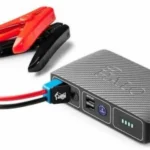
A dead battery always picks the worst time to happen. Good news: a Duralast jump starter can get you back on the road in minutes, but only if you use it right. Skip a step and you risk sparks, damaged electronics, or a jump starter that just won’t fire up. This guide walks you through exactly how to use a Duralast jump starter, from safety checks to the actual cranking, so you’re not guessing when it counts.
What Duralast Jump Starter Do You Actually Have?
Not all Duralast jump starters are built the same. Some handle a compact car. Others can crank a diesel truck. Check your model before you rely on it for anything bigger than a sedan.
| Model | Peak Amps | Max Gas Engine | Max Diesel Engine | Extra Features |
|---|---|---|---|---|
| DL-800A | 800A | 5.0L | 2.5L | Work light, USB ports |
| DL-1000A | 1000A | 6.0L | 3.0L | Work light, AC input |
| DL-1200AC | 1200A | 8.0L | 6.0L | 150 PSI air compressor |
| GL056WA | 2000A | 8.0L | 4.0L | Lithium cells, fast charge |
| DL-2000Li | 2000A | 8.0L | 6.0L | Wireless charge pad, digital display |
If you try to start a big diesel with a small unit, the jump starter’s thermal overload protection will just shut it down. Match the amperage to the engine before you even connect a clamp.
Safety Checks Before You Touch a Single Clamp
Watch Out for Explosive Gas
Lead-acid batteries release hydrogen gas. Mix that with air and a stray spark, and you’ve got a real problem. Never place the jump starter directly on the battery. If you’re in a closed garage, open the door first. Give the engine bay a minute to air out before hooking up any clamps.
Gear Up First
Grab safety goggles or a face shield. Wear rubber or nitrile gloves. Take off rings, watches, and anything metal. If a piece of jewelry touches both terminals at once, it heats up fast and can burn you badly.
Get Your Battery Ready for the Jump
Check the Charge First
A healthy battery reads around 12.6 volts. Anything noticeably lower means it needs a boost. No multimeter? Turn on your headlights. Dim or no light means the battery’s low. A rapid clicking sound when you turn the key usually points to weak cranking power, even if the lights look fine.
Also give the battery a once-over. If the case looks swollen or you see leaking fluid, don’t jump it. That battery needs to be replaced, not revived.
Clean Off the Corrosion
This step gets skipped a lot, and it’s a big reason jump-starts fail. Corrosion on the terminals acts like a wall, blocking the current no matter how powerful your jump starter is. Here’s how to clean battery corrosion the easy way:
- Mix one tablespoon of baking soda with a cup of warm water.
- Pour it over the corroded terminals. It’ll fizz — that’s the acid getting neutralized.
- Scrub with a wire brush until you see clean, shiny metal.
- Wipe dry with a cloth. Don’t let liquid drip into the battery vents.
- Add a thin coat of dielectric grease or petroleum jelly to slow down future corrosion.
Skipping this can make your jump starter look broken when the real issue is just gunk on the posts.
How to Use a Duralast Jump Starter Step-by-Step
Once your battery’s checked and cleaned, you’re ready for the actual connection. This is the core of how to use a Duralast jump starter safely and correctly.
- Turn off the car. Key out, lights off, AC off, radio off. Put it in Park (or Neutral for manual transmissions) and set the parking brake.
- Check the jump starter’s charge. You need at least 40% battery in the pack to reliably crank a car engine.
- Connect red to positive. Find the positive terminal (marked with a plus sign or red cover). Clamp the red cable on tight, making sure the metal teeth bite into bare metal.
- Connect black to ground. Skip the negative battery terminal. Instead, clamp the black cable to an unpainted metal part of the engine block, away from the battery. Some vehicles specify otherwise, so check your owner’s manual if you’re unsure.
- Route the cables safely. Keep the wires clear of belts, fans, and pulleys. Those parts start spinning the second the engine fires up.
What That Light on the Clamp Means
Modern Duralast units use “smart cables” that check your connection before sending any power through. Turn the unit on, and here’s what you’ll see:
- Solid green light: You’re good. Connection’s correct, and it’s safe to crank.
- Red light plus alarm: Clamps are backward. The reverse-polarity protection kicked in to stop damage. Turn it off, fix the connection, and try again.
Don’t try to force a start if the light’s red. The device is protecting your car’s electronics, not being difficult.
Cranking the Engine the Right Way
Once you see green, turn the key. Crank for no more than 4 to 5 seconds. That’s it. Longer than that builds up heat inside the jump starter and can wear down the starter motor too.
If it doesn’t start, wait 30 to 60 seconds before trying again. After three tries with no luck, stop. That’s usually a sign of something bigger than a dead battery — a bad starter, fuel issue, or failed alternator.
Disconnecting Safely
Once the engine’s running:
- Turn off the jump starter first.
- Remove the black clamp from the ground point.
- Remove the red clamp from the positive terminal.
- Coil up the cables and tuck them back into their holsters.
Let the car run (or better, drive it) for 20 to 30 minutes. This gives the alternator time to actually recharge the battery instead of leaving it half-full for next time.
Got a Really Dead Battery? Try the Manual Override
Sometimes a battery is so drained the smart cable can’t even detect it. If the voltage drops below about 2 volts, the jump starter thinks nothing’s connected at all, and the green light won’t turn on.
Try the pre-soak trick first. Connect the clamps as usual and just leave them there for 5 to 10 minutes. A tiny trickle of voltage moves through even in standby mode. This often raises the battery just enough for the smart cable to recognize it.
If that doesn’t work, use the manual override. Fair warning: this shuts off the reverse-polarity protection completely. Double-check your connections before you do this.
- Confirm red is on positive, black is on ground.
- Press and hold the override button (often marked with an exclamation icon) for 3-5 seconds.
- You’ll hear a click as the relay closes. The light will change to signal it’s live.
- Crank the engine immediately, max 4 seconds.
- Turn the jump starter off before disconnecting the clamps.
One honest note: if a battery reads under 9.5 volts and needs an override to start, it’s probably damaged for good. It might get you home, but plan on replacing it soon.
Jump-Starting Other Rides
A Duralast jump starter isn’t just for sedans. Here’s how it works across different vehicles.
| Vehicle Type | Main Hazard | What to Do | Amps Needed |
|---|---|---|---|
| Standard car | Spinning belts/fans | Keep cables clear of moving parts | 400-800A |
| Hybrid/EV | High-voltage orange cables | Use the 12V terminal under the hood only | 200-400A |
| Motorcycle/ATV | Tight terminal spacing | Connect carefully to avoid shorting terminals | 150-200A |
| Boat engine | Gasoline fumes in bilge | Run the blower 4+ minutes first | 600-1000A+ |
Hybrid cars aren’t actually hard to jump. They just have two batteries — a big high-voltage one you never touch, and a small 12-volt one that boots up the computer. Most hybrids have a dedicated 12V jump terminal under the hood, even if the actual battery sits in the trunk. Never touch anything wrapped in orange cable — that’s the high-voltage side.
Boats need extra caution because of trapped fuel vapors. Run the bilge blower for several minutes and check for gasoline smell before connecting anything. If you catch a whiff of fuel, stop entirely.
Using the Extra Features
Most Duralast jump starters aren’t just for jump-starts.
- Air compressor: Good for topping off tires. Run it for 10 minutes max, then let it cool for another 10 before using it again.
- USB ports: Charge your phone in a pinch. Ports shut off automatically after about 30 seconds if nothing’s plugged in.
- Work light: Comes with steady, strobe, and SOS flash modes — handy at night or in bad weather.
- Alternator check (on select models): Hold the diagnostic button for 2 seconds while the car’s running. “GOOD” means your charging system’s fine. “ALT” means the alternator needs attention, even though the jump-start worked.
Keeping Your Jump Starter Ready for Next Time
A jump starter that’s sitting dead in your trunk won’t help you when you actually need it.
- Recharge it right after every use, even a quick one.
- Top it off every 3 months even if you haven’t used it, since batteries self-discharge over time.
- Avoid extreme heat. Leaving it in a hot trunk all summer speeds up battery breakdown.
- Store it around room temperature, roughly 70°F, when you can.
- If it’s been sitting in freezing temps, warm it up before use. Cold batteries can’t deliver full cranking power.
Watch for a swollen case, unusual heat, or a strange chemical smell. That means the battery inside is failing. Stop using it immediately and don’t try to charge it. Set it outside on a non-flammable surface and get it to a hazardous waste or battery recycling drop-off point. Don’t toss it in regular trash — lithium batteries are considered hazardous waste under EPA guidelines.
Common Error Codes
If your unit has a digital display, here’s what those codes usually mean:
| Code | What It Means | What To Do |
|---|---|---|
| E0/E01 | Jump starter’s own battery too low | Recharge fully before use |
| E2 | Overheating from too much cranking time | Let it cool down completely |
| E7 | Short circuit detected | Check clamps aren’t touching or on the same terminal |
Jump Starter vs Charger vs Maintainer
People mix these up all the time, and it leads to bad battery habits.
| Tool | What It Does | Best For |
|---|---|---|
| Jump Starter | Quick burst of power to start the car | Roadside emergencies |
| Battery Charger | Slowly refills a dead battery | Overnight recovery in the garage |
| Battery Maintainer | Tiny trickle to keep a battery topped off | Seasonal vehicles sitting for months |
A jump starter gets you moving, but it doesn’t fix the battery itself. If your car’s dying often, look into a proper battery charger or maintainer instead of relying on jump-starts as a long-term fix.
Final Thoughts
Knowing how to use a Duralast jump starter properly turns a stressful roadside moment into a five-minute fix. Clean the terminals, check your connections, respect the cranking time limit, and recharge the unit after every use. Do that, and this little device will bail you out for years. Skip the basics, and you risk damaging your car, your jump starter, or worse. Keep it charged, keep it in your trunk, and hope you rarely need it — but you’ll be glad it’s there when you do.