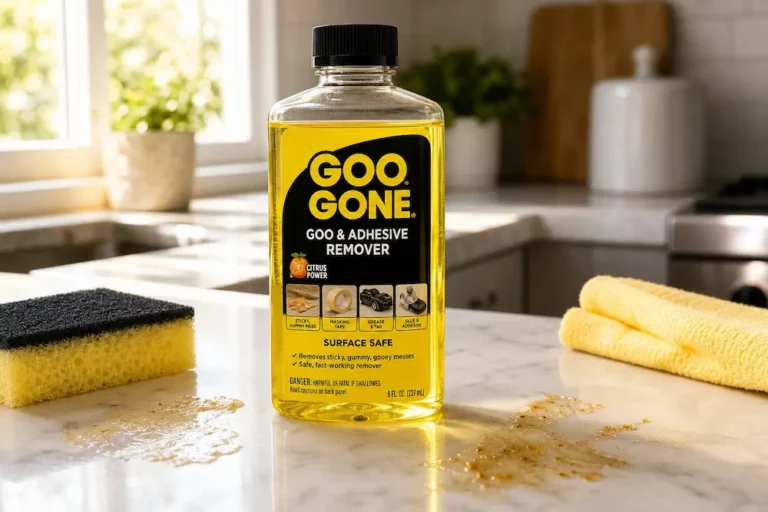
You’ve got a stubborn sticker, a glob of road tar, or a dealership badge that won’t budge. Someone told you to grab Goo Gone. But now you’re staring at your car’s finish wondering if this stuff will wreck it. Good instinct to pause. Here’s exactly what you need to know before you spray anything near your paint.
The Short Answer: It Depends on Which Formula You Use
Is Goo Gone safe for car paint? Yes — but only the right version used the right way.
Goo Gone makes several completely different products under the same brand name. Use the wrong one, and you’re looking at a dull, etched clear coat that no amount of waxing will fix. Use the correct one with proper technique, and your paint walks away unharmed.
That one distinction makes all the difference.
Understanding Why Car Paint Is Vulnerable
Before you start spraying solvents, it helps to know what you’re actually protecting.
Modern factory paint isn’t just one layer of color slapped on metal. It’s a carefully engineered system with multiple layers:
- Electrodeposition coat — rust prevention applied directly to bare metal
- Primer — smooths the surface and buffs out physical impacts
- Base coat — the color you actually see (zero protective function)
- Clear coat — the transparent outer shield that protects everything beneath it
The clear coat is the only layer a solvent should ever touch. Here’s the catch: even though it feels rock solid, the clear coat is actually a slightly porous polymer matrix. Aggressive solvents cause it to swell and break down its cross-linked bonds — permanently.
That’s how you end up with hazy, soft, or peeling paint.
The Four Goo Gone Formulas (And What Each Does to Your Paint)
This is the most important table you’ll read today. Most paint damage happens because someone grabbed the wrong bottle.
| Formula | Viscosity | Intended Use | Clear Coat Safety |
|---|---|---|---|
| Original Formula | Thin liquid | General household messes | ❌ High risk — drips, pools, too concentrated |
| Automotive Spray Gel | Thick gel | Vehicle exteriors, bumpers, glass | ✅ Safe when used correctly |
| Pro Power Formula | Liquid | Heavy industrial adhesives | ❌ Extreme risk — degrades paint fast |
| Latex Paint Clean Up | Clinging liquid | Latex and acrylic paint removal | ❌ Unsafe — formulated to break down paint polymers |
The Automotive Spray Gel is the only version you should bring anywhere near your car’s exterior. It’s explicitly marketed as clear coat safe and engineered with a lower-concentration solvent blend that clings to vertical surfaces without dripping into rubber seals or panel gaps.
Why the Original Formula Is Risky on Cars
The original Goo Gone contains hydrotreated light petroleum distillates, sweet orange extract, aliphatic ether alcohol, and glycol ethers. It’s not formulated with car paint in mind.
The biggest problem isn’t just the chemistry. It’s the thin, watery texture. Spray it on a vertical car door and it immediately runs downward, covering huge sections of clean paint and pooling in crevices and rubber trim. Because it’s more concentrated than the automotive version, that pooling causes the solvent to dwell far longer than intended — long enough to cause real clear coat damage.
The automotive gel was specifically engineered to fix this problem. Its thick consistency clings exactly where you apply it, giving you control.
How to Use Goo Gone Automotive Spray Gel Without Damaging Paint
Safe results aren’t automatic. They depend entirely on following the right process.
Step 1: Wash the Area First
Always wash the target panel before applying any solvent. If you skip this step, loose dirt particles turn into tiny scratches the second you start wiping. Use automotive soap, warm water, and a clean microfiber towel to dry it off.
Step 2: Park in the Shade
Never apply solvent to hot paint. Heat accelerates chemical reactions. A solvent that’s perfectly safe on cool paint for three minutes can permanently etch hot paint in seconds. Park in a shaded spot and make sure the panel is cool to the touch before you start.
Step 3: Apply to a Microfiber, Not Directly to the Car
Instead of spraying directly onto the vehicle, apply a small amount of gel onto a clean, folded microfiber towel. This “pinpoint method” keeps the solvent precisely on the adhesive residue, away from clean surrounding paint, plastic trim, and rubber seals.
Step 4: Watch Your Dwell Time Carefully
This is the single most critical variable in the whole process.
- Standard adhesive residue: 1–3 minutes
- Heavy baked-on adhesive: 5 minutes absolute maximum
- Never let it dry completely on the paint
Allowing the solvent to dry will cause chemical etching and a hazy finish you can’t simply polish away. Stay present and keep an eye on the clock.
Step 5: Wipe Gently with Microfiber
Use a clean, damp microfiber towel to wipe away the softened residue. Microfiber lifts and traps sticky material rather than smearing it around. Never scrub aggressively. If the adhesive doesn’t budge, reapply and wait — don’t force it.
Step 6: Wash the Area Immediately with Soap
The job isn’t done when the sticker’s gone. The oily solvent residue continues interacting with the clear coat if you leave it sitting there. Wash the area with automotive detergent and warm water right away to neutralize all chemical activity.
Specific Contaminants: What Works and What Doesn’t
The automotive spray gel doesn’t perform equally on everything. Here’s a realistic breakdown:
Bumper stickers and dealership decals — Works very well. The gel breaks down pressure-sensitive acrylic adhesives efficiently. For thick foam badge tape, you’ll need to apply the solvent, scrape the top foam layer with a plastic blade, then reapply on the freshly exposed adhesive underneath.
Road tar and asphalt — Excellent results. Because tar is hydrocarbon-based, petroleum distillates dissolve it almost immediately, turning it into a thin brown liquid you can easily wipe off.
Fresh tree sap — Works well when sap is still sticky and soft. Aged, baked-on pine sap is a different story. It may need multiple applications, and if it’s been sitting for months, it may have already etched into the clear coat organically. The solvent removes the sap, but the crater underneath stays.
Paint protection film (PPF) adhesive — Too mild for large-scale removal. Stripping an entire hood of PPF adhesive with consumer Goo Gone means excessive dwell time and heavy wiping — both of which risk scratching the clear coat. Professionals use rapid-acting industrial solvents for this.
Plasti-Dip flakes — Very effective at dissolving sprayable rubber coatings. Just keep it strictly away from permanent rubber door seals and window gaskets — prolonged contact will cause them to swell and deteriorate.
Surfaces Where Goo Gone Will Cause Real Damage
Even the automotive formula has clear no-go zones:
Freshly painted panels — Fresh clear coat takes 30–90 days to fully cure. Any solvent applied before then will wrinkle, bubble, or dissolve the paint. Never use it on recent body shop repairs.
Matte and satin finishes — Petroleum-based solvents and rubbing will permanently smooth out the microscopic texture that creates the flat look, leaving behind uneven glossy patches. Matte paint needs matte-specific cleaners only.
Polycarbonate headlight lenses — Letting solvent dwell on plastic headlamp covers can cause crazing — hundreds of tiny internal cracks that permanently cloud the lens.
Aftermarket window tint — Factory privacy glass is fine because the tint is built into the glass itself. But aftermarket window film is a thin polyethylene terephthalate layer held on with adhesive. Petroleum-based solvents dissolve this film, causing it to smear, discolor, and lift. Use diluted isopropyl alcohol applied to a cloth instead.
Interior leather, suede, and Alcantara — The oily distillates permanently stain porous materials and strip color dyes from leather. Keep it strictly on exterior painted surfaces.
Goo Gone vs. Goof Off: Don’t Confuse These Two
This is where a lot of people make a seriously expensive mistake.
Goo Gone is a citrus-based, mild solvent. Goof Off is a completely different product containing acetone, xylene, methanol, and ethylbenzene. Goof Off will immediately eat through your clear coat down to the primer — it’s designed for stripping industrial adhesives from concrete, not touching automotive paint.
Detailing professionals call acetone-based cleaners “chemical sledgehammers.” Goo Gone Automotive is more like safety scissors. Always check the label before applying anything to your car.
Post-Removal: Don’t Skip This Part
One thing most people miss: Goo Gone instantly strips away any wax, sealant, or ceramic coating from the area you treated. The petroleum distillates are highly efficient degreasers that wipe out your paint protection entirely.
After washing the area clean, follow these steps:
- Clay bar the area — Use a synthetic clay mitt or traditional clay bar with clay lubricant spray to pull out microscopic adhesive remnants embedded in the paint’s pores. Work in straight, overlapping lines.
- Light polish if needed — If wiping left behind minor surface marring, a fine finishing polish on a soft foam pad restores optical clarity.
- Reapply protection — Put a layer of carnauba wax, synthetic sealant, or ceramic coating back on the treated area. Without it, the bare clear coat is completely exposed to UV damage and environmental fallout.
Safety Notes Worth Reading
Goo Gone smells pleasant and looks harmless, but it’s a real industrial chemical.
- Always wear nitrile gloves — Repeated skin contact causes dryness, cracking, and can trigger allergic dermatitis
- Work outdoors or in well-ventilated spaces — The vapors contain high levels of Volatile Organic Compounds that cause dizziness and nausea in enclosed areas
- It’s combustible — Keep it away from open flames, sparks, and hot heat guns. Its flash point sits around 185°F
- Don’t throw soaked rags in the dryer — Microfiber towels saturated with petroleum distillates are a spontaneous combustion hazard. Wash them thoroughly first
- Watch your runoff — The solvent is highly toxic to aquatic life with long-lasting environmental effects. Minimize the amount you use and keep it out of storm drains
The Bottom Line on Goo Gone and Car Paint
Goo Gone Automotive Spray Gel is genuinely safe for your car’s clear coat — when you use the right formula, stay out of the sun, limit dwell time to under five minutes, wipe gently with microfiber, and wash the area immediately after.
The moment you cut corners — wrong product, hot paint, too long a dwell, aggressive scrubbing — you risk permanent clear coat damage that no wax will fix. Treat it like the chemical tool it is, follow the steps above, and your paint will come out clean every time.