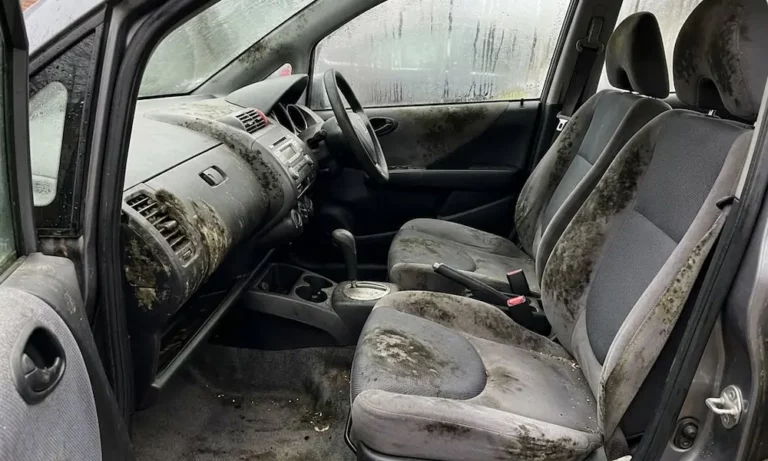
That musty smell hitting you every morning commute? It’s not just unpleasant — it could be quietly wrecking your health. Mold in a car is a real problem, and most drivers have no idea how serious it gets. Stick around, because what you’re about to read might change how you look at your daily drive.
Why Your Car Is a Mold Paradise
Your car is basically a sealed box. It holds around 100 cubic feet of air — way less than your home. That means any airborne contamination builds up fast with nowhere to go.
Mold needs four things to grow: oxygen, warmth, organic food, and moisture. Your car delivers all four. Fabric seats, carpet foam, acoustic insulation, skin cells, and food crumbs give mold plenty to eat. Meanwhile, sunlight turns your car into a greenhouse, and moisture sneaks in constantly.
The EPA confirms you’ve got a serious problem if water-damaged materials aren’t dried within 24 to 48 hours. In a car, that window closes fast.
How Moisture Gets In
Water finds its way into your car through more routes than you’d expect:
- Worn door and window seals — UV damage and temperature swings crack rubber seals over time, letting rain seep into floorboards and headliners
- Clogged sunroof drains — Blocked tubes send water straight into your ceiling liner and carpet padding
- A/C condensation overflow — When the evaporator drain tube clogs, water pools inside your dashboard in total darkness
- Wet gear left inside — Damp umbrellas, gym bags, and snow-covered boots all add moisture to trapped cabin air
- Humid coastal air — Leaving a window cracked overnight in humid climates lets moisture condense on cold surfaces by morning
How Fast Mold Actually Grows
This timeline will make you uncomfortable:
| Time After Moisture Exposure | What’s Happening |
|---|---|
| 0–6 hours | Water soaks deep into seat foam and carpet padding — surface looks dry |
| 6–12 hours | Dormant spores activate; first musty odor may appear |
| 12–24 hours | Spores extend root-like hyphae into materials and start digesting them |
| 24–72 hours | Visible colonies form; millions of new spores release into cabin air |
That’s under three days from a spilled coffee to a full infestation. Your commute isn’t looking so innocent now, is it?
Is Mold in Car Dangerous? Here’s the Real Answer
Yes — and the danger is amplified because of how small your car is. You’re sitting inches from the contamination source, breathing concentrated doses of spores every time you drive. The CDC is clear that mold exposure in enclosed spaces causes serious health problems, particularly for people with respiratory conditions.
Here’s what’s actually happening inside your body:
Allergic Reactions
When mold spores enter your nasal passages, your immune system flags them as threats. It releases histamine, triggering the full allergic response — sneezing, itchy eyes, runny nose, and throat irritation. Touching moldy surfaces can also cause skin rashes from contact dermatitis.
The kicker? If you’re exposed daily during your commute, these symptoms stop feeling like allergies. They feel like a permanent cold you can’t shake.
Asthma Attacks and Long-Term Lung Damage
The CDC links damp, moldy environments directly to asthma. For people who already have asthma, mold spores in a car trigger bronchial constriction fast — coughing, wheezing, chest tightness, and shortness of breath.
But here’s the part most people miss: repeated exposure in moldy spaces can create new asthma in people who never had it before. Studies show a particularly strong connection between childhood mold exposure and pediatric asthma development. If you’re driving kids in a contaminated car, that’s a serious concern.
With chronic exposure, inflammation can scar lung tissue permanently — a condition called pulmonary fibrosis. That damage doesn’t reverse.
Brain Fog and Neurological Effects
Certain molds produce mycotoxins — toxic chemical compounds that don’t die when the mold does. These microscopic particles are lipid-soluble, meaning they can cross the blood-brain barrier.
Research published on PubMed found that toxic mold spore exposure caused significant memory deficits and elevated neuroinflammation in animal models. Drivers exposed to mycotoxins frequently report:
- Short-term memory loss
- Inability to concentrate
- Chronic migraines
- Dizziness and loss of coordination
- Severe, persistent fatigue
Think about that in the context of driving at highway speed. This isn’t just a health issue — it’s a road safety issue.
High-Risk Groups Who Should Never Ride in a Contaminated Car
The CDC recommends extreme caution for vulnerable individuals around mold. In a car specifically, these people face the highest risk:
- Children and infants
- Elderly passengers
- Anyone undergoing chemotherapy
- People with HIV or on immunosuppressive medication
- Anyone with COPD or pre-existing lung disease
For immunocompromised individuals, inhaling Aspergillus spores can trigger invasive pulmonary aspergillosis — fungal colonies actually growing inside lung tissue. That’s potentially fatal.
6 Types of Mold That Grow in Cars
Not all car mold is equally dangerous. Here’s what you might be dealing with:
| Mold Type | Appearance | Main Risk |
|---|---|---|
| Cladosporium | Black, dark green, or brown patches; powdery texture | Potent allergen; triggers sneezing and nasal congestion |
| Aspergillus | Green, yellow, or white; velvety texture | Produces mycotoxins; can cause invasive lung infections in vulnerable people |
| Penicillium | Vivid blue-green; powdery | Recirculates through HVAC; causes chronic sinus and pulmonary irritation |
| Stachybotrys (Black Mold) | Dark greenish-black; slimy | Produces trichothecene mycotoxins; linked to neurological damage |
| Alternaria | Dark green or black; woolly texture | Top trigger for allergic asthma; penetrates deep into lower airways |
| Fusarium | White or pink; fluffy (looks like lint) | Cold-tolerant; active in winter; produces mycotoxins and causes eye irritation |
Stachybotrys and Aspergillus are the ones that demand immediate professional attention. Their toxins survive after the mold is killed, so simply wiping visible growth away doesn’t fix the problem.
How to Tell If Your Car Has Mold
Mold loves to hide. It grows in the dark, in spots you never look. Here’s how to catch it early:
Trust Your Nose First
A musty, earthy, or wet-cardboard smell is the earliest warning sign. If that odor hits you when you open the door or blasts from your A/C vents, mold is already present — even if you can’t see it. Don’t mask it with air fresheners. That just hides the alarm while the problem grows.
Check the Hidden Spots
Visual inspections need to go beyond the obvious:
- Under floor mats — Lift them. The foam underneath soaks up water and stays wet while the carpet surface looks dry
- The spare tire well — Lowest point in the trunk; collects water from leaky rear seals
- Cabin air filter — A dark, damp, or debris-clogged filter means the ducts and evaporator are likely contaminated too
- Headliner and sunroof tracks — Stains, sagging fabric, or discoloration on the ceiling confirm a roof leak
Map Your Symptoms
This is the most reliable diagnostic tool. Do you get headaches, sneezing fits, or chest tightness only while driving — and feel better an hour after you park? That pattern is exactly what the CDC describes for work-related hypersensitivity conditions. The car is the source.
Why Your A/C Makes the Problem Worse
Your HVAC system doesn’t just grow mold — it weaponizes it. Here’s how:
The A/C evaporator coil produces condensation as it cools your cabin. When the car turns off, residual moisture clings to the coil inside a dark, enclosed dashboard. Dust particles and organic debris drawn in from outside create a nutrient-rich sludge on the wet metal fins.
Studies show average fungal concentrations in car A/C filters reaching tens of thousands of colony-forming units per square meter. Once mold colonizes the evaporator and ductwork, every time you turn on the blower, you’re blasting concentrated spores, mycotoxins, and volatile organic compounds directly at your face.
A contaminated climate control system turns your car into an active exposure chamber on every drive.
How to Remove Mold From Your Car
Minor surface mold under 10 square feet? A healthy adult can tackle it with the right approach. Anything beyond that, or involving HVAC contamination, needs a professional. The EPA’s 10-square-foot rule is the benchmark — in a car’s tiny cabin, that threshold matters enormously.
Gear Up First
Before touching anything, put on:
- N95 or P100 respirator — Standard masks don’t filter microscopic spores
- Unvented safety goggles — Spores enter through mucous membranes
- Nitrile or neoprene gloves extending to mid-forearm
- Disposable coveralls or clothing you’ll wash immediately in hot water
Step-by-Step Removal
1. Fix the moisture source first. Remediation is pointless if water keeps coming in. Repair seals, clear drains, fix A/C tubes. Skip this step and mold comes straight back.
2. Move the car outside. Open all doors. Working in an enclosed garage risks cross-contaminating your home with airborne spores.
3. HEPA vacuum everything. Never use a regular shop vac — it exhausts spores back into the air. Use only a HEPA-filtered vacuum with a brush attachment to extract loose spores from seats, carpets, and headliners.
4. Apply the right cleaning agent. Forget bleach. The EPA advises against it on porous materials — bleach can’t penetrate fabric and foam, so it just bleaches the mold invisible while leaving roots alive. Instead use:
- 3% hydrogen peroxide — Spray, dwell 10–15 minutes, wipe clean. Decomposes into water and oxygen, zero toxic residue
- White vinegar — Natural fungicide that penetrates porous fabric. Spray, dwell 15–20 minutes, then extract
- Enzymatic cleaners — Break down mold cell walls at the molecular level; excellent for deep infestations
- Steam cleaning — High heat kills spores and denatures mycotoxin proteins without chemicals
5. Extract the liquid. Use a wet vacuum or carpet extractor to pull cleaning solution, dead mold, and residue out of fabrics. Don’t let it air dry.
6. Dry it completely. This is the most critical step. Deploy fans, dehumidifiers, or park in direct sunlight (UV also kills spores). Use silica gel desiccant packs or baking soda overnight for residual humidity.
Any foam padding or carpet backing that’s heavily saturated must be cut out and replaced — surface cleaning can’t reach mold roots in thick porous materials.
How to Keep Mold From Coming Back
Prevention beats remediation every time. These habits keep your car dry and mold-free:
Run the A/C smarter. A few minutes before you park, switch the A/C compressor off but keep the fan running on fresh air. This dries the evaporator coil before you shut down, denying mold its moisture source.
Replace your cabin air filter regularly. Every 12,000–15,000 miles, or more often in damp or dusty conditions. A clogged filter is a mold incubator that recirculates contamination into your cabin all day.
Clear your sunroof drains annually. Debris blocks these tubes fast — especially under trees. A blocked drain overflows directly into your headliner.
Never leave damp stuff in the car overnight. Wet umbrellas, gym clothes, and sports gear spike cabin humidity fast in a sealed space. Take them inside.
Use waterproof rubber floor mats. They trap water from shoes and snow, and you can pull them out and dump them rather than letting moisture soak into carpet.
Follow AAA’s winter storage recommendations — clean and dry your car thoroughly before long storage periods, and use desiccant packs to control moisture in stagnant air.
Clean up spills immediately. Blot liquid out of upholstery, then dry the area with a fan or wet vacuum. A spill left to air dry over several days is an open invitation for mold.
So, is mold in car dangerous? Absolutely — and now you know exactly what to look for, what it does to your body, and what to do about it. Your daily commute shouldn’t be making you sick.
This post is for informational purposes only. For medical advice or diagnosis, consult a healthcare professional.