You’ve probably heard the pitch: one professional coating and your car stays cleaner, shinier, and protected for years. But System X ceramic coating reviews tell a more complicated story. Before you drop $2,000+ on a detailing appointment, here’s what you actually need to know.
What Is System X Ceramic Coating?
System X is a professional-grade ceramic coating brand made by Element One Nineteen, based in Plainville, Connecticut. It’s not sold over the counter. You need a certified installer to apply it.
The coating bonds directly to your car’s clear coat at a molecular level, forming a hard, glass-like shell. This is completely different from how traditional waxes work. Waxes sit on top of your paint and wash away in weeks. System X coatings are designed to last years—or even a lifetime, depending on the tier you choose.
The brand holds Boeing aerospace approval, SGS laboratory certifications for alkali and salt resistance, and integrates directly with CARFAX vehicle history reports. That’s a serious résumé.
The Science Behind System X (Without the Jargon)
The active ingredient in System X coatings is silicon dioxide—the same stuff in quartz and glass. When a technician applies the liquid to your paint, the carrier solvents evaporate. What’s left behind is a dense, transparent, incredibly hard microscopic shell bonded to your clear coat.
What “9H Hardness” Actually Means
System X heavily markets its coatings as achieving a 9H rating. Here’s the truth: that 9H refers to the graphite pencil hardness scale, not the Mohs mineral scale. It means the coating resists scratching from the hardest standardized graphite pencil. Since factory clear coats typically rate between 2H and 4H, a System X coating is genuinely much harder than bare paint.
That matters for swirl marks and micro-scratches from routine washing. It doesn’t make your car bulletproof.
Even the flagship System X Max adds a maximum of roughly 0.9 mils of thickness to your paint. That won’t stop a highway rock chip. It won’t prevent a key scratch. And it won’t survive an automated brush car wash without damage.
The Hydrophobic Effect
This is where ceramic coatings genuinely shine. The cured silicon dioxide reduces surface tension so dramatically that water can’t grip your paint. It beads up into tight spheres and rolls off, dragging dirt and pollen with it.
Professional detailers and daily drivers alike report that coated cars stay cleaner between washes and that routine cleaning takes far less effort. Many owners dry their cars entirely with a leaf blower—zero towel friction, zero swirl marks.
The coating also handles real-world chemical threats well: bird droppings, tree sap, road salt, industrial fallout, and exhaust residue all struggle to penetrate or etch a properly applied System X coating.
The Full System X Product Lineup
System X isn’t one product—it’s an ecosystem. Here’s how the tiers break down:
Flagship Coatings: Max and Diamond
System X Max G+ sits at the top. It’s up to twice as strong and twice as durable as previous formulas, delivers 30% more gloss, and works over clear coat, vinyl wraps, PPF, and marine gel coat. There’s also a Max MF (Matte Friendly) variant for satin and matte finishes that protects without adding unwanted shine. Properly maintained, it carries a lifetime warranty on new vehicles.
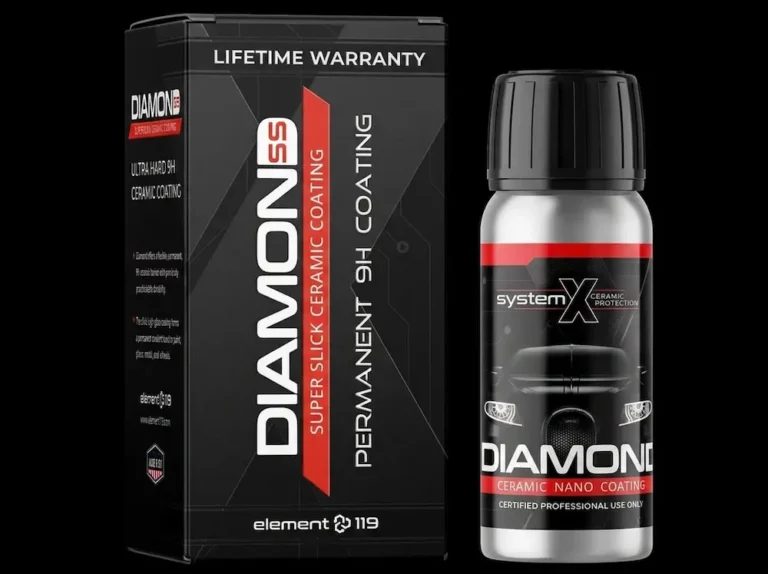
System X Diamond SS prioritizes a deep, permanently wet-looking gloss alongside a 9H+ hardness rating. It’s notably slicker to the touch than lower tiers and backs that up with a lifetime warranty or an estimated 8-year real-world lifespan.
Mid-Range and Entry-Level Options
System X Pro and Pro+ is the workhorse. It carries the full SGS certifications and Boeing approval, delivers 9H hardness, and protects up to 6 years. For most American drivers dealing with seasonal weather swings, it hits the sweet spot between cost and durability.
System X Crystal and Crystal+ is the entry-level tier. It’s perfect for short-term vehicle owners or leased cars. You get 2–3 years of warranted, semi-permanent protection that still vastly outperforms any wax or sealant.
Specialized Surface Coatings
Your car isn’t just painted metal. System X has products for every surface:
| Product | Target Surface | Key Benefit | Warranty |
|---|---|---|---|
| Glass+ | Windshields, mirrors, headlamps | Hydrophobic vision clarity, easier ice removal | Up to 2 Years |
| Wheel+ | Alloy and painted wheels | Thermal resistance against hot brake dust | Tied to vehicle package |
| LVP | Leather, vinyl, interior plastic | Liquid and stain repellency without texture change | 3 Years |
| Textile | Carpets and fabric seats | Liquid beading for easy extraction | 3 Years |
| Revive | Exterior unpainted trim | Restores faded plastics, adds UV protection | Varies |
System X Renew: The Consumer Spray
Can’t get a professional coating? System X Renew is the brand’s consumer-facing spray sealant. Independent testing found it maintained hydrophobic properties for up to 9 months—an impressive run for a spray-on product. Just buff it in carefully. Its higher solid content means sloppy application leaves streaks.
Installation: Why Prep Work Is Everything
The chemical in the bottle is almost a footnote. The real value is in the preparation.
Because System X coatings cure into a permanent, transparent shell, they lock in every defect present at the moment of application. Swirl marks, contaminants, water stains—all of it gets sealed under glass forever.
A certified installer typically runs through four stages before touching the coating:
- Chemical decontamination — Dissolves embedded iron particles and tar that soap can’t reach
- Clay bar decontamination — Physically removes any remaining surface particulates
- Paint correction — Machine polishing removes swirl marks, oxidation, and scratches
- IPA wipe-down — Strips all polishing oils so the ceramic bonds cleanly to bare clear coat
This process takes 10–20 hours depending on the vehicle’s condition. That’s where most of your money goes—not the liquid itself.
DIY vs. Professional: The Honest Difference
DIY ceramic kits use 30–60% active silicon dioxide concentrations, heavily diluted for forgiveness. Professional coatings like System X run 80–90%+ active solids. That means a narrow flash window—sometimes just 1–2 minutes per panel before the product starts curing unevenly.
Miss that window and you get a “high spot”—a hazy, iridescent streak permanently baked into the coating. Solvents can’t remove it. You have to machine-polish the entire area off and re-coat it.
Even experienced detailers occasionally struggle with this. Reddit’s r/Detailing community documents cases where authorized System X installers left high spots. The lesson: vet the shop thoroughly. The brand name on the bottle doesn’t guarantee the skill of the person holding the applicator.
What Does System X Actually Cost?
Here’s a realistic pricing breakdown based on nationwide installer data:
| System X Tier | Sedans & Coupes | Midsize SUVs & Trucks | Large Vehicles | Lifespan |
|---|---|---|---|---|
| Crystal / Crystal+ | $800–$1,000 | $1,000–$1,200 | $1,200–$1,400 | 2–3 Years |
| Pro / Pro+ | $1,000–$1,500 | $1,400–$1,700 | $1,600–$1,900 | Up to 6 Years |
| Max / Diamond | $1,500–$2,500 | $1,700–$2,800 | $2,000–$3,000+ | 10 Years / Lifetime |
Add-ons stack up fast. Glass coating adds ~$200. Wheel coating adds $200–$400. Interior protection adds ~$300. A full-vehicle Max package on a luxury SUV can easily clear $3,500.
The Hidden Cost of the “Lifetime” Warranty
Here’s the fine print most installers don’t volunteer upfront.
To keep the lifetime warranty valid, you must return to an authorized System X installer every year—within 30 days of your exact anniversary date. Miss that window and the warranty is permanently voided.
Those annual inspections aren’t free. They run $150–$300+ each time. Over 10 years, that’s an additional $1,500–$3,000 on top of your initial installation cost.
If a warranty claim is approved, System X’s maximum liability payout is $1,000. Since most of your initial cost was the detailer’s labor—not the product—a $1,000 payout may not cover re-polishing and re-coating at another shop.
The warranty also explicitly excludes:
- Water spots from hard tap water or sprinklers
- Rock chips and physical impact damage
- Malicious damage (key scratches, vandalism)
- Swirl marks from washing
- Any automated brush car wash use
You’re contractually committed to bi-weekly hand washes using pH-neutral soap, immediate drying, and periodic ceramic booster applications. That’s a real lifestyle commitment.
How System X Compares to the Competition
| Brand | Chemistry | Warranty | Annual Inspection Required? | Est. 10-Year Inspection Cost |
|---|---|---|---|---|
| System X (Max/Diamond) | Silicon Dioxide | Lifetime | Yes (30-day window) | $1,500–$3,000+ |
| Ceramic Pro (Ultimate ION) | Silicon Dioxide / ION Exchange | Lifetime | Yes | $1,500–$5,000 |
| Gtechniq (Crystal Serum Ultra) | Silicon Dioxide Composite | 9 Years | Yes | Varies |
| XPEL (Fusion Plus v2) | Silicon Dioxide | 8 Years | Yes | Varies |
| Owners Pride (OP-Select) | Silicon Carbide | 9 Years (Insurance-Backed) | No | $0 |
A few things stand out from this competitive comparison:
- Silicon carbide (used by Owners Pride) offers higher heat stability and chemical resistance than silicon dioxide—the same material in industrial cutting tools.
- Self-healing properties are increasingly common in premium competitors. Owners Pride OP-Select includes heat-activated scratch repair. System X Max currently doesn’t.
- The annual inspection model is standard across the premium tier—except for Owners Pride, which could save you thousands over a decade.
System X competes on film thickness and aerospace-grade chemical resistance. Those are legitimate advantages. But the warranty model and the absence of self-healing technology are real gaps.
The CARFAX Advantage: A Smart Resale Play
One genuinely unique System X feature is its direct integration with CARFAX. Every installation from a certified installer—including each annual inspection—gets logged permanently in your vehicle’s CARFAX history report.
Aftermarket modifications rarely help resale value. But a documented, professional-grade paint protection history tells prospective buyers and dealership appraisers something specific: this car was cared for obsessively. That documented maintenance record can increase trade-in appraisal value and differentiate your vehicle from identical models with zero documented care.
It converts part of your coating cost from pure luxury spend into a partial asset-protection play.
What Real Users Are Saying
When applied correctly over properly corrected paint, the feedback on gloss is consistent: dark-colored vehicles look dramatically richer, with a deep, liquid-like depth that standard waxes can’t match. The Diamond SS and Max coatings are frequently called out for their exceptional tactile slickness.
The self-cleaning effect earns universal praise across climates—from the dusty Southwest to the rainy Pacific Northwest. Owners report noticeably less dirt adhesion between washes and much faster cleaning sessions.
But the frustrations are consistent too. Many buyers feel misled about physical protection, expecting rock chip resistance and getting none. Others resent that maintaining the warranty requires as much effort as traditional sealants—just more expensive upfront. And some installers have drawn complaints for leaving high spots and for poor communication from System X’s corporate team.
Is System X Right for You?
System X makes sense if you:
- Own a luxury, exotic, or high-value daily driver you plan to keep long-term
- Hand-wash your car regularly and can commit to pH-neutral products
- Want documented paint protection on your CARFAX report for resale leverage
- Care deeply about maintaining a showroom-quality appearance
System X probably doesn’t make sense if you:
- Rely on automated brush car washes (this immediately voids the warranty)
- Lease your vehicle for 2–3 years (Crystal is borderline, Max is overkill)
- Primarily want protection from rock chips and physical impact (you need Paint Protection Film for that)
- Want a maintenance-free solution—ceramic coatings don’t exist
If rock chip protection is your priority, the smarter move is PPF on high-impact zones (front bumper, hood, mirrors) and a System X ceramic coating applied directly over the PPF—a hybrid approach top-tier detailers increasingly recommend.
System X is an elite product with real, proven chemistry behind it. But it’s not magic. It’s a tool that rewards disciplined owners and punishes unrealistic expectations. Go in with clear eyes, vet your installer carefully, and factor in the full 10-year cost—not just the sticker price.