
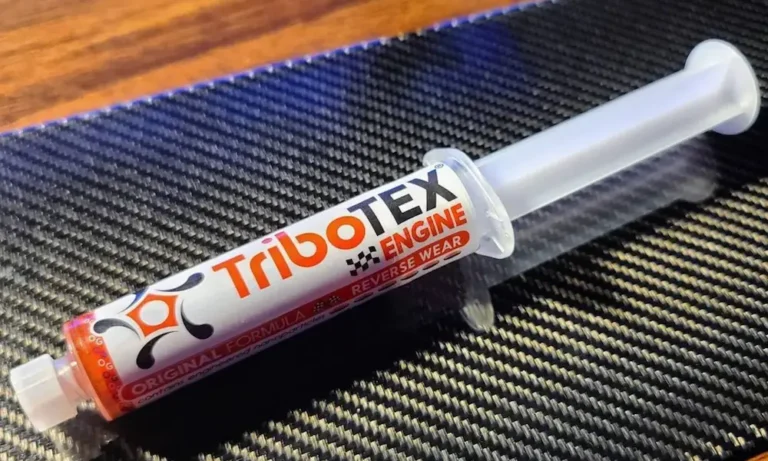
You’ve probably seen the ads. A tiny syringe of nanoparticles that promises to repair worn engine parts, boost your gas mileage, and quiet that annoying engine tick. Sounds great, right? But before you squeeze that stuff into your crankcase, you should know about the real tribotex problems mechanics and engineers keep flagging. From clogged valve timing systems to ruined oil analysis results, this additive comes with baggage the marketing won’t mention. Let’s break down what’s actually going on under the hood.
What Is TriboTEX and How’s It Supposed to Work?
TriboTEX started as research out of Washington State University back in 2011. The company built its whole pitch around a synthetic nanoparticle called magnesium silicon hydroxide.
The idea sounds cool on paper. These particles are supposedly “anisotropic,” meaning one side is sticky and one side is slippery. You pour it into your oil, drive about 500 miles, and the sticky side is supposed to bond to worn metal surfaces. The slippery side faces out, cutting friction.
The company claims this forms a diamond-like coating that fills in scratches up to 40 microns deep — about the width of a human hair. They back this up with bench tests like the Four-Ball Wear Test and testing on a Wedeven Associated Machine, claiming huge reductions in friction and wear.
Sounds impressive. But here’s where things get shaky.
The Big Problem: You Can’t Un-Wear Metal
TriboTEX’s boldest claim is that it “reverses” engine wear. It says it can fix cylinder ellipticity — the oval shape cylinders develop after tens of thousands of miles of piston rings scraping against them.
Mechanics call this claim out for a simple reason: it defies physics. Engine wear means metal has physically worn away. No liquid or nanoparticle additive poured through an oil cap can rebuild that metal or reshape a worn cylinder back into a perfect circle.
Fixing real wear requires pulling the engine, boring the cylinders, and installing new pistons. That’s it. There’s no shortcut in a bottle.
Forums full of experienced techs, like the discussions on Bob Is The Oil Guy, echo this same point again and again. Solid particles might settle into microscopic grooves temporarily. They can’t rebuild macro-scale geometry.
There’s also a bigger issue: modern synthetic oils already contain advanced liquid friction modifiers, like molybdenum dithiocarbamate. These dissolve completely into the oil and actually work better as engine temperatures climb. Solid nanoparticles don’t behave the same way. They don’t scale with heat, and they’re more likely to compete with your oil’s built-in additives than team up with them.
| Feature | Liquid Friction Modifiers (in modern oils) | Solid Nanoparticle Additives |
|---|---|---|
| Solubility | Fully dissolved, flows freely | Suspended solids, can clump or settle |
| Heat Response | Works better as engine heats up | Doesn’t scale well with rising temps |
| Tight Clearances | Passes through easily | Risk of buildup in tiny gaps |
| Chemical Teamwork | Built to work with other additives | Can clash with existing oil chemistry |
TriboTEX Problems That Can Wreck Your Engine
This is where things get expensive. Adding solid particles to modern engines isn’t just theoretically questionable — it can cause real, physical damage.
Clogged Variable Valve Timing Systems
Modern engines use variable valve timing (VVT) to adjust when intake and exhaust valves open. This system relies on oil pressure through tiny solenoids with extremely fine mesh screens.
Those screens are built to filter out even the smallest wear particles. When you add billions of nanoparticles to your oil, they can clump together inside the crankcase. Once they hit those fine screens, they can clog them completely.
According to PartCatalog’s breakdown of VVT solenoid clogging, a blocked screen cuts oil flow to the camshaft phasers. Your engine loses the ability to adjust valve timing correctly, so it defaults to a fixed “limp mode” setting.
You’ll notice:
- Rough idling
- Sudden loss of power
- A check engine light with camshaft timing codes
- Rattling or knocking noises on cold starts
Fixing this means tearing into the top of the engine to clean or replace the solenoids and phasers. That repair bill often runs into the thousands.
Stuck Piston Rings and Oil Burning
Your piston’s oil control ring has tiny drain holes that let excess oil drain back into the pan. Thick, particle-heavy additives can bake into these holes under combustion heat, causing the ring to stick or seize.
Once that ring can’t move freely, it stops scraping oil off the cylinder walls properly. That oil gets burned in the combustion chamber, which means:
- Blue smoke from the exhaust
- Rapid increase in oil consumption
- Fouled spark plugs
- Damaged catalytic converters
This shows up worse in flat or “boxer” engines, like those in Subarus and Porsches. Owners on Rennlist have reported thick startup smoke tied to exactly this kind of ring issue, since oil naturally pools against the rings when these engines sit horizontally.
Cold Start Filter Bypass Risk
Here’s a sneaky one. Oil filters have a bypass valve. When oil is cold and thick, it can’t push through the filter media fast enough, so the valve opens and sends unfiltered oil straight into your engine.
TriboTEX recommends a 500-mile break-in period for its coating to form. During that entire stretch, every cold start potentially sends a wave of unfiltered nanoparticles straight into your engine’s tightest bearing clearances. That’s a rough combo — solid particles plus zero filtration.
Additive Clash: When Chemicals Fight Each Other
Motor oil isn’t just oil. It’s a carefully balanced mix of detergents, dispersants, anti-wear agents, and friction modifiers, all engineered to work together.
Base oils can only hold so much additive before things get oversaturated. Dump in an aftermarket particulate product, and you risk what the industry calls “additive clash” — where different chemicals start competing instead of cooperating.
| Oil Component | Job It Does | What Can Go Wrong With Added Particulates |
|---|---|---|
| Detergents | Clean surfaces, neutralize acids | Get overwhelmed, leading to sludge buildup |
| Anti-Wear Agents (like ZDDP) | Form protective layer under stress | Coating can block them from bonding properly |
| Dispersants | Keep soot and debris suspended | Get overloaded, causing clumping and filter clogs |
| Friction Modifiers | Reduce friction smoothly | Compete with solid particles instead of working together |
This isn’t a small technical footnote either. It’s part of why oil companies spend years and millions of dollars getting formulas certified by the American Petroleum Institute. The moment you add an unapproved product, you’re voiding all that testing. There’s zero data showing the new mixture still protects against issues like Low-Speed Pre-Ignition, a real engine-killer in modern turbo engines that API-certified oils are specifically tested against.
It Messes Up Your Oil Analysis Results
This might be the most underrated of all the tribotex problems out there, especially if you’re the type who tracks engine health through oil sample testing.
Fleet managers and careful car owners use used oil analysis to catch problems early. Labs like Blackstone Laboratories test your oil for wear metals and contaminants. One of the most important numbers they watch is silicon.
Here’s why silicon matters: a spike usually means abrasive dirt is getting into your engine, often from a torn air filter or a vacuum leak. Catching that early can save your engine from getting sandblasted from the inside.
The problem? TriboTEX’s active ingredient is loaded with silicon. Spectrometers read raw elements, not brand names. They can’t tell the difference between silicon from a legit engine additive and silicon from dangerous dirt ingestion.
So if you’re using this product and your air filter fails, your oil analysis results will show high silicon either way. The lab won’t be able to tell if it’s your additive or a real emergency. That’s a scary blind spot to have.
Will It Void Your Warranty?
TriboTEX’s marketing leans hard on the Magnuson-Moss Warranty Act, claiming it protects you from warranty issues. That’s only half true.
The law does stop manufacturers from voiding your warranty just because you used a third-party product. But if a dealership can prove the additive directly caused a failure — like a clogged VVT solenoid packed with synthetic paste — they can legally deny your claim.
Most owner’s manuals explicitly warn against supplemental oil treatments. If your engine fails while under warranty and a tech finds nanoparticle buildup in a sensitive system, you could be stuck paying for the repair yourself. That bill can easily hit five figures on modern engines.
What Actual Customers Say
Real-world feedback tells a mixed story, but the negative reviews raise real concerns. Many users on sites like SlashGear report doing everything right — following instructions, completing the break-in period — and seeing zero change in fuel economy, power, or noise.
Diesel truck owners who paid extra for the “Big Rig” formula often say their trucks perform exactly the same towing heavy loads, additive or not.
There’s also a logical issue worth pointing out. If an engine has a real mechanical knock from worn bearings, a coating thinner than a thousandth of an inch isn’t going to silence that. Any quieting effect might just come from the oil getting thicker, not from any actual repair happening inside your engine.
The NASA Claim and Other Marketing Red Flags
TriboTEX heavily promotes its “NASA-backed” origin story. Yes, the early university research got federal grant money. But federal agencies are explicitly barred from endorsing commercial products. Grant funding for academic research isn’t the same as government approval for a retail product you pour into your car.
There’s also the crowdfunding angle. If this tech really could reverse engine wear and boost fuel economy by 6-8%, major oil companies and automakers would’ve bought the technology outright years ago. Instead, it stayed a small crowdfunded startup — which tells you something about how the big players in the industry actually view the claims.
On top of that, the company isn’t accredited by the Better Business Bureau, and its refund policy sticks customers with return shipping costs. Not exactly confidence-inspiring for a product asking you to trust it with your engine.
Final Thoughts
TriboTEX makes big promises, but the tribotex problems we’ve covered here are hard to ignore. Solid nanoparticles clogging precision VVT systems. Piston rings gumming up and burning oil. Oil analysis results getting thrown off, hiding real engine emergencies. Warranty claims potentially denied. And a “NASA-backed” story that oversells what actually happened.
Your best bet for keeping your engine running long and strong? Stick with API-certified oil, follow your manufacturer’s maintenance schedule, and skip the syringe of mystery nanoparticles. Your engine — and your wallet — will thank you.