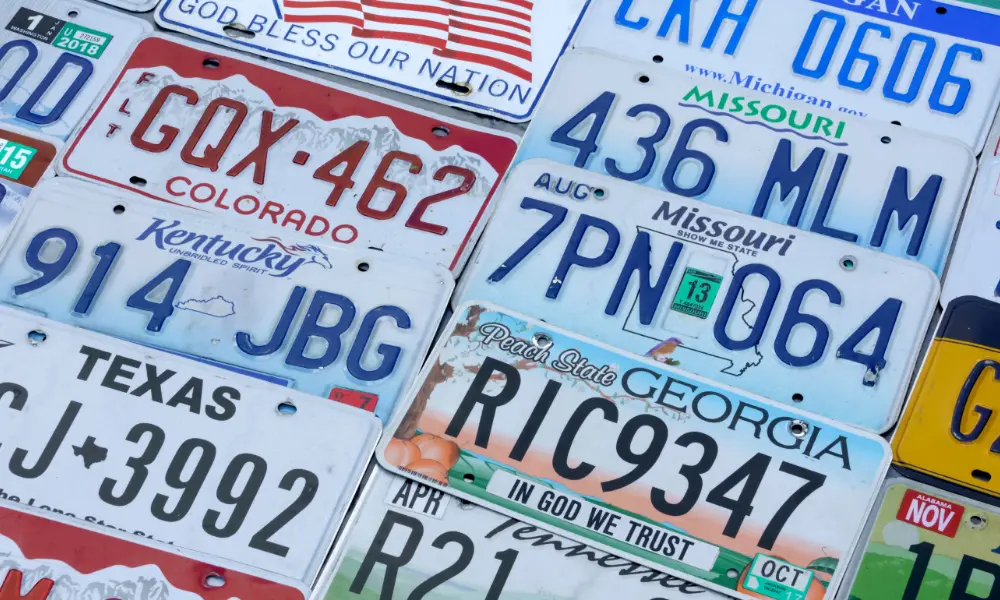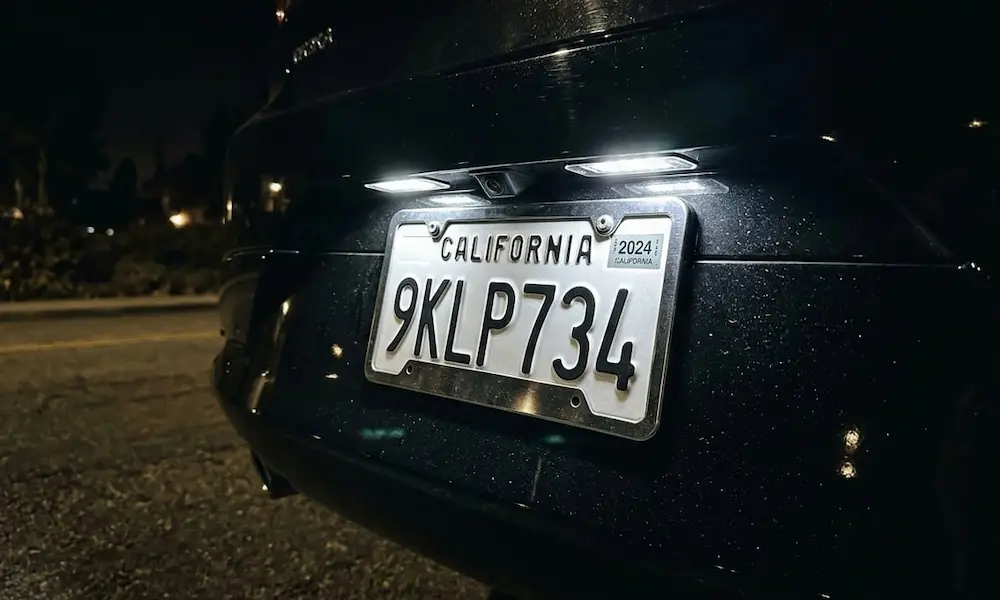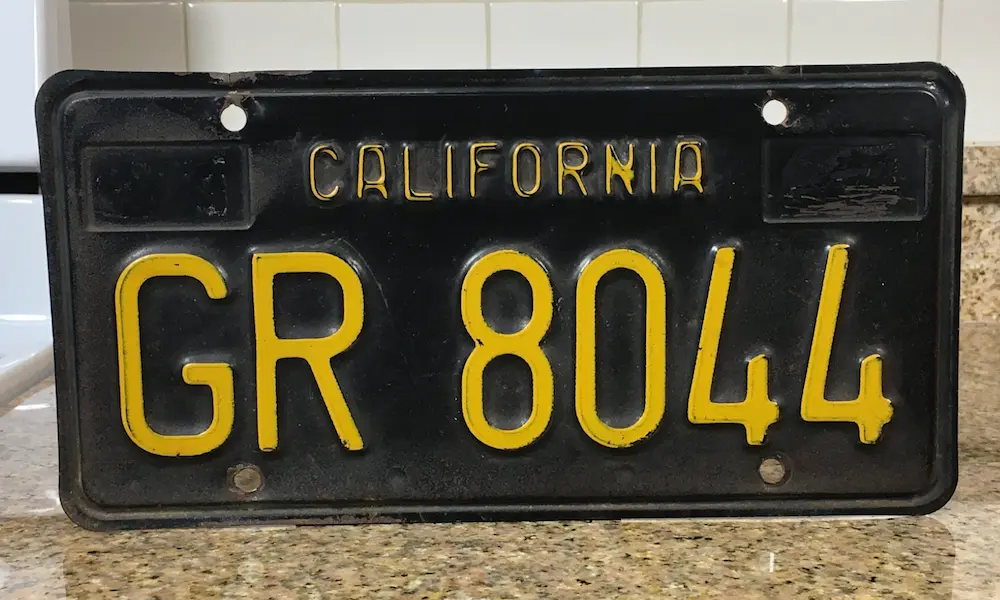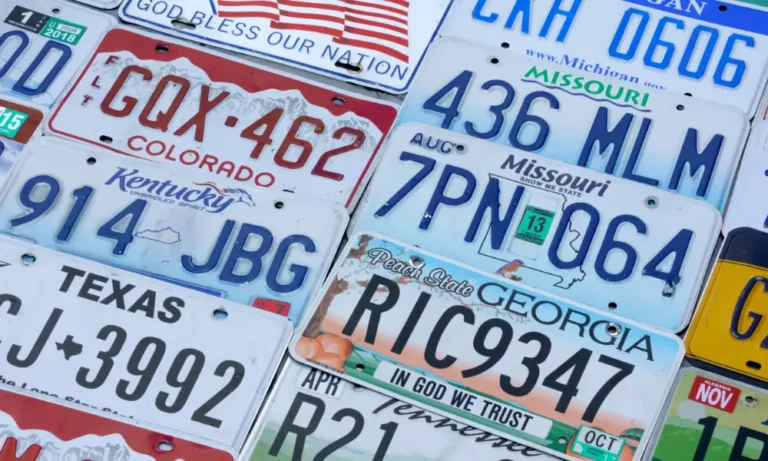
Got old license plates collecting dust in your garage? You might be unknowingly sitting on a legal liability. This guide breaks down exactly what to do with old license plates — whether you need to return them, destroy them, recycle them, or turn them into something cool.
Why Old License Plates Are a Bigger Deal Than You Think
Here’s something most people don’t realize: in most U.S. states, your license plate isn’t actually yours. The state owns it. You’re essentially borrowing it for as long as your registration is valid.
That changes everything about how you handle an old plate.
When your registration expires, you sell your car, or you move to another state, that plate enters a legal gray zone. Handle it wrong and you could face suspended licenses, fraud charges, or a stack of toll violations from a city you’ve never visited.
Let’s break down your options clearly.
States That Require You to Return Old License Plates
Some states treat old license plates like sensitive government documents — because legally, they are. These “mandatory surrender” states have strict rules, and ignoring them carries real penalties.
Florida
Florida makes this crystal clear: the plate belongs to the state. If your car insurance lapses and you haven’t surrendered the plate, Florida automatically suspends your driver’s license. That’s not a warning — that’s an immediate, automatic penalty.
To surrender, you can:
- Mail the plate to your local Tax Collector’s office
- Drop it into designated drop boxes at county offices
- If the plate is lost, submit a “License Plate Unavailable for Surrender Affidavit” along with a police report
Pro tip: Keep the surrender receipt. Florida lets you use it as a credit toward future vehicle registration, so you won’t pay the initial fee twice.
New Jersey
New Jersey requires plates to go back to the Motor Vehicle Commission. Drop them in the external drop boxes outside local MVC offices, or mail them to P.O. Box 129, Trenton. Include a self-addressed stamped envelope if you want a receipt.
Important: New Jersey won’t accept out-of-state plates. Those go back to the state that issued them.
Virginia
Virginia offers multiple surrender options: an online plate surrender portal, in-person drop-offs, or mail. But there’s a catch — if you want a partial registration refund (more on that below), skip the online portal and mail the plates with Form FMS 210 instead.
Maryland and Pennsylvania
Maryland requires all plates back without delay — even if you only have one plate from a matching pair. Pennsylvania uses Form MV-141 (Surrender of a Registration Plate) to officially mark the tag as a “dead tag.” If you’re donating a car in Pennsylvania, remove the plates before the tow truck arrives and mail them to the Bureau of Motor Vehicles in Harrisburg.
Ohio
Ohio goes the extra mile. To cancel your registration, you need a notarized Statement of Fact with the vehicle’s year, make, model, and VIN. Only the named owner or someone with Power of Attorney can do this. Once it’s canceled, it cannot be reinstated — ever.
States That Tell You to Destroy the Plate Yourself
Some states don’t want the plates back. Instead, they put the fraud-prevention burden on you. That means you need to destroy them properly — not just toss them in the trash.
New York
New York’s DMV explicitly tells residents NOT to return old plates unless required. Instead, you must destroy them yourself by:
- Cutting each plate into multiple pieces with metal shears
- Marking all identifying numbers with permanent black marker
- Dropping the pieces into scrap metal recycling — not curbside bins
Texas
Texas takes a casual approach: old plates are considered your property. Keep it as a souvenir, destroy it, or recycle it. But if you’re disposing of it, Texas law says you must permanently deface the front using permanent black ink or by cutting it into pieces before recycling.
California
California’s rules depend on the situation. If you receive replacement plates, you must surrender or destroy the old ones within five business days. When selling a car privately, plates generally stay with the vehicle — but if you’re keeping personalized plates, the standard ones must be surrendered or destroyed. Either way, file a Notice of Transfer and Release of Liability (NRL) within five days of the sale.
State-by-State Quick Reference
| State | What to Do | Key Risk If You Don’t |
|---|---|---|
| Florida | Surrender to Tax Collector | Driver’s license suspension |
| New Jersey | Mail or drop box to MVC | Ongoing liability exposure |
| Virginia | Surrender online or by mail | Continued registration fees |
| Maryland | Return to MVA | Insurance penalties |
| Pennsylvania | Submit Form MV-141 | Liability for new owner’s actions |
| Ohio | Notarized Statement of Fact | Registration can’t be reinstated |
| New York | Destroy and scrap metal recycle | Toll fraud, criminal summonses |
| Texas | Deface and destroy | Identity theft, fraud exposure |
| California | Destroy within 5 days of receiving replacement | Ongoing fraud liability |
| Illinois | Keep, transfer, or destroy; file Seller’s Report within 20 days | Legal liability for vehicle actions |
The Criminal Risk Nobody Talks About: Ghost Cars
This is where things get serious. A discarded but intact license plate is a goldmine for criminals.
New York’s problem got so bad that Governor Hochul launched “Operation Plate Check” — a multi-agency enforcement operation specifically targeting ghost cars (vehicles using fake, stolen, or improperly retained plates to dodge tolls and law enforcement).
Here’s how it plays out for innocent people: someone fishes your old plate from a trash bin, slaps it on their car, and runs through a dozen toll gantries. Every single automated camera captures your plate number. The citations get mailed to your address. Without a surrender receipt or police report, you spend months fighting fines from cities you’ve never driven through.
Innocent people have reported receiving years of continuous toll violations simply because they failed to destroy a plate before discarding it.
How to Properly Destroy an Old License Plate
If your state says destroy it, here’s how to do it right:
- Cut through the numbers — Use heavy-duty metal shears or aviation snips. Cut directly through the alphanumeric characters so no optical recognition software can read them
- Fold and deform it — No shears? Score the plate down the center, fold it lengthwise multiple times, and hammer it flat. This defeats automated license plate readers (ALPRs)
- Black out the numbers — Use permanent black marker to heavily cover all identifying text, state logos, and any validation decals
- Scrape off the stickers — Registration stickers get stolen and resold. Use a razor blade to remove every last one
- Take a photo — Photograph the destroyed plate fragments next to a handwritten note with the date. Store this with your vehicle records as proof
For businesses managing large vehicle fleets, companies like LegalShred offer industrial license plate shredding services with documented certificates of destruction — a smart move for any company with corporate liability exposure.
Can You Get a Refund on Your Registration?
Yes — in some states, surrendering your plates early can put money back in your pocket.
Virginia offers a partial refund if your registration has six or more full months remaining. But as mentioned earlier, you can’t claim this refund through the online surrender portal. You need to mail the plates with Form FMS 210. Refunds take about 30 days, and Virginia won’t refund Highway Use fees or one-time plate reservation fees.
Illinois also allows refunds under its Administrative Code, Title 92, Part 1003. You’ll need proof of the original payment, a letter stating when you stopped using the vehicle, and the physical plate itself. If your car was stolen, a police report substitutes for the plate surrender.
Always surrender the plate before canceling your insurance. The moment your insurer reports a coverage cancellation to the state and the plate still shows as active, automated systems assume you’re driving uninsured. That triggers immediate administrative penalties in states like Florida.
How to Recycle Old License Plates the Right Way
Old plates are almost always made of aluminum or galvanized steel — both infinitely recyclable without losing quality. But you can’t just toss them in the curbside bin.
Their rigid shape, reflective vinyl coatings, and sharp cut edges create hazards for sorting machinery and workers at standard recycling facilities. Communities from Ann Arbor, Michigan to Monroe County, New York classify plates as scrap metal — not curbside recyclables.
The right move:
- Take them to a local scrap metal yard
- Drop them at a municipal public works heavy recycling station
- Use a certified industrial shredding service for bulk disposal
If you’re selling the metal in Texas, know that scrap yards are legally required to record your ID and vehicle info and upload the transaction to the Texas Online Metals (TOM) database. It’s part of the Texas Metals Program to prevent stolen government property from entering the scrap stream.
Selling Old License Plates as Collectibles
Old plates have a real collector market. The Automobile License Plate Collectors Association (ALPCA) has been around since 1954, with over 3,000 members across 19 countries, hosting events like their annual international convention. Collectors hunt specific years, states, or rare issue types.
What’s Legal to Sell
Selling expired collectible plates is perfectly legal — with these rules:
- The plate must be fully expired and retired from active use
- Remove all active registration stickers before listing
- eBay requires plates to be stated as at least three years old in the listing description
- Never list U.S. Government plates — possession of them violates federal law under 18 U.S.C. Section 641, and the GSA actively monitors the secondary market
Using Old Plates on Classic Cars (Year of Manufacture Laws)
If you restore vintage vehicles, this one’s for you. About 35–38 states allow Year of Manufacture (YOM) registration, which lets you legally drive a classic car with period-correct authentic plates.
Requirements vary but typically include:
- Authentic plates only — New York prohibits replicas or repainted reproductions
- Matching pairs if the state issued two plates that year
- Vehicle age thresholds — New York requires the vehicle to be more than 25 years old; Wisconsin generally requires over 20 years old)
- Keep current registration in the vehicle — In Ohio, the modern historical plate must stay physically in the car even when displaying the vintage plate
This drives serious demand in the collector market, since restorers need pristine, year-specific plates to complete accurate restorations.
Creative Ways to Reuse Old License Plates
If your plates don’t qualify for YOM laws and aren’t collectible, don’t send them straight to the scrap pile. Artisans and DIYers have found genuinely useful applications:
- Key and mail organizer — Mount a plate to a piece of scrap pine with basic screws and add hooks for an entryway organizer
- Storage boxes — Score and fold two plates with a jigsaw and pop rivets into an enclosed container
- Industrial lampshade — Bend plates into semi-cylinders, join them, drill a central hole, and fit a pendant lamp fixture
- Rustic wall art — Mount plates to weathered wood with sawtooth hangers for localized home decor
- Address markers — Cut individual numbers with shears and arrange them as street address signs
These projects keep the metal out of the waste stream indefinitely — which is genuinely good for the environment.
Donating Your Car? Don’t Forget the Plates
Charitable vehicle donation is a great way to dispose of an unwanted car. But non-profit organizations explicitly warn donors: remove the plates before the tow truck arrives. The moment that vehicle leaves your driveway with your plates still attached, you carry liability for whatever happens next.
Strip the plates, return them to your state DMV, and keep the surrender receipt. Some states, like Michigan, even fund causes like organ donation awareness through Donate Life license plates, turning an expired plate into a direct charitable contribution through the specialty plate system.
The Bottom Line on What to Do with Old License Plates
Knowing what to do with old license plates isn’t just about tidying up the garage — it’s about protecting yourself legally and financially.
Here’s the short version:
- Check your state’s rules first — mandatory surrender vs. destroy-it-yourself
- Never just throw an intact plate in the trash — that’s an invitation for fraud
- Surrender before canceling insurance — avoid automated license suspension
- Recycle at a scrap metal facility — not your curbside bin
- Sell, collect, or upcycle — if the plate is expired and legally clear
A little admin work now saves you from a lot of headaches later.