Brake pulsation, steering wheel shimmy, or that grinding noise that makes you wince at every stoplight — sound familiar? You’re probably wondering if O’Reilly’s turns rotors and whether it’s worth your time. Good news: this post covers exactly that, plus what it costs, what can go wrong, and how to make the smartest call for your brakes and your wallet.
Yes, O’Reilly’s Does Turn Rotors
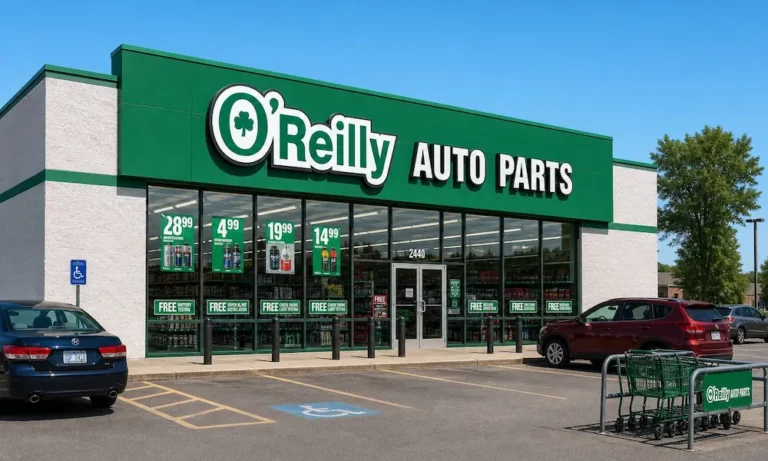
O’Reilly Auto Parts offers in-store brake rotor and drum resurfacing at the majority of their U.S. locations. The service is free to walk in and get a quote, and it doesn’t require an appointment at most stores.
Rotor turning (also called resurfacing) is a machining process that shaves a thin layer of metal off the rotor’s surface. It removes:
- Surface rust and light corrosion
- Brake pad deposits and glazing
- Minor ridges and uneven wear patterns
The result is a smooth, flat friction surface that lets your new brake pads bed in evenly and stops that annoying pedal pulsation.
One thing to understand upfront: O’Reilly doesn’t touch your car. They have no service bays, no lifts, and no mechanics on staff. You pull the rotors yourself, drive them to the store, and they machine them on a bench-top brake lathe. If you need tools to pull the rotors, their loaner tool program lets you borrow caliper piston rewind tools, hub pullers, and more for a fully refundable deposit.
How Much Does O’Reilly Charge to Turn Rotors?
Here’s the current pricing breakdown:
| Vehicle Type | Resurfacing Cost Per Rotor |
|---|---|
| Passenger car / light vehicle | $20 – $25 |
| Light/medium truck, SUV, oversized rotor | $30 |
These rates have climbed significantly. Historically, rotor turning ran about $10–$12 per rotor. So at $20–$25 a pop, it’s no longer the automatic bargain it once was.
Is Resurfacing Actually Cheaper Than New Rotors?
It depends heavily on your vehicle.
For a standard commuter car, budget replacement rotors from Dorman or ACDelco Silver run $25–$60 each. At that price, paying $20–$25 to resurface a worn rotor doesn’t always make financial sense — especially since the resurfaced rotor comes with zero warranty.
For a luxury sedan, performance vehicle, or heavy-duty truck, OEM-quality rotors from brands like Brembo or EBC Brakes can cost $100–$250 each. In that case, a $30 resurfacing fee is an easy decision, provided the rotor passes inspection.
The Free Inspection: What O’Reilly Checks Before Turning Your Rotors
Before any machining happens, O’Reilly staff run a mandatory free inspection. They’re not just eyeballing your rotors — they’re using a precision micrometer to measure actual rotor thickness.
The rule is simple: after machining, the rotor must remain above the manufacturer’s minimum discard thickness. If it won’t, they won’t touch it. Thin rotors can’t dissipate heat properly, which leads to brake fade, warping, and in worst-case scenarios, structural failure under hard braking.
Here’s a quick guide to what passes and what doesn’t:
| Rotor Condition | Resurfacing Result | Why |
|---|---|---|
| Surface glazing | ✅ Good candidate | Lathe shaves off crystallized pad deposits and restores stopping surface |
| Light rust, minor ridges | ✅ Good candidate | Smooths out corrosion for clean pad-to-rotor contact |
| Deep grooves or gouges | ❌ Not suitable | Clearing deep grooves requires removing too much metal |
| Hard spots or thermal cracking | ❌ Not suitable | Altered metallurgy resists lathe bits; structural integrity is compromised |
| Severe warping | ❌ Not suitable | Flattening extreme warp removes too much material, leaving rotor dangerously thin |
The Warranty Situation Nobody Mentions
This part matters. A resurfaced rotor carries no warranty from O’Reilly. You’re continuing to use a used component — one that’s now slightly thinner than before.
New rotors are a different story:
| Product Type | Warranty Coverage |
|---|---|
| Resurfaced rotors | No warranty |
| Budget replacement rotors | 1–2 years (manufacturing defects) |
| Premium replacement rotors | 2–3 years (manufacturing defects, original purchaser only) |
| New brake pads | Limited lifetime on manufacturing defects |
Check O’Reilly’s full warranty policy for the fine print on specific product lines. The no-warranty reality of resurfacing is a real factor when you’re weighing cost versus long-term value.
The Honest Truth: It Doesn’t Always Go Smoothly
O’Reilly markets rotor turning as a standard in-store service, but the real-world experience can vary a lot depending on which store you visit.
Here’s why:
Machine issues are common. Brake lathes are precision instruments, and many in-store machines suffer from calibration drift, worn cutting bits, or mechanical faults after years of heavy use. Not every location has a fully functional lathe at any given time.
Trained operators are limited. Running a brake lathe correctly requires real skill. Many stores have only one or two people who know how to operate the machine properly — usually the store manager or a senior parts professional. If they’re off that day, you’re waiting or driving to another location.
Turnaround times can surprise you. Expect somewhere between 40 minutes and a few hours under normal conditions. If the lathe needs calibration or there’s a queue, it can stretch to the next day. Don’t pull your rotors off a vehicle you need to drive to work tomorrow and assume you’ll be back on the road in an hour.
Pro tip: Call your local O’Reilly before you pull a single lug nut. Confirm the lathe is working and a trained operator is on shift during your visit window. This one call saves you from leaving your car on jack stands while your rotors sit on a retail counter.
What the Pros Do (and Why)
Commercial shops almost never resurface rotors anymore. When technician labor rates run $150+ per hour, the time cost of removing, machining, and re-inspecting used rotors beats the cost of just swapping in new ones. Shops also want to eliminate liability from noise complaints or premature warping.
For DIYers, the math is different. Your labor is free. But you still need to make smart decisions.
How to Decide: Resurface or Replace?
Follow this sequence before you commit to anything:
Step 1 — Measure first.
Grab a brake micrometer and check your current rotor thickness before going anywhere. If you’re already close to the minimum discard thickness stamped on the rotor casting, skip resurfacing entirely. The lathe will cut past the safety limit, and O’Reilly’s technician will turn you away anyway.
Step 2 — Price it out.
Compare the resurfacing fee to the cost of new rotors for your specific vehicle. For cheap, commoditized rotors, replacement often wins. For premium or heavy-duty rotors, resurfacing wins every time — assuming the rotor passes inspection.
Step 3 — Confirm service availability.
Call your nearest O’Reilly location and verify the lathe is operational and a trained operator will be in. No exceptions. Don’t assume.
Step 4 — Always replace the pads at the same time.
Running old, unevenly worn pads on a freshly resurfaced rotor will re-introduce grooves and heat spots within weeks. You’ll undo everything the lathe just fixed. New pads every time, no debate.
Step 5 — Fix any caliper issues first.
A sticking caliper piston or worn slide pins apply constant uneven pressure on one side of the rotor. This creates localized heat buildup that cracks and warps the rotor fast — whether it’s freshly machined or brand new. Fix mechanical brake issues before you invest in any rotor service.
O’Reilly vs. AutoZone for Rotor Turning
Here’s something worth knowing: AutoZone doesn’t offer rotor resurfacing at most of its locations. O’Reilly has a clear service advantage here when their equipment and trained staff are available. That “when” is the catch — it’s a strong competitive edge that’s sometimes undercut by operational inconsistency at the store level.
Pep Boys offers resurfacing at some locations, but their service model is closer to a full repair shop, which comes with longer wait times and higher overhead costs.
For a DIYer who wants fast, affordable rotor turning without paying shop labor rates, O’Reilly remains your most accessible option — as long as you call ahead and set realistic expectations.
O’Reilly’s Machine Shop Services Go Way Beyond Rotors
Standard in-store rotor turning is just one layer of what O’Reilly offers. Their dedicated automotive machine shop network handles significantly more complex work, including:
- Manual transmission flywheel grinding
- Engine cylinder boring and resizing
- Cylinder head resurfacing
- Crankshaft reconditioning
- Connecting rod reconditioning
These services aren’t available at every retail location, but they exist for serious engine rebuilds and heavy mechanical restorations. Worth knowing if you’re deep into a project vehicle.
The Bottom Line on Does O’Reilly’s Turn Rotors
O’Reilly does turn rotors — yes. The service is real, it’s widely available, and at $20–$30 per rotor, it makes strong financial sense for premium or heavy-duty applications. For cheap commuter rotors, the math is close enough that replacement might be smarter, especially when you factor in the zero-warranty reality of resurfacing.
The biggest variable isn’t price or quality — it’s operational consistency. Call ahead, confirm the lathe works, confirm a trained operator is there, measure your rotors before you pull them, and always pair the service with fresh pads and hardware. Do that, and O’Reilly’s rotor turning service delivers genuine value for a DIY brake job.