Got a Caterpillar C7 and not sure how much oil it actually takes? You’re probably finding different numbers everywhere — 19 quarts, 22 quarts, 28 quarts — and none of them seem to agree. There’s a good reason for that. The Caterpillar C7 oil capacity isn’t one-size-fits-all, and getting it wrong causes real damage. Read this to the end, and you’ll know exactly what your engine needs.
Why the C7 Oil Capacity Question Is Trickier Than You Think
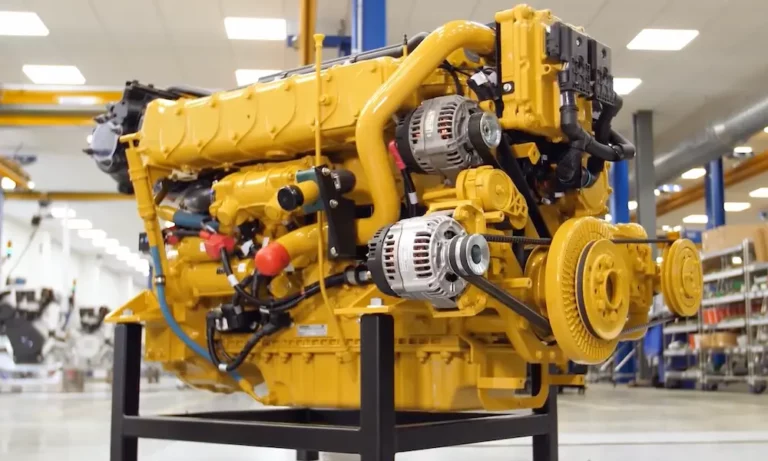
The Caterpillar C7 is a 7.2-liter inline six-cylinder diesel produced between 2003 and 2009. It replaced the 3126 and landed in everything from motorhomes and box trucks to marine vessels and oil field equipment.
Because it dropped into so many different machines, Caterpillar built the C7 with multiple oil pan configurations. Each pan holds a different volume of oil. There’s no universal answer — the correct capacity depends entirely on which pan is bolted to your engine.
Here’s the other thing that makes oil volume critical on a C7: the engine uses oil to fire its fuel injectors.
The C7’s Hydraulic Electronic Unit Injection (HEUI) system uses high-pressure engine oil as the hydraulic fluid that physically actuates each injector. If the oil volume is wrong, the hydraulic pressure is wrong, and the injectors misfire. You get poor combustion, lost power, and potentially destroyed injector internals. Getting the oil level right isn’t just routine maintenance — it’s mission-critical.
Caterpillar C7 Oil Capacity by Sump Configuration
Here’s the breakdown you actually need. The specific oil pan installed dictates everything.
| Sump Configuration | Common Applications | Caterpillar C7 Oil Capacity | Maintenance Interval |
|---|---|---|---|
| Shallow Sump | Motorhomes, box trucks, tow trucks | 19 U.S. quarts (18 liters) | 11,000 miles / 1 year |
| Intermediate Sump | Class 8 daycabs, medium-duty freight | 22 U.S. quarts | 11,000 miles / 1 year |
| Deep Sump | School buses, heavy vocational trucks | 26.5–28 U.S. quarts (25–26 liters) | 15,000 miles / 1 year |
The 19-Quart Shallow Sump
The 19-quart shallow pan is the most common configuration out there. You’ll find it on over-the-road trucks, diesel pusher motorhomes, and straight trucks where ground clearance matters.
This configuration has practically zero tolerance for overfilling. Add even a quart or two too many, and the spinning crankshaft counterweights hit the oil surface at up to 2,400 RPM. That turns your oil into aerated froth, wrecks injection pressure, and starts pushing oil out the breather tube. More on that in a minute.
The 22-Quart Intermediate Sump
Certain C7 installations call for 22 quarts. This intermediate configuration fits specific truck chassis where a slightly deeper pan fits without ground clearance problems. Aftermarket steel replacement pans in this size — like the PAI 341376 kit — are common upgrades for worn or cracked original aluminum pans.
The 26.5 to 28-Quart Deep Sump
Heavy-duty school buses, like those from Blue Bird, frequently use the deep sump configuration. At 26.5 to 28 quarts, this larger oil volume handles more thermal load and stretches the maintenance interval to 15,000 miles. More oil means more chemical capacity to neutralize acids and suspend soot before the additive package gives out.
Don’t Forget Auxiliary Filters
If your C7 runs an aftermarket bypass filtration system, the standard capacity numbers don’t tell the whole story. Those external filter housings and routing lines absorb additional oil volume. You need to calculate your true fill amount by adding the bypass system’s volume to your baseline pan capacity. Skipping this step means starting a cold engine with an underfilled crankcase.
Steel vs. Aluminum Oil Pans: What’s on Your Engine Matters
Caterpillar used both cast aluminum and stamped steel oil pans throughout the C7’s production run. The material difference affects more than just weight.
Cast Aluminum Pans
Aluminum pans are about 35% lighter than steel and transfer heat out of the oil more efficiently. That’s great for fuel economy and thermal management.
The problem? Aluminum is brittle. It’s often porous from the casting process, and it has no malleability. A rock strike or a hard curb contact doesn’t dent an aluminum pan — it cracks or shatters it. That means instant, catastrophic oil loss on the road.
Stamped Steel Pans
Steel pans are heavier and less thermally efficient, but they take a hit and deform rather than fracture. A dented steel pan reduces volume slightly, but the engine keeps running. That’s why most motorhomes and heavy trucks eventually end up with steel pans, whether factory-installed or as aftermarket replacements.
The PAI 341376 steel pan kit is a popular direct-fit replacement for worn aluminum pans. It’s laser-measured for exact fitment, features engineered sealing ridges to prevent gasket seepage, and includes a corrosion-resistant finish that handles road salt and industrial chemicals. Key specs below:
| Steel Pan Spec | Detail |
|---|---|
| Material | Heavy-gauge stamped steel |
| Capacity | 22 U.S. quarts |
| Bolt holes | 36 |
| Drain plug thread | M18 x 1.5 |
| Dimensions (L x W x H) | 32.62 x 11.43 x 9.00 inches |
| Extras | Integrated oil level sensor port, corrosion-resistant finish |
The Overfilling Problem: Why Your C7 Might Be “Burning” Oil
This is probably the most misunderstood issue on the C7, especially in the motorhome community. Owners watch their oil level drop and assume the engine’s rings are toast. In most cases, the real culprit is overfilling.
Here’s what actually happens when you put too much oil in a 19-quart C7:
- The crankshaft counterweights hit the elevated oil surface at high speed
- The oil gets whipped into an aerated, frothy mist
- Internal crankcase pressure rises from blow-by gases and mechanical churning
- The pressurized mist exits through the crankcase breather tube (the “slobber tube”)
- Oil coats the rear radiator fins
- Road debris sticks to the oily fins and blocks airflow through the radiator core
- The engine overheats
The oil level drops on the dipstick. The back of the coach is covered in oil mist. The owner assumes internal wear. In reality, the engine is purging the excess volume through the ventilation system to protect itself.
This happens because the chassis builder — not Caterpillar — supplies the dipstick. Every vehicle mounts the engine at a slightly different angle. The factory dipstick markings are frequently wrong for your specific installation. The fix is a one-time dipstick calibration.
How to Calibrate Your C7 Dipstick (Do This Once, Fix It Forever)
This procedure, recommended by diesel technicians for virtually every C7 installation, permanently marks your dipstick based on your engine’s actual mounting angle. Park on a perfectly level surface before you start.
Step 1 — Drain warm oil completely. Run the engine to operating temperature, shut it down, and drain oil from the deepest point of the pan. Let it drain for at least 20 minutes. Replace the filters at the same time.
Step 2 — Calculate your ADD mark fill volume. Identify your pan’s baseline capacity (say, 19 quarts). Subtract 2 quarts for the operational range between ADD and FULL. Your initial fill amount is 17 quarts.
Step 3 — Fill to the ADD level. Pour exactly 17 quarts of fresh oil into the engine.
Step 4 — Prime and wait. Start the engine, let it idle briefly to prime the oil pump and fill the new filter. Shut it down. Wait at least 30 minutes — a full hour is better — so all oil drains back into the pan from the valvetrain.
Step 5 — Scribe the ADD mark. Pull the dipstick, wipe it clean, and engrave a permanent line at the current fluid level. Grind off or deface the old factory ADD mark.
Step 6 — Add the remaining 2 quarts. Bring the total to your full capacity (19 quarts). Wait for it to settle.
Step 7 — Scribe the FULL mark. Engrave a second permanent line. Deface the old factory FULL mark.
That’s it. Your dipstick now reflects your actual engine geometry. The slobber tube stops dripping, the radiator stays clean, and the “oil consumption” problem disappears.
Oil Specs and Change Intervals: What Goes in Matters Too
Viscosity and API Rating
Caterpillar specifies API CI-4 or CH-4 rated engine oil for the C7. These ratings include the chemical dispersant packages that keep soot particles suspended and out of the tight hydraulic injector tolerances.
For standard temperature ranges (above 0°F and below 104°F), the recommended grade is SAE 15W-40. In cold climates, SAE 10W-30 or a full synthetic SAE 5W-40 work safely and ensure fast flow to the HEUI injectors on cold starts.
Don’t use lower-grade oils. They lack the chemical protection modern low-emission diesels require and will accelerate wear inside the hydraulic injection system.
Change Intervals by Application
- 19-quart on-highway: 11,000 miles or 1 year
- 28-quart school bus/vocational: 15,000 miles or 1 year
- Industrial stationary: Every 250 operating hours
- Marine: Every 250–500 operating hours depending on load and rating
Large fleets often use oil sampling programs to analyze wear metals and additive depletion. That data lets you extend or shorten intervals based on actual oil condition rather than guesswork.
Application-Specific Capacities: Marine and Industrial
Marine C7 Configurations
The C7.1 ME425 marine main propulsion engine carries 20 liters (5.3 U.S. gallons) of oil in standard configuration. Higher-output versions rated up to 454 horsepower expand that to 25 liters (6.6 U.S. gallons). Marine pans use internal baffling to keep oil around the pickup tube during heavy rolling and pitching — the engine handles up to 20 degrees fore-to-aft and 30 degrees athwartship while running.
Industrial and Petroleum Sector Configurations
Standard industrial C7 engines carry 13.7 to 16.9 quarts depending on the specific block and aftertreatment setup. Hazardous location C7 engines used in oil field applications — cementing units, coil tubing, acidizing rigs — run up to 34 liters (about 9 U.S. gallons) of lube oil to manage the thermal demands of continuous extreme-load operation.
The Bottom Line on Caterpillar C7 Oil Capacity
There’s no universal Caterpillar C7 oil capacity. Your number is 19, 22, or 26.5 to 28 quarts depending on the pan bolted to your engine — and adding too much is just as destructive as running it low. Identify your sump, calibrate your dipstick once, use API CI-4 or better 15W-40, and stick to your application’s service interval. That’s the formula for keeping a C7 running strong.