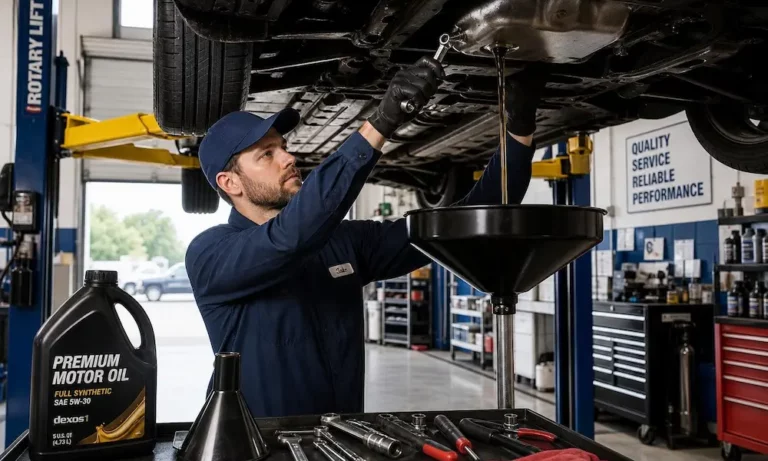
Yes, Firestone does oil changes — and they do a lot of them. But before you book an appointment, you probably want to know what’s included, how much it costs, and whether it’s actually worth your time. Stick around, because this covers everything.
Yes, Firestone Does Oil Changes (Here’s the Proof)
Firestone Complete Auto Care performs roughly 19,000 oil changes every single day across more than 1,700 locations nationwide. That’s not a side hustle — oil changes are a core part of what they do.
Most locations are open seven days a week, with weekday hours typically running from 7:00 AM to 7:00 PM. Walk-ins are welcome, but you can also schedule an appointment online to skip the wait.
Whether you’re in Plano, Texas, Knoxville, Tennessee, or anywhere in between, there’s likely a Firestone close enough to make it convenient.
What Kind of Oil Changes Does Firestone Offer?
Firestone doesn’t offer just one type of oil change. They carry a full range of motor oil options to match your engine’s needs.
Conventional Oil
This is the standard, budget-friendly option. It works well for older vehicles running under normal conditions. It gets the job done, but it breaks down faster under heat and stress than synthetic options.
Full Synthetic Oil
Firestone uses Pennzoil Platinum full synthetic, which is made from natural gas — not crude oil. That gives it an incredibly uniform molecular structure, which means better protection during cold starts, extreme heat, and stop-and-go traffic.
If your car regularly deals with temperatures below 40°F or above 90°F, full synthetic is the smarter call.
Synthetic Blend Oil
A mix of conventional and synthetic base stocks. It’s a solid middle-ground choice for drivers who tow, haul, or push their vehicles harder than average — without paying full synthetic prices.
High-Mileage Oil
Got more than 75,000 miles on the odometer? High-mileage oil is built for you. It contains seal conditioners that help reduce oil leaks, plus extra detergents to clean out built-up sludge. If your engine’s burning a little oil or you notice seepage, this is worth a look.
Diesel Oil
Diesel engines run hotter and under higher pressure. Firestone handles them using products like Shell Rotella, which is specifically engineered to stand up to heavy-duty diesel combustion.
| Oil Type | Best For | Key Benefit |
|---|---|---|
| Conventional | Standard engines, mild climates | Most affordable option |
| Full Synthetic | Modern engines, extreme temps | Best protection and cleaning |
| Synthetic Blend | Towing, hauling, hard use | Balance of performance and price |
| High-Mileage | Engines over 75,000 miles | Reduces leaks, cleans sludge |
| Diesel | Heavy-duty diesel vehicles | Handles soot and high heat |
What’s Actually Included in a Firestone Oil Change?
Here’s where Firestone separates itself from a basic quick-lube shop. Every oil change comes with a free 19-point Courtesy Inspection — no upselling required to unlock it.
The Oil Change Itself
A technician lifts your vehicle, drains the old oil into a containment system (which gets recycled later), swaps out the old filter, installs a new one, and refills the engine with the correct oil type and volume. They also reset your oil life monitor and slap a reminder sticker on your windshield.
The 19-Point Courtesy Check
Think of this as a quick health scan for your whole car. Here’s what they look at:
Under the hood:
- Battery voltage and terminal condition
- Engine air filter and cabin air filter
- Coolant, brake fluid, power steering fluid, and wiper fluid levels
- Drive belts and hoses for cracks or fraying
Underneath the car:
- Exhaust system — manifold, catalytic converter, muffler
- Steering and suspension components
- Brake pads, rotors, or drums (where visible)
- Brake fluid level
Tires and exterior:
- Tread depth and wear patterns
- Tire pressure adjusted to spec
- Headlights, taillights, brake lights, and turn signals
- Windshield and wiper blade condition
This inspection gives you a real snapshot of your car’s health. Catching problems early — like a worn belt or low brake fluid — can save you from a much bigger repair bill down the road.
| System Checked | What They Look At | Why It Matters |
|---|---|---|
| Electrical | Battery, terminals | Prevents unexpected no-starts |
| Fluids | Coolant, brakes, steering, washer | Avoids overheating and hydraulic failure |
| Tires | Tread, pressure, wear | Keeps handling and braking reliable |
| Undercarriage | Exhaust, suspension, shocks | Affects safety and ride quality |
| Lights & Wipers | All exterior lights, blades | Critical for visibility and road safety |
How Much Does a Firestone Oil Change Cost?
Pricing varies depending on the oil type, your engine size, and your location. But here’s a general idea of what you’re working with.
Base Prices by Oil Type
- Conventional: Around $29.99 with a coupon
- Synthetic blend: Mid-range, often discounted
- Full synthetic / high-mileage: List price minus $20 with promotional offers
Coupons and Rebates
Firestone runs oil change coupons regularly. You’ll find them on their website, through the My Firestone app, and via email. Some current-style offers include:
- $20 off synthetic or high-mileage oil changes
- $40–$50 prepaid Mastercard rebate for premium oil services using Pennzoil Platinum or Shell Rotella
- $25 prepaid Mastercard when you bundle a fluid exchange service
| Offer Type | Typical Value | How to Access |
|---|---|---|
| Standard oil change deal | ~$29.99 | Printed or digital coupon |
| Premium oil discount | $20 off | Promo code online |
| Rebate reward | $40–$50 Mastercard | Online or mail-in claim |
| Fluid exchange bundle | $25 Mastercard | Bundled service purchase |
Always check firestonecompleteautocare.com/offers before you go. There’s almost always something running.
Does Firestone Back Up Their Oil Changes With a Warranty?
Yes — and it’s one of the better guarantees in the business.
The 3-Month / 3,000-Mile Warranty
Every oil change comes backed by a limited parts and labor warranty covering 3 months or 3,000 miles, whichever comes first. If something goes wrong due to improper installation or a faulty part, they fix it at no charge.
The best part? This warranty is honored at any Firestone location in the country. So if you get your oil changed in Denver and something feels off when you’re in Atlanta, you don’t have to track down the original shop.
The Triple Promise
Firestone also backs their services with a Triple Promise:
- Fixed Right: They do it correctly the first time. If not, they redo it free during the warranty period.
- Priced Right: For tires, they match any locally advertised price. Find it cheaper within 30 days? They refund 200% of the difference.
- Right On Time: If your car isn’t ready when they promised, you get 10% off your next purchase (up to $25).
How to Book a Firestone Oil Change
You’ve got two solid options.
Walk in: Most locations handle walk-ins without a fuss. Bring your car, drop it off or wait, and you’re usually out within an hour.
Book online: Scheduling online is worth it if you want to lock in a time. You pick your vehicle, your service, and your preferred location. The shop can prep in advance, which often means a faster turnaround.
Use the My Firestone App
The My Firestone app (available on iPhone and Android) handles more than just booking. Here’s what it gives you:
- Full service history for your vehicle
- Personalized maintenance reminders based on your mileage
- Roadside assistance access
- Exclusive digital coupons you can show right at the counter
If you’re the type who forgets when your last oil change was, the app is genuinely useful.
How Often Should You Get an Oil Change at Firestone?
The old “every 3,000 miles” rule is outdated for most modern cars. Firestone recommends checking your owner’s manual first — it’s the most accurate source for your specific engine.
Here’s a general guide based on oil type:
- Conventional oil: Every 3,000–5,000 miles
- Synthetic blend: Every 5,000–7,500 miles
- Full synthetic: Every 7,500–15,000 miles (varies by vehicle)
- High-mileage oil: Follow manufacturer guidance, typically 5,000–7,500 miles
Your driving habits also matter. Short trips, heavy traffic, extreme temperatures, and towing all wear oil down faster. If any of those describe your daily commute, lean toward the shorter end of the range.
What Happens to Your Old Oil?
Firestone collects and recycles the used oil and filters from every service. Old oil goes to authorized processors who re-refine it into new lubricants or use it as industrial fuel. Steel filters get recycled too.
It’s a small thing, but it means your routine maintenance isn’t adding waste to a landfill.
Is Firestone Worth It for an Oil Change?
Here’s the honest answer: if you want a quick, cheap oil change with zero extras, a dedicated quick-lube shop might be marginally faster. But Firestone brings things a quick-lube can’t match — over 12,000 ASE-certified technicians, the ability to fix problems they find on the spot, a nationwide warranty, and a free multi-point inspection every time.
That combination makes Firestone a strong choice, especially if you want more than just fresh oil — you want a shop that actually checks whether your car is road-safe while they’re at it.