Snowy roads, muddy trails, sandy beaches — knowing how to put your Jeep in 4WD at the right moment makes all the difference. Whether you’ve got a manual lever or an electronic dial, this guide walks you through every step clearly and quickly. Stick around to the end — there’s troubleshooting info that could save your drivetrain.
First, Know What System Your Jeep Has
Before you touch that lever or dial, figure out which 4WD system you’re working with. It changes everything about how you engage four-wheel drive.
Jeep uses two main system types across its lineup:
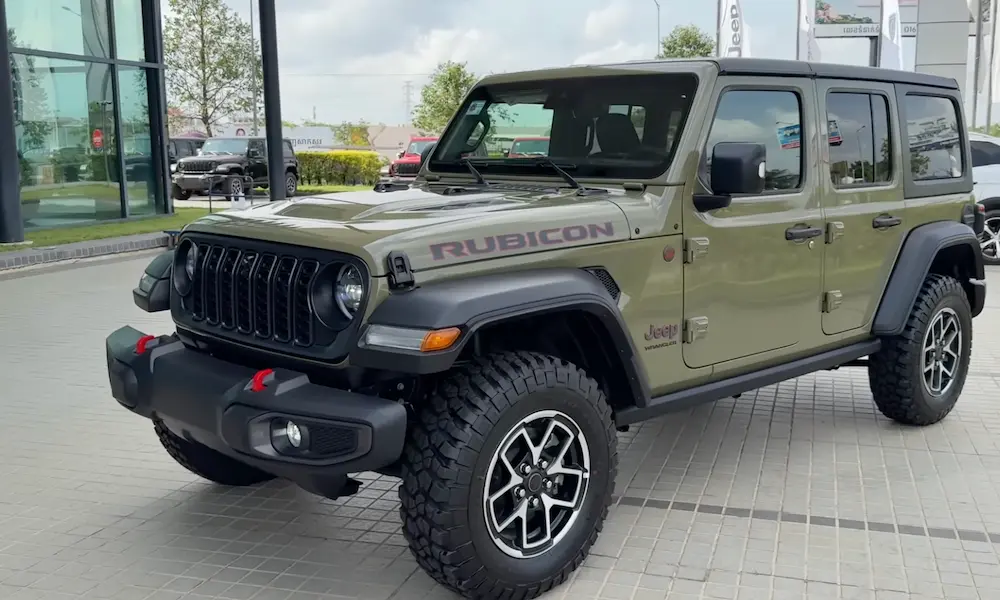
- Part-time 4WD (Command-Trac, Rock-Trac) — found on the Wrangler and Gladiator. It uses a mechanical lock between the front and rear axles. You can only use it on slippery, loose surfaces. Never on dry pavement.
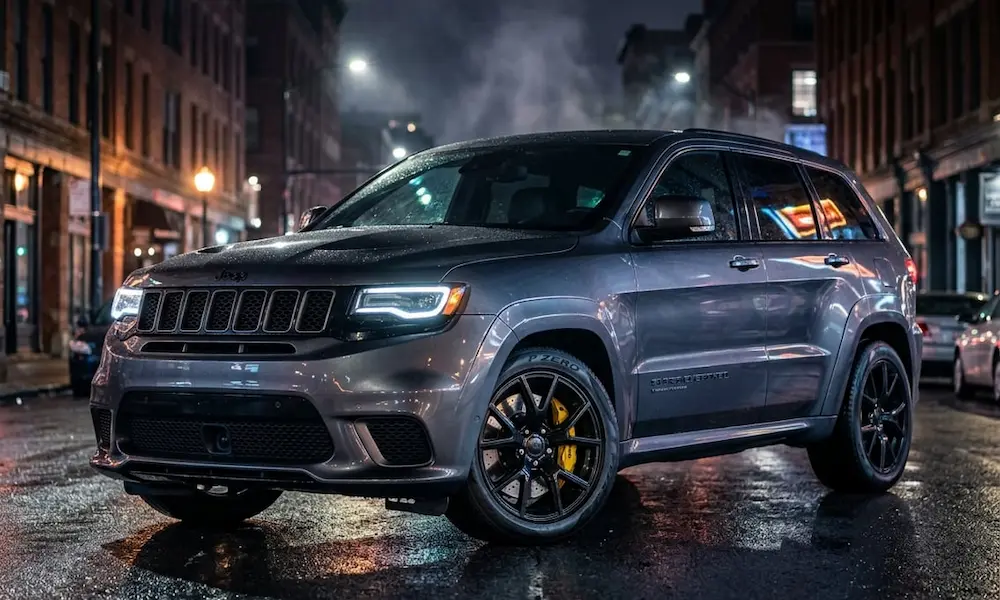
- Full-time 4WD (Selec-Trac, Quadra-Trac) — found on the Grand Cherokee and Wagoneer. It uses a center differential, so it’s safe on any surface, including dry roads.
Not sure which one you have? Check your center console. A manual floor lever usually means part-time. An electronic dial or button usually means full-time or automatic.
Understanding Your 4WD Modes
Every Jeep 4WD system uses the same basic mode labels. Here’s what they actually mean before you learn how to engage them:
| Mode | What It Does | Best For |
|---|---|---|
| 2H | Rear-wheel drive only | Dry pavement, highways |
| 4H | All four wheels, normal speed | Snow, gravel, wet roads, sand |
| 4L | All four wheels, maximum torque, low speed | Rock crawling, deep mud, steep hills |
| N (Transfer Neutral) | Disconnects drivetrain entirely | Flat towing behind an RV |
Simple rule: if the road is dry and paved, stay in 2H. If it’s slippery, use 4H. If you’re crawling over serious terrain, use 4L.
How to Put Your Jeep in 4WD With a Manual Lever (Wrangler & Gladiator)
The Wrangler and Gladiator use a physical transfer case lever on the floor. It gives you direct mechanical control — but the technique matters.
Shifting From 2H to 4H (While Moving)
This is the easiest shift. You can do it while the vehicle is moving at up to 55 mph, though most experienced drivers recommend under 45 mph to reduce wear on the synchronizers.
Here’s exactly how to do it:
- Keep driving at a steady speed
- Lift your foot off the gas briefly
- Pull the lever firmly from 2H into 4H
- Watch for the 4WD light to appear on your dashboard
If the light flashes instead of staying solid, don’t panic. That just means the gears haven’t fully meshed yet. Drive forward a little and it’ll click into place.
If you’re driving a manual transmission Jeep, pressing the clutch during this shift makes the transition smoother — though it’s not required.
Shifting Into 4L (The Critical One)
This shift takes more care. The 4L range provides serious torque multiplication for rock crawling, deep mud, and steep inclines — but you must follow the steps precisely.
For automatic transmission Jeeps:
- Slow down to 2–3 mph while rolling
- Shift your main transmission into Neutral
- Move the transfer case lever firmly from 4H → through N → into 4L in one smooth motion
- Shift back into Drive once the light is solid
For manual transmission Jeeps:
- Slow to 2–3 mph
- Press and hold the clutch pedal fully down
- Move the transfer case lever into 4L in one smooth pull
- Release the clutch and select first gear
The key mistake to avoid: Don’t pause the lever in the Transfer Case Neutral position. If the gears stop spinning, they won’t align properly, and you’ll get grinding. One smooth, confident movement gets it done.
What If You Try to Shift While Completely Stopped?
It’s possible, but it’s not recommended. When the vehicle is completely still, the gear teeth may not line up, and the lever won’t budge. If that happens, shift your transmission into Drive for one second, then back to Neutral, and try again. The slight gear rotation usually solves it.
How to Put Your Jeep in 4WD With an Electronic System (Grand Cherokee, Cherokee, Compass, Renegade)
Modern Jeeps swap the mechanical lever for a dial or button. The process is simpler, but the rules around 4L engagement are identical.
Using the Selec-Terrain Dial
The Selec-Terrain dial sits on your center console. You turn it to your chosen mode. That’s genuinely it for most everyday situations.
Here’s when to use each setting:
- Auto — Every day driving. The system manages everything automatically.
- Snow — Reduces throttle sensitivity, starts in second gear to prevent wheel spin on ice.
- Sand/Mud — Allows more wheel spin to keep momentum going.
- Rock — Maximum torque, requires 4L, available on Trailhawk models.
- Sport — Sharpens throttle response for dry roads.
Engaging 4L Electronically
Even with a dial or button, engaging 4WD Low requires the same slow-speed steps:
- Slow to under 3 mph or come to a complete stop
- Shift your transmission into Neutral
- Press the 4WD LOW button or turn the dial to 4L
- Wait for the dashboard indicator to stop flashing and show solid
- Shift back into Drive
Don’t skip step 4. Putting it in Drive before the indicator is solid can cause grinding or incomplete engagement.
4WD Tips for Specific Terrain
Knowing how to put your Jeep in 4WD is step one. Using it smartly is step two.
Snow and Ice
Use 4H or Snow mode. The big thing most drivers forget: four-wheel drive helps you move, not stop. Your stopping distance on ice is exactly the same in 4WD as in 2WD. Keep that in mind. If you start to slide, ease on the throttle gently rather than slamming the brakes.
Sand
Use 4H or Sand mode. Momentum is your friend in sand — keep moving. A great trick: drop your tire pressure by 10–12 pounds. This widens the tire’s footprint and stops it sinking. Also, avoid sharp turns — the tire sidewalls dig in and kill your momentum.
Rock Crawling
This is what 4L was made for. Move at 1–3 mph. Approach rocks straight-on so all four tires share the load. Use your engine’s torque to walk over obstacles rather than powering at them. Speed damages the undercarriage. Patience protects it.
Common 4WD Problems (And How to Fix Them)
| Problem | Likely Cause | Fix |
|---|---|---|
| Lever won’t move | Rusted or seized linkage | Clean and lubricate pivot points with silicone spray |
| Grinding when shifting to 4L | Wrong speed or wrong transmission position | Ensure you’re under 3 mph with trans in Neutral |
| 4WD light keeps flashing | Gears not fully aligned | Roll forward or reverse slightly |
| Shuddering in turns (crow hop) | Part-time 4WD used on dry pavement | Disengage 4WD immediately |
| Lever moves but nothing engages | Broken plastic linkage bushing | Inspect and replace the bushing |
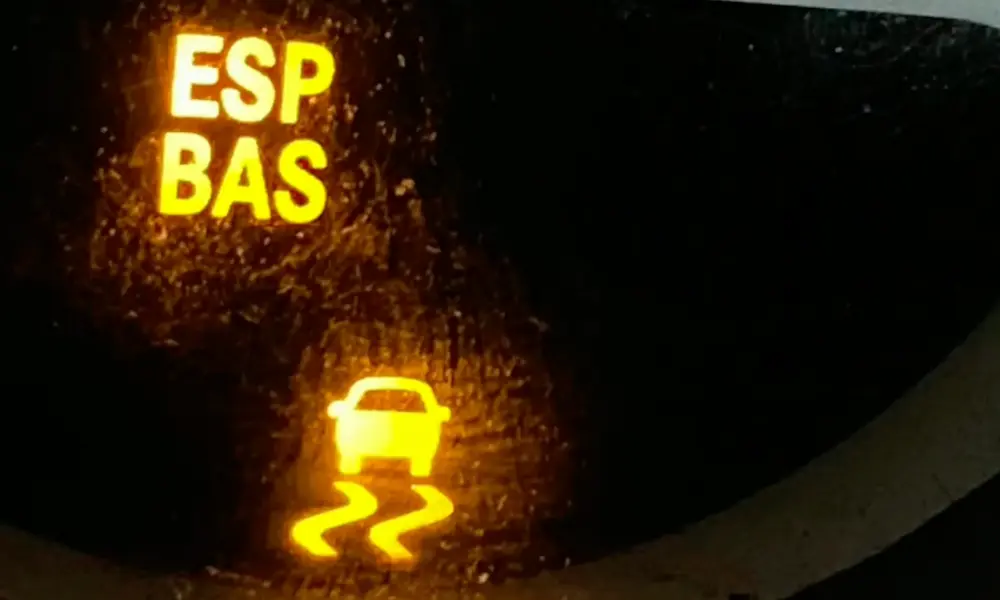
| “Service 4WD” message on dash | Electronic fault or dirty dial | Try contact cleaner on the dial; if it persists, get it scanned |
Never Ignore Crow Hop
If your Jeep shudders or the tires scuff during turns, that’s driveline binding. It means your front and rear axles are locked but trying to travel at different speeds. On a loose surface, the tires slip and relieve the pressure. On dry pavement, the internal gears absorb all that stress — and it can snap axle shafts or stretch the transfer case chain. Disengage 4WD the moment you notice it.
After Off-Roading: Don’t Skip This
Once you’re back on dry pavement, here are two things worth doing:
Shift back to 2H. Don’t leave your Wrangler or Gladiator in 4H on paved roads. Every mile in part-time 4WD on dry asphalt stresses the drivetrain.
Check for water contamination. If you drove through deep water, check your differential and transfer case fluids. If either fluid looks milky or creamy, that’s water. Change it immediately. Water-contaminated gear oil destroys bearings fast.
Transfer case and differential fluids need regular inspections — especially if you tow or off-road frequently. It’s cheap insurance compared to a rebuild.
What About 4xe and Electric Jeeps?
The newer 4xe hybrid and electric models handle 4WD differently. Instead of a mechanical connection, electric drive modules (EDMs) independently control torque at each axle. The system reacts faster than any mechanical setup and adjusts per wheel rather than per axle.
The Selec-Terrain dial still works the same way from the driver’s seat — so the experience feels familiar. These vehicles also use axle disconnects to improve range when full 4WD isn’t needed, just like the axle disconnect systems on traditional models. The tech changes, but the principle stays the same: match power delivery to the surface beneath your tires.