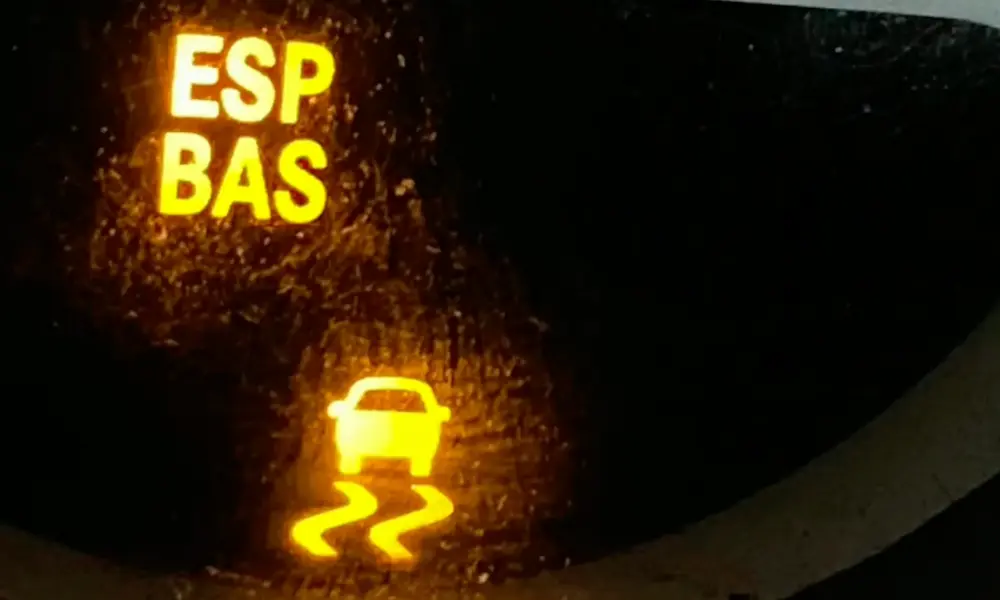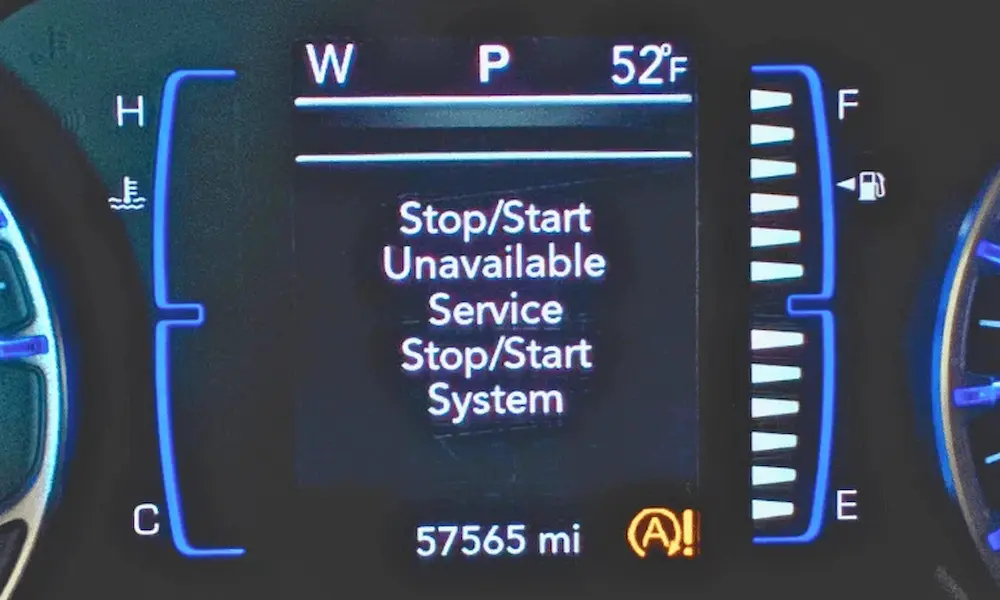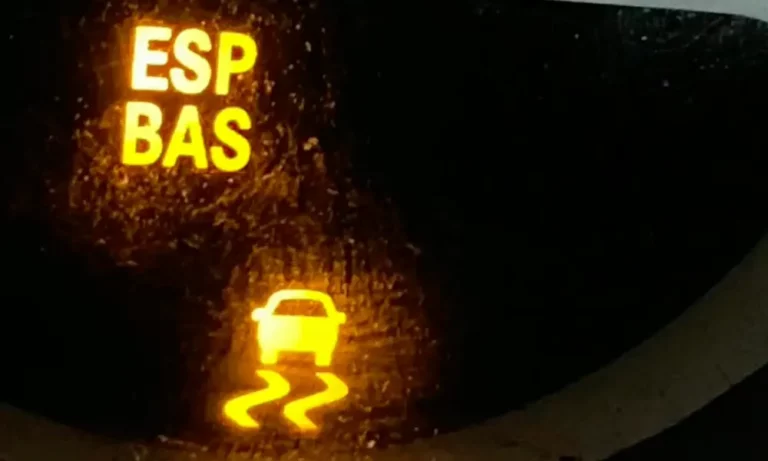
That little ESP BAS light just lit up your Jeep’s dashboard, and now you’re wondering if you can still drive it. Good news: this post covers exactly what triggered it, which parts fail most often, what repairs cost, and whether your Jeep might qualify for a free fix under a recall. Read to the end — there’s money-saving information you don’t want to miss.
What the Jeep ESP BAS Light Actually Means
The ESP BAS light tells you two safety systems just shut off at the same time.
ESP stands for Electronic Stability Program. It monitors your steering input, yaw rate, and individual wheel speeds. When your Jeep starts to slide or oversteer, ESP selectively applies brakes to individual wheels and cuts engine power to bring you back on track.
BAS stands for Brake Assist System. It watches how fast and hard you press the brake pedal. During a panic stop, it instantly delivers maximum hydraulic pressure to minimize your stopping distance.
Both systems share the same sensors and communication network. So when one sensor sends bad data, both systems shut down simultaneously to prevent erratic, unpredictable braking interventions. One warning light, two systems offline.
Is It Safe to Drive With the Jeep ESP BAS Light On?
Your Jeep will still drive. Normal braking still works. However, ESP and BAS won’t intervene during an emergency or low-traction situation. On dry pavement at normal speeds, the risk is manageable. On wet roads, gravel trails, or in a panic stop scenario, you’re significantly more vulnerable. Get it diagnosed soon — don’t ignore it for months.
The Most Common Causes of the Jeep ESP BAS Light
The Clockspring and Steering Angle Sensor
This is the most common culprit on Jeep models. The steering angle sensor tracks the exact rotational position of your steering column. On most modern Jeeps, it’s built directly into the clockspring assembly — a spiral-wound copper ribbon inside a plastic housing behind your steering wheel.
Because Jeeps spend time on dirt trails, dust and debris migrate into the clockspring housing. This contaminates the copper contacts, degrades the signal, and lights up your dashboard. If your Jeep is a 2007–2016 Wrangler, stop reading and jump to the recall section — this repair might be completely free.
A common installation mistake also causes this fault. During steering shaft servicing, if a technician disconnects the column and lets the steering wheel spin one full rotation before reconnecting, the sensor ends up 360 degrees out of phase. The steering wheel looks straight. But the sensor hits its electronic limit before the wheels reach their mechanical stop, which can snap the internal ribbon cable entirely.
The Brake Light Switch
This small switch lives above your brake pedal. One circuit controls your taillights. A second circuit tells the stability control computer that you’re braking. Every single brake pedal press compresses this switch, and the internal contacts wear down over time. When the stability system can’t confirm you’re braking, it shuts down to avoid unintended interventions.
Wheel Speed Sensors
These sensors mount at each wheel hub and report individual tire rotation speeds to the stability control module. Their wiring harnesses route through the wheel wells, where they face water, road debris, and constant flex. On models like the Jeep Liberty, loose harnesses can rub against tires and get shredded entirely, breaking the circuit and triggering the warning lights.
Severely under-inflated tires or heavily uneven tire wear can also confuse the stability module into thinking a wheel speed sensor has failed.
Diagnostic Trouble Codes Behind the ESP BAS Light
A basic OBD-II reader won’t cut it here. You need a scan tool that reads manufacturer-specific chassis codes. Here’s what those codes mean on Jeep platforms:
| Trouble Code | What It Means | Primary Check |
|---|---|---|
| C1219 | Steering angle sensor sends jumpy, erratic data | Live sweep test; check circuit voltage and ground resistance |
| C1240 | Sensor reports an angle beyond its physical range | Check for steering shaft installed 360° out of phase |
| C123F | Conflict between steering angle and yaw/wheel speed data | Inspect front suspension; perform drag link alignment |
| C121A | Sensor lost its straight-ahead zero position | Execute calibration with a bidirectional scan tool |
| C121C | Traction control refuses engine torque requests | Fix the underlying steering angle sensor fault first |
| U0429 | ABS module lost communication with the steering column | Check CAN bus wiring and harness connectors |
| B1B02 / B1B06 | Open circuit in the clockspring’s ribbon cable | Replace the clockspring assembly |
If you see airbag codes stored alongside stability codes, that’s a strong sign the clockspring physically failed. Both systems route through the same assembly.
What Repairs Cost on Different Jeep Models
Repair costs vary widely depending on your model and which component failed. Independent shops generally charge lower labor rates than dealerships, and quality aftermarket parts with warranties offer real savings. However, avoid cheap, unbranded online parts — many generate persistent fault codes or fail quickly.
Jeep Wrangler Repair Estimates
| Repair | Parts | Labor | Total |
|---|---|---|---|
| Steering wheel alignment | $0 | $183–$269 | $183–$269 |
| Clockspring & steering sensor | $40–$280 | $100–$500 | $250–$750 |
| Brake light switch | $37 | $47–$68 | $84–$106 |
| Wheel speed sensor | $37–$58 | $74–$109 | $111–$167 |
Other Jeep Models
| Model & Repair | Parts | Labor | Total |
|---|---|---|---|
| Grand Cherokee — brake light switch | $30–$48 | $30–$60 | $60–$108 |
| Grand Cherokee — wheel speed sensor | $140–$188 | $387–$403 | $543–$575 |
| Cherokee — wheel speed sensor | $137–$174 | $77–$113 | $214–$288 |
| Liberty — clockspring & steering sensor | $690 | $100 | $790 |
| Compass / Patriot — clockspring & sensor | $180–$560 | $120–$240 | $300–$800 |
| Compass / Patriot — brake light switch | $35–$65 | $38–$70 | $73–$135 |
Federal Recalls That Cover the Jeep ESP BAS Light for Free
Several Jeep models qualify for free repairs. Check your VIN on the official Mopar recall search or contact NHTSA directly before paying anything.
Active NHTSA Recalls and Warranty Programs
| Campaign | Affected Models | Defect | Fix |
|---|---|---|---|
| NHTSA 16V-290 (Recall S33) | 2007–2010 Jeep Wrangler | Dust contaminates clockspring, disabling airbag and stability circuits | Free clockspring replacement |
| NHTSA 16V-288 (Recall S40) | 2011–2016 Jeep Wrangler (all drive sides) | Dust ingestion disables traction control and airbag deployment | Free clockspring and shroud replacement |
| NHTSA 24V-196 (Recall 27B) | 2016 Jeep Wrangler RHD only | Environmental debris causes circuit failures and safety system deactivation | Redesigned clockspring with protective gaskets |
| NHTSA 24V-838 (Recall 94B) | 2018–2019 Jeep Grand Cherokee | ABS module falsely reads brake pressure, disabling ABS and stability control | Free HCU and ABS module replacement |
| NHTSA 24E-025 (Recall 15B) | 2018–2024 Wrangler, Grand Cherokee, Gladiator, Wagoneer | Faulty weld in steering column module’s internal cable | Free steering column module inspection and replacement |
| NHTSA 17V-640 (Recall T56) | 2012 Jeep Liberty | Occupant Restraint Controller failure disables airbag deployment | Free ORC module replacement |
| NHTSA 13V233000 (Recall N01) | 2010–2012 Jeep Compass, Patriot | Software error causes delayed airbag and pretensioner deployment | Free dealer software update |
The X68 Warranty Extension — 15 Years, Unlimited Miles
If you own a 2011–2016 Left-Hand Drive Jeep Wrangler, Warranty Extension X68 covers your clockspring and steering angle sensor for 15 years with unlimited mileage from the vehicle’s original in-service date.
Here’s how the dealer visit works:
- The dealer charges a standard diagnostic fee (roughly $180–$195) upfront
- If the clockspring or steering angle sensor is confirmed as the fault, the diagnostic fee is waived and the repair is free
- If the fault is caused by something unrelated, you pay the diagnostic fee and the repair cost
Already paid for this repair out of pocket? You can submit a reimbursement request through fcarecallreimbursement.com with your original receipts. Approved claims typically process within 60 days.
For recall questions, contact FCA at 1-800-853-1403 or reach NHTSA directly at 1-888-327-4236.
How a Shop Should Diagnose the Jeep ESP BAS Light
A good technician won’t just clear the code and hand your keys back. Here’s the structured process that actually identifies the root cause:
Step 1 — Pull all codes. Connect a bidirectional scan tool to the OBD-II port. Retrieve every active and stored code from the ABS and chassis modules. Note any airbag codes — they confirm a physical clockspring failure.
Step 2 — Check live steering angle data. Start the engine and point the wheels straight ahead. The scan tool should display an angle close to 0 degrees, with a tolerance of plus or minus 15 degrees.
Step 3 — Check for rotational offset. If the reading shows near plus or minus 360 degrees with the wheels pointed straight, the steering shaft is installed one full rotation out of phase. The technician disconnects the intermediate shaft, returns the steering wheel to 0 degrees, and reconnects.
Step 4 — Perform a full lock-to-lock sweep. Slowly turn the steering wheel from full right lock to full left lock while watching the live data stream. The angle values must change smoothly without any jumps, freezes, or erratic spikes. Erratic data means the clockspring needs replacement.
Step 5 — Test the electrical circuit. Measure voltage at the steering column connector. It must read above 11.0 volts. Measure ground circuit resistance — it must stay below 5.0 ohms. High resistance means a corroded or loose ground wire that needs cleaning and resecuring.
Step 6 — Inspect physical alignment. If the straight-ahead reading sits slightly outside the ±15-degree tolerance, the front suspension is misaligned. The technician inspects the steering linkage for bent components and adjusts the front drag link sleeve until the steering wheel centers mechanically and the sensor reads 0 degrees.
Recalibrating the Steering Angle Sensor After Repairs
Any time you replace the clockspring, adjust suspension components, or complete a wheel alignment, the steering angle sensor needs recalibration. Without it, the ESP BAS light comes right back on.
Basic manual reset (works for battery replacements or minor faults):
- Start the engine
- Turn the steering wheel fully right until it stops
- Turn the steering wheel fully left until it stops
- Return to center so the wheels point straight
- Turn the engine off and restart
- Take a short drive to clear the temporary calibration code
Professional scan tool calibration (required after clockspring or module replacement): The technician connects a bidirectional scanner, selects the Steering Angle Sensor Calibration or ABS Initialization function, and resets the sensor’s zero position. This teaches the control module exactly which steering position equals “straight ahead.”
If a new ABS controller was installed, a Proxy Configuration Alignment is also required. This process registers the new module across the vehicle’s entire communication network so every system recognizes the replacement component. Clear all codes after calibration and road-test the vehicle to confirm everything’s operating correctly.