Skipping a Jeep differential fluid change doesn’t just void warranties — it destroys axles. Whether you wheel hard on weekends or daily-drive your JK through rough terrain, dirty gear oil quietly grinds your ring and pinion into expensive scrap metal. This guide covers everything: the right fluid, the right intervals, and exactly how to do the job yourself.
Why Your Jeep’s Differential Needs Special Attention
Your Jeep’s differential isn’t like a typical car’s. It takes serious abuse.
The ring and pinion gears inside your axle housing sit at a 90-degree angle to each other, generating extreme sliding friction and heat every time you drive. Add rock crawling, deep water crossings, and heavy towing, and you’ve got a system that chews through gear oil faster than a stock Explorer ever would.
Here’s the real problem: differentials don’t have oil filters. Every microscopic metal filing your gears shed goes straight into the oil bath and stays there, turning your expensive gear lube into liquid sandpaper.
Water intrusion makes it worse. When you drive through a cold stream with a hot differential, the temperature drop contracts the air inside the housing. That vacuum pulls water past the axle seals, emulsifying your gear oil and stripping away its protective film entirely.
How Often Should You Change Jeep Differential Fluid?
The answer depends entirely on how you use your Jeep.
Under normal driving conditions, Jeep axles need a fluid exchange every 30,000 to 60,000 miles. But if your Jeep sees any of the following, cut that interval in half — or more:
- Frequent off-road use or rock crawling
- Regular water crossings deeper than the axle housing
- Heavy-duty towing
- Mud, sand, or dirt driving
Severe-duty Jeeps need fresh differential fluid every 15,000 miles. That might sound aggressive, but it’s far cheaper than replacing a Dana 44.
Warning Signs Your Differential Fluid Is Done
Don’t wait for the service interval if your Jeep is already telling you something’s wrong.
Pull the fill plug and check what comes out. Healthy gear oil looks golden yellow or slightly translucent green. Here’s what the bad stuff looks like:
| Fluid Appearance | What It Means |
|---|---|
| Gray or silver | Metal particles — severe gear or bearing wear |
| Dark brown or jet black | Thermal breakdown — oil has lost its viscosity |
| Milky or cream-colored | Water contamination — flush immediately |
| Rotten egg smell | Extreme-pressure additive package has degraded |
Beyond the fluid itself, watch for these symptoms while driving:
- Whining or howling noises starting above 15 mph, or during deceleration — signals damaged pinion bearings or altered gear backlash
- Clunking or banging in turns — damaged spider gears or slipping clutch plates
- Chassis vibrations at highway speeds
- Binding when turning — especially in tight parking maneuvers
- Uneven tire wear across the driven axle
- Active gear oil leaks from the pinion seal or cover flange — this one can cause rear wheel lockup if ignored
Choosing the Right Differential Fluid for Your Jeep
This is where most DIYers get it wrong. Using the wrong fluid in a limited-slip differential causes chatter, wear, and eventually clutch pack failure.
GL-5 Rating Is Non-Negotiable
Every Jeep differential requires an API GL-5 rated gear oil. GL-5 fluids contain sulfur and phosphorus-based extreme-pressure additives that chemically bond to gear teeth under heat, forming a protective barrier that prevents metal-to-metal welding and micro-pitting.
Conventional vs. Synthetic
Conventional gear oils like SAE 85W-140 cling well to hot gear teeth. Synthetics like SAE 75W-90 or 75W-140 run cooler, reduce cold-start drag, and last longer between changes. For most modern Jeep applications — especially anything that sees off-road use — synthetic wins.
Premium options like Amsoil Severe Gear 75W-85 maintain 12.8 centistokes of kinematic viscosity at operating temperature and use zinc-free anti-wear packages that protect pinion bearings without degrading gaskets.
The Limited-Slip Friction Modifier Rule
This is critical. If your Jeep has a Trac-Lok limited-slip differential, you must add a friction modifier like Mopar Friction Modifier or Motorcraft XL-3 to your gear oil. Without it, the clutch packs grab instead of slip, causing a nasty chattering or ticking sensation through the steering wheel during slow turns.
Some premium synthetic fluids come pre-blended with friction modifier, so check the label before buying a separate additive.
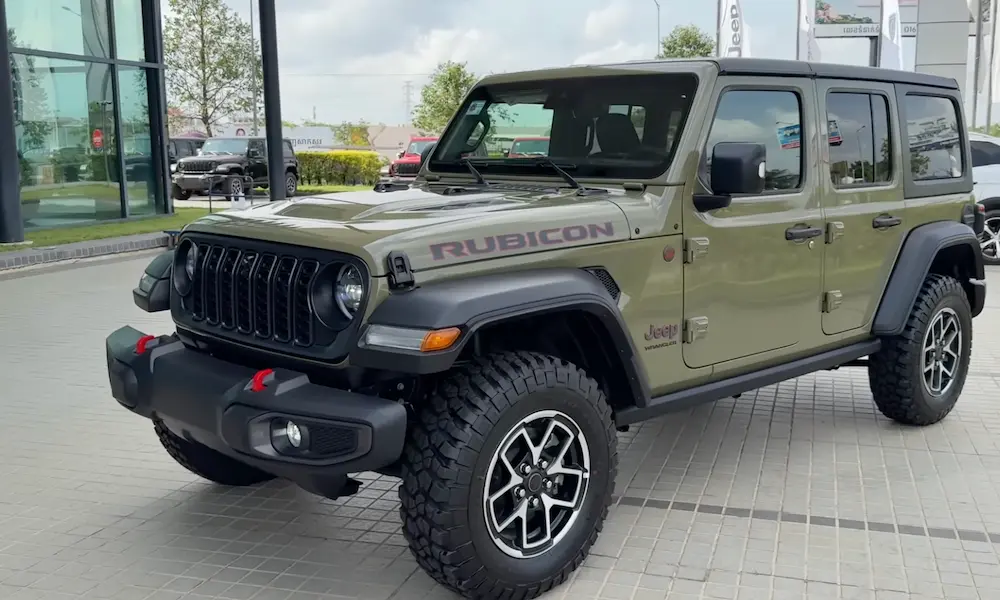
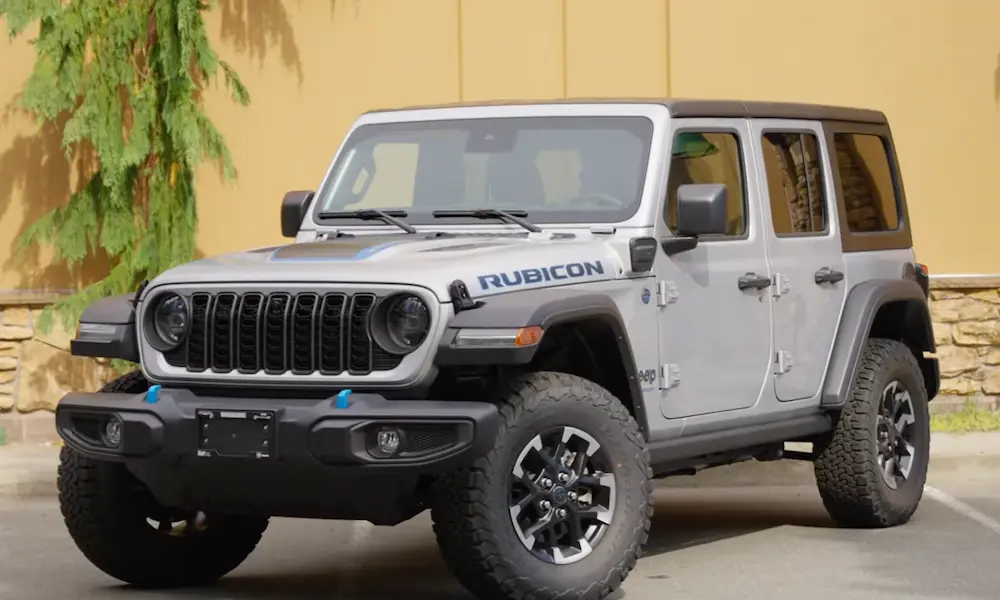
If your Jeep has a Tru-Lok mechanical locker (standard on Rubicon models), skip the friction modifier entirely. Tru-Lok systems use physical splines, not clutch packs. Standard GL-5 gear oil is all they need.
Jeep Axle Fluid Specs by Generation
Getting the fluid type and capacity right matters. Too little and your gears run dry. Too much and the spinning ring gear aerates the oil into foam, pushing it out the breather tube and coating your undercarriage in foul-smelling gear lube.
Here are the factory specs and severe-duty alternatives for Jeep Wrangler and Gladiator axles:
| Axle | Traction System | OEM Fluid | Severe-Duty Fluid | Capacity | Additive? |
|---|---|---|---|---|---|
| JK Dana 30 Front | Open | SAE 80W-90 | 75W-90 Synthetic | 2.10 pts | No |
| JK Dana 35 Rear | Trac-Lok LSD | SAE 80W-90 | 75W-140 / 85W-140 | 3.50 pts | Yes — friction modifier |
| JK Dana 44 Front (Rubicon) | Tru-Lok | SAE 80W-90 | 75W-90 Synthetic | 2.70 pts | No |
| JK Dana 44 Rear (Rubicon) | Tru-Lok | SAE 80W-90 | 75W-140 Synthetic | 4.75 pts | No |
| JK Dana 44 Rear (Non-Rubicon) | Trac-Lok LSD | SAE 80W-90 | 75W-140 Synthetic | 3.80 pts | Yes — friction modifier |
| JL/JT M186 (Dana 30) Front | Open | SAE 80W-90 | 75W-90 Synthetic | 1.82 pts | No |
| JL/JT M210 (Dana 44) Front | Tru-Lok | SAE 80W-90 / 75W-85 | 75W-140 Synthetic | 2.18 pts | No |
| JL/JT M200 Rear | Open | SAE 80W-90 | 75W-140 Synthetic | 2.43 pts | No |
| JL/JT M220 Rear (Locker) | Tru-Lok | SAE 80W-90 / 75W-85 | 75W-140 Synthetic | 3.06 pts | No |
| JL/JT M220 Rear (LSD) | Trac-Lok | SAE 80W-90 | 75W-140 Synthetic | 2.87 pts | Yes — friction modifier |
Important note on aftermarket covers: If you’ve installed a high-capacity differential cover like the aFe Pro Series, the fill hole sits much higher than stock. Don’t fill to the hole — fill to the factory-specified volume. Overfilling churns the fluid into foam and forces it out the breather tube.
How to Change Jeep Differential Fluid: Step-by-Step
Tools You’ll Need
| Category | Item |
|---|---|
| Hand Tools | 3/8″ ratchet + 3″ extension |
| Specialty Sockets | 13mm socket, 8mm hex bit, 3/8″ hex bit |
| Torque Wrench | Calibrated to 20–100 ft-lbs |
| Fluid Pump | Hand-operated bottle siphon pump |
| Drain Pan | Heavy-duty 4-quart capacity |
| Sealing Agent | Gear-oil-resistant RTV or Lube Locker gasket |
| Cleaners/Safety | Brake cleaner, shop towels, heavy gloves |
Work in a ventilated area. Degraded gear oil contains sulfur compounds that produce headache-inducing fumes in enclosed spaces.
For Jeeps With a Drain Plug (JK, JL, JT)
Most modern Jeep axles have an integrated bottom drain plug, making this a straightforward job:
- Warm the fluid first. Drive 5–10 minutes to thin the oil and suspend contaminants.
- Park on level ground. Engage the parking brake and chock the tires.
- Remove the fill plug first. Always. If it’s stripped or seized, you need to know before you drain the axle dry. Use a 3/8″ drive ratchet extension or #8 hex driver.
- Position the drain pan and remove the lower drain plug from the bottom right of the housing.
- Inspect the magnetic drain plug. A thin coating of dark gray iron paste is normal gear seating. Chunks, slivers, or fragments of gear teeth mean you need to pull the cover and inspect the internals.
- Clean and reinstall the drain plug. Torque to 25–30 ft-lbs (26 ft-lbs for Mopar axles).
- Add fluid. Use the hand pump to fill through the fill port. If your axle needs a friction modifier, add a small amount of gear oil first, pour the modifier into the bottle, shake, then pump the rest in.
- Fill until fluid seeps from the fill hole, then install the fill plug. Torque to 25–30 ft-lbs.
For Jeeps Without a Drain Plug (Older Models)
Some older Jeep axles skip the drain plug entirely, which means the cover has to come off:
- Remove the fill plug, position the drain pan, and loosen all cover bolts with a 13mm socket — working from the bottom up.
- Leave the top two bolts loosely threaded in place.
- Wedge a flat scraper into the bottom seam of the cover flange and pry gently to break the RTV seal. The fluid drains while the top bolts keep the cover from dropping.
- Once drained, remove the remaining bolts and set the cover aside.
- Spray the interior gear cavity with brake cleaner and wipe dry with lint-free towels.
- Scrape all old RTV or gasket material from both mating surfaces down to bare metal.
For resealing, you have two options:
- RTV sealant: Apply a continuous 1/4-inch bead around the cover flange, circling each bolt hole. Torque bolts to 30 ft-lbs in a cross pattern. Let it cure overnight before adding fluid.
- Lube Locker gasket: Place the dry gasket between clean surfaces, start the bolts by hand, and torque to 30 ft-lbs in a star pattern. No cure time needed — fill immediately.
Critical compatibility warning: JK-spec Lube Locker gaskets don’t fit JL or JT Dana M210 or M220 axles. The bolt patterns don’t match. Using the wrong gasket guarantees a catastrophic fluid leak.
The Post-Service Step Most People Skip
Right after a Jeep differential fluid change, drive to an empty parking lot and run several slow, tight figure-eight patterns.
Driving in a straight line keeps the differential gears in a static relationship with each other. Tight turns force the spider and planetary gears to rotate independently, which engages and disengages the clutch packs in limited-slip systems. This is the only way to work fresh fluid and friction modifier between every clutch plate surface.
Skipping this step on a Trac-Lok axle can cause localized clutch overheating and steering wheel chatter — the exact problem the fluid change was supposed to fix.
After the figure-eights, park on a level surface and check for seepage around the drain plug, fill plug, and cover gasket. Re-torque anything that looks wet. Check again over the next two or three drives to confirm you’ve got a clean, leak-free seal.
A Jeep differential fluid change takes less than an hour and costs under $50 in materials. A new Dana 44 costs considerably more than that. The math isn’t complicated.