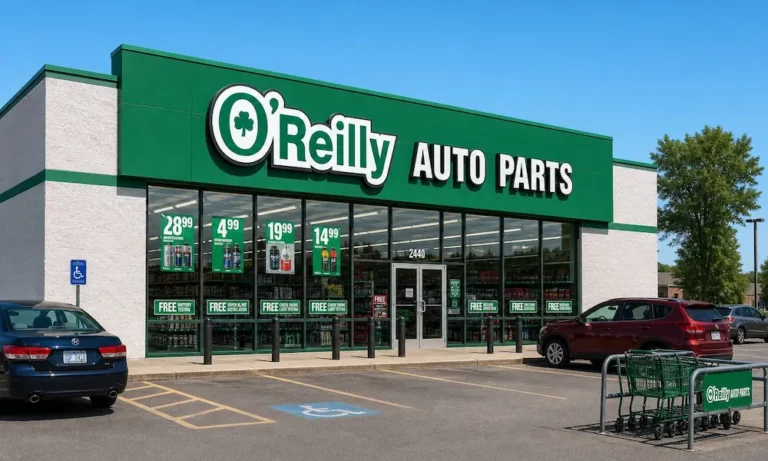
Got a jug of dirty motor oil sitting in your garage and no idea what to do with it? O’Reilly Auto Parts might be your answer. This guide covers what they take, what they won’t touch, and a few state-specific quirks that could save you a wasted trip.
Yes, O’Reilly Does Take Used Oil — But Read This First
The short answer: yes, O’Reilly Auto Parts accepts used motor oil for free at most of their 6,000+ U.S. locations. But “most” is doing a lot of heavy lifting in that sentence.
Local zoning laws and environmental codes vary wildly. Some store locations can’t legally accept hazardous fluids at all. Before you load up your car, call your local store first. A 30-second phone call beats a 20-minute drive with a leaky jug.
What O’Reilly Actually Accepts
Here’s what you can drop off at participating O’Reilly locations:
- Motor oil — conventional and synthetic, both welcome
- Transmission fluid — automatic or manual
- Gear oil — for differentials and transfer cases
- Hydraulic oil — from machinery, lifts, or suspension systems
- Power steering fluid
- Used oil filters — must be drained and in a leak-proof bag
- Lead-acid batteries — automotive, marine, lawn, and motorcycle
These fluids share similar base oil chemistry, so they can mix in the store’s recovery tank without wrecking the recycling process.
What O’Reilly Won’t Take
Some fluids get a hard no, no matter which location you visit.
Antifreeze and engine coolant are completely off the table. O’Reilly explicitly classifies coolant as hazardous waste they can’t process. It needs a dedicated facility. Check your city or county’s household hazardous waste program for drop-off options.
Contaminated oil is also rejected on the spot. Even a small amount of the wrong substance ruins an entire tank. Fluids that immediately disqualify your oil include:
- Water or moisture of any kind
- Gasoline or diesel fuel
- Paint thinner or chemical solvents
- Windshield washer fluid
- Household cleaners or bleach
- Cooking oil
If your used oil touched any of these, take it to a municipal hazardous waste site instead. Don’t risk contaminating a store’s entire collection tank — the cleanup costs are enormous, and you could face legal penalties.
The 5-Gallon Rule (and Why It Exists)
O’Reilly limits drop-offs to 5 gallons per person, per day. This isn’t an arbitrary policy. It’s grounded in federal and state environmental law.
That limit separates residential DIY oil changes from commercial waste. Mechanic shops, fleet operators, and agricultural businesses generate far more than 5 gallons and must use licensed industrial waste haulers. Retail stores are only permitted to collect household-level waste.
If you show up with 10 gallons, the staff has to turn away the extra. It’s not personal — it’s a legal obligation.
How the Drop-Off Process Works
Here’s what to expect when you bring your used oil in:
- You’ll sign a logbook. Staff record your name, address, phone number, and the volume you’re dropping off. This satisfies state tracking requirements and enforces the daily limit across shifts.
- An employee handles the transfer. You don’t pour the oil yourself. A staff member takes your container to the rear of the store and empties it into a sealed recovery tank.
- You get your empty container back. This part surprises a lot of people. O’Reilly doesn’t accept the empty plastic jugs. Take them home for disposal or reuse.
Pack your fluids in a clean, leak-proof container with a tight lid. The original motor oil bottle works great. Avoid thin water bottles or glass jars — petroleum breaks them down fast.
Used Oil Filters: What You Need to Know
Spent oil filters hold up to half a quart of contaminated oil inside the filter media, even after you think they’re drained. If those go into a landfill, that oil leaches into the soil and eventually reaches groundwater.
O’Reilly accepts used filters, but with a few rules:
- Drain them thoroughly before you arrive
- Bring them in a sealed, leak-proof plastic bag
- Most locations cap drop-offs at 2 to 5 filters per visit (varies by location)
Once collected, the filters go through industrial crushing to extract residual oil, then the steel casing gets melted down and recycled as scrap metal. Nothing goes to a landfill.
Battery Drop-Off and the $10 Gift Card
Lead-acid batteries are among the most successfully recycled products in the U.S. — largely because of how the economics work.
When you buy a new battery, a core charge gets added at the register. Return your old battery within 45 days and you get that fee back. Simple.
But here’s the better deal: if you’ve got an old battery lying around the garage with no purchase tied to it, O’Reilly gives you a free $10 gift card just for bringing it in. That’s a solid incentive to finally clear out the dead battery that’s been collecting dust since 2019.
A Quick Reference: What’s In and What’s Out
| Fluid or Item | Accepted? | Notes |
|---|---|---|
| Motor oil (conventional & synthetic) | ✅ Yes | Must be uncontaminated; 5-gallon daily limit |
| Transmission fluid | ✅ Yes | Can mix with motor oil in recovery tank |
| Gear & hydraulic oil | ✅ Yes | Accepted at all participating locations |
| Power steering fluid | ✅ Yes | Goes into standard recovery tank |
| Used oil filters | ✅ Yes | Drained, in leak-proof bag; 2–5 per visit |
| Lead-acid batteries | ✅ Yes | $10 gift card for non-core returns |
| Antifreeze / engine coolant | ❌ No | Take to municipal hazardous waste site |
| Contaminated oil | ❌ No | Mixing voids recyclability immediately |
| Cooking oil | ❌ No | Requires separate municipal program |
| Empty plastic containers | ❌ No | You must take these home |
How This Changes by State
Corporate policy sets the baseline, but your state often adds its own rules on top.
California: You Can Get Paid to Recycle
California runs the most structured used oil program in the country. O’Reilly locations there operate as official Certified Collection Centers under CalRecycle oversight.
By state law, they must offer you 40 cents per gallon when you drop off clean used oil. But here’s the smarter play: O’Reilly often offers an 80-cent per gallon store coupon instead of cash. Double the value if you’re going to buy supplies there anyway.
Location-specific limits apply across the state:
- Sonoma County locations (Santa Rosa, Petaluma, Rohnert Park) enforce the 5-gallon and 2-filter caps with hours extending to 9 PM on weekdays
- San Mateo County (San Carlos) limits oil filters to 2 per customer in a leak-free bag
- Merced County locations in Atwater, Los Banos, and surrounding areas operate as Certified Collection Centers alongside county-run facilities
San Diego locations also host seasonal Filter Exchange Events, where you bring in a used filter and walk out with a free new one (capped at around $15–17 value, one or two per household).
Utah: Tiered Collection for Farmers
Utah classifies its collection centers into four types (A through D), each with different volume limits depending on who’s dropping off:
| Center Type | Residential Limit | Agricultural Limit |
|---|---|---|
| Type A | 5 gallons per visit | Not applicable |
| Type B | 5 gallons per visit | 55 gallons per visit |
| Type C & D | Varies | Tailored to rural needs |
That 55-gallon agricultural allowance reflects the reality that farmers running heavy equipment generate substantial quantities of hydraulic and engine oil. Utah’s system gives them a legal drop-off option without forcing retail stores to become commercial waste facilities.
Washington State: Filters Can’t Go in the Trash
Washington law bans used oil filters from any landfill-bound trash container — no exceptions. This applies both to consumers and to businesses. If you’re in Washington, that used filter must go to a certified collection point, full stop.
Hawaii: No Liquid Drop-Offs — Use Absorbent Boxes Instead
Hawaii’s situation is completely different from the rest of the country. Transporting bulk liquid hazardous materials across island infrastructure creates serious spill risks, and there are no large re-refining facilities nearby.
Instead, O’Reilly sells specialized Oil Change Kit Fluid Collection Boxes — thick cardboard boxes packed with absorbent material that soak up your drained oil. You drain your engine oil into the box, and it becomes solid. Then you dispose of the box per local solid waste guidelines.
These kits are Hawaii-only items. They come in 5-quart sizes for passenger cars and 22-quart versions for trucks. Some Honolulu locations (Nuuanu Avenue, Dillingham Road, Salt Lake Blvd) and the Kona location on the Big Island still advertise standard fluid recycling — so verify what your specific island and store supports before you head over.
Why Proper Oil Disposal Actually Matters
This isn’t just a regulatory checkbox. The environmental stakes are real.
Used motor oil carries heavy metals, unburned fuel vapors, and chemical additives from thousands of miles of engine heat and friction. Pour it on the ground or into a storm drain, and it moves fast. A single gallon of improperly disposed motor oil can contaminate up to a million gallons of fresh water — enough to make an entire reservoir unusable.
The EPA doesn’t play around with this. Illegal dumping penalties can hit $50,000 per day per violation. Intentional cases can result in criminal prosecution.
On the flip side, re-refining used oil requires up to 90% less energy than refining crude oil from scratch. The base oil doesn’t wear out — it just needs industrial cleaning. What you drop off at O’Reilly eventually comes back as new motor oil on a shelf somewhere.
O’Reilly’s Broader Sustainability Commitment
The recycling program fits into O’Reilly’s formal net-zero emissions pledge by 2050. They’ve published structured milestones:
- By 2026: 10% reduction in direct emissions per store (vs. 2021 baseline); 50% of supplier spend directed to net-zero-committed companies
- By 2035: 50% total reduction in direct emissions; 90% of supplier spend to net-zero suppliers
- By 2050: 90% absolute reduction across all operations and supply chain
The used oil program directly supports the supply chain side of those targets. Every gallon re-refined is one less barrel of crude oil that needs to be extracted.
O’Reilly also runs a hard parts remanufacturing program using core charges. Alternators, starters, brake calipers, steering racks, and AC compressors all get rebuilt rather than scrapped. The recoverable materials — copper, aluminum, cast iron — cycle back into new components. Nothing useful hits a landfill if the system works as intended.
Quick Tips Before Your Next Drop-Off
Keep these in mind to make the process smooth:
- Use a dedicated container. Never reuse a jug that held antifreeze or solvent — residue contaminates your oil batch
- Drain filters over 12 hours before putting them in a bag for transport
- Call ahead to confirm your location participates and check their current hours
- California residents: ask specifically about the 40-cent cash incentive or 80-cent coupon
- Bring your old garage batteries — that $10 gift card is free money sitting in your storage room
- Take your empty jugs home — stores won’t keep them
Does O’Reilly take used oil? Yes — and they’ve built a serious infrastructure around making sure that oil gets handled the right way. Drop it off clean, stay within the limits, and you’ve done your part to keep it out of the water supply.