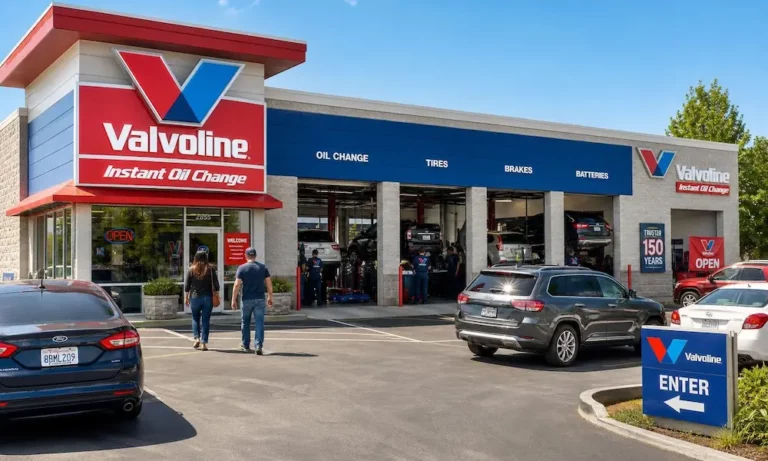
Yes, Valvoline does tire rotations — but there’s more to know before you drive in. From pricing to what vehicles they can’t handle, this guide covers it all so you don’t get caught off guard.
Yes, Valvoline Does Tire Rotations
Short answer: yes. Valvoline Instant Oil Change offers tire rotation services at locations across the country. You don’t need an appointment, and the whole thing takes about 15 to 20 minutes as a standalone service — or as little as 10 minutes when you bundle it with an oil change.
That said, not every location or every bay can do it. More on that in a bit.
How Valvoline’s Tire Rotation Actually Works
Valvoline technicians move your tires to different positions on your car based on your drivetrain and what the manufacturer recommends. It’s not just a simple front-to-back swap.
Here’s what the process typically looks like:
- Front-wheel-drive vehicles put a ton of stress on the front tires for both steering and power. So those tires move to the rear.
- All-wheel-drive vehicles need even tread depth across all four tires to protect the drivetrain. The rotation pattern is more precise here.
- Rear-wheel-drive vehicles wear the rear tires faster, so the pattern shifts accordingly.
Technicians use a forward cross, X-pattern, or straight front-to-back rotation depending on your specific setup. They don’t just guess — they consult your manufacturer’s specs.
What’s Included With the Rotation
Valvoline doesn’t just move your tires and send you on your way. Every visit includes an 18-point maintenance check that covers:
- Tire pressure adjustment (set to manufacturer specs)
- Brake fluid, transmission fluid, and power steering fluid levels
- Visual inspection of belts, hoses, and chassis components
- Battery and wiper condition check
One thing worth noting: the standard 18-point check doesn’t always measure tread depth unless you specifically ask about it during a tire rotation consultation. Ask your tech to flag it if you’re unsure about your tread life.
One Big Thing: You Have to Get Out of the Car
If you love Valvoline because you can stay in your car during an oil change — fair enough, that’s a great perk. But tire rotations are different.
Because the vehicle has to go up on a hydraulic lift, Valvoline requires all customers to wait inside the lobby. No exceptions. It’s a safety rule, not a suggestion. You can’t sit in a lifted car while technicians remove and reposition all four wheels.
It’s not a big deal, but it’s worth knowing before you pull in expecting the usual drive-thru experience.
Does Every Valvoline Location Do Tire Rotations?
Not necessarily. The lift equipment needed for a rotation takes up real space and requires specific floor infrastructure. Some locations only have one or two rotation-capable bays. A few smaller facilities don’t offer the service at all.
Before you go, do this:
- Call ahead or check the Valvoline location finder to confirm your local spot offers rotations
- Ask about wait times, especially during busy weekend hours
- If you drive something oversized (more on that below), definitely call first
How Much Does a Tire Rotation at Valvoline Cost?
Pricing varies by location, but here’s a realistic breakdown of what to expect in 2025-2026:
| Service Provider | Estimated Rotation Fee | Notes |
|---|---|---|
| Valvoline Instant Oil Change | $20 – $50 | Bundling with oil change often reduces effective cost |
| Jiffy Lube | ~$30 | Comparable quick-lube pricing |
| Walmart Auto Care | ~$28.88 | Budget-friendly option |
| Tesla Service Centers | $65 – $75 | Higher for EV-specific handling |
| Local Private Workshops | $50 – $100 | Wide range depending on shop |
When you bundle a rotation with a full-service oil change, the total bill usually runs between $70 and $150 depending on your vehicle and oil type. Conventional oil starts around $45; full synthetic can push past $100.
How to Save Money at Valvoline
Valvoline runs promotions regularly. Here’s how to pay less:
- Digital coupons: Check the Valvoline website or app for deals — 20% off rotations or flat-dollar discounts on oil changes pop up often
- Rebate programs: Upload your service receipt to their rebate portal and get $10 or more back, especially on full synthetic oil changes
- Bundle deals: Combining a rotation with an oil change almost always saves you money compared to booking them separately
How Often Should You Rotate Your Tires?
Valvoline recommends rotating your tires every 5,000 miles or every 6 months — whichever comes first. Many people tie it to their oil change schedule, which makes it easy to remember.
That said, a few factors can push that interval shorter:
- Electric vehicles — heavier and torquier, they wear tires faster
- Performance tires — softer compounds wear more quickly
- Uneven wear already visible — rotate sooner if you notice it
Skipping rotations leads to uneven tread, which shortens your tires’ life and can create handling and safety issues. The NHTSA links tire failure to thousands of crashes annually in the US — and uneven wear is a major contributor.
Are Valvoline Technicians Actually Qualified?
Yes, and this is worth knowing. Every certified Valvoline technician completes around 270 hours of professional training through an ASE-certified program. That’s not a weekend course.
Here’s a quick look at the key service benchmarks:
| Metric | Detail |
|---|---|
| Standalone rotation time | 15–20 minutes |
| Rotation with oil change | 10–15 minutes |
| Recommended rotation interval | Every 5,000 miles or 6 months |
| Technician training hours | ~270 hours (ASE-certified) |
| Average customer satisfaction | 4.7 out of 5 stars |
They’re also trained to spot irregular wear patterns that might point to alignment issues or worn suspension parts — which is useful information even if Valvoline doesn’t fix those things themselves.
After every rotation, a second technician verifies that lug nuts are torqued correctly and the tire pressure is calibrated to spec (typically 30–35 PSI for standard passenger vehicles, higher for SUVs or specialty vehicles). Loose lug nuts after a rotation aren’t something to take lightly — wheel separation is a documented safety hazard.
What About Electric Vehicles and Heavy-Duty Trucks?
Electric Vehicles
EVs are heavy and produce instant torque, which chews through tires faster than most gas-powered cars. Tesla, for example, recommends rotating every 6,250 miles or any time tread depth varies by 2/32 of an inch between axles.
Valvoline has adapted for this. Many locations now offer EV-specific maintenance packages that prioritize tire rotation and cabin air filter replacement — since there’s no engine oil to change. Technicians follow manufacturer-specific lifting protocols to protect battery packs and specialized suspension setups.
Dually Trucks and High-Roof Vans
These are trickier. Dually trucks (dual rear wheels) need wider lifts than most quick-lube bays carry. High-roof vans like the Ford Transit or Mercedes Sprinter may not fit under the bay ceiling once lifted.
If you drive something like this, Valvoline may refer you to a Valvoline Tire & Auto location instead — which is a smarter option anyway.
Valvoline Instant Oil Change vs. Valvoline Tire & Auto: What’s the Difference?
These are two different types of Valvoline locations, and mixing them up leads to frustration.
Valvoline Instant Oil Change (VIOC):
- Drive-thru format, no appointment needed
- Oil changes, basic tire rotations, battery replacements, fluid top-offs
- Does NOT sell tires, do alignments, or handle brake repairs
- Best for quick, routine maintenance
Valvoline Tire & Auto:
- Full-service shop format
- Sells and installs tires (Bridgestone, Michelin, Goodyear, and more)
- Offers wheel alignments, tire balancing, puncture repairs, brake work, and suspension repairs
- Price match guarantee on tires and road hazard warranties up to 3 years
- Better suited for oversized vehicles and anything beyond routine maintenance
If your tires are worn out or you need an alignment after a rotation, head straight to a Tire & Auto location. The VIOC bays aren’t set up for that level of work.
Is Valvoline the Right Choice for Your Next Tire Rotation?
For most people driving a standard passenger car or SUV, Valvoline is a solid, convenient option. You get certified technicians, a thorough 18-point inspection, competitive pricing, and no appointment needed.
Just keep these things in mind before you go:
- Confirm your location does rotations — not all do
- Plan to wait inside — you can’t stay in the car during a lift service
- Check for coupons first — there’s almost always a deal available
- Drive something unusual? Call ahead or go straight to a Valvoline Tire & Auto
Routine tire rotations extend tire life, improve fuel efficiency, and keep your handling predictable. It’s one of those maintenance tasks that’s easy to skip and genuinely costs you more when you do.