Wondering how much to PPF a car but getting wildly different quotes everywhere you look? You’re probably confused — and for good reason. PPF pricing is all over the place. This guide breaks down exactly what drives the cost, what each package covers, and whether it’s actually worth it. Stick around, because the answer might surprise you.
What Is PPF and Why Does the Price Vary So Much?
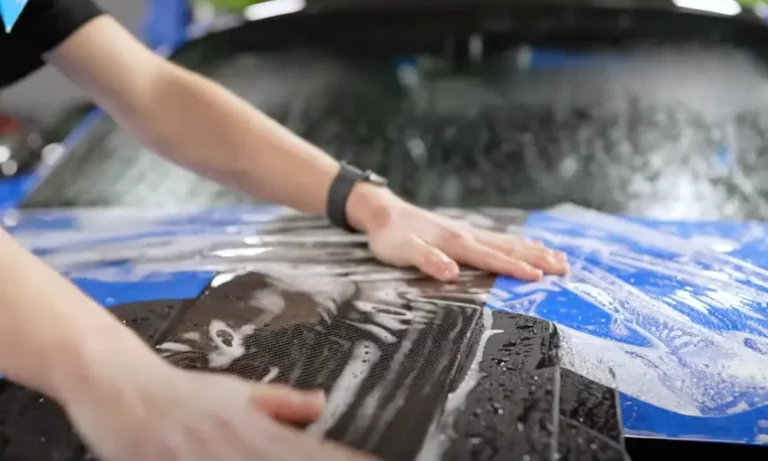
Paint protection film (PPF) is a thick, clear urethane layer applied directly to your car’s exterior. It absorbs rock chips, resists chemical etching, and shields your paint from UV damage, scratches, and road grime.
So why does pricing jump from $600 to $15,000+? Four big reasons:
- How much of the car you cover
- How complex your car’s body panels are
- Which film brand and thickness you choose
- Where in the US you get it done
Let’s dig into each one.
PPF Package Pricing: What Each Tier Actually Costs
Partial Front Coverage ($600–$1,500)
This covers your front bumper, side mirrors, and roughly the first 18–24 inches of your hood and fenders. It’s the budget-friendly entry point — and it works well for daily drivers who want basic chip protection.
The catch? It leaves a visible seam across your hood. Over time, grime builds up along that edge, and upper hood sections stay totally exposed to highway debris. It’s functional, not flawless.
Best for: High-mileage commuters, older vehicles, fleet operators.
Full Front Coverage ($1,500–$3,500)
This is the most popular package in the industry — and for good reason. It wraps the entire front bumper, full hood, full fenders, and mirrors in one seamless installation. Edges get tucked into panel gaps, making the film virtually invisible.
No seam lines. No exposed panels. Just clean, complete protection where your car takes the most hits.
Best for: New vehicles, luxury sedans, daily sports cars.
Track / High-Impact Package ($2,500–$5,000)
This package builds on full front coverage by adding rocker panels, lower doors, A-pillars, and wheel arch impact zones. Performance cars fling gravel sideways into their own body panels. Trucks in harsh winters collect road salt along the rocker panels. This tier handles that.
Best for: Track drivers, rural drivers, trucks in heavy winters.
Full Vehicle Coverage ($4,500–$15,000+)
Every painted surface. Every panel. Every edge. Full body PPF completely seals your factory paint from parking lot scratches, bird droppings, UV fading, car wash swirls, and even minor keying.
Pricing depends heavily on vehicle size and complexity. A compact sedan runs $3,500–$6,000. An exotic supercar can easily top $15,000.
Best for: Dark-colored vehicles, matte-finish cars, exotics, long-term asset protection.
Cost by Vehicle Type at a Glance
| Vehicle Type | Partial Front | Full Front | Track Package | Full Body |
|---|---|---|---|---|
| Compact Sedans & Hatchbacks | $600–$1,200 | $1,500–$2,500 | $2,500–$4,000 | $3,500–$6,000 |
| Mid-Size SUVs & Crossovers | $1,000–$1,200 | $1,900–$3,000 | $2,500–$4,500 | $4,500–$7,500 |
| Large Trucks & Full-Size SUVs | $1,200–$1,500 | $2,500–$4,000 | $3,500–$6,000 | $6,000–$9,000 |
| Sports Cars & Coupes | $1,200–$2,000 | $2,000–$3,500 | $3,500–$5,500 | $5,500–$8,000 |
| Exotic & Supercars | $3,000–$5,000 | $4,000–$6,000 | $5,000–$7,000 | $9,000–$15,000+ |
What Actually Drives the Price Up
Material Costs and Shop Margins
Raw PPF film is expensive. Budget rolls cost installers $250–$400. Premium brands with self-healing topcoats run $650–$1,000+ per roll. That translates to $1.20–$4.00 per square foot at wholesale.
Shops mark up material to cover overhead, labor, insurance, and rent. In a healthy shop, materials account for 15–30% of your final bill. Labor and overhead eat another 30–45%. Net margins usually land between 25–40%.
Retail pricing to you lands between $2–$12 per square foot, depending on film tier and location.
Body Complexity — The Biggest Labor Driver
This is the one most people miss. Two cars can have identical surface area but wildly different installation costs — all because of body shape.
A flat-nosed Tesla wraps fast. A Corvette C8 with deep air intakes, sharp splitters, and aggressive side vents? That takes hours more. Every tight corner risks over-stretching the film, causing adhesive failure or visual distortion. When an installer ruins a piece, they scrap it and start over. That risk gets priced into your quote.
Real example: A full front on a Tesla Model 3 runs around $2,200. The same package on a C8 Corvette runs $3,000+. The $800 gap is pure labor complexity.
Paint Correction Before Installation
PPF is transparent — it’s a magnifying glass, not a concealer. Any swirl marks, scratches, or oxidation on your paint get locked under the film permanently.
That means your car often needs paint correction first. This multi-step machine polishing process adds 5–20 labor hours and $500–$2,500 to your total bill before a single piece of film gets cut. It’s not optional if you want a clean result.
Where You Live Changes Everything
Geography moves PPF prices by 15–25%. High-cost urban markets like Los Angeles, San Francisco, and New York charge more — not because they’re gouging you, but because their rent, labor rates, and overhead are simply higher.
A full front package in LA often starts at $2,099–$2,200. The same job at a certified shop in the Midwest or rural South might run $1,699–$1,899. Same film. Same skill level. Different zip code.
Which PPF Brand Is Worth It?
Not all films protect equally. Here’s how the top brands stack up:
| Brand | Flagship Film | Thickness | Key Feature |
|---|---|---|---|
| XPEL | ULTIMATE PLUS | 7.0–10.0 mil | Self-healing, top-tier gloss |
| XPEL | STEALTH | 8.0 mil | Transforms gloss to satin finish |
| XPEL | ARMOR | 13.0+ mil | Extreme off-road/track protection |
| 3M | Scotchgard Pro Series | Varies by tier | Advanced UV and yellowing resistance |
| UPPF | Platicoat Series | Standard | Proprietary UV inhibitor technology |
Premium brands command a 15–30% price premium over generic alternatives. That premium buys you better optical clarity, longer warranties, and a proven track record against yellowing.
Standard film thickness sits between 6.5 and 8.5 mil — the sweet spot for impact absorption without visual distortion. Upgrading to 10–13 mil adds another 15–20% to your cost.
Does PPF Really Yellow Over Time?
Old PPF had a serious yellowing problem. Those early films used aromatic polymer structures that broke down under UV exposure, turning yellow and hazy — especially on white and silver cars.
Modern premium films use aliphatic polymer structures instead. Aliphatic chains don’t react aggressively with UV light. Combined with built-in UV inhibitors, a quality modern film can last 5–10 years in direct sun without yellowing.
If your PPF yellows fast, one thing almost certainly went wrong: you got a cheap, offshore polyvinyl chloride film from an uncertified installer. That’s not a film failure — it’s a purchasing mistake.
PPF vs. Ceramic Coating: Which One Do You Need?
These two technologies get compared constantly. They’re actually very different tools.
PPF is a physical, 8-mil thick barrier. It absorbs kinetic energy. Rocks bounce off it. It self-heals minor scratches. It’s armor for your paint.
Ceramic coating is a 2–3 micron chemical layer. It’s glass-hard but paper-thin. A piece of gravel at highway speed punches straight through it. What ceramics do brilliantly is chemical resistance, hydrophobicity, and deep gloss enhancement.
Cost difference? Ceramic coatings run $700–$3,500. That’s roughly one-third to one-sixth the cost of full body PPF.
The Smart Move: Layer Both
Top detailing shops advocate applying ceramic coating over PPF. The film handles physical impacts. The ceramic coating protects the film itself from chemical staining and contamination, makes washing effortless, and adds an extra layer of UV protection.
This combo adds $1,000–$2,000 on top of your PPF install — but it maximizes the lifespan of both products significantly.
A popular middle-ground: PPF on the full front end, ceramic coating over the entire car. You get physical protection where it counts most, with easy-clean chemical defense everywhere else.
Understanding Your PPF Warranty
PPF comes with two separate warranties. Don’t confuse them.
Manufacturer warranty (5–12 years, some lifetime): Covers defects in the film itself — yellowing, blistering, bubbling, delamination, adhesive failure under normal conditions. XPEL’s warranty is even transferable to new owners, which directly boosts resale value.
Installer workmanship warranty (1–3 years): Covers human error — premature edge lifting, misaligned patterns, or contamination trapped under the film during installation. Good shops fix these fast without argument.
What’s Not Covered
- Rock chip damage — the film did its job. It’s not a defect; it’s a sacrifice. Replace the damaged section; file with your insurance if applicable
- Automated car wash brush damage — those spinning brushes strip topcoats and lift edges
- Acidic contamination left untreated — bird droppings or bug splatter baked into the film by summer heat can etch through the topcoat
- Improper cleaning products — caustic degreasers void coverage fast
If you have a valid claim, contact your installer with photos, schedule an inspection, and keep your maintenance records handy. Documented care history matters.
Is PPF Actually Worth the Money?
Here’s the math that makes it click.
A professional respray of one damaged panel — bumper, hood, or fender — runs $500–$1,500 for standard vehicles. Luxury panels hit $3,000+. A full vehicle respray? $5,000–$12,000.
Full front PPF costs $1,500–$3,500. If one piece of highway debris avoids a $2,000+ hood-and-bumper respray, the film pays for itself in a single hit.
Then there’s resale value. Buyers and dealers use paint thickness gauges to check for resprays. A resprayed panel flags potential accident history and kills resale value. Factory-perfect paint under PPF — documented with professional installation records — can add 5–10% to your vehicle’s valuation at trade-in or private sale.
For a $60,000 car, that’s $3,000–$6,000 in preserved value. Against a $2,000–$3,500 full front install, the numbers make clear sense.
The bottom line on how much to PPF a car: it’s not just a protection cost. It’s a depreciation prevention strategy — and for most drivers, the math works strongly in its favor.