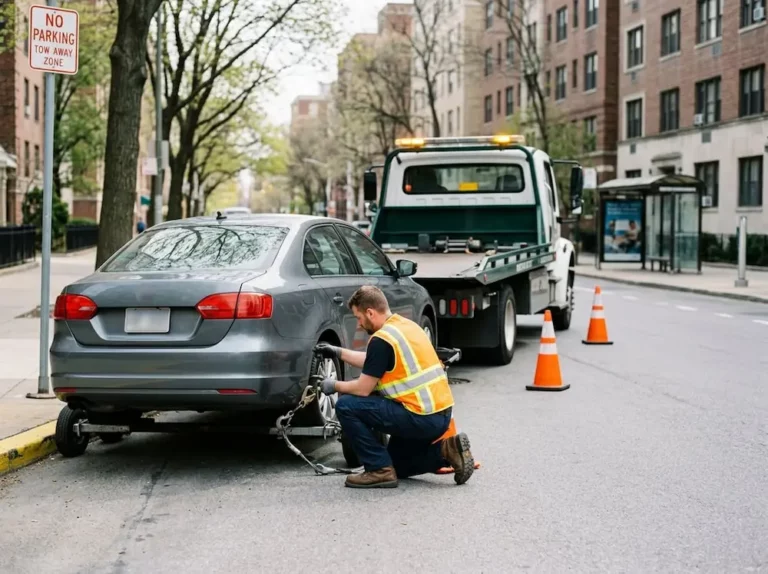
Someone’s parked in your spot again. Or blocking your driveway. Or just sitting there for weeks. You want that car gone — but doing it wrong could land you in legal trouble. This guide breaks down exactly how to get someone’s car towed legally, whether you’re on public or private property.
First, Figure Out Where the Car Is
This single question changes everything. The rules for towing a car on a public street are completely different from towing one on private property. Get this wrong, and you could face a lawsuit for illegal vehicle seizure.
Here’s a quick way to think about it:
- Public street or city parking = You need law enforcement or a city traffic agent involved first
- Private property you own or manage = You may have the right to call a tow company directly — but only if you meet strict legal requirements
How to Get Someone’s Car Towed From a Public Street
You can’t just call a tow truck and point at a car on a public road. That’s not how it works. On public streets, private citizens have no legal authority to order a non-consensual tow. You need the city involved.
Someone Is Blocking Your Driveway
This is one of the most common situations — and it has a clear process.
Step 1: Call your local non-emergency police line or dial 311 (in cities like New York or LA).
Step 2: A police officer or traffic enforcement agent comes out, inspects the vehicle, and issues a parking ticket. In New York City, that ticket ranges from $115 to $250 depending on the borough and repeat violations.
Step 3: Only after the ticket is issued can you — or the officer — contact a licensed tow company to remove the vehicle.
Step 4: You pay nothing. All towing, impound, and storage fees go to the registered owner of the illegally parked car.
In Los Angeles, the LADOT operates a 24-hour dispatch center specifically for public parking violations. LA’s rules are strict — even if a bumper just slightly overhangs your driveway apron, that counts as a blockage and is subject to citation and tow.
The Car Has Been Sitting There for Days
Most U.S. cities enforce a 72-hour rule. If a vehicle hasn’t moved in 72 consecutive hours on a public street, it’s eligible for citation and impoundment. In California, the city doesn’t even need to post warning signs for this rule to apply — it’s automatic.
Report it to your local traffic enforcement agency or 311. They’ll verify the vehicle’s position, tag it, and initiate the tow process if the time threshold is met.
Pro tip: Some cities have smart programs to avoid this entirely. Pasadena, California runs a “Text Before Tow” program that texts registered vehicle owners before towing them. Worth knowing if you’re on the other side of this situation.
The Car Has Unpaid Tickets
Cities don’t wait forever for people to pay parking fines.
- In Los Angeles, five or more unpaid citations make a vehicle eligible for booting or direct towing from a public street
- In New York City, a vehicle can be booted if the owner owes over $350 in violations that have reached judgment status — and the owner only gets 48 hours to pay before the car gets towed
New York City Marshals can even tow a vehicle from private property to collect on a judgment debt. That’s how far the city’s financial enforcement powers reach.
How to Get Someone’s Car Towed From Private Property
If the car is on land you own or manage, you may have the right to tow it without police involvement. But “may” is doing a lot of heavy lifting in that sentence. States impose strict requirements — and skipping even one step can make the tow illegal.
You Must Have the Right Signage First
This is non-negotiable. Before you can legally tow anyone, your property needs compliant warning signs posted at every vehicle entrance. And these aren’t just generic “No Parking” signs — the law gets very specific.
| State | Sign Size | What It Must Say |
|---|---|---|
| California | Min. 17×22 inches, 1-inch letters | No public parking, tow company name & phone, local traffic enforcement number |
| Colorado | Min. 2 sq. ft., 1-inch letters, English and Spanish | Parking restrictions, hours, towing company name & number |
| Utah | Two-part sign assembly, 24×18 inches each | “Towing Enforced,” authorized vehicles, towing company contact |
| Illinois | Bottom edge min. 4 ft. from ground | “Tow-away zone” in 2-inch letters, towing company phone number |
| Florida | “Tow-away zone” in 4-inch letters | Risk of towing and contact info to locate the vehicle |
In California, forgetting to include the local traffic enforcement phone number — even if everything else looks perfect — invalidates the sign entirely. Same deal if you switch tow companies but forget to update the sign.
Check your signs regularly. Sun bleaching, graffiti, and fading can make a number unreadable — and an unreadable sign is a strong legal argument for the vehicle owner in court.
You May Need to Wait Before Towing
Most states require a grace period between discovering an unauthorized vehicle and actually towing it.
- Illinois: Towing companies must place a physical, timestamped notice on the vehicle at least one hour before towing
- Colorado & Utah: A 24-hour written warning must be placed on the windshield before a tow can happen
- Illinois (tenants): If the vehicle belongs to someone with a parking agreement — like a resident — the property manager must give at least three hours’ personal notice via text, email, or phone call and receive a confirmed response
Exceptions exist. Vehicles blocking fire lanes, sitting within 15 feet of a fire hydrant, or obstructing an emergency exit can usually be towed immediately — no warning required.
You Need Written Authorization for the Specific Tow
In many states, you can’t just have a blanket contract with a tow company and let them patrol your lot. That’s called “patrol towing” — and several states have banned or heavily restricted it because of widespread abuse.
In California, someone representing the property must be physically present at the time of the tow and sign a written authorization document for that specific vehicle. The document needs the car’s make, model, VIN, plate number, reason for towing, and the agent’s signature.
In Oregon, tow truck drivers must get a physical signature from the property owner at the time of the tow — a general contract doesn’t cut it.
In Illinois, no tow can happen without express written instructions from the property owner or person in charge. And there’s a key protection: you can’t tow a car just because its registration sticker is expired.
Can a Tenant Authorize a Tow?
Short answer: usually no. Even if someone is parked in your assigned spot, most jurisdictions require the property owner, manager, or an authorized security agent to sign off on the tow. An ordinary tenant doesn’t have that legal standing.
Your move? Call the landlord or property manager and let them handle it.
After the Tow: What Has to Happen Next
Once a car gets hooked, the tow company’s legal obligations kick in immediately.
Police Must Be Notified Fast
Towing companies must report the seizure to local law enforcement — and quickly. This prevents the vehicle owner from reporting the car stolen.
- Florida & Illinois: Notification within 30 minutes of completing the tow
- California: Within one hour of receiving tow authorization
Miss this window? In many states, the tow company forfeits the right to charge storage fees for the period they failed to report.
Storage Limits and Personal Property
California limits tow companies to storing vehicles within a 10-mile radius of where the car was towed. They can’t haul it to a far-off lot to rack up fees.
Personal items inside the car? Colorado law says towing carriers must release personal property for free if requested within 30 days. Tow companies that hold wallets, car seats, or medication hostage to force payment are breaking the law in most states.
Know Your Rights If You’re the One Getting Towed
If you catch a tow truck mid-process on private property before the vehicle reaches a public road, you can stop it.
In California and Florida, the operator must release your vehicle immediately — they can only charge a “drop fee” capped at half the standard tow rate. They can’t demand full payment first. They can’t require your license or registration. A tow operator who refuses is committing a criminal misdemeanor under California law.
If you believe a tow was illegal, collect evidence fast:
- Photograph the parking space, the signage (measure letter heights if possible), and your car’s position
- Get a copy of the written authorization that triggered the tow
- Request the tow receipt and invoice immediately
Then consider small claims court. The penalties for illegal towing are serious:
| State | What You Can Recover |
|---|---|
| California | 2x–4x total towing and storage charges + actual damages |
| Texas | Up to $1,000 + 3x the tow fees + attorney’s fees |
| Florida | Actual costs + attorney’s fees + court costs |
| Illinois | All towing charges + loss of vehicle use + attorney’s fees + $500 fine per violation |
A formal demand letter sent via certified mail to the tow company and property owner often results in a fast settlement — nobody wants to face those multipliers in court.
For Property Managers and HOAs: Do It Right
If you manage a property and need to enforce parking rules, the stakes are high. Getting it wrong means civil liability, angry residents, and expensive lawsuits.
Here’s what a solid program looks like:
- Write clear rules and include them in leases or CC&Rs — define exactly what’s unauthorized
- Apply rules consistently — selective enforcement opens the door to discrimination claims
- Vet your tow vendor — check their state permits, insurance, and compliance record with the local utility commission
- Cap fees in your contract — don’t let your vendor charge above local statutory maximums
- Document every tow — timestamped photos, signed authorization forms, stored for up to three years
- Never authorize a tow with someone inside the vehicle — that’s not a parking issue anymore
If a mistake happens and a vehicle gets towed illegally, release it immediately without fees. Eating that cost is far cheaper than a statutory damages case.
The bottom line on how to get someone’s car towed legally: follow the location-specific rules, get the right authorization, and document everything. Skip those steps and the headache shifts from their car to your wallet.