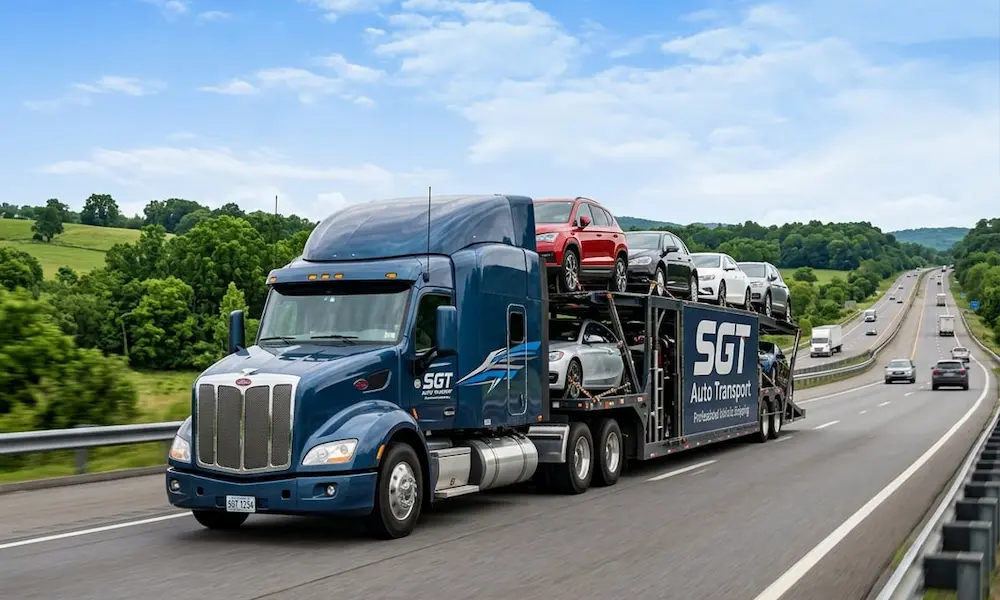
Figuring out how much to ship a car to Hawaii feels overwhelming at first. Prices vary wildly depending on where you’re starting, which island you’re headed to, and how you ship. This guide breaks down every cost factor clearly so you can plan your budget without nasty surprises. Stick around — the details at the end could save you hundreds.
The Short Answer: What Does It Actually Cost?
Here’s the honest truth about how much to ship a car to Hawaii in 2026:
- West Coast to Honolulu: $1,500 – $2,200
- East Coast to Honolulu: $2,200 – $3,500
- Midwest to Honolulu: $2,000 – $2,800
Those ranges cover the full trip — overland trucking to the port plus the ocean crossing. Your final number depends on your starting city, your car’s size, the shipping method you choose, and the time of year.
Where You’re Shipping From Matters a Lot
West Coast ports like Los Angeles, Oakland, and Seattle sit closest to Hawaii. More ships sail from these ports, so carriers charge less. Here’s how departure port affects your baseline ocean freight cost:
| Departure Port | Estimated Ocean Freight Cost |
|---|---|
| Los Angeles / Long Beach | $1,500 – $1,800 |
| Oakland / San Francisco | $1,550 – $1,850 |
| Seattle / Tacoma | $1,600 – $1,900 |
If you live far from these ports, you’ll also pay for overland transport to get your car there. A door-to-port shipment from New York to Honolulu typically runs $2,500 – $3,300 once you factor in cross-country trucking plus ocean freight.
RoRo vs. Container Shipping: Which One’s Right for You?
Your two main options are roll-on/roll-off (RoRo) and containerized shipping. They’re very different in price and protection.
Roll-On/Roll-Off (RoRo): The Budget-Friendly Choice
RoRo ships work like massive floating parking garages. Dock workers drive your car on board, secure it to the deck, and drive it off at the destination port. It’s simple, fast, and cheap — ocean freight runs about $1,200 – $1,800.
The catch? Your car must run perfectly. It needs a working engine, brakes, steering, and fully inflated tires. Carriers will refuse vehicles with warning lights or flat tires. Also, you can’t leave anything inside the car — no bags, no electronics, nothing.
Container Shipping: Premium Protection
For luxury cars, classics, or anything you’d lose sleep over, containerized shipping seals your vehicle inside a steel box. Salt air, humidity, and debris can’t touch it.
The price reflects that protection:
- Shared container: $2,000 – $2,500
- Dedicated 20-foot container: $3,500 – $6,000+
Some carriers let you pack household goods alongside your car in a shared container, which can make the premium feel more worthwhile if you’re relocating entirely.
How Vehicle Size Affects Your Bill
Carriers charge by the space your car takes up on the ship. A standard sedan sits at the baseline price tier. From there, expect these add-ons:
- SUVs and minivans: $150 – $400 extra
- Full-size trucks and oversized vehicles: $500+ above sedan pricing
If you’re shipping a big truck, containerized transport might actually be more economical than RoRo, since oversized vehicles often hit punitive deck space surcharges.
Which Island You’re Shipping To Changes the Price
Honolulu gets the most ships, so it’s the cheapest destination. Shipping to a neighbor island costs more because your car needs a second, shorter ocean leg after arriving in Oahu.
Neighbor island surcharges typically add $150 – $450 to your Honolulu baseline rate. Keep that in mind if you’re headed to Maui, the Big Island, or Kauai.
The Two Big Carriers: Matson vs. Pasha Hawaii
Only two major carriers run vehicles across the Pacific to Hawaii.
Matson Navigation Company
Matson is the dominant player with over 140 years in the Pacific. They operate terminals in Long Beach, Oakland, and Tacoma, with extensive Hawaii infrastructure. Their baseline rate for a standard vehicle starts at $1,790 from the mainland. Active-duty military members get a $100 discount per vehicle.
Pasha Hawaii
Pasha Hawaii runs specially designed RoRo vessels with fully enclosed ship-board garages, giving better weather protection than standard open-deck carriers. They serve San Diego, Los Angeles, and San Francisco Bay Area, connecting to Honolulu, Hilo, and Kahului. Their premium enclosed vehicle service starts at $3,800 per unit.
Should You Use a Broker Instead?
Most people ship through brokers like Nexus Auto Transport, Sherpa Auto Transport, or SGT Auto Transport. Brokers don’t own ships — they coordinate overland pickup and book space with Matson or Pasha on your behalf.
Because they move high volumes, they often negotiate better rates than you’d get by booking directly. Just make sure you pick a broker with solid reviews and verified carrier relationships.
Seasonal Pricing: Timing Your Shipment Smartly
Summer kills your budget. Peak shipping season runs May through September, driven by military relocations, university moves, and corporate transfers. Demand spikes so high that rates jump 20 – 30% during this window — that’s $200 – $400 extra per vehicle.
January and February are your best bet for savings. Carriers compete to fill empty space during the slow season, and you might save 10 – 15% off peak prices. If your timeline is flexible, that difference adds up.
Port-to-Port vs. Door-to-Port: Pick the Right Service Level
Port-to-port is the cheapest option. You drive the car to the departure terminal yourself, drop it off, and pick it up at the Hawaii port on arrival. A San Diego resident, for example, can drive to Long Beach and cut $200 – $400 in trucking fees off their total.
Door-to-port includes overland pickup from your home or a nearby location. It’s more convenient, but you’ll pay for it. A door-to-port shipment from New York to Honolulu runs $2,500 – $3,300 for a standard sedan.
Choose door-to-port if you can’t easily get to a West Coast port. Choose port-to-port if you live near Los Angeles, Oakland, or Seattle and want to trim costs.
Getting Your Car Ready: Agricultural Inspection Requirements
Hawaii takes biosecurity seriously. Every vehicle entering the state goes through Hawaii Department of Agriculture inspection for soil, seeds, insects, and plant matter. Fail this check, and your car gets quarantined — at your expense.
Here’s what you need to do before you ship:
- Pressure wash the exterior — focus on wheel arches, tire treads, and the undercarriage
- Vacuum the interior thoroughly — remove all sand, dirt, and debris
- Empty the trunk and glove box — only a spare tire, jack, and secured car seats are allowed
- Remove loose roof racks, electronics, and aftermarket add-ons
For vehicles heading back to the mainland, the USDA inspects for tropical pests and prohibited plant material before departure. Fresh fruits, berries, live plants in soil, and certain flowers are strictly forbidden.
Washing your car at home? Use a commercial car wash. Washing on residential streets can introduce phosphates into the watershed — Honolulu fines can reach $25,000 per violation.
Fuel and EV Battery Rules You Can’t Ignore
Gas-powered vehicles must arrive at the port with the tank between one-eighth and one-quarter full. More fuel means more fire risk on board. Carriers will siphon the excess at your expense — or reject the vehicle outright.
Electric vehicles face strict battery charge requirements. Carriers require a state of charge between 20% and 50% at time of loading. You also need to disable any remote monitoring apps that might drain the battery during the voyage.
Arrive outside that range, and you’re looking at a $250 mandatory surcharge — or a denied loading. Matson confirms it accepts non-plug-in hybrids with NiMH, sodium-ion, and nickel-iron batteries without issue.
Documents You’ll Need at the Port
Missing paperwork is the #1 reason shipments get delayed. Bring these:
- Valid government-issued photo ID
- Current vehicle registration
- Original Certificate of Title
- Proof of active auto insurance
Financed or leased vehicle? Your lender legally co-owns the car. You need a notarized Lienholder Authorization Letter on the bank’s official letterhead granting permission for the vehicle to leave the mainland.
Can’t deliver the car yourself? A notarized Absentee Owner Authorization Letter lets someone else drop it off on your behalf.
Some terminals also require U.S. Customs and Border Protection clearance — an “OK to Lade” approval submitted up to 72 hours before departure. Customs verifies your VIN against stolen vehicle databases before allowing loading.
After Arrival: Picking Up Your Car Without Getting Stung
Once the ship docks, you have a short window to retrieve your vehicle before storage fees kick in:
- Honolulu (Oahu): 4 days free
- Nawiliwili (Kauai): 4 days free
- Hilo (Big Island): 3 days free
- Kahului (Maui): 2 days free
After free time expires, fees start at $7/day and climb to $19.25/day by day 11 at Honolulu. Don’t miss the window.
To pick up your car, bring your shipping receipt, photo ID, and a valid Hawaii safety inspection form.
Registering Your Car in Hawaii: Costs and Taxes
Hawaii requires all imported vehicles to get registered locally. Here’s a quick breakdown of what you’ll pay:
| Fee | Amount |
|---|---|
| State registration | $46 |
| Honolulu County registration | $20 |
| Title transfer (Honolulu/Kauai) | $10 |
| Title transfer (Maui) | $20 |
| Title transfer (Hawaii County) | $5 |
| Highway Beautification Fee | $7 |
| Registration Emblem Fee | $0.50 |
| EV road user fee (annual) | $50 flat or $8/1,000 miles |
Hawaii also charges an annual weight tax based on curb weight:
- Up to 4,000 lbs: 1.75¢ per pound
- 4,001 – 7,000 lbs: 2.00¢ per pound
- 7,001 – 10,000 lbs: 2.25¢ per pound
- Over 10,000 lbs: $300 flat
Military personnel stationed in Hawaii can apply for a complete weight tax exemption using the CS-L(MVR)50A form signed by their commanding officer.
The Hawaii Use Tax: Don’t Get Caught Off Guard
Hawaii charges a Use Tax of 4% – 4.5% on vehicles imported for use in the state. It’s calculated on the vehicle’s “landed value” — purchase price plus all shipping costs.
The exemption you want: If you owned the car out of state and used it there before moving, you likely qualify for an exemption. But there’s a catch — vehicles imported less than 3 months after purchase don’t qualify. The state assumes you bought the car specifically for Hawaii use.
To claim the exemption, file Form G-27 before your county issues permanent plates. If you bought your car privately from a non-dealer, you’re likely exempt from Use Tax entirely.
Shipping Between Islands: Young Brothers and Rising Costs
Moving your car from Oahu to Maui, the Big Island, or Kauai? That’s a whole separate shipment through Young Brothers LLC, the near-monopoly inter-island carrier operating under state oversight.
Effective 2026, rates jumped significantly after the Hawaii Public Utilities Commission approved a 25.75% rate increase. Senate Bill 2694 then added an immediate 3% hike on July 1, 2026.
Current estimated costs for a mid-sized vehicle:
| Route | 2026 Estimated Cost |
|---|---|
| Honolulu → Kahului (Maui) | $350 – $450 |
| Honolulu → Hilo (Big Island) | $370 – $480 |
| Honolulu → Nawiliwili (Kauai) | $350 – $450 |
Shipping directly between two neighbor islands (skipping Honolulu) triggers a 25% trans-shipment surcharge. Also, Young Brothers uses open barges — your car is exposed to ocean air the entire trip. Wash and wax it thoroughly before loading to protect against salt corrosion.
Shipping Back to the Mainland: It’s Actually Cheaper
Good news if you’re heading back to the continental U.S. — eastbound trips run 15 – 25% cheaper than the westbound journey. Ships return from Hawaii with lots of empty space, so carriers discount aggressively to fill it.
- Honolulu to California: $1,000 – $1,400
- Honolulu to San Diego: $1,100 – $1,500
- Kauai or Big Island to Long Beach: $1,200 – $1,800
Transit runs 10 – 21 days door-to-door. The same USDA agricultural inspections apply before your car boards the ship in Hawaii.
If you’re shipping even further — Guam runs about $3,218 from Honolulu and Anchorage costs $5,581 — plan for major premiums given the extreme distances involved.
Quick Recap: Total Cost by Departure City
| Origin City | Estimated Total to Honolulu |
|---|---|
| Los Angeles / Long Beach | $1,500 – $1,800 |
| Oakland / San Francisco | $1,550 – $1,850 |
| Seattle / Tacoma | $1,600 – $1,900 |
| Chicago | $2,000 – $2,400 |
| New York | $2,200 – $2,800 |
| Miami / Florida | $2,300 – $2,700 |
All figures reflect standard sedans via RoRo during non-peak season. Larger vehicles, container shipping, and peak season add to these numbers.
Knowing exactly how much to ship a car to Hawaii comes down to three things: where you’re starting, how you want to ship, and how well you prepare your car for inspection. Nail those three, pick the right service level for your budget, and you’ll sidestep the expensive surprises that catch most people off guard.