Getting your 2 stroke gas mix wrong is the fastest way to destroy an engine. Too little oil and it seizes. Too much and it chokes itself to death. This guide covers everything — the right ratio, the right fuel, and the exact steps to mix it correctly. Stick around and you’ll never guess again.
Why the Mix Ratio Actually Matters
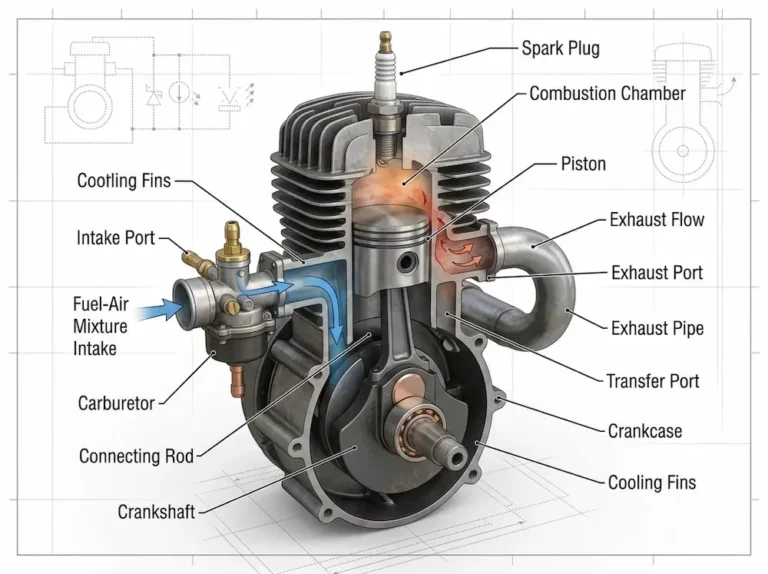
A 2 stroke engine doesn’t have a separate oil reservoir like your car does. The oil travels with the fuel through the crankcase, coating every moving metal part as it goes. No oil film means metal grinding on metal at thousands of RPM. That’s not a slow death — it’s instant.
The gasoline carries the oil in. The oil does the protecting. Get the balance wrong in either direction and you’ve got a problem on your hands.
What Ratio Does Your Engine Actually Need?
There’s no single “correct” ratio for every engine. The manufacturer sets it based on internal clearances and heat design. Check your owner’s manual first — always. But here’s what most equipment actually calls for.
50:1 is the standard for nearly all modern equipment — Stihl, Husqvarna, Echo, RedMax. Modern metallurgy allows tighter clearances, so less oil does the job and burns cleaner.
40:1 is common for equipment made before the early 2000s and some consumer-grade machines.
32:1 suits vintage engines, heavy-duty applications, and older equipment with looser manufacturing tolerances.
25:1 and 20:1 are for antique engines or break-in periods on freshly rebuilt motors.
Exact Measurements for Common Batch Sizes
Stop eyeballing it. Use a calibrated measuring syringe or a purpose-built mixing cup. Many oil brands sell pre-measured bottles — a 2.6 oz bottle treats exactly one gallon at 50:1. Simple.
Here are the numbers you need:
50:1 Mix Chart (Modern Equipment)
| Gasoline Volume | Two-Stroke Oil Required |
|---|---|
| 1 US Gallon | 2.6 fl oz |
| 2 US Gallons | 5.1 fl oz |
| 2.5 US Gallons | 6.4 fl oz |
| 5 US Gallons | 12.8 fl oz |
40:1 Mix Chart (Older Equipment)
| Gasoline Volume | Two-Stroke Oil Required |
|---|---|
| 1 US Gallon | 3.2 fl oz |
| 2 US Gallons | 6.4 fl oz |
| 2.5 US Gallons | 8.0 fl oz |
| 5 US Gallons | 16.0 fl oz |
32:1 Mix Chart (Vintage & Racing Engines)
| Gasoline Volume | Two-Stroke Oil Required |
|---|---|
| 1 US Gallon | 4.0 fl oz |
| 2 US Gallons | 8.0 fl oz |
| 2.5 US Gallons | 10.0 fl oz |
| 5 US Gallons | 20.0 fl oz |
How to Mix 2 Stroke Gas Step by Step
The order you add things matters. Oil is thick and viscous — pour it into an empty can and it sticks to the walls. You’ll end up with a mix that’s leaner than you intended.
Here’s the correct sequence:
- Pour half your gasoline into a clean, approved fuel container
- Add your measured oil into that partial fuel charge — it hits liquid instead of dry plastic walls and starts blending immediately
- Cap the container tightly and shake it vigorously for 15–30 seconds
- Add the remaining gasoline
- Cap it again and give it one final shake
That’s it. Your fuel is ready.
One more thing: shake the container before every refuel. Oil and gas can slowly separate when left sitting. A quick 10-second shake before you pour keeps the ratio consistent every time.
Safety rules that aren’t optional:
- Mix outdoors in a well-ventilated space, away from sparks or open flames
- Let the engine cool down completely before refueling
- Move at least 10 feet from where you fueled before you pull the starter cord
Choosing the Right Gasoline
Not all pump gas works well in a 2 stroke. Here’s what to look for.
Octane Rating
Most modern air-cooled 2 stroke engines need a minimum of 89 octane (mid-grade). Many professional equipment specialists push for 91–93 premium. Running 87 regular in a high-revving chainsaw invites pre-ignition — that’s when the fuel detonates before the spark plug fires, sending a shockwave down into a piston that’s still traveling up. The damage is fast and expensive.
The Ethanol Problem
This one catches a lot of people off guard. US pump gas is almost always blended with ethanol, and ethanol is genuinely harmful to small 2 stroke engines.
- Never use fuel with more than 10% ethanol — E15 or E85 will damage your engine and void your warranty
- Ethanol absorbs moisture from the air. Once enough water is absorbed, phase separation happens — the water and ethanol drop to the bottom of your tank as a layer of sludge with zero oil content. Your engine draws that in and runs completely unlubricated
- Ethanol acts as a solvent, dissolving rubber fuel lines, primer bulbs, and carburetor diaphragms over time
- It also burns hotter than straight gasoline, pushing air-cooled cylinder temps beyond their design limits
Ethanol-free premium fuel is your best option whenever you can find it. If you can’t, stick to a max 10% ethanol blend and use it within 30 days.
Fuel Freshness
Mixed fuel starts degrading quickly. The light hydrocarbons evaporate first, leaving behind a heavier, less combustible liquid that eventually turns into varnish inside your carburetor. Use mixed fuel within 30 days and never top off a tank with old fuel from last season.
Picking the Right 2 Stroke Oil
Two rules before anything else:
- Never use 4 stroke automotive motor oil — it’s loaded with metallic additives that don’t combust cleanly and will foul your engine fast
- Never use outboard marine 2 stroke oil — marine oils are ashless formulations designed for water-cooled engines. In an air-cooled engine, the heat flashes them away before they can lubricate anything
Oil Types Compared
Mineral oils are petroleum-based and cost-effective. They work, but they don’t burn completely clean. Carbon deposits build up on the piston crown, exhaust port, and spark arrestor over time — expect more maintenance.
Semi-synthetic oils like Echo PowerBlend Gold blend mineral oil with synthetic polymers. They burn cleaner, produce less smoke, and include detergents that fight rust and exhaust port buildup.
Full synthetic oils like Stihl HP Ultra or Amsoil Interceptor are engineered at the molecular level. They provide the best film strength at extreme temps, burn almost completely clean, and keep your engine internals spotless. They’re worth the extra cost for any equipment you use regularly.
What the Certification Labels Mean
Don’t just grab any bottle off the shelf. Check for these certification marks:
- JASO FD — the highest standard from the Japanese Automotive Standards Organization. Guarantees excellent lubricity, low smoke, and strong engine detergency. Full synthetics target this rating
- ISO-L-EGD — the international equivalent, with even stricter requirements for piston cleanliness under extreme heat
- API TC — a solid baseline for air-cooled engines, but an older and less demanding standard than JASO FD
When in doubt, grab a JASO FD full synthetic and you’re covered for virtually any modern equipment.
The Right Container for Storing Mixed Fuel
The container you use matters more than most people realize — both for safety and for keeping your mix properly labeled.
Color Codes
The industry color-coding system exists for a reason:
- 🔴 Red — raw, unmixed gasoline
- 🟡 Yellow — diesel
- 🔵 Blue — kerosene
- 🟢 Green — pre-mixed 2 stroke fuel
Storing your pre-mix in a green can means you’ll never accidentally pour unlubricated gas into your chainsaw. It’s a simple habit that prevents expensive mistakes.
Regulatory Requirements
Any container you use for fuel storage needs to meet real safety standards. According to OSHA guidelines, safety-approved fuel cans must include:
- A spring-closing lid that seals automatically
- A pressure relief vent to prevent explosive rupture in heat
- A metal flash-arresting screen inside the spout to stop flames from traveling back into the can
- Maximum 5-gallon capacity for workplace use
Under CPSC regulations from the Portable Fuel Container Safety Act of 2020, containers sold in the US must also include child-resistant closures and flame mitigation devices to prevent backflash ignition injuries.
Label your container with the mix date and ratio. Every time.
Diagnosing a Bad Mix
Signs You’ve Mixed Too Rich (Too Much Oil)
- Heavy white or blue smoke that doesn’t clear after warmup
- Loss of power and sluggish throttle response
- Spark plug fouling — oil bakes onto the electrode and bridges the gap, killing the spark
- Carbon buildup in the exhaust port and spark arrestor, choking airflow over time
Signs You’ve Mixed Too Lean (Not Enough Oil)
This one’s more dangerous because the engine often sounds better right before it fails.
- Higher-pitched engine note — it revs unusually freely
- Excessive heat from the engine block
- Sudden seizure — the aluminum piston expands into the cylinder wall, scoring the metal and locking the engine solid
If your starter cord won’t pull and the engine ran dry, you’re looking at a full rebuild.
What to Do If You Put In the Wrong Mix
Stop immediately. Don’t run it for even a few seconds. Drain the tank completely into a disposal container, wipe out any residual fuel, then refill with correctly mixed fresh fuel. Pump the primer bulb several times to flush the old mix out of the carburetor before you start it. If the engine was running on a rich mix, pull the spark plug, clean off the fouling with a wire brush, check the electrode gap, and reinstall before your first start.
Pre-Mixed Commercial Fuel: Skip the Math Entirely
If you only use your equipment occasionally or want guaranteed storage stability, commercial pre-mixed fuels like Stihl MotoMix, Husqvarna XP+ Premixed Fuel, TruFuel, and VP Racing Premix are worth considering.
They use an alkylate synthetic base fuel — no ethanol, no aromatic hydrocarbons, and typically 92–94 octane. The oil is already blended at exact ratios at the factory. Shelf life runs up to two years once opened, compared to 30 days for pump gas mixes. They’re excellent for winterizing — run a full tank through before storage and your carburetor stays clean and lubricated all off-season. The cost per gallon is higher, but you’re also buying zero mixing errors and zero ethanol headaches.