Shopping for a GMC Sierra and staring at that X31 package option? You’re probably wondering if it’s just fancy marketing or if there’s real meat on those bones. Here’s the deal: the X31 package isn’t just badges and stickers—it’s a collection of mechanical upgrades that can genuinely transform how your truck performs. Let’s break down exactly what you’re getting and whether it makes sense for your wallet and your driving habits.
What Actually Comes in the X31 Package
The X31 package isn’t a mystery box. You’re getting specific hardware that changes how your Sierra handles dirt, mud, and challenging terrain.
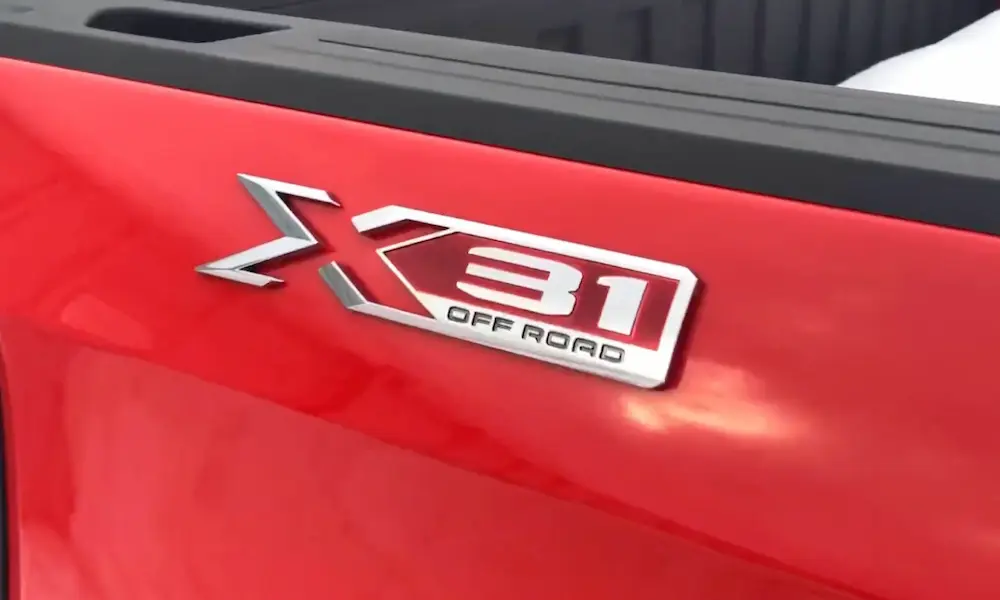
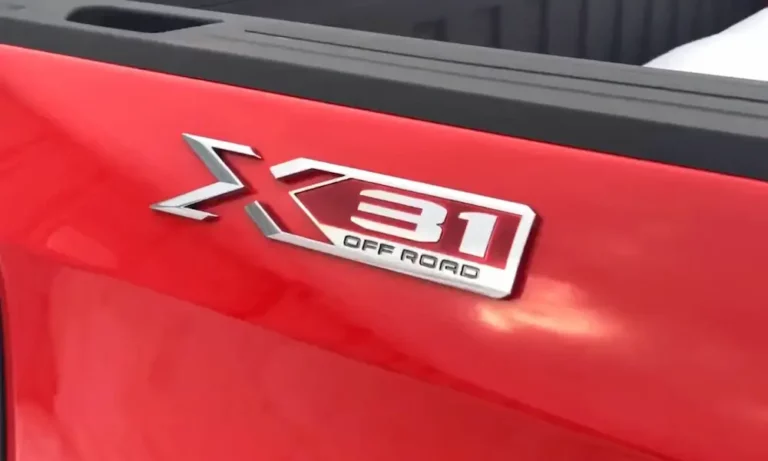
The X31 off-road package includes Rancho off-road shocks, a two-speed transfer case with 4-Low, an automatic locking rear differential, skid plates, hill descent control, and a heavy-duty air filter. You’re also getting all-terrain tires and some cosmetic touches like X31 badges.
Here’s what matters most: the two-speed transfer case and the G80 automatic locker are the stars of this show. Everything else is supporting cast.
The Transfer Case: Your Secret Weapon
The Autotrac 2-speed transfer case is probably the single most important component in the package. It gives you 4-Low with a 2.72:1 reduction ratio.
What does that actually mean? It multiplies your engine’s torque by nearly three times. When you’re pulling a boat up a slimy ramp or crawling through deep sand, you can idle along without straining your engine or cooking your transmission. It’s the difference between sweating bullets and sipping coffee.
Without the X31 package, you’re stuck with a single-speed transfer case that only offers 2-High, Auto-4WD, and 4-High. No reduction gearing, no crawling control.
There’s another critical detail: if you plan to flat-tow your Sierra behind an RV, you absolutely need the two-speed transfer case. It’s the only configuration with a “Neutral” position that disconnects the drivetrain without destroying your transmission. For RV owners, this isn’t optional—it’s mandatory.
The G80 Automatic Locking Differential
Think of the G80 locker as your insurance policy against getting stuck. When one wheel starts spinning faster than the other (like when you’re in mud or snow), the G80 automatically locks both rear wheels together so they turn at the same speed.
The G80 uses a mechanical flyweight system—no buttons, no electronics, no air lines. When wheel speed difference hits about 100 RPM, centrifugal force triggers a clutch pack that locks the axle. It’s simple, reliable, and works without you thinking about it.
The downside? It only engages after you’ve lost traction. Electronic lockers (like on the AT4X) can be turned on before you hit the tough stuff. But for snow, mud, and farm use, the G80 is perfect because it’s one less thing to remember.
Quick note: The G80 isn’t exclusive to the X31 package. It sometimes comes with towing packages or certain engines. But on lower trims or with the 2.7L engine, the X31 guarantees you get it.
The Suspension: Here’s Where It Gets Complicated
The X31 package swaps your standard shocks for Rancho-branded twin-tube units. They’re tuned for off-road compliance, which sounds great until you hit the highway.
Why Some Owners Aren’t Thrilled
The Rancho shocks get mixed reviews. Many owners describe the ride as “bouncy” or “floaty,” especially with an empty bed. Here’s the physics: pickup trucks have stiff rear springs designed to carry payload. When the bed’s empty, those springs are too strong for the truck’s weight. If your shocks are valved soft (like the Ranchos), they struggle to control the spring’s energy on the rebound.
Result? Your truck feels jittery over bumps and highway expansion joints. Load it with cargo or hook up a trailer, and the ride smooths out because the weight calms down the suspension cycle.
The Aftermarket Upgrade Path
Here’s the reality: many X31 owners plan to swap the Rancho shocks for Bilstein 5100s almost immediately. Bilsteins use monotube construction that prevents the fluid from mixing with gas (called aeration), which keeps damping consistent even when you’re hammering washboard roads.
A full set of four Bilstein shocks runs about $400-$600. If you’re already budgeting for new shocks, factor that into your X31 decision.
But here’s the thing: even if the Rancho shocks aren’t perfect, you still need the X31 package to get the transfer case and locker. You can’t retrofit those components cost-effectively after purchase.
Protection Components That Actually Matter
The X31 package includes steel skid plates covering your oil pan, front differential, and transfer case. These aren’t rock-crawling-grade armor, but they’ll stop gravel, ice chunks, and stiff brush from cracking expensive components.
Aftermarket skid plate packages offering full coverage (engine, transmission, fuel tank) run $1,000-$1,200. The factory plates save you that expense if you’re not planning extreme overlanding.
You also get a heavy-duty air filter with deeper pleats and more surface area. In dusty environments—construction sites, gravel roads, farm fields—this protects your engine from abrasive particulate that would otherwise wear down cylinders and foul sensors.
Hill descent control rounds out the package. It uses your ABS system to pulse individual brakes on steep declines, maintaining a crawling speed without locking your wheels. On loose or slick surfaces, this preserves steering control when hitting the brake pedal would cause a slide.
The Big Trade-Off: X31 vs. Max Trailering
Here’s a critical detail that catches buyers off guard: you can’t have both the X31 package and the Max Trailering package. They’re mutually exclusive.
Why They Don’t Play Together
The Max Trailering package uses stiff springs and firm damping to resist squat and sway under heavy loads. It’s engineered for stability when you’re towing 10,000+ pounds.
The X31 package uses softer springs and compliant damping to let the suspension articulate over uneven terrain. These are opposite engineering philosophies.
If you’re regularly hauling heavy fifth-wheels or large travel trailers, the Max Trailering package is your only choice. The X31’s soft suspension will cause porpoising and sway with heavy tongue weights.
But if your towing is occasional—a 5,000-pound boat or utility trailer—the X31 makes more sense. You’ll still have plenty of capacity, plus the traction upgrades that help you extract that boat from muddy ramps.
What You’ll Actually Pay
The X31 package typically costs around $2,100, but that’s usually bundled with a spray-on bedliner and all-weather floor liners.
Break it down:
- Spray-on bedliner: ~$550 value
- Floor liners: ~$200 value
- Net cost of X31 mechanicals: ~$1,350
Can you build this yourself cheaper? Not a chance. You could buy aftermarket shocks and skid plates, but retrofitting a two-speed transfer case is financially impossible. You’d need the hardware ($1,500+), new switchgear, wiring harnesses, and BCM reprogramming. It’s not happening.
The transfer case alone justifies the package cost.
Fuel Economy Impact
You’ll lose about 1-2 MPG compared to a standard truck. The culprits: removal of the front air dam (increases drag), higher rolling resistance from all-terrain tires, and added weight from skid plates.
If you’ve got the 3.0L Duramax diesel, you’ll still see 25-27 MPG highway, which softens the penalty considerably.
X31 vs. AT4: The Value Proposition
The AT4 is GMC’s dedicated off-road trim with a factory 2-inch lift, more aggressive tires, and premium interior touches. It typically costs $10,000 more than an Elevation with X31.
Here’s what you need to know: the X31 gives you 90% of the AT4’s mechanical capability—same locker, same 4-Low, same skid plates. The AT4 just sits higher and looks tougher.
If you don’t need that extra 2 inches of ground clearance or the AT4’s interior upgrades, the X31 is a massive value play. You’re getting serious capability at a reasonable price.
X31 vs. Chevy Z71: Same Truck, Different Badge
GMC’s X31 and Chevy’s Z71 are mechanically identical. Same suspension tuning, same transfer case, same locker, same skid plates.
The only difference is branding and styling. Your decision should come down to which truck’s appearance you prefer and which dealer offers better pricing or incentives.
Who Should Buy the X31 Package
| If You’re This Person | Get the X31? | Why |
|---|---|---|
| Boat owner | Yes | 4-Low is essential for ramp extraction without frying your transmission |
| RV owner (flat towing) | Absolutely | Only configuration that allows dinghy towing |
| Rancher/farmer | Yes | G80 locker and heavy-duty air filter are purpose-built for your environment |
| Snow-belt driver | Yes | Automatic locker provides passive safety on mixed traction surfaces |
| Planning to resell | Yes | Off-road packages protect resale value in truck markets |
Who Should Skip the X31 Package
| If You’re This Person | Get the X31? | Why |
|---|---|---|
| Heavy hauler (10K+ lbs) | No | You need Max Trailering; X31’s soft suspension causes sway |
| Pure city commuter | No | You’re paying for capability you’ll never use |
| Extreme modification plans | No | If you’re installing a 6-inch lift immediately, you’re wasting money on factory parts you’ll trash |
The Bottom Line: Transfer Case Decides Everything
Here’s the simple truth: the value of the X31 package lives or dies with the two-speed transfer case.
If you can imagine any scenario where you’d need 4-Low—pulling stumps, navigating steep logging roads, crawling through deep sand, or flat-towing behind an RV—the X31 package is the cheapest way to get that capability. The skid plates, hill descent control, and air filter are basically free bonuses bundled with the critical drivetrain upgrade.
The Rancho shocks? They’re fine for most people and easily upgraded later. But you can’t upgrade to a two-speed transfer case without major surgery and expense.
The X31 package is available on Pro, SLE, Elevation, and SLT trims, which means you can get serious capability without stepping up to an expensive AT4. That democratization of features is where the real value lives.
For about $1,350 in actual mechanical upgrades, you’re getting components that would cost thousands to retrofit and features that are literally impossible to add later. That’s a pretty solid deal in the world of truck options.
If your Sierra’s going to see dirt roads, boat ramps, snow, or anything beyond smooth pavement, the X31 package earns its keep. If you’re hauling heavy or staying purely urban, save your money. It’s that straightforward.