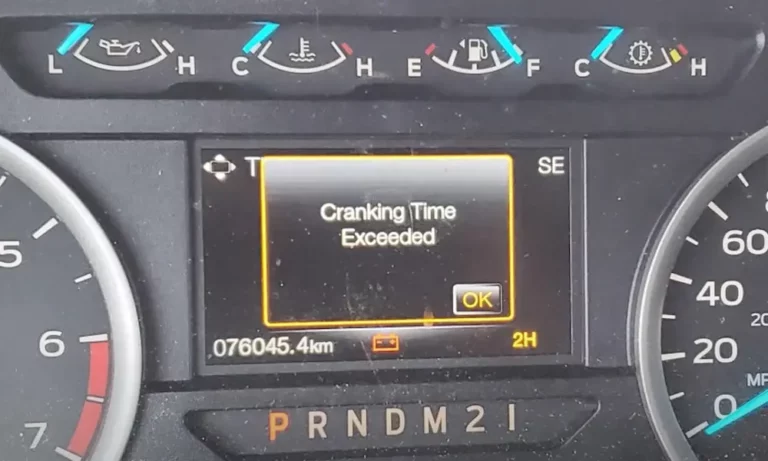
Your Ford won’t start, and now there’s a “Cranking Time Exceeded” message staring back at you from the dashboard. Don’t panic—this error is actually your vehicle’s way of protecting itself. You’re dealing with a built-in safety feature that stops damage before it happens, not a catastrophic failure. Let’s figure out what’s going on and get you back on the road.
What Does “Cranking Time Exceeded” Actually Mean?
Your Ford’s Engine Control Module shuts down starter engagement after 10-15 seconds of cranking without a successful start. Think of it as a circuit breaker for your starter motor—it trips to prevent worse problems.
This protection system guards four critical components. Your starter motor can overheat and fail if it runs continuously. Your battery can drain completely, leaving you stranded even after fixing the original issue. Your engine can flood with unburned fuel. And your catalytic converter can suffer damage from fuel washing through the exhaust system.
Once triggered, you’ll wait 15-20 minutes before the system lets you try again. This cooling period is hardcoded into your vehicle’s programming—there’s no shortcut around it without a proper reset.
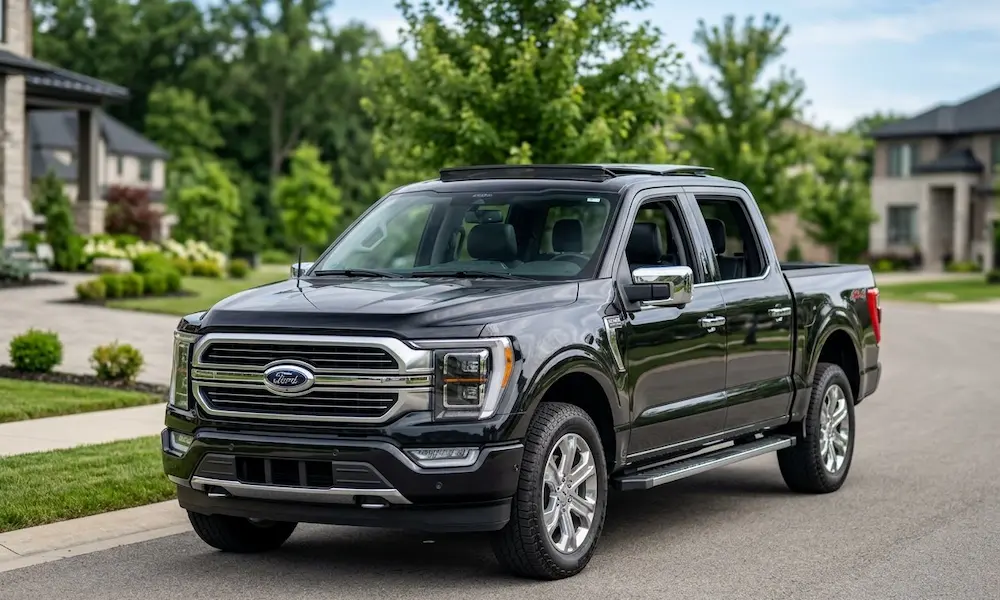
The Ford “Cranking Time Exceeded” error appears most frequently in F-150, Explorer, Escape, and Bronco Sport models, though it can affect any Ford vehicle with modern engine management systems.
Why Your Ford Shows This Error (The Real Culprits)
Fuel System Failures Strike Most Often
Fuel delivery problems cause 40% of all cranking time exceeded errors. Your fuel pump might be dying a slow death, initially struggling only during cold starts before failing completely. Heat makes things worse—a weak pump can vapor lock when the engine compartment gets hot.
Clogged fuel filters starve your engine of fuel, especially noticeable after sitting overnight. You’ll get extended cranking before the engine finally catches, if it starts at all.
Ford’s 1.5L EcoBoost engines in Escape and Bronco Sport models face documented fuel injector cracking issues that create fire hazards while also preventing proper starts. If you’re driving a 2020-2022 Escape or 2021-2024 Bronco Sport, check if your vehicle is affected by recall 25S76 covering approximately 694,000 vehicles.
Proper fuel pressure ranges from 35-65 PSI depending on your specific engine. Anything below that creates starting problems.
Ignition System Problems Come Second
About 30% of cases trace back to ignition components. Worn spark plugs need replacing every 60,000-100,000 miles, but many people push them far beyond that. Weak spark means multiple compression cycles before ignition, extending cranking time past the safety limit.
Ignition coils fail without warning, creating misfires during cranking. If you’re replacing one, consider replacing them all—the others aren’t far behind.
Variable Camshaft Timing (VCT) unit failures plague Ford’s 3.5L EcoBoost engines, particularly in 2018-2023 F-150, Explorer, and Expedition models. Technical Service Bulletin TSB23-2143 addresses this specific problem, which causes timing disruption during cold starts.
Carbon buildup on intake valves becomes a serious issue after 80,000 miles in direct injection engines. This creates compression irregularities that make starting difficult.
Battery and Electrical Issues Account for 20%
Cold weather exposes weak batteries instantly. Your battery needs at least 12.6 volts at rest and should hold 9.6 volts during cranking. Anything less means replacement time.
Corroded battery terminals create resistance that robs cranking power. You might see 12.6 volts on the battery but only 9 volts reaching the starter due to connection problems.
Starter motor heat soak causes problems after driving. Your starter sits near exhaust components, absorbing heat that increases internal resistance. This is why your Ford starts fine when cold but struggles after a short drive and shut-off.
Engine Mechanical Problems Round Out the Causes
The remaining 10% stems from internal engine issues. Low compression from worn piston rings, valve problems, or head gasket failures makes cranking harder. Your starter fights against mechanical resistance it can’t overcome quickly enough.
Timing chain stretch in high-mileage EcoBoost engines throws off valve timing, preventing proper combustion during cranking. Wrong oil viscosity increases internal friction, making the engine harder to turn over.
Model-Specific Issues You Need to Know About
F-150, Explorer, and Expedition Owners
If you’re driving a 2018-2023 F-150, Explorer, or Expedition with the 3.5L EcoBoost engine built before November 30, 2019, pay attention. These vehicles experience VCT-related starting problems that combine ticking noises from the timing cover with intermittent no-start conditions during auto-start-stop operation.
The fix requires replacing all four VCT units along with gaskets and seals. This isn’t a shade-tree mechanic job—labor runs 9.6 to 9.8 hours. Parts costs add up quickly, but addressing the problem prevents catastrophic engine damage.
You’ll also notice these symptoms alongside the cranking error:
- Rattling or ticking from the front timing cover during cold starts
- Rough idle after successful starts
- Auto-start-stop system failures
Escape and Bronco Sport Owners
Your 2020-2022 Escape or 2021-2024 Bronco Sport with a 1.5L EcoBoost engine faces two distinct problems. Software issues in the fuel pump control module affect fuel pressure timing during starts. This requires dealer software updates rather than hardware replacement.
More seriously, cracked fuel injectors can leak fuel onto hot engine surfaces while also causing fuel pressure drops that trigger the cranking error. Ford issued interim software that detects pressure drops and reduces engine power as a temporary safety measure. Permanent hardware fixes are coming, but if you’re experiencing this issue, check with your dealer immediately.
How to Reset the Error and Try Again
Start with the Simple Battery Disconnect
Disconnect your negative battery terminal and wait 10 minutes minimum. This drains stored electrical charge from the PCM’s capacitors, clearing temporary error codes and protection lockouts.
After reconnecting, wait 30 seconds with everything off before attempting a start. This gives the system time to initialize properly.
This method works for about 60% of cranking time exceeded errors caused by temporary glitches rather than underlying mechanical problems.
Try the Key Cycling Method for Push-Button Start
If you’ve got a 2020 or newer Ford with push-button start, there’s a faster reset procedure. Put your key in the run position without starting the engine. Press both the brake and accelerator pedals simultaneously for 10 seconds. This triggers a PCM reset sequence without battery disconnection.
This technique bypasses the cranking protection temporarily, letting you attempt another start sooner than the standard 15-20 minute lockout.
Advanced PCM Memory Clearing for Stubborn Cases
When basic resets don’t work, you’ll need complete PCM memory clearing. Disconnect both battery terminals and connect a jumper wire between the positive and negative battery posts for 10-15 minutes. This completely drains residual charge from all capacitors.
Warning: This clears ALL learned parameters including fuel trims, shift points, and idle values. Your Ford will run rough for the first 50-100 miles while the PCM relearns everything.
Professional scan tools offer selective clearing, targeting specific error codes without wiping everything. This is the better option if you’ve got access to dealer-level equipment or know a friendly mechanic with advanced diagnostic tools.
Diagnostic Steps to Find the Real Problem
Check Your Battery First
Grab a multimeter and test resting voltage—you need 12.6 volts minimum. Load test under starter draw (your parts store can do this free). Voltage shouldn’t drop below 9.6 volts during cranking.
Check battery age. Most last 3-5 years, less in hot climates. If yours is older than that, replacement prevents future problems even if it tests okay now.
Clean battery terminals with a wire brush and baking soda solution. Corrosion you can’t see creates resistance you can definitely feel when starting.
Test Fuel Pressure Next
You’ll need a fuel pressure gauge that connects to your fuel rail test port. Turn the key to run (engine off) and watch pressure build. It should hit specification (usually 35-65 PSI) within 2-3 seconds and hold steady.
Crank the engine and watch for pressure drops. Steady pressure during cranking means your pump is probably fine. Pressure that drops or builds slowly points to pump failure or filter clogging.
Listen to your fuel pump when you turn the key to run. You should hear a brief whirring sound for 2-3 seconds. No sound means no pump operation—check the fuse, relay, and electrical connections before condemning the pump itself.
Inspect Ignition Components
Pull your spark plugs and check the gap and condition. Worn electrodes, carbon buildup, or cracks mean replacement time. While you’re at it, check the plug wires and boots for cracks or carbon tracking.
If your Ford has coil-on-plug ignition, look for oil or moisture around the coils. This causes misfires that extend cranking time. Swap suspected bad coils with ones from cylinders that are firing normally to confirm failure.
Check for diagnostic trouble codes even if your check engine light isn’t on. Pending codes can reveal intermittent ignition problems that only show up during starting.
Look for Carbon Buildup in Direct Injection Engines
Got over 80,000 miles on a direct injection engine? Carbon buildup on intake valves restricts airflow and creates compression problems. You’ll need a borescope to see inside, or take it to a shop that can inspect through the spark plug holes.
Symptoms include rough idle, reduced power, and yes—extended cranking times. Professional walnut blasting or chemical cleaning services remove deposits without engine disassembly.
What the Repair Actually Costs
| Problem Type | DIY Cost | Shop Cost | Repair Time |
|---|---|---|---|
| Battery replacement | $150-$200 | $200-$300 | 30 minutes |
| Fuel pump replacement | $200-$400 | $600-$1,200 | 2-4 hours |
| Spark plugs & coils | $150-$400 | $400-$800 | 1-2 hours |
| VCT unit replacement | Not recommended | $2,000-$3,500 | 9-10 hours |
| Fuel injector replacement | Not recommended | $1,500-$2,500 | 4-6 hours |
| Carbon cleaning service | N/A | $300-$600 | 2-3 hours |
VCT repairs run expensive because they require timing cover removal and extensive disassembly. The parts themselves cost $800-$1,200, with the rest being labor. This isn’t a job for your driveway unless you’re comfortable with major engine work.
Fuel injector replacement on recalled models should be free under Ford’s recall program. Don’t pay for repairs covered by safety recalls.