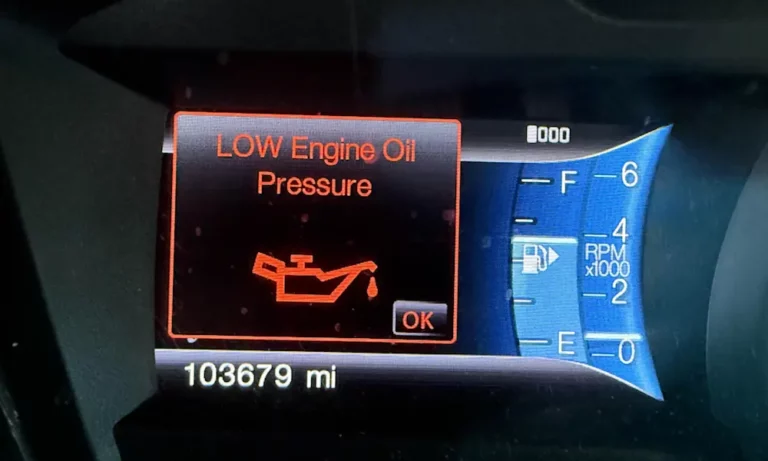
That little oil pressure warning light just lit up on your Ford’s dashboard, and your heart probably skipped a beat. Don’t panic yet—but don’t ignore it either. We’re breaking down exactly what causes ford low engine oil pressure, how to spot the real problem, and what it’ll actually cost you to fix.
What Causes Low Oil Pressure in Your Ford
Running Low on Oil (Or Using Bad Oil)
Here’s the thing—your engine can’t build pressure without enough oil. When your oil level drops below the minimum mark, the pump’s basically trying to squeeze water from a stone. Ford engines get touchy about this, especially the newer models with tighter tolerances.
But quantity isn’t everything. Old, contaminated oil loses its thickness and can’t maintain pressure like fresh stuff. Think of it like trying to build water pressure with syrup that’s been sitting out for months—it’s just not happening. Metal shavings, dirt, and heat breakdown turn your oil into sludge that clogs passages and drops pressure fast.
Change your oil when Ford says to. Better yet, change it a bit sooner if you’re doing lots of short trips or towing.
Your Oil Pump is Giving Up
The oil pump’s job is simple: push oil everywhere it needs to go. When it starts failing, you’re in trouble. Ford’s used different pump setups over the years, and each has its own way of dying.
Traditional gear-driven pumps wear down slowly. The gears get chewed up, the housing develops gaps, or the pressure relief valve stops working right. Chain-driven pumps (like in the 3.5L EcoBoost) last longer but can suffer when the timing chain stretches.
Belt-driven systems? That’s where things get interesting—and not in a good way. We’ll get to that disaster in a minute.
Worn Bearings and Internal Damage
As your engine racks up miles, the bearings between spinning parts wear down. Bigger gaps mean oil flows through easier, which tanks your pressure. You’ll notice this mostly at idle—pressure drops when the engine’s loafing but comes back when you’re cruising.
Previous oil starvation creates permanent damage. Scored bearings, damaged oil galleries, or messed-up cylinder walls leak pressure like a sieve. At that point, you’re looking at rebuilding or replacing the whole engine.
Ford-Specific Problems You Should Know About
F-150 Oil Pressure Sensors (2011-2021): The Usual Suspect
If you’ve got an F-150 from 2011 to 2021, there’s a good chance your oil pressure sensor is lying to you. This sensor—hiding behind the alternator on 4WD trucks—has a nasty habit of leaking oil into its own electrical connector.
The sensor develops internal leaks that contaminate the wiring. Your truck thinks it’s got low pressure when everything’s actually fine. This affects multiple engines, including the popular 5.0L Coyote V8.
Replacing it on a 2WD truck? Pretty straightforward. Got a 4WD? You’re dealing with extra work to reach around the front differential. Plan accordingly.
EcoBoost Oil Pump Belt Failures: Ford’s Big Recall
Here’s where Ford really stepped in it. The 1.0L EcoBoost three-cylinder engines in 2016-2018 Focus and 2018-2022 EcoSport models have a serious design flaw.
The oil pump runs on a belt that sits in oil (called a “wet belt” system). The tensioner arm can break, the belt can snap, and boom—you’ve got zero oil pressure while you’re driving down the highway. Engine seizes, power steering quits, brake assist dies. Not fun.
Ford issued recall 23S64 covering this mess. They’re replacing entire engines in vehicles that fail before the fix parts arrive (scheduled for Q1 2025). That tells you how serious this is.
The belt material breaks down in the oil, creating debris that clogs the pickup screen. Even if the belt’s still hanging on, your pressure tanks anyway.
The 5.0L Coyote Engine: Lower Pressure by Design
Ford’s 5.0L Coyote engine runs lower oil pressure than older Ford V8s—and that’s intentional. If you’re used to classic Ford engines, the Coyote’s numbers might freak you out when they’re actually normal.
Ford revised the pressure specs for the 5.4L 3-valve from 25 PSI to 15 PSI minimum at hot idle. The Coyote follows similar engineering philosophy—efficiency matters, and modern tolerances don’t need old-school pressure levels.
Some 2018+ models had oil consumption issues linked to intake manifold vacuum problems. Ford released Technical Service Bulletin 19-2365 with a computer update to fix it.
How to Tell If You’ve Got a Real Problem
Warning Signs That Scream “Check This Now”
Your dashboard lights up with an oil pressure warning. Don’t drive another mile until you know what’s happening. Modern Fords will throw messages on the screen, beep at you, and generally make a fuss—listen to them.
Engine noise tells the truth. Knocking or ticking sounds mean parts aren’t getting lubricated. These noises usually get worse at idle when pressure naturally drops. If you hear consistent knocking, shut it down immediately.
Your engine might run hotter than normal. Oil doesn’t just lubricate—it cools things down. When pressure drops, heat builds up faster than your coolant system can handle.
How Mechanics Actually Test Oil Pressure
Professional shops don’t trust your sensors—they verify with mechanical gauges. They’ll screw a calibrated gauge directly into the engine’s pressure port and watch what happens at idle and higher RPMs.
For the 5.4L 3-valve engine, they test at the oil filter adapter with the engine fully warmed up. The reading should hit at least 15 PSI at hot idle, with higher numbers as engine speed increases.
Temperature matters for testing. Cold oil reads higher pressure, warm oil reads lower. That’s normal physics—your mechanic accounts for this.
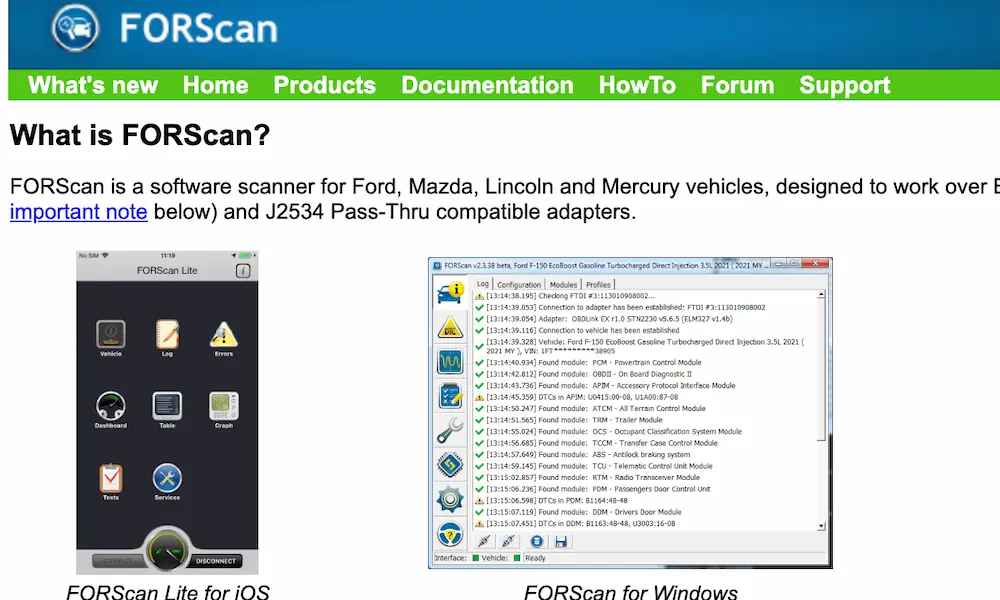
Advanced diagnostics might include checking pump flow volume, leak testing the oil system, or analyzing sensor circuits with professional scan tools. These comprehensive checks prevent guessing games.
What’s Normal for Different Ford Engines
| Engine Type | Idle Pressure (Hot) | Normal Operating Pressure |
|---|---|---|
| 5.4L 3-Valve | 15 PSI minimum | 40-70 PSI at 2000 RPM |
| 5.0L Coyote | 15-25 PSI | 50-80 PSI cruising |
| 3.5L EcoBoost | 20-30 PSI | 60-90 PSI operating |
| PowerStroke Diesel | 15 PSI minimum (lubrication) | 500-3600 PSI (injection) |
These aren’t universal—always check your specific model year and configuration. What’s low pressure for one engine is perfectly fine for another.
What Fixes Cost (The Real Numbers)
Oil Pressure Sensor Replacement
This is the cheap fix you’re hoping for. Sensor replacement runs $130 to $375 depending on your truck’s configuration. Parts cost $50-$200, labor adds $80-$175.
F-150s specifically run $156 to $373 for sensor replacement. The 4WD models cost more because that sensor’s a pain to reach.
Here’s some free advice: buy OEM sensors, not the cheapest thing on the shelf. Aftermarket sensors fail faster and read less accurately. Spend the extra $30 now or replace it again in six months.
Clean that electrical connector thoroughly when you’re in there. Oil contamination sticks around and can cause problems even with a new sensor.
Oil Pump Replacement: Where It Gets Expensive
Oil pump replacement is major surgery. You’re looking at $400 to $2,500 depending on your engine and how buried the pump is. Labor dominates this bill—mechanics need to remove the oil pan, timing cover, and sometimes lift the engine.
EcoBoost engines with wet belt systems hit the high end of that range. One 2018 Focus owner got quoted $2,000 for oil pump replacement, and that’s before addressing related damage.
When you’re replacing the pump, you’re also flushing the system, cleaning the pickup screen, and replacing filters. Contamination that killed the first pump will destroy the second one if you don’t clean house.
Sometimes the repair cost approaches what the truck’s worth. That’s a tough conversation, but it happens.
Preventive Maintenance Saves Thousands
Regular oil changes cost $50-$100 depending on your engine. Skipping them can cost you $2,500 for a pump or $5,000+ for a new engine. The math isn’t complicated.
Ford’s oil change intervals are minimums. If you’re towing, doing lots of short trips, or driving in dusty conditions, cut those intervals in half. Severe service isn’t just marketing talk—it’s real.
Good oil and filters matter. High-quality oil maintains viscosity longer and protects the pump from wear. Cheap filters with weak bypass valves can actually restrict flow and damage your pump.
Check your oil level weekly. Takes two minutes and catches problems before they become catastrophes.
EcoBoost Engines Need Special Attention
The Wet Belt System Problem
EcoBoost engines with wet belt oil pump drives are ticking time bombs. The belt sits in oil, which sounds clever until the belt material starts breaking down. That debris clogs the pickup screen while the belt itself weakens.
Belt condition assessment requires opening things up or using a borescope camera. You can’t just pop the hood and look. By the time symptoms show up, damage is already happening.
The tensioner arm fracture issue affects thousands of vehicles. Ford’s replacing complete engines when they fail because the internal damage is too severe to repair economically.
If you’ve got an affected EcoSport or Focus, get that recall done the second parts are available. Don’t wait for the failure—it’ll leave you stranded in dangerous situations.
Electronic Complications in Modern Fords
Oil pressure sensors in EcoBoost engines talk to multiple systems. The computer uses pressure data for turbocharger control, variable valve timing, and emissions management. One sensor can trigger problems across the whole engine management system.
Diagnosing these vehicles requires understanding how systems interact. A pressure sensor fault might show up as a turbo problem or timing issue, sending mechanics down the wrong path.
Professional scan tools can monitor sensor voltages and system responses in real-time, separating actual mechanical failures from electronic glitches.
Diesel Owners: You’ve Got Double the Complexity
PowerStroke diesel engines use oil pressure for fuel injection, not just lubrication. You’ve got two separate pressure systems to worry about.
The lubrication circuit runs normal pressures—15 PSI minimum at idle. The high-pressure injection system needs 500 PSI just to start, and up to 3,600 PSI during normal operation.
Injection Control Pressure (ICP) monitoring becomes critical. Low ICP means hard starting, rough running, or no starting at all. The diagnostic approach differs completely from gas engines.
Diesel diagnosis requires specialized tools and knowledge. Don’t let a shop that only works on gas engines guess their way through your PowerStroke problems.
Catching Problems Before They Catch You
Monitor These Things Regularly
Check your oil level every week. Not just the quantity—look at the color and consistency. Dark, dirty oil needs changing. Milky oil means coolant contamination. Metallic particles mean something’s wearing badly.
Unusual oil consumption patterns signal problems. If you’re adding a quart between oil changes when you never did before, something’s changed. Could be normal wear, could be the start of pressure problems.
Dashboard warnings aren’t suggestions. Low oil pressure warnings mean stop driving immediately. Oil change reminders mean schedule service soon. Learn the difference.
Listen to your engine. New noises—ticking, knocking, rattling—mean something’s wrong. Don’t turn up the radio and ignore them.
Oil Analysis Tells the Future
Oil analysis programs test your used oil for wear metals, contamination, and breakdown products. These tests predict failures before they happen, especially valuable for high-mileage trucks or severe service vehicles.
You send a sample to a lab, they tell you what’s wearing, how fast, and what might fail next. Costs $30-$40 per test, but it can save you thousands in prevented failures.
Bearing wear shows up as copper and lead in your oil. Pump wear generates iron particles. Coolant contamination appears as glycol. The lab report explains everything.
Quality Parts and Service Matter
Using the right oil matters more than most people think. Ford specifies certain oil weights for reasons—they’ve engineered the clearances and pump capacity around those specs. Don’t freelance with whatever’s on sale.
Filter quality isn’t universal. Cheap filters collapse under pressure, use weak bypass valves, or don’t filter as well. The $8 filter compared to the $15 OEM filter isn’t saving you money.
Find a mechanic who knows Fords specifically. The guy who’s great with Hondas might not understand EcoBoost peculiarities or recall issues. Specialized knowledge prevents expensive misdiagnosis.
The Bottom Line on Ford Low Engine Oil Pressure
Ford low engine oil pressure isn’t one problem—it’s dozens of potential causes ranging from $10 sensor issues to $5,000 engine replacements. The key is accurate diagnosis before throwing parts at symptoms.
F-150 owners with 2011-2021 trucks should suspect the oil pressure sensor first—it’s the most common culprit and the cheapest fix. EcoBoost owners need to stay on top of recall notifications because that wet belt issue is serious.
Understand what’s normal for your specific engine. The Coyote 5.0L running 15 PSI at hot idle isn’t broken—it’s designed that way. Don’t let a shop sell you repairs based on outdated specifications.
Regular maintenance with quality oil and filters prevents most oil pressure problems. Skip oil changes and you’re gambling with thousands in repair costs. The $75 oil change every 5,000 miles is cheap insurance.
When that warning light comes on, stop driving and get it checked properly. Mechanical gauge testing tells the truth—sensors lie all the time. Spend $100 on accurate diagnosis rather than $500 on unnecessary repairs.
The repair-versus-replace decision gets real when pump replacement approaches vehicle value. A $2,000 oil pump fix on a $3,000 truck requires honest evaluation of your options.
Modern Ford engines with their electronic integration and advanced designs need specialized knowledge for proper diagnosis. This isn’t your grandfather’s Ford—the complexity requires updated expertise and equipment.
Your oil pressure system is literally the lifeblood of your engine. Treat it seriously, maintain it properly, and address problems immediately. Ignore it, and you’ll be shopping for engines or trucks instead of just replacing sensors.