The 3.5 EcoBoost is one of Ford’s most popular engines — and one of its most talked-about. If you’ve heard rattling on startup, noticed oil disappearing between changes, or just bought a used F-150 and want to know what you’re dealing with, this guide breaks it all down. Stick around — knowing these problems upfront could save you thousands.
What Makes the 3.5 EcoBoost So Common (and Complicated)
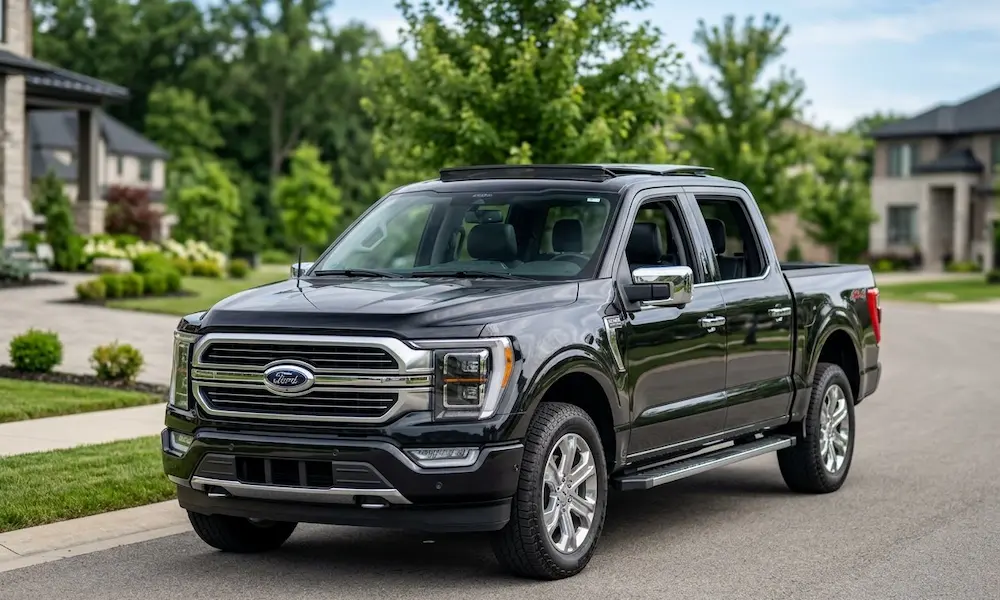
Ford’s twin-turbocharged 3.5L EcoBoost V6 powers everything from the F-150 and Expedition to the Lincoln Navigator. It replaced big naturally aspirated V8s and delivered serious torque in a smaller package.
But “smaller and turbocharged” also means more heat, more pressure, and more things that can go wrong.
There are three distinct generations of this engine, and each one came with its own set of headaches. Here’s a quick look at how they differ:
| Specification | Gen 1 (2010–2016) | Gen 2 (2017–2020) | Gen 3 (2021–Present) |
|---|---|---|---|
| Fuel System | Direct Injection only | Dual (Port + Direct) | Dual (Port + Direct) |
| Timing Setup | Single long chain | Dual primary chains | Dual chains (revised) |
| Cam Phasers | Standard | VCT phasers (problematic) | Redesigned phasers |
| Turbo Wastegate | Mechanical linkage | Mechanical linkage | Rotary electronic |
| Transmission | 6-Speed (6R80) | 10-Speed (10R80) | 10-Speed / PowerBoost Hybrid |
Knowing your generation is the first step to diagnosing 3.5 EcoBoost engine problems correctly.
Gen 1 Problems (2010–2016): The Original Trouble Spots
Timing Chain Stretch — The Cold-Start Rattle
This is the most well-documented Gen 1 failure. The first-generation engine used one long primary timing chain to sync the crankshaft with both camshafts. Over time, wear at the chain’s pivot pins causes it to stretch.
When the chain stretches past what the hydraulic tensioner can handle, you’ll hear a distinct rattling or clacking sound right when you start a cold engine. It usually quiets down after a few seconds as oil pressure builds up. Don’t ignore it.
If it goes too far, you’ll trigger a P0016 fault code — a camshaft correlation error. Worse case? Valve-to-piston contact and an engine that’s done. Vehicles with long oil change intervals are far more vulnerable here, since degraded oil accelerates chain wear.
What to do: Shorten your oil change intervals. If the rattle’s already there, get the timing chain inspected immediately.
Intercooler Condensation and Engine Shudder
This one caught a lot of 2011–2012 F-150 owners off guard. In humid conditions, the charge air cooler (CAC) worked too well — cooling intake air past its dew point and letting water pool inside the intercooler housing.
Floor the throttle to merge onto a highway or climb a grade while towing, and that water gets sucked into the intake. The result? An instant misfire and the truck going into limp mode.
Ford issued TSB 13-8-1 to address it with plastic deflectors and a PCM reprogram. Many owners went further with the DIY “weep hole” fix — drilling a small 1/16-inch hole at the bottom of the CAC to let condensate drain continuously. It works, but it does create a minor boost leak and Ford doesn’t officially endorse it.
Carbon Buildup on Intake Valves
Direct injection engines — including the Gen 1 EcoBoost — don’t spray fuel over the intake valves. That means the oily vapors from the PCV system bake onto those valves and harden into carbon deposits.
By 60,000–100,000 miles, you can have serious buildup that causes:
- Rough idle
- Reduced fuel economy
- Noticeable power loss
The fix is walnut shell blasting — a shop removes your intake manifold and blasts crushed walnut media across the valves to scrub them clean. It typically runs $500–$1,200 depending on labor rates.
Don’t use chemical induction cleaners on a turbocharged engine. Ford warns against it — large chunks of loosened carbon can damage the turbo wheels or catalytic converters.
| Remedy | Effectiveness | Est. Cost | Risks |
|---|---|---|---|
| Walnut Blasting | High | $500–$1,200 | Labor-intensive |
| Oil Catch Can | Moderate (preventative) | $150–$550 | Must be emptied manually |
| Methanol Injection | High (preventative) | $500–$800 | Added complexity |
| Chemical Induction | Low–Medium | $150–$300 | Turbo/cat converter damage risk |
For Gen 1 owners, an oil catch can is practically essential. It traps oil vapors before they reach the intake, slowing down carbon accumulation significantly.
Gen 2 Problems (2017–2020): The Cam Phaser Nightmare
Ford redesigned the engine for 2017 — added dual injection, split the timing into two chains, and strengthened several components. Progress, right? Mostly yes. But one new problem overshadowed everything else.
Cam Phaser Rattle — The Diesel Knock That Isn’t
The Variable Cam Timing (VCT) phasers control camshaft timing based on engine load. In Gen 2 trucks, the internal locking pin inside each phaser was prone to failing. Instead of holding its locked position at startup, the phaser would rattle around for the first few seconds — producing a heavy, diesel-like clacking sound.
Ford’s initial response was Customer Satisfaction Program 21B10 — a software update to keep phasers from cycling into the unlocked position too early. When that wasn’t enough, Ford launched Customer Satisfaction Program 21N03, which covered full phaser replacement on all four phasers.
It’s an expensive job. The repair requires removing the front timing cover, valve covers, and a host of cooling and fuel lines. If your truck was out of warranty when the program launched, Ford used a proration table:
| Vehicle Mileage | Ford Covers | You Pay |
|---|---|---|
| Up to 69,999 miles | 100% | 0% |
| 70,000–79,999 miles | 66% | 34% |
| 80,000–89,999 miles | 33% | 67% |
| 90,000+ miles | 0% | 100% |
The redesigned replacement phasers use a “cap over spring” design to physically contain the internal components — a much sturdier approach than the originals.
Bottom line: If you own a 2017–2020 F-150 with a 3.5 EcoBoost and hear that startup clatter, check whether your truck qualifies for the 21N03 program before you pay out of pocket.
Oil Consumption Issues (Especially in High Output Models)
The Raptor’s High Output 3.5 EcoBoost earned a reputation for burning through oil. During Deceleration Fuel Shut Off (DFSO) events, high intake vacuum pulled oil vapor past the PCV valve and straight into the combustion chamber.
Ford addressed this with TSB 20-2294, which involved a PCM reprogram and, for trucks built before April 2019, new valve covers with better internal baffling.
There was also TSB 19-2365, which replaced the oil dipstick with one featuring a wider min-to-max range. Critics — including legal professionals — called that a workaround, not a fix.
If your oil keeps dropping between changes, don’t just top it off. Get the PCM checked and confirm your valve covers are the updated version.
Gen 3 Problems (2021–Present): Manufacturing Hits the Headlines
The third-generation engine fixed the cam phaser rattle and introduced rotary electronic wastegates. It’s structurally the strongest version yet. But it’s still not problem-free.
The Cup Plug Recall — A Serious Fire Risk
In late 2024, Ford discovered a critical defect at the Cleveland Engine Plant. A misaligned hydraulic press incorrectly seated the engine cup plugs (also called freeze plugs) in the cylinder heads. If one dislodges, the engine dumps oil rapidly — and if that oil hits the exhaust manifold, you’ve got a fire.
Recall 25V198 / 24S70 covers certain F-150, Expedition, and Navigator models. Dealers inspect the 13mm plugs and replace any misaligned ones with shorter, more securely seated versions.
If you own a 2024–2025 model with a 3.5 EcoBoost, check your VIN on Ford’s recall page immediately.
Here’s a broader look at active Gen 3 recalls:
| Recall ID | System Affected | Failure Risk | Status |
|---|---|---|---|
| 25V198 / 24S70 | Engine cup plugs | Oil leak, fire | Active |
| 25V344 / 25S55 | Connecting rods | Improper machining, seizure | Active |
| 25V-455 / 25S75 | Low-pressure fuel pump | Engine stall | Investigating |
| 25V398 / 25S63 | Wiring harness | Coolant line chafing, stall | Active |
| 25V512 / 25S82 | Rear axle hubs (Max Tow) | Bolt fatigue, rollaway | Active |
PowerBoost Hybrid Reliability
The PowerBoost variant adds a 35kW electric motor between the engine and 10-speed transmission. It makes 570 lb-ft of torque and powers your tools with 7.2kW of onboard electricity — impressive numbers.
But Consumer Reports flags it as one of the least reliable light-duty truck options. Common complaints include erratic shifting, software conflicts between the electric and gas systems, and failures in the 10R80 transmission’s CDF drum bushing — a known issue in Gen 2 and Gen 3 trucks where a bushing slides out and blocks fluid ports.
Ford updated the bushing design in late 2023 and 2024 models with a retaining lip. If you’re buying used, check which build date you’re getting.
Turbocharger Problems Across All Generations
Wastegate Rattle
A metallic rattle from the turbos — especially during cold starts or light deceleration — is a common complaint in 2017–2020 trucks. It comes from excessive play in the wastegate actuator linkage.
Ford’s fix for 2017 models was TSB 20-2016 — a spring washer kit to dampen the linkage vibration. Some owners add external tension springs themselves, though reports suggest this can make the throttle feel sluggish. The Gen 3’s rotary electronic wastegate eliminates this problem entirely.
Exhaust Manifold Stud Failures
The cast-iron manifolds sit right next to the turbos, so they get extremely hot — especially during towing. This heat warps the manifolds, and the resulting stress snaps the mild steel studs inside the aluminum cylinder head.
You’ll notice this as a high-pitched chirp or whistle under boost. Fixing it means pulling the turbos and carefully extracting broken studs from aluminum — an expensive and tedious job.
Upgraded aftermarket manifolds with thicker flanges and stainless or Inconel studs handle thermal expansion far better than the factory hardware.
Maintenance Habits That Prevent Most 3.5 EcoBoost Engine Problems
The Ford Intelligent Oil-Life Monitor might tell you to change oil every 7,500–10,000 miles. For a turbocharged, direct-injection engine, that’s too long. Most experienced owners and technicians recommend every 3,000–5,000 miles with full synthetic 5W-30 and a quality filter like the Motorcraft FL-500S.
Short change intervals are the single biggest factor in preventing timing chain stretch and cam phaser failures.
Spark Plugs — Change Them Early
The factory recommends 100,000 miles for spark plugs. Don’t wait that long. Worn plugs cause a shudder under boost that often gets misdiagnosed as a transmission problem.
Replace them every 30,000–40,000 miles instead:
| Component | Gen 1 (2011–2016) | Gen 2 (2017–2020) | Gen 3 (2021–Present) |
|---|---|---|---|
| Spark Plug | Motorcraft SP-580 | Motorcraft SP-594 | Motorcraft SP-596 |
| Ignition Coil | Motorcraft DG-549 | Motorcraft DG-585 | Motorcraft DG-584 |
| Gap | 0.028″–0.030″ | 0.028″–0.030″ | 0.028″–0.030″ |
| Replace Cycle | 30k–40k miles | 30k–40k miles | 30k–40k miles |
Oil Catch Can — Worth It?
For Gen 1 owners, yes — it’s close to mandatory. Without port injection washing the valves, every bit of oil vapor that bypasses the PCV heads straight for the intake. A catch can intercepts it.
For Gen 2 and Gen 3 engines, port injection already washes the valves, so a catch can is less critical. Many owners still use one to keep the intercooler and intake plumbing clean. It’s not a bad call — just not as essential.
One More Thing: Check Your Water Pump Setup
If you drive a transverse-mounted 3.5 EcoBoost — think Ford Explorer or Lincoln MKS — the water pump sits behind the timing cover and runs off the timing chain. When its seal fails, coolant dumps into the oil pan instead of dripping on the ground. By the time you notice anything wrong, the engine may already be destroying itself from the inside.
Longitudinal setups like the F-150 use an external, belt-driven pump. Easy to inspect, easy to replace, and a coolant leak stays visible. If you own a transverse application, get that cooling system inspected at every major service interval.
The 3.5 EcoBoost isn’t a bad engine — it’s a demanding one. Treat it like the high-performance, turbocharged machine it is, stay ahead of the maintenance, and keep tabs on active recalls for your VIN. Do that, and it’ll run strong for well over 200,000 miles.