Your Ford just threw a P1299 code, and your check engine light is staring you down. Before you panic (or ignore it), you need to know what’s actually happening inside your engine. This guide breaks down exactly what triggers Ford P1299, what your car does to protect itself, and what you should do next.
What Is the Ford P1299 Code?
Ford P1299 stands for Cylinder Head Overtemperature Protection Active. It applies to Ford, Lincoln, and Mercury vehicles.
Here’s the key thing: P1299 isn’t a broken part code. It’s a status code. It tells you the Powertrain Control Module (PCM) has kicked in an emergency protocol to stop your engine from destroying itself.
Think of it as your engine’s last line of defense.
Why Ford Uses a Cylinder Head Temperature (CHT) Sensor
Most cars use an Engine Coolant Temperature (ECT) sensor. The problem? ECT sensors measure the fluid, not the metal. If your coolant suddenly disappears, the sensor sits in air or steam and gives a falsely low reading — while your cylinder head creeps toward its melting point.
Ford’s CHT sensor threads directly into the metal of the cylinder head. It measures metal temperature directly, even with zero coolant present. When the metal hits roughly 250°F–280°F, the PCM knows it’s time to act fast.
That’s when P1299 triggers.
How Your Engine Protects Itself (Fail-Safe Mode Explained)
When Ford P1299 activates, the PCM doesn’t just turn on a light and hope for the best. It runs a multi-stage rescue operation.
Stage 1: The Engine Becomes an Air Pump
This is the clever part. The PCM starts alternating which cylinders get fuel. The unfueled cylinders keep cycling, pulling in cool outside air and pumping it through the hot cylinder head and out the exhaust.
It’s essentially air-cooling your engine from the inside.
From the driver’s seat, this feels awful:
- Massive power loss
- Rough, shaky running
- Flashing check engine light
The car still moves, but don’t expect highway speeds or hill climbs.
Stage 2: The A/C Shuts Off
The PCM cuts the air conditioning compressor to reduce engine load. If your A/C suddenly blows warm air while your temperature gauge climbs, the PCM is trying to prevent a full P1299 event. It’s a warning sign you shouldn’t ignore.
Stage 3: Full Engine Shutdown
If the temperature keeps rising past roughly 300°F, the PCM kills all fuel injectors and stalls the engine completely. It won’t restart until the CHT sensor confirms the metal has cooled.
Important: An engine shutdown while driving means you lose power steering and brake assist. That’s a real safety risk. Pull over safely and immediately.
What’s Actually Causing Ford P1299?
P1299 almost always shows up with companion codes that point to the root cause. Look for P1285, P0217, or P030X misfire codes alongside it.
Coolant Loss
The most common trigger. Coolant leaks from:
- Cracked radiator tanks
- Split hoses
- A failing water pump (check the weep hole near the bearing — if coolant drips from there, the seal’s gone)
Internal leaks are trickier. A blown head gasket lets coolant burn inside the cylinders. You won’t see puddles under the car, but you’ll notice white, sweet-smelling exhaust smoke and a mysteriously empty coolant reservoir.
Stuck Thermostat
A thermostat stuck closed traps hot coolant inside the engine. A quick check: if the engine is overheating but the lower radiator hose feels cold, your thermostat’s the culprit.
Fan Failure
If your electric cooling fans don’t kick on — blown fuse, dead motor, bad fan control module — the engine overheats fast at low speeds and idle.
Clogged Radiator
Mud, leaves, and road debris blocking the radiator fins cut heat exchange. It’s an overlooked but common cause, especially on trucks.
EGR Cooler Problems (Diesel and Turbocharged Engines)
In diesel Fords and some turbocharged gas engines, a clogged or leaking EGR cooler causes localized coolant boiling or rapid fluid loss. Research suggests a bad EGR cooler accounts for 40–50% of all P1299 cases in diesel Ford trucks.
The EcoBoost Coolant Intrusion Problem
If you drive a 2013–2019 Ford with a 1.5L, 1.6L, or 2.0L EcoBoost engine, pay close attention here.
These engines have a known design vulnerability. Ford used an open-deck block with small slits machined between the cylinder bores for cooling. Under the heat and pressure of turbocharged operation, the head gasket loses its seal over those grooves. Coolant seeps into the cylinders — especially during cold starts when the metal contracts.
The result: misfires, rough idle, disappearing coolant, and eventually a P1299 event. Ford has faced multiple class-action lawsuits over this, with plaintiffs arguing Ford knew about the defect as early as 2013.
Here’s a summary of Ford’s official responses:
| Program / TSB | Affected Vehicles | Engine | Repair |
|---|---|---|---|
| TSB 19-2346 | 2015-2018 Edge, 2017-2019 Fusion/MKZ | 2.0L EcoBoost | Replace Long Block |
| TSB 20-2100 | 2014-2019 Fusion, 2017-2019 Escape | 1.5L EcoBoost | Replace Short Block & Head Gasket |
| CSP 21N12 | 2017-2019 Fusion & Escape | 1.5L EcoBoost | One-time free short block (within 7 yrs/84K miles) |
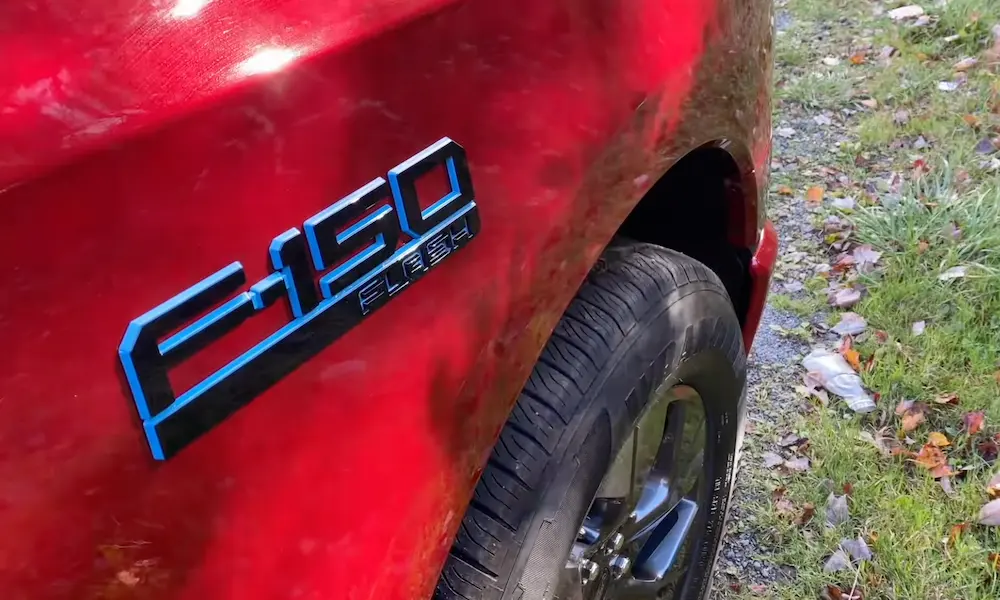
| TSB 24-2441 | 2024 F-150 | 2.7L EcoBoost | PCM software reflash |
Owners outside warranty coverage have faced engine replacement bills between $5,000 and $10,000. If you’ve hit a wall with Ford on coolant intrusion, reporting your issue to the NHTSA is a step consumer advocates actively recommend.
Can P1299 Be a False Alarm?
Yes. Sometimes Ford P1299 fires with a perfectly healthy cooling system. Here’s why:
Wiring and sensor faults: The CHT sensor uses a resistor that drops in resistance as temperature rises. A short-to-ground in the signal wire mimics maximum temperature instantly, triggering fail-safe mode even when nothing’s hot. Rodent damage and corroded PCM connectors cause this more often than you’d think.
2024 F-150 software bug: Owners of the 2024 F-150 with the 2.7L EcoBoost have seen P1299 and “Engine Over-Temperature” warnings with fully functional cooling systems. Ford’s fix? A PCM firmware reflash — no wrenches required.
How to Diagnose Ford P1299 Properly
Don’t just replace the CHT sensor and hope for the best. Run through this sequence:
Step 1: Read All the Codes
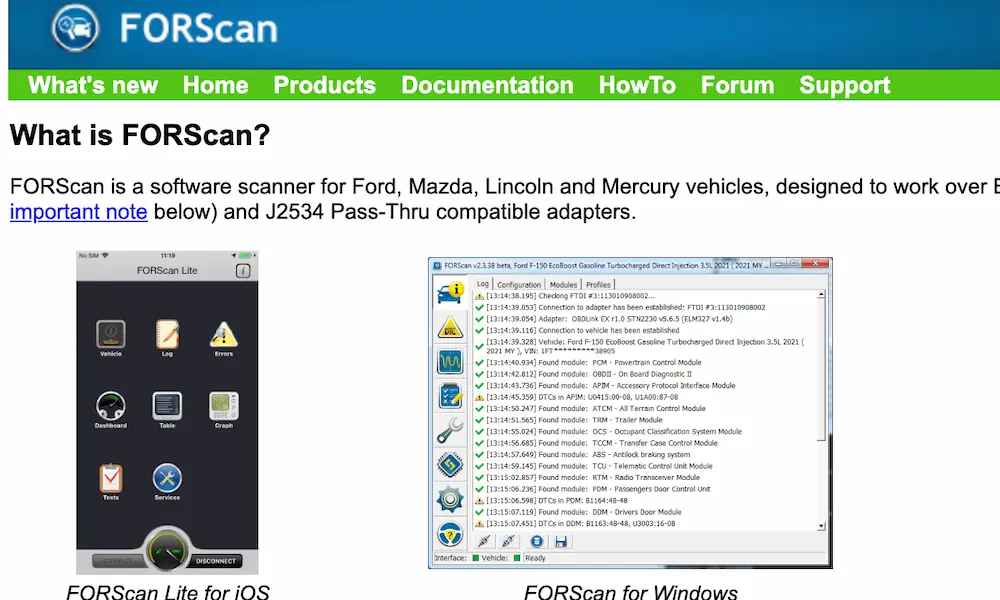
Check for companion codes. P1285 plus P1299 together confirms a real thermal event. Check the freeze frame data too — it captures engine RPM, load, and temperature at the exact moment the code set, which narrows down the cause fast.
Step 2: Compare CHT and ECT Live Data
Watch both readings simultaneously while the engine warms up:
- Both climb into the danger zone → genuine overheat, likely coolant loss
- CHT spikes, ECT stays cool → water pump failure or blockage — coolant near the ECT sensor isn’t circulating
- CHT jumps instantly from normal to extreme → electrical short in the sensor circuit
Step 3: Pressure Test the Cooling System
Apply 20 psi (138 kPa) with a pressure tester. For suspected EcoBoost coolant intrusion (per TSB 19-2346), hold the pressure for 5 hours. A drop of more than 4 psi with no visible external leak = internal intrusion confirmed.
Remove the spark plugs and use a borescope. Unusually clean piston tops or actual coolant pooled in the cylinder are definitive proof.
Step 4: Check the CHT Sensor Itself
Unplug the sensor and measure resistance with a multimeter:
- ~32,000 ohms at freezing (0°C/32°F) = good
- ~250 ohms at operating temperature (90°C/194°F) = good
A reading that doesn’t match these values means the sensor’s bad — not the engine.
What Does It Cost to Fix P1299?
Repair costs span a huge range depending on the root cause:
| Repair | Estimated Cost |
|---|---|
| CHT sensor replacement | $150–$300 |
| Thermostat replacement | $150–$400 |
| Water pump replacement | $400–$800 |
| Radiator replacement | $600–$1,200 |
| Head gasket repair | $1,500–$3,000 |
| EcoBoost short block (out of warranty) | $5,000–$8,000 |
| EcoBoost long block replacement | $8,000–$10,000+ |
If your vehicle qualifies for Customer Satisfaction Program 21N12, a short block repair is free. Check your VIN with your Ford dealer first — it takes five minutes and could save you thousands.
The Bottom Line on Ford P1299
Ford P1299 is your engine screaming for help. When it shows up, stop driving and diagnose it properly. Don’t just clear the code — the fail-safe mode exists because the alternative is a destroyed engine.
If you’ve got a 2013–2019 EcoBoost, check whether your vehicle falls under a TSB or CSP before authorizing any paid repairs. And whether your fix is a $200 sensor or a $7,000 short block, report persistent cooling issues to the NHTSA — your report contributes to the data that drives recalls and manufacturer accountability.