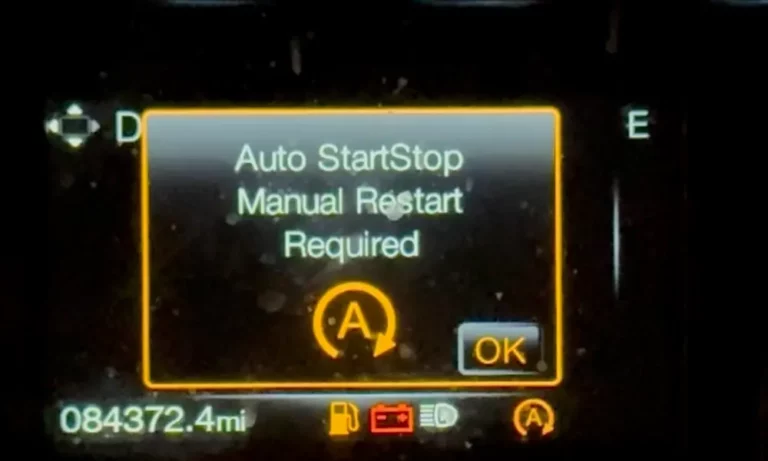
You’re cruising through traffic when your dashboard lights up with “Auto Start-Stop Manual Restart Required.” Before panic sets in, know this: it’s a safety feature, not a death sentence for your Ford. Let’s dig into what’s happening and how to fix it without breaking the bank.
What Does “Manual Restart Required” Actually Mean?
When you see this message, your Ford’s spotted something that could stop your engine from restarting automatically. Instead of leaving you stranded at a red light, the system plays it safe and asks you to restart manually.
Here’s the thing: your truck isn’t broken—it’s being cautious. The auto start-stop feature cycles your engine off during stops to save fuel. But when conditions aren’t perfect, Ford’s system disables itself rather than risk a no-start situation.
You’ll see this most during stop-and-go driving. One second you’re stopped, the next you’re staring at warning lights. It’s frustrating, but there’s always a reason behind it.
Why Your Battery Is Usually the Culprit
About 70% of manual restart messages trace back to battery problems. Your Ford needs around 12.6 volts for the auto start-stop to work properly. Drop below 12.0V? The system shuts down.
Modern Fords use AGM batteries designed for constant cycling. These batteries are tougher than old-school lead-acid ones, but they’re pickier about voltage levels. Even a slightly weak battery triggers the warning.
Here’s what’s really interesting: Ford’s Battery Management System (BMS) constantly monitors battery health. When this sensor goes wonky, it sends false readings to your Powertrain Control Module. The PCM thinks your battery’s dying when it’s actually fine.
The Sudden Battery Death Problem
Ford’s issued recalls for a scary scenario: batteries degrading rapidly while you’re driving. The Body Control Module and PCM fail to detect this sudden drop, and the auto start-stop kicks in anyway. Result? Your engine shuts off and won’t restart.
This isn’t theoretical. It’s happened to thousands of Bronco Sport and Maverick owners. You’re sitting in traffic, engine cycles off, and nothing happens when you press the brake pedal. Not fun.
Quick Battery Health Check:
- Voltage with engine off should read 12.6-12.8V
- Below 12.4V means charging or replacement needed
- Below 12.0V guarantees auto start-stop failure
EVAP System Issues You Can’t Ignore
The EVAP (Evaporative Emission Control) system seems unrelated to engine starting, right? Wrong. This system controls fuel vapors, and when it fails, your auto start-stop goes haywire.
The purge valve is the main troublemaker. It manages vapor flow from your charcoal canister to the engine intake. When it sticks or fails, you’ll see codes like P0455, P0441, or P0496 alongside your restart warning.
Here’s a mistake you’re probably making: overfilling your fuel tank. Topping off after the pump clicks? You’re flooding the charcoal canister with liquid fuel. That canister’s designed for vapors only. Liquid fuel saturates it, causing system-wide EVAP problems.
Signs Your EVAP System Is Failing
Watch for these red flags:
- Gas smell near your vehicle
- Check engine light with EVAP codes
- Rough idling after refueling
- Auto start-stop working intermittently
Replacing a purge valve costs $100-200 at a shop, or $30-50 if you’re handy with tools. The canister itself runs $200-400, but contamination from overfilling makes this a pricey lesson.
Software Glitches Behind the Scenes
Your Ford’s basically a computer on wheels. The BCM and PCM need to talk properly for auto start-stop to function. When software’s outdated or corrupted, communication breaks down.
Ford’s released Technical Service Bulletin 23-2256 specifically for 2020-2021 Expeditions with restart failures. The fix? Reprogramming the PCM with updated calibrations.
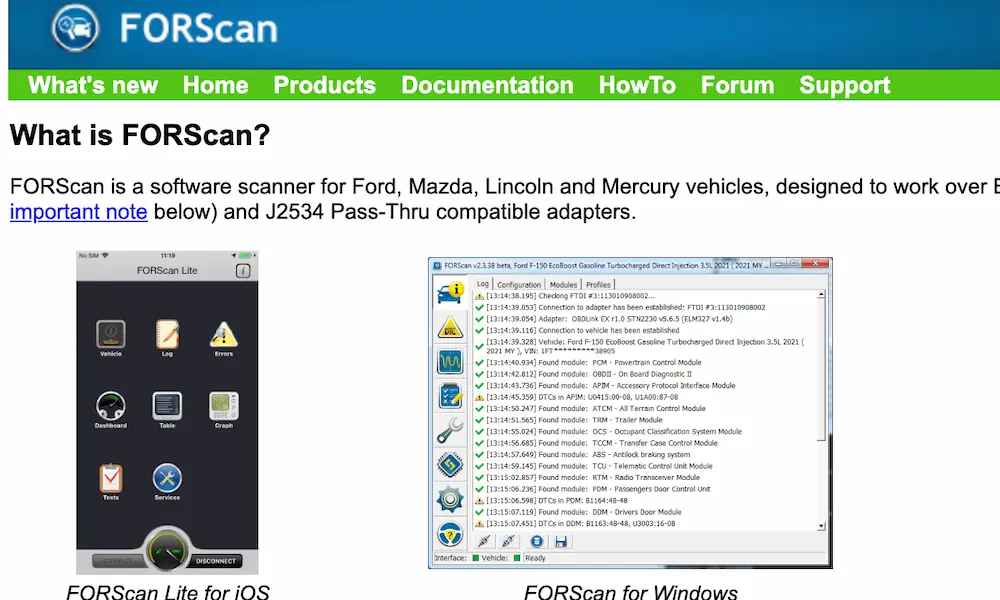
This isn’t a DIY job unless you’ve got FORScan and know what you’re doing. Dealers charge $150-300 for software updates, but if there’s an active TSB or recall, it’s free.
The Recall You Need to Know About
Ford issued Recall 24S24 covering 456,565 vehicles—mainly 2021-2024 Bronco Sports and 2022-2023 Mavericks. The problem? BCM and PCM calibrations that can’t detect rapid battery degradation.
They followed up with Recall 25S26 for 48,066 vehicles where the first recall was botched. If you own an affected model, get this done. It’s free, and it prevents getting stranded.
What to Do When the Message Appears
Don’t panic. Here’s your immediate action plan:
- Shift to Park
- Hold the brake pedal firmly
- Press the start button to manually restart
- Disable auto start-stop using the button on your dash
The disable button is usually near the shifter or on your center console. Some models let you turn it off through vehicle settings in the infotainment system.
After you’ve restarted, don’t just ignore it. The warning means something needs attention—either now or soon.
Diagnostic Steps That Actually Work
Grab a basic OBD2 scanner—you can get one for $25 on Amazon. Plug it into the port under your steering wheel and check for codes. Look specifically for:
- P0455: Large EVAP leak
- P0441: EVAP purge flow incorrect
- P0496: EVAP purge valve stuck
- B1317: Battery voltage low
- U0100: PCM communication lost
These codes point to specific problems. EVAP-related codes almost always mean purge valve or canister issues. Communication codes suggest software problems.
Check your battery voltage next. You need a digital multimeter—$15 at any hardware store. With the engine off, touch the red probe to the positive terminal and black to negative. Anything below 12.4V needs addressing.
| Battery Voltage | System Status | Action Needed |
|---|---|---|
| 12.6-12.8V | Optimal | None—look elsewhere |
| 12.4-12.5V | Marginal | Monitor closely |
| 12.0-12.3V | Low | Charge or test battery |
| Below 12.0V | Critical | Replace battery |
The Real Cost of Fixing This
Let’s talk money. If you’re under warranty or covered by a recall, you’re golden—everything’s free at the dealer.
Outside warranty? Here’s what you’re looking at:
| Problem | DIY Cost | Shop Cost | Difficulty |
|---|---|---|---|
| Battery replacement | $180-250 | $250-400 | Easy |
| Purge valve | $30-50 | $150-250 | Moderate |
| Charcoal canister | $100-150 | $350-500 | Hard |
| Software update | $0 (FORScan) | $150-300 | Moderate |
| BMS reset | $0 | $100-150 | Easy |
Battery Management System resets are often needed after battery replacement. Some shops forget this step, leaving you with the same problem you paid to fix.
Should You Just Disable Auto Start-Stop?
Here’s the controversial take: many Ford owners disable this feature permanently and never look back. You can use aftermarket modules like Autostop Eliminator ($80-120) or program it out with FORScan.
The system saves maybe 1-3% fuel in city driving. That’s $50-100 yearly for most drivers. Against the cost of repairs and frustration? Some folks say it’s not worth it.
But disabling it might affect your warranty claims. If Ford can prove you modified the system and it caused problems elsewhere, they can deny coverage. Tread carefully here.
When You Need Professional Help
Some problems are beyond DIY fixes. Head to a Ford dealer if:
- Your vehicle’s covered by an active recall or TSB
- Multiple warning lights appear with the restart message
- The truck won’t restart after an auto start-stop event
- You’ve replaced the battery but problems continue
Dealers have access to factory diagnostic tools and software that generic scanners can’t match. Sometimes that $150 diagnostic fee saves you from throwing parts at the problem blindly.
Independent shops can handle most repairs, but software updates and recall work must happen at dealerships. Don’t waste time going elsewhere for those.
The Bottom Line on Manual Restart Messages
This warning isn’t random—your Ford detected something preventing reliable automatic restart. It’s protecting you from getting stranded, not trying to ruin your day.
Most cases trace to battery voltage, EVAP system issues, or outdated software. Check recalls first, then battery health, then scan for codes. That order solves 90% of problems.
Don’t ignore the message. It won’t get better on its own, and the underlying issue might damage other systems if left unchecked. A $200 fix today beats a $2,000 repair tomorrow.
The auto start-stop system works great when everything’s healthy. Keep your battery fresh, don’t overfill the tank, and stay current on software updates. Do that, and you’ll probably never see this message again.