You’re thinking about Ford’s BlueCruise, but $495 per year feels like a lot for cruise control. Smart thinking. Before you commit, let’s break down what you’re actually getting, where it shines, and—most importantly—where it falls flat. This isn’t marketing fluff. It’s the real deal on whether BlueCruise delivers value for your specific driving life.
What BlueCruise Actually Does (and Doesn’t Do)
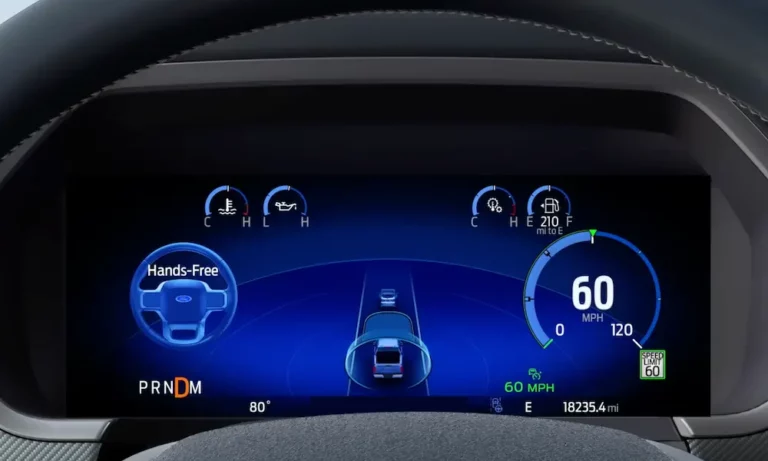
BlueCruise is Ford’s hands-free highway driving system. Notice the keyword: highway. This isn’t self-driving. It’s Level 2 driver assistance, meaning you’re still responsible for everything that happens.
Here’s the tech behind it. The system uses cameras, radar sensors, and an infrared camera pointed at your face. That face camera tracks your eyes—not your hands. You can drop your hands in your lap and let the car steer itself, but your eyes must stay on the road. Look away too long, and you’ll get nagging alerts.
The catch? BlueCruise only works on Ford’s pre-mapped “Blue Zones”—about 130,000 miles of major North American highways. Drive outside these zones, and you’re back to regular cruise control.
The Eye-Tracking Reality
That driver-facing camera is both BlueCruise’s strength and its annoyance. Unlike Tesla’s system that nags you to grip the steering wheel, Ford lets your hands rest. But some polarized sunglasses block the infrared light, triggering “Watch Road” warnings even when you’re staring straight ahead. You might need to buy specific eyewear to use a feature you’re paying for.
The New Pricing: Ford Finally Got Competitive
Ford slashed BlueCruise pricing in late 2024, and it makes a massive difference in the value calculation.
Your Three Options:
- Annual Plan: $495 per year (down from ~$800)
- Monthly Plan: $49.99 per month (down from $75)
- One-Time Purchase: $2,495 upfront (covers minimum 7 years)
Let’s do the math. Over seven years of ownership, the annual plan costs $3,465. The one-time purchase saves you $970—about 28% cheaper. But here’s the kicker: if you lease for three years, the annual plan ($1,485 total) beats the upfront fee by over a thousand bucks.
Bottom line for value: Buy the one-time option only if you’re keeping the truck or Mach-E for 5+ years. Otherwise, go annual.
How BlueCruise Stacks Up Against the Competition
Ford’s pricing now matches GM’s Super Cruise and undercuts Tesla’s Full Self-Driving significantly.
| System | Annual Cost | One-Time Cost | Where It Works |
|---|---|---|---|
| BlueCruise | $495 | $2,495 (7 years) | 130,000 highway miles |
| Super Cruise | ~$300-$480 | ~$2,500 (3-year trial) | 750,000+ highway miles |
| Tesla FSD | $1,188 | $8,000 (lifetime) | Any road with lane lines |
Ford wins on cost against Tesla. But GM’s Super Cruise covers nearly six times more road miles. If you drive rural highways or secondary routes, Super Cruise works where BlueCruise refuses to engage.
Where BlueCruise Absolutely Shines
The Highway Commuter Sweet Spot
Drive 40+ minutes daily on I-95, I-80, or I-5? BlueCruise is a game-changer. The system handles stop-and-go traffic brilliantly, bringing your truck to a full stop and resuming without pedal input. That’s less than $1.35 per day to eliminate steering thousands of micro-corrections.
The real value isn’t “laziness.” It’s energy conservation. Drivers consistently report arriving with significantly more mental stamina after letting BlueCruise handle the monotonous interstate grind.
The Traffic Jam Transformation
BlueCruise’s Traffic Jam Assist excels in congested commutes. The system manages acceleration, braking, and steering in bumper-to-bumper crawls. What used to be the most stressful part of driving becomes almost meditative.
Where BlueCruise Falls Completely Flat
The Towing Dealbreaker
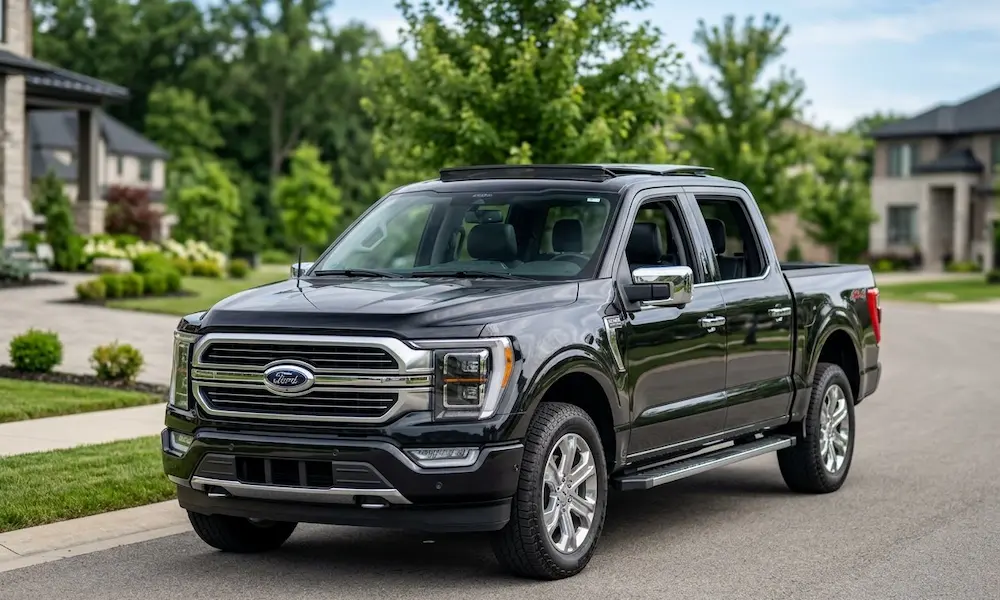
Own an F-150 for hauling? Here’s the brutal truth: BlueCruise completely disables hands-free mode when you connect a trailer. The system detects the electrical connection and reverts to basic cruise control or shuts down lane centering entirely.
This is a catastrophic limitation for truck buyers. You need fatigue relief most when managing a heavy RV or boat trailer over hundreds of highway miles. Instead, BlueCruise abandons you exactly when you need it. GM’s Super Cruise allows hands-free towing, making it the obvious choice for serious haulers.
Verdict for towers: BlueCruise isn’t worth a dime.
The Rural Highway Problem
Live outside metro areas? Check Ford’s coverage map meticulously. That 130,000-mile network sounds impressive until you realize it’s mostly major interstates. Two-lane state highways and rural divided roads rarely qualify as Blue Zones.
For comparison, Super Cruise covers 750,000 miles, including rural routes. If your daily drive includes Route 66 through the Southwest or state highways across the Plains, BlueCruise stays dormant while you pay for it.
The Software Version Lottery: Are You Getting Old Tech?
This is critical if you’re buying used or a leftover 2024 model. BlueCruise has evolved through multiple versions, but not every vehicle can run the latest software.
BlueCruise 1.0-1.4: The Legacy Stack
Early versions (1.0-1.2) were rough. Users described a “ping-pong” effect where the truck bounced between lane markers. Version 1.3 improved stability, staying engaged five times longer on curves.
Version 1.4 is the peak for older hardware. It handles tighter curves and adds better handling if you briefly grab the wheel to dodge a pothole. Many 2022-2023 F-150 and Mach-E owners say BlueCruise 1.4 finally made the subscription worthwhile.
BlueCruise 1.5: The Hardware Wall
The 2025 Mustang Mach-E and 2026 Explorer get BlueCruise 1.5, which adds automatic lane changes. The vehicle switches lanes on its own when it detects slow traffic ahead—no turn signal required.
The problem? Older vehicles can’t upgrade to 1.5 due to processor and camera limitations. You’re buying a legacy software stack that won’t improve. Don’t pay extra for “BlueCruise capabilities” on a used 2022 model expecting future updates. The hardware won’t support it.
The Safety Question You’re Probably Wondering About
Let’s address the elephant: the NHTSA investigation.
Federal regulators opened an Engineering Analysis after BlueCruise-equipped Mustang Mach-Es hit stationary vehicles at highway speeds, resulting in fatalities. The crashes happened at night when the system failed to detect stopped cars in the lane.
This highlights a known limitation: radar sensors excel at detecting moving objects but often filter out stationary signals to avoid false positives (like braking for overpasses). If the camera also misses the stopped vehicle due to poor lighting, the car doesn’t brake.
The numbers: BlueCruise is linked to 11 crashes and 3 deaths in the current probe. GM claims zero accidents directly attributed to Super Cruise over 700 million miles.
The “eyes-on” requirement is Ford’s defense. You’re supposed to be watching. But the system can create automation complacency—drivers rely too heavily and can’t react fast enough when the tech fails.
Environmental Challenges That Kill the System
BlueCruise relies on cameras to see lane lines. Heavy rain, snow covering markings, or blinding sun glare trigger “BlueCruise Not Available” messages.
Night driving generally works well thanks to radar and infrared, but the recent safety probe suggests limitations detecting stationary objects in low light. The system performs best in ideal conditions—dry pavement, clear markings, moderate lighting.
Is BlueCruise Worth It? The Real Answer Depends on You
You Should Absolutely Buy It If:
You’re a highway commuter. Daily interstate driving on major routes (I-95, I-80, I-405) with a 2024-2025 model? BlueCruise delivers exceptional value at $495 annually. The mental fatigue reduction alone justifies the cost.
You hate stop-and-go traffic. BlueCruise transforms congested commutes from exhausting to manageable. The Traffic Jam Assist is legitimately excellent.
You own the vehicle long-term. Planning to keep your F-150 or Mach-E for 5+ years? The $2,495 one-time purchase is mathematically sound and adds resale value.
You Should Skip It If:
You tow regularly. The system shuts down when you hook up a trailer. You’re paying for a feature you can’t use during the most demanding driving. Buy a GM truck with Super Cruise instead.
You drive rural highways. Outside major metro corridors, BlueCruise coverage is sparse. You’ll constantly hit “Not Available” zones. GM’s 750,000-mile network is superior for rural drivers.
You’re buying used (2021-2023). You’re getting legacy software that won’t receive major updates. Don’t pay premium prices for outdated hardware.
You lease for 3 years or less. The annual plan ($1,485 over three years) beats the $2,495 upfront cost. Never choose the one-time purchase for a lease.
The Final Verdict on Value
At $495 per year, BlueCruise is competitively priced and genuinely useful for the right driver. Ford finally nailed the cost structure after the 2024 price cuts. For highway commuters on major interstates, it’s a high-value convenience feature.
But it’s not universal. The towing limitation disqualifies it for serious truck work. The limited map coverage makes it worthless for rural drivers. And the hardware fragmentation means you might be renting obsolete software.
The “worth” comes down to the map. If your daily drive lights up blue on Ford’s coverage network, the subscription is gold. If your routes stay gray, you’re paying for a feature you can’t use. Check the connectivity map before committing. The difference between “worth it” and “waste of money” is whether your commute is colored blue.