Thinking about tinting your car windows but not sure if LLumar’s worth the money? You’re in the right place. This post breaks down everything you need to know — the product tiers, real performance, honest comparisons, and the one factor that makes or breaks your entire investment.
What Is LLumar, Exactly?
LLumar is made by Eastman Chemical Company, a global materials manufacturer based in Kingsport, Tennessee. Their dedicated film production facility sits in Martinsville, Virginia. The brand has over six decades of manufacturing experience, covering automotive tints, architectural window films, and paint protection film.
So when people ask, “Is LLumar tint good?” — the short answer is yes. But the full answer is more interesting.
The Four Types of LLumar Window Film
LLumar builds its films using distinct construction methods. Each one targets a different budget and performance level.
Deep-Dyed Film
LLumar dyes go deep into the polymer structure — not just on the surface. Cheap surface-dyed films turn purple and bubble within a few years, especially in hot climates. LLumar’s dyed films stay color-stable much longer and block 100% of UV rays, though they don’t reject much heat.
Metallized Film
These films reflect solar energy like a mirror, giving you solid heat rejection. The catch? The metallic layer blocks GPS, cell signals, and tire pressure sensors. Still useful for homes and buildings — not ideal for modern cars packed with electronics.
Nano-Ceramic Film
This is where LLumar really shines. Billions of microscopic ceramic particles absorb and disperse infrared heat without touching your signal reception. You get massive heat rejection in lighter shades, so your windows don’t need to look like a limo to keep your car cool.
Clear Ceramic Film (AIR Series)
Nearly invisible but still blocks heat and UV. Perfect for windshields where dark tint is illegal.
The LLumar Automotive Lineup, Explained
LLumar splits its auto products into two channels: the standard line for broad dealer networks, and the premium FormulaOne line reserved for elite SelectPro installers only.
Standard Automotive Films
| Product | Type | Best For |
|---|---|---|
| ATC | Deep-Dyed | Budget drivers wanting UV protection and privacy |
| ATR | Metallized Hybrid | Older vehicles without complex electronics |
| CTX | Nano-Ceramic | Daily drivers wanting great heat rejection at fair prices |
| IRX | Advanced Nano-Ceramic | Hot climates, EVs, luxury vehicles, maximum cooling |
| AIR | Clear Nano-Ceramic | Full windshield application, invisible protection |
The LLumar CTX is the workhorse of the lineup — neutral charcoal color, great heat rejection, zero signal interference. Most everyday drivers will be completely happy here.
The IRX pushes infrared rejection up to the high 80-90% range. That matters in states like Texas, Arizona, and Florida where your car literally becomes an oven. It also helps electric vehicle owners — less cabin heat means less A/C use, which preserves your driving range.
The AIR 80 and AIR 90 solve a specific problem: most states ban dark windshield tint, but they allow clear films that don’t affect visibility. AIR blocks significant heat and UV while looking completely stock.
FormulaOne SelectPro Films
| Product | Type | Key Feature |
|---|---|---|
| Classic | Deep-Dye | Matches factory privacy glass perfectly |
| Comfort | Metallized | Reflective look with solid heat control |
| Pinnacle | Ultra-Premium Ceramic | Premium heat rejection, non-reflective aesthetic |
| Stratos | Proprietary Hybrid Matrix | Flagship — maximum possible heat rejection |
FormulaOne products come with a fully transferable lifetime warranty — meaning it moves to the next owner when you sell your car. That’s a genuine boost to resale value. More on that below.
Is LLumar Good for Your Home or Business?
Absolutely — and it’s a legitimate investment, not just a luxury.
Residential Films
LLumar residential films block up to 99% of UV radiation, which is the primary cause of hardwood floor fading, leather cracking, and artwork degradation. Their optical clarity is noticeably better than generic brands, which often look hazy or cloudy when sunlight hits them directly.
Commercial Films
For building owners, LLumar commercial films can block up to 85% of total solar heat gain. That dramatically cuts HVAC costs. Industry data shows return on investment in three to five years — much cheaper than full window replacement.
Safety and Security Films
LLumar’s security films range from 4-mil to 14-mil thickness. They hold shattered glass in the frame on impact — protecting against storms, forced entry, and vandalism. Heavy-duty installations can even bolt the film to the window frame itself for serious protection.
The Vista Premium Architectural Series
| Vista Series | Technology | Best Use |
|---|---|---|
| Dual-Reflective | High exterior / low interior reflection | Eliminates mirror effect at night |
| Spectrally Selective | Targeted IR filtration | Historic buildings, luxury storefronts |
| Low-E | Radiant heat insulation | Year-round energy savings |
| Atmosphere Exterior | Weather-resistant external film | High-rise buildings, skylights |
LLumar vs. 3M vs. XPEL: Which Is Actually Better?
Before diving in — testing methods differ between brands, so raw spec comparisons can mislead you. LLumar tests on standard clear automotive glass. 3M sometimes uses green-tinted glass, which inflates numbers. XPEL sometimes measures IR rejection at one specific wavelength. Real-world performance matters more than spec sheets.
LLumar vs. 3M
| Factor | 3M Crystalline | LLumar IRX / Stratos |
|---|---|---|
| Technology | 200+ layered polymer films | Dense nano-ceramic particles |
| Appearance | Slight brown/blue tint at angles | Deep neutral charcoal |
| Warranty | Lifetime, non-transferable | Lifetime, fully transferable (FormulaOne) |
| Value | Premium-priced via brand recognition | Better cost-to-performance ratio |
3M wins on brand name recognition. LLumar wins on warranty transferability and real-world value, especially for people who plan to sell their vehicle eventually.
LLumar vs. XPEL
| Factor | XPEL | LLumar |
|---|---|---|
| Window Film Performance | Marginally higher TSER on paper | Virtually identical real-world cooling |
| Warranty Transferability | Every film tier transfers | Only FormulaOne tier transfers |
| Paint Protection Film | Pairs with separate ceramic coating | Valor integrates ceramic tech (Tetrashield) built-in |
XPEL has stronger warranty terms across their whole lineup. But LLumar’s Valor PPF skips the need for a separate ceramic coating application — that built-in Tetrashield technology saves you real money upfront.
LLumar’s Warranty: What’s Actually Covered
Automotive Films
Standard films (ATC, CTX, IRX, AIR) come with a limited lifetime warranty covering bubbling, peeling, adhesive failure, and color change for the original owner.
FormulaOne films add:
- Full warranty transferability to subsequent owners
- No-Fault clause — one free glass replacement per vehicle if tinted glass gets damaged by accidents or vandalism
Important exclusions: If your tint violates your state’s legal VLT limits, your entire warranty is void. Using ammonia-based cleaners on the glass also kills your coverage.
Architectural Films
- Residential: Lifetime limited warranty for the original homeowner
- Commercial: 10–15 year limited warranty
- Thermal Stress Breakage: 5-year coverage if the film causes your glass to crack from heat expansion — a real risk with architectural installations
Paint Protection Film
- Platinum Series: 10-year warranty
- Valor Series: 12-year warranty
- Non-transferable — coverage ends when you sell the vehicle
- Don’t wash or wax for 3–7 days post-installation while adhesives cure
The Dirty Truth About Installation Quality
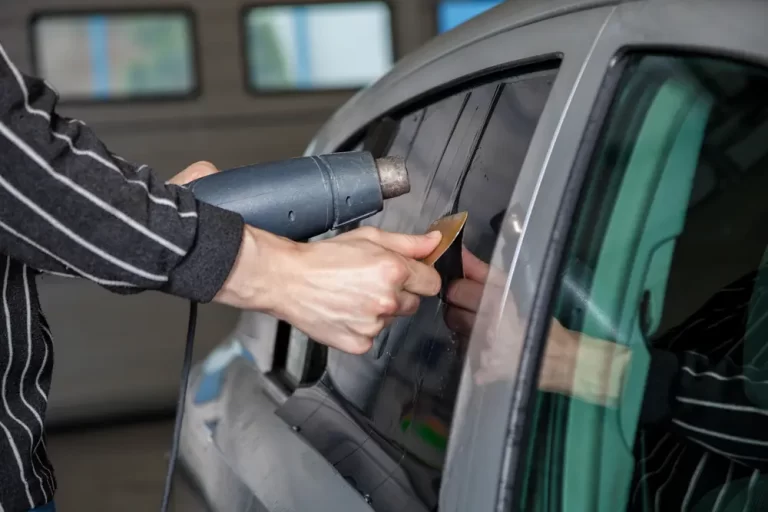
Here’s the thing most people miss: LLumar tint is only as good as the person putting it on your car.
A premium film installed by a careless tech will look worse than a mid-tier film done by a skilled one. Common installation nightmares include trapped dust particles, uneven hand-cut edges, water blisters, and trim damage.
LLumar addresses this by restricting FormulaOne and Vista products to vetted SelectPro dealers only. These shops use computer-controlled plotters to cut film precisely to your car’s exact dimensions — no razor blades near your rubber seals, no room for human error.
Watch Out for Fraud
This one’s important: ceramic and dyed films look identical when unrolled from the roll. Dishonest shops have charged customers for IRX ceramic while installing the cheaper ATC dyed film. Customers only notice months later when their car’s still an oven in July.
Protect yourself:
- Use only authorized dealers from LLumar’s official website
- Ask to see the physical roll and the product box before installation starts
- Request the official warranty card with lot numbers when the job’s done
- Confirm the warranty gets digitally registered
Does LLumar Tint Actually Save You Money?
The upfront cost is real. A full ceramic tint job with AIR windshield film in a major city can run past $1,000. Full Valor PPF wraps go into several thousand dollars.
But look at what you’re buying:
- UV protection prevents cracked dashboards and faded leather that cost far more to replace
- Heat reduction in homes and offices creates measurable energy savings over 3–5 years
- Paint protection film preserves factory clear coat, boosting resale value significantly
- Transferable FormulaOne warranty adds direct resale appeal to potential buyers
If you’re keeping your car or property for several years, the math works. If you want solid performance without the flagship price tag, LLumar CTX for cars and the standard residential ceramic line for homes hit the sweet spot.
So — is LLumar tint good? Yes. Genuinely. It’s made by a 60-year-old manufacturer using real nano-ceramic technology, backed by strong warranties, and it performs right alongside 3M and XPEL at prices that often make more sense. Just make sure you book an authorized installer and ask to see that product box before anyone touches your windows.