You’re staring at a quote for paint protection film and wondering if it’s just a glorified car sticker. It’s a fair question — especially when the price tag makes your eyes water. This guide cuts through the noise and gives you a real answer based on your car, your budget, and where you drive.
What Is PPF and How Does It Actually Work?
Paint protection film (PPF) is a multi-layered thermoplastic polyurethane applied directly to your car’s painted surfaces. It measures between 8 and 12 mils thick — that’s roughly 150 to 250 micrometers — which sounds tiny but acts like a serious cushion between your paint and the road.
When a pebble or chunk of gravel hits your hood at highway speed, the film absorbs and spreads that kinetic energy instead of letting it crater your clear coat. No other product — not wax, not ceramic — does this.
Here’s what makes modern PPF genuinely impressive:
- Self-healing topcoat — Light scratches and swirl marks disappear with heat from the sun or a heat gun
- UV inhibitors baked into the film prevent paint fading under intense sunlight
- Hydrophobic surface repels water, road salt, and chemical fallout
- Chemical resistance blocks bird droppings and tree sap from etching into your finish
It originally protected military helicopter rotor blades from desert abrasion. Your car’s hood faces similar punishment every single day.
How Much Does PPF Cost in the US?
This is where most people get confused. PPF pricing isn’t one flat number — it depends on coverage area, vehicle complexity, film tier, and your location.
| Coverage Package | Average US Price Range | Areas Covered | Best For |
|---|---|---|---|
| Partial Front | $600 – $1,500 | Front bumper, hood edge, partial fenders, mirrors | Budget-conscious owners wanting entry-level defense |
| Full Front | $1,500 – $3,500 | Full hood, bumper, fenders, headlights, mirrors | Daily highway commuters |
| Track / High-Impact | $2,000 – $3,500 | Full front + rockers, A-pillars, rear wheel arches | Performance cars, winter climates |
| Full Vehicle | $4,500 – $10,000+ | Every painted panel | Luxury, exotic, and collector vehicles |
Labor drives most of that cost — roughly 70 to 85% of your invoice covers the skill required to wrap a flat film around complex 3D curves without bubbles or lifting. The film material itself? Just 15 to 30% of the total.
Location matters too. Shops in Los Angeles or New York often charge over $150 per hour, pushing prices to the upper limits. Midwest shops frequently come in at the lower end.
Vehicles with aggressive styling — deep air intakes, wide-body fenders, sharp creases — cost more because they demand advanced installation techniques and sometimes require ADAS sensor recalibration after trim removal.
PPF vs. Ceramic Coating vs. Wax: What’s the Real Difference?
People mix these up constantly. Here’s why it matters: these three products do completely different jobs.
| Attribute | Wax / Sealant | Ceramic Coating | PPF |
|---|---|---|---|
| Thickness | Under 1 micrometer | 1–3 micrometers | 150–250 micrometers |
| Rock Chip Defense | None | None | Excellent |
| Chemical Resistance | Minimal | Excellent | Good |
| Self-Healing | No | No | Yes (premium films) |
| Lifespan | 4 weeks – 6 months | 2–5 years | 5–10+ years |
| Cost | Lowest | $600 – $1,500+ | $1,500 – $8,000+ |
Wax gives your car a temporary shine. It offers zero structural protection against impacts. Full stop.
Ceramic coating chemically bonds to your clear coat and builds strong chemical and UV resistance. It won’t stop a rock chip, though — the layer is microscopically thin.
PPF is the only physical armor. Nothing else intercepts kinetic energy.
The Layered Approach Most Detailers Recommend
The current industry standard combines both: install PPF on high-impact zones first, then apply a ceramic coating over the entire car, including over the film. You get impact absorption up front and chemical resistance everywhere else — plus easier maintenance for years.
Is PPF Worth It? The ROI Case
Here’s where the math actually matters.
What Repainting Costs in 2026
Modern car paint isn’t simple. Multi-stage applications, metallic flakes, and pearl finishes are nearly impossible to replicate perfectly outside the factory. When your front end gets sandblasted after a few years of highway driving, the repair bills add up fast:
- Single panel respray (hood): $1,000 – $3,000
- Front bumper respray: $800 – $2,000 (especially complex with parking sensors)
- Full front-end color blend: $3,000 – $6,000
- Full-body luxury respray: $5,000 – $20,000+
A full-front PPF package at $2,500 suddenly looks reasonable when it replaces just one major repaint job — and protects your car for a decade.
Factory Paint vs. Repainted Panels: Why It Matters for Resale
This is the argument most people overlook. When a dealership appraises your trade-in, they use electronic paint thickness meters to detect non-original paint. Repainted panels read thicker than factory application. That instantly signals a possible collision history — even if it was just cosmetic touch-up work.
The result? Severe deductions on your trade-in value.
PPF preserves your factory clear coat in its original state. Remove the film before selling, and your paint looks exactly as it did on the showroom floor. Market data suggests well-protected luxury vehicles retain up to 15% more resale value than comparable unprotected examples — often more than covering the original cost of installation.
Lease Returns: Avoid Surprise Charges
If you lease your car, PPF works as financial insurance. Lease agreements penalize excessive paint damage at turn-in — heavy rock chips, door edge scuffs, and bumper damage can trigger fees of $500 to $1,500 or more. A targeted protection package applied at delivery easily prevents those charges and pays for itself.
How Regional Climate Affects Your PPF Decision
Where you live makes a huge difference in how much punishment your paint takes.
Winter States: Salt, Brines, and Freeze-Thaw Cycles
In the Northeast and Midwest, municipalities spread road salt and chemical brines to clear ice. These compounds are highly corrosive. When saline moisture enters an existing rock chip, it triggers rust beneath the paint. Temperature swings then freeze and expand that moisture, widening the damage further.
PPF creates an impenetrable hydrophobic barrier that stops salt crystals from embedding and prevents brines from reaching your clear coat. If you drive in a heavy salt state, this alone justifies the investment.
Coastal Environments
Florida, California, and the Carolinas deal with year-round salt air. Even parked cars get attacked by atmospheric salinity. Premium PPF’s dense polyurethane topcoat resists ambient saline corrosion that slowly destroys unprotected paint.
Desert Climates: Arizona, Nevada, Texas
Intense UV radiation in the Southwest accelerates clear coat breakdown, leading to oxidation and chalking. PPF’s built-in UV inhibitors act as sunscreen for your paint, blocking the damaging solar spectrum and keeping your color vibrant for years longer than an unprotected car in the same environment.
Pre-Cut vs. Custom Installation: Which Is Better?
The two main installation methods each have genuine trade-offs.
Pre-cut (computer plotted) uses digital templates cut before the film touches your car. It’s safer for beginners since no blade gets drawn directly on your paint. Faster turnaround, lower labor cost. The downside: templates often leave a small visible gap at panel edges that can collect dirt over time — most noticeable on lighter colored cars.
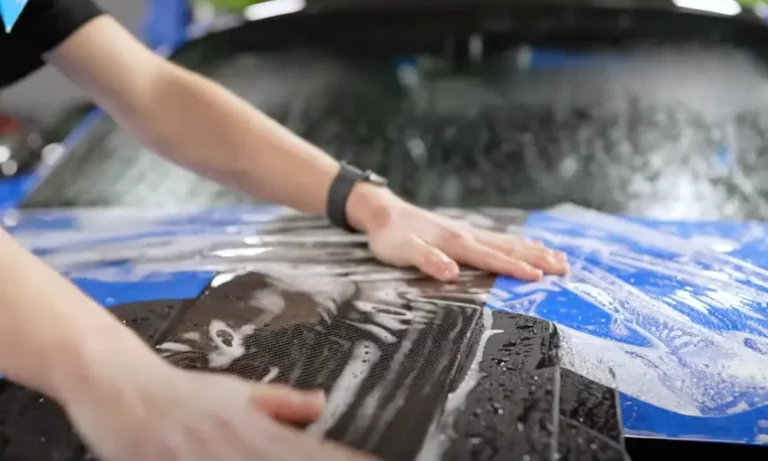
Custom bulk hand-trimming means an oversized sheet gets applied directly to the panel, then trimmed by hand on the vehicle. Done right, the film wraps inside panel gaps for a completely invisible result with no exposed edges. The risk: this demands serious skill. An inexperienced installer can score your clear coat with the blade. It also takes longer and costs more.
Bottom line: For daily drivers on a budget, pre-cut from a reputable shop is smart. For exotic cars or total-vehicle coverage where seamlessness matters, custom bulk is worth paying for.
PPF Films That Are Changing the Game
Beyond clear protection, modern films now let you transform your car’s look while keeping it protected.
Matte / Stealth Films
Matte PPF converts your glossy factory paint to a satin, non-reflective finish — without actually repainting anything. It carries identical impact resistance to standard clear film. The big advantage: factory matte paint is fragile and can’t be polished. Stealth PPF over standard gloss paint gives you the matte look with bulletproof protection underneath, and you can return the car to gloss simply by removing the film. Full matte coverage typically runs up to $8,000 or more given the complexity involved.
Color-Infused Films
Color PPF embeds vibrant pigments directly into thick, self-healing polyurethane, letting you do a full color change with actual rock chip protection — something standard vinyl wraps can’t deliver. These carry a 15 to 30% price premium over equivalent clear film installations.
Top PPF Brands Compared
| Brand | Thickness | Warranty | Standout Feature |
|---|---|---|---|
| XPEL Ultimate Plus | 8.5 mil | 10 years (transferable) | Best-in-class pattern software; strong self-healing |
| SunTek / Llumar | 8.0 mil | 10–12 years (non-transferable) | Superior optical clarity; excellent stain resistance |
| STEK DYNOshield | 8.0 mil | 10 years | Built-in ceramic topcoat; extreme hydrophobicity |
| 3M Pro Series | 8.0 mil | 10 years | Aggressive adhesive; rugged impact resistance |
XPEL dominates market share partly because its Design Access Program pattern database is the most comprehensive available — great for precise, safe pre-cut installs. Its warranty is transferable, which helps resale value.
SunTek and Llumar (both from Eastman Chemical Company) offer the best optical clarity and chemical stain resistance. SunTek is widely regarded as top-tier performance at a slightly lower price point. Note: their warranties don’t transfer between owners.
STEK stands out for built-in nano-ceramic properties and the widest range of specialty finishes and color films.
3M brings legacy industrial credibility and aggressive adhesive stability but trades some optical refinement for rugged durability.
Will PPF Turn Yellow? The Truth About Discoloration
Old PPF films yellowed badly — that’s a real memory for many car owners. But the chemistry has fundamentally changed.
Early films used aromatic polyurethane that oxidized under UV exposure and turned yellow permanently. Modern premium films use aliphatic thermoplastic polyurethane, which is structurally resistant to UV degradation.
When modern film appears to yellow today, it’s almost always “false yellowing” — atmospheric pollutants, bird droppings, and hard water minerals baking into the topcoat. Regular washing with pH-neutral shampoo prevents this entirely.
True molecular yellowing in 2026 is almost exclusive to cheap, unbranded films using outdated chemistry. Stick to established brands and you won’t have this problem.
What Happens When You Remove PPF?
At 5 to 10 years, or before a sale, PPF gets removed. Professional removal typically costs $200 to $1,500, depending on film age, vehicle size, and adhesive condition.
The process uses controlled heat — usually industrial steam or a heat gun — to soften the adhesive. The technician peels the film at a shallow 45-degree angle to avoid pulling vertically on the clear coat. If the film was applied over healthy original paint, removal carries virtually no risk of damage.
The one complication: if a film was neglected and severely overexposed to heat beyond its rated lifespan, the adhesive can crystallize and bond stubbornly to the paint. Removing that residue requires specialized safe solvents and extra labor hours — pushing costs higher.
Once removed, the underlying paint looks exactly as it did at installation. That’s the whole point.
So, Is PPF Worth It for Your Car?
Here’s the honest breakdown:
PPF probably isn’t worth it if:
- Your car is worth under $20,000 and heavily depreciated
- You replace vehicles every two to three years without regard for resale
- You rarely drive on highways or in harsh climates
PPF is almost certainly worth it if:
- You own a luxury, performance, or electric vehicle
- You drive daily on highway roads, especially in winter salt states or coastal areas
- You plan to sell or trade in within five to ten years and want top dollar
- You’re leasing and want to avoid end-of-term damage charges
- You simply hate watching a beautiful paint job get destroyed by road debris
The math is straightforward: one avoided repaint job, a stronger trade-in figure, or clean lease return can fully offset the cost of a quality installation. For the right owner and the right vehicle, PPF isn’t just worth it — it’s one of the smartest investments you can make in the first few weeks of ownership.