Your Chevy 5.3’s Active Fuel Management (AFM) system might be quietly destroying your engine right now. Whether you’re hearing a faint tick, burning through oil, or just want to keep things healthy before problems start, you’ve got real options. This guide breaks down every method — from free fixes to full mechanical deletion — so you can pick the right path for your truck.
What AFM Actually Does (And Why It’s a Problem)
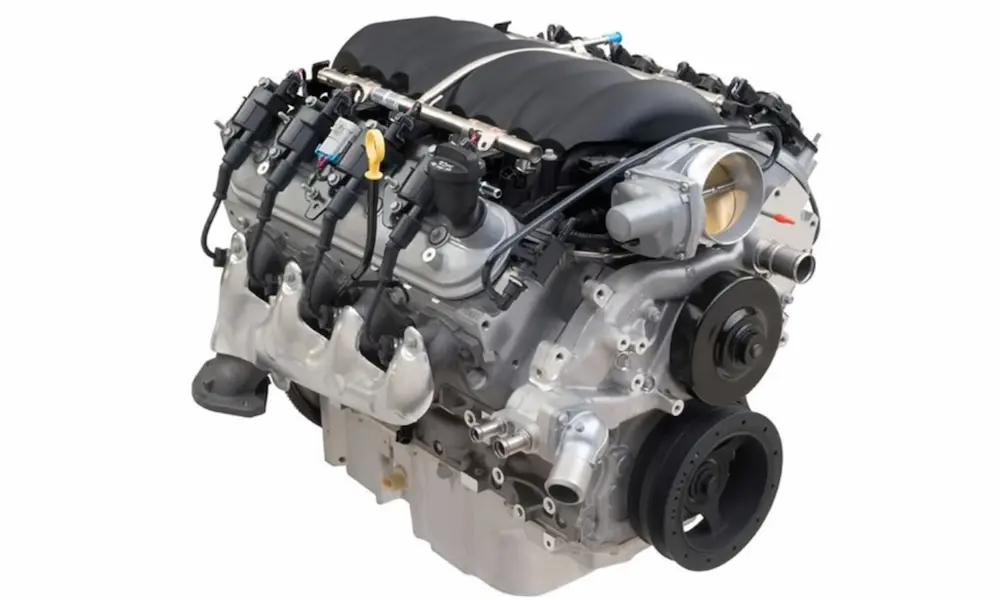
General Motors built AFM into the 5.3-liter small-block to squeeze better fuel economy out of bigger engines. Under light loads — like cruising the highway — the system shuts down cylinders 1, 4, 6, and 7, dropping your V8 into a four-cylinder mode. GM claimed a five to seven percent fuel economy improvement under ideal conditions.
Sounds smart. The problem? It relies on hydraulic collapsible lifters, a high-pressure oil pump, and a Lifter Oil Manifold Assembly (LOMA) buried under your intake manifold. These components cycle millions of times over the truck’s life. Eventually, carbon buildup and oil degradation cause the lifter locking pins to stick. When they can’t re-engage, a collapsed lifter starts hammering your camshaft lobe, sending metal shrapnel through the entire engine block.
The fix? An expensive, complete teardown. That’s why so many 5.3 owners want to disable or delete AFM before the damage starts — or stop it from getting worse once it already has.
Wait — Is That Vibration Your Engine or Your Transmission?
Before you spend a dollar on AFM fixes, check this first.
Many 5.3 owners report a harsh, rumbling vibration between 35 and 55 mph. It feels exactly like driving over rumble strips. Most people assume it’s a failing lifter triggered by cylinder deactivation. Often, it’s not.
That vibration is frequently torque converter clutch shudder inside the 6L80 or 8L90 automatic transmission. The factory transmission fluid absorbs moisture over time, glazing the torque converter clutch friction material. When the transmission tries to lock the converter at cruising speed — right when AFM kicks in — you get violent slip-and-catch shudder that feels just like an engine misfire.
The fix doesn’t require a rebuild. GM Technical Service Bulletin 18-NA-355 specifies a full machine-assisted fluid flush, replacing the degraded fluid with Mobil 1 LV ATF HP (blue label). This strips the glazing off the clutches and solves the shudder permanently.
Run this diagnostic before touching anything AFM-related. It could save you thousands.
Method 1: The Free Fix — Use Your Gear Selector
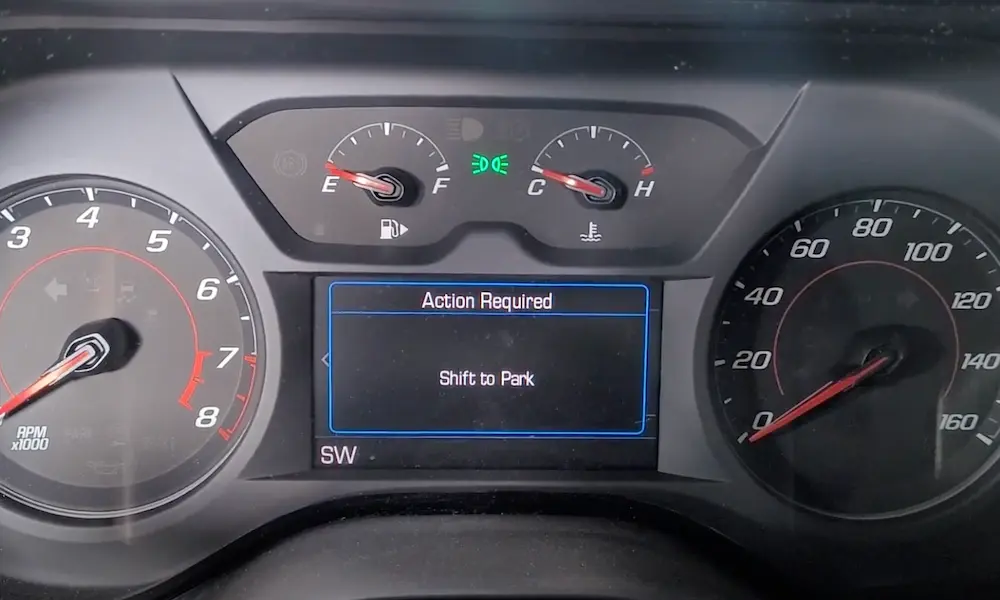
This costs nothing and works immediately. GM actually programmed the ECM to suspend cylinder deactivation when you use manual gear mode, since max torque delivery might be needed at any moment.
Here’s how to do it:
- 6-speed transmission (6L80): Shift from Drive into Manual mode and select M5 or L5
- 8-speed transmission (8L90): Select L7
- 10-speed transmission: Select L9
The transmission still shifts automatically through gears one through five (or seven, or nine). It just can’t reach final overdrive. Without overdrive, the ECM never triggers AFM. Your engine stays in V8 mode the entire time.
The catch: At highway speeds above 60 mph, restricting overdrive raises your RPM, increases cabin noise, and burns more fuel. For city driving and speeds under 50 mph, this method works great. For long road trips, you’ll need to drop back into Drive — which re-enables AFM.
Some owners also combine this with Tow/Haul mode to further reduce deactivation frequency, though it’s not a complete solution on its own.
Method 2: The Plug-In OBD-II Disabler
If your engine is currently healthy — no ticking, no oil consumption, no misfires — an electronic disabler is your best preventative investment.
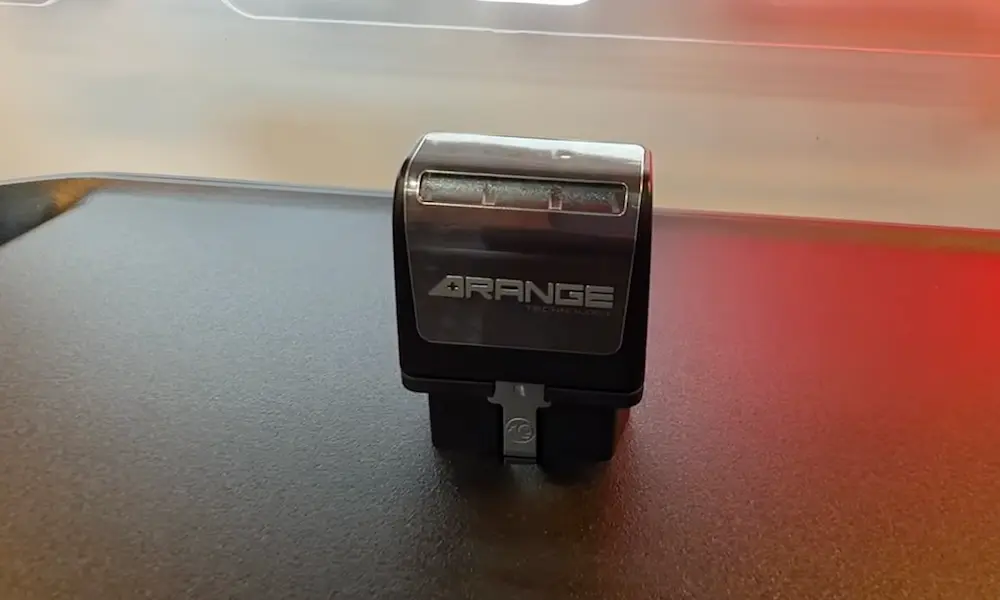
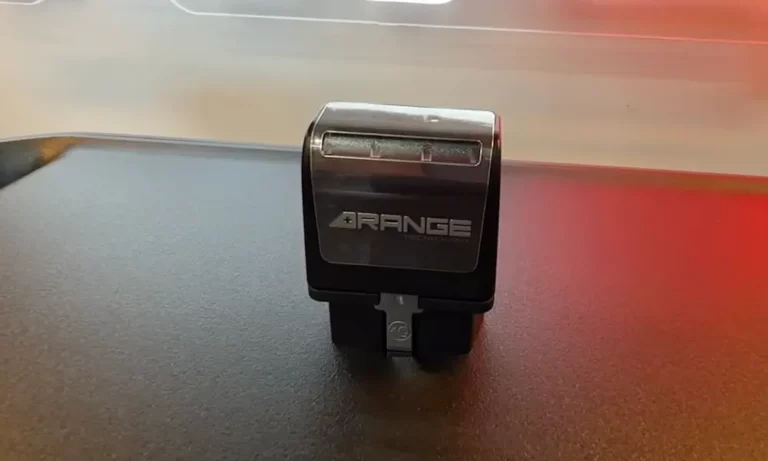
These compact modules plug directly into your OBD-II port under the driver-side dash. The Range Technology AFM/DFM Disabler is the most popular option, retailing under $300. It injects a continuous signal into the vehicle’s controller area network, telling the ECM the engine is always under load. The LOMA solenoids never open. The lifters never collapse.
Key advantages:
- Zero mechanical teardown required
- Doesn’t permanently flash or modify your ECM
- Unplug it and the truck instantly reverts to factory settings
- Modern units include sleep-mode circuits to prevent battery drain
- Advanced options like the Pulsar LT also adjust throttle response, speedometer calibration, and disable auto start/stop
The hard limit: A disabler is prevention, not a repair. If your lifters already tick, if oil consumption is already happening, or if you’re already getting misfire codes — plugging in a disabler won’t fix the damage. It just stops the system from cycling further on whatever healthy lifters remain.
Think of it like this: a disabler keeps a healthy engine healthy. It can’t heal a sick one.
Method 3: The Permanent Fix — Full Mechanical Delete (DOD Delete Kit)
When your engine already has the tick, the misfire, or the oil consumption, there’s only one real path forward: a complete mechanical hardware deletion.
This is a major job. It requires pulling the intake manifold, both cylinder heads, the timing cover, water pump, harmonic balancer, and timing chain. Expect several thousand dollars in parts and labor at a professional shop.
Here’s what gets replaced in a proper DOD delete kit:
| Component | Why It Gets Replaced |
|---|---|
| Non-AFM camshaft | Factory AFM cam lobes are machined for collapsible lifters — keep them and you lose ~25 lbs of compression per cylinder |
| All 16 hydraulic lifters | Collapsible lifters get tossed; standard roller lifters take their place |
| Non-AFM lifter trays | Factory trays won’t align standard lifters properly |
| Solid valley cover (replaces LOMA) | Seals the high-pressure oil galleys; removes the solenoid assembly entirely |
| Multi-layer steel head gaskets | Mandatory when pulling heads; old ones can’t be reused |
| New head bolts or ARP studs | Torque-to-yield bolts stretch permanently — never reuse them |
| Timing cover gasket, front main seal, water pump gaskets | Replace everything you touched during teardown |
Don’t skip the oil relief valve. The high-volume oil pump that fed the LOMA stays in the block after deletion. Without the LOMA to route that extra volume, it discharges upward onto your rotating assembly — continuing the oil consumption the delete was supposed to fix. Plug the relief valve in the oil pan or swap to a standard-volume pump.
Gen IV vs. Gen V: The Delete Isn’t the Same
If your truck is a 2014 or newer (Gen V, L83 engine), the delete process has critical differences you can’t ignore.
Variable Valve Timing Limiter
Gen V engines use Variable Valve Timing (VVT). If you install an aggressive aftermarket camshaft without installing a VVT limiter block inside the cam phaser, the ECM will over-advance the larger cam. Intake and exhaust valves will physically hit your pistons. That’s catastrophic, not inconvenient.
High-Pressure Fuel Pump Lifter
Gen V’s direct injection system uses a dedicated high-pressure fuel pump driven by a lobe on the rear of the camshaft. Since you’re already pulling the cam during the delete, replace the HP fuel pump lifter now. It’s a known wear item and an absolute nightmare to access later without tearing the engine apart again.
Hot Idle Oil Pressure Issues
After a Gen V delete, many owners see hot idle oil pressure drop dangerously low — sometimes to 16 psi, triggering warning messages. This often traces back to oil pump gear misalignment during reassembly. Use proper positioning shims. If pressure still drops after that, your tuner may need to raise base idle speed by 100 RPM and adjust VVT activation parameters to stabilize pressure back to a safe 25 psi.
ECM Tuning Is Non-Negotiable After a Mechanical Delete
Pulling the LOMA hardware without reprogramming the ECM creates immediate problems. The computer keeps sending voltage signals to solenoids that no longer exist, throwing diagnostic trouble codes and potentially triggering fail-safe modes.
More importantly, a new non-AFM camshaft changes how efficiently your engine breathes. The factory fuel maps won’t match the new airflow. A qualified tuner using HP Tuners or DiabloSport software needs to:
- Disable the master cylinder deactivation switch in the ECM
- Rewrite volumetric efficiency fuel tables to match the new cam
- Adjust base airflow and idle parameters for stable, crisp drivability
Skip this step and your delete isn’t done — even if the mechanical side is perfect.
Is Disabling AFM Legal?
This is where things get complicated.
The EPA classifies AFM as an emissions-control device. Under Section 203 of the Clean Air Act, removing or defeating any emissions device on a street-driven vehicle is technically illegal at the federal level. Manufacturers put “off-road use only” labels on delete kits, but that label doesn’t make street use legal under federal law.
In California and CARB-compliant states, enforcement is real. State smog checks now scan your vehicle’s Calibration Verification Number (CVN). A custom tune that disables AFM without a valid CARB Executive Order number means an automatic inspection failure — and your truck can’t get registered.
Inspectors also do visual checks for non-AFM valley covers and blocked-off ports.
In non-emissions states, practical enforcement is minimal — but the federal technical violation still exists.
Your compliance options:
- Source a remanufactured engine from a certified builder like Jasper Engines that carries an approved CARB Executive Order for the included tuner
- In emission-test states, unplug an OBD-II disabler and complete proper drive cycles before inspection (though this still skirts federal anti-tampering intent)
- Consult a local emissions specialist before committing to a mechanical delete in a CARB state
Frequently Asked Questions
Will disabling AFM cause my exhaust to drone?
When the engine drops into four-cylinder mode, exhaust pulse frequency drops sharply. With an aftermarket exhaust, this creates a loud, low-frequency drone — often described as a “helicopter” sound — throughout the cabin. Many owners disable AFM just to eliminate this noise and maintain a consistent V8 exhaust note at cruising speeds.
Does using M5 or L5 gear selection wear out my transmission faster?
No. Selecting M5 or L5 only electronically prevents the transmission from reaching overdrive. The transmission still shifts smoothly through lower gears using normal fluid pressure and solenoid commands. It doesn’t put unusual stress on clutch packs or the torque converter. You will run slightly higher RPM at highway speeds, which marginally increases fuel consumption.
What’s the difference between AFM and Dynamic Fuel Management (DFM)?
AFM is the older binary system — it deactivates the same four fixed cylinders every time. DFM, introduced in 2019 and newer trucks, can deactivate any combination of cylinders across 17 different firing patterns. DFM is more sophisticated, but it still uses similar mechanical lifter technology. The same long-term reliability risks apply.
Will a mechanical delete permanently cure my oil consumption?
It eliminates the oil consumption caused by the high-pressure relief valve spraying oil onto the rotating assembly. But if your engine already suffered cylinder wall scoring or if the piston rings lost tension from years of oil saturation before the delete, oil burning will continue. In that case, a full lower-end rebuild — including cylinder honing and new piston rings — is required to fully solve the problem.
Can an OBD-II disabler drain my battery when the truck sits?
Early versions did cause parasitic drain. Modern units from reputable manufacturers include voltage detection circuits. When the alternator stops charging and battery voltage drops to resting levels, the device enters sleep mode automatically, preventing battery depletion during extended parking.