If you’ve ever wondered what cars have LS1 engines, you’ve landed in the right place. This 5.7-liter all-aluminum V8 powered everything from American muscle cars to Australian family sedans — and it still dominates the engine swap scene today. Stick around, because the full list might surprise you.
What Is the LS1 Engine?
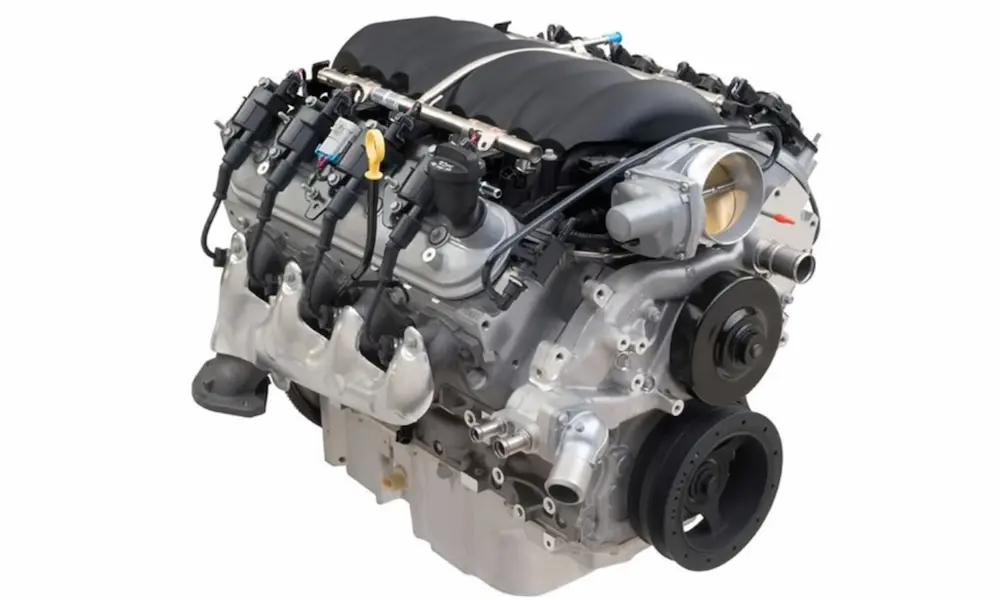
The LS1 is General Motors’ clean-sheet Gen III small-block V8, launched in 1997. It ditched the old cast-iron block for an all-aluminum design, shed serious weight, and packed a factory compression ratio of 10.2:1. The result? A pushrod V8 that punched well above its class.
Here’s a quick snapshot of what makes it tick:
| Spec | Detail |
|---|---|
| Displacement | 5.7L / 346 cubic inches |
| Bore x Stroke | 3.898″ x 3.622″ |
| Block Material | Aluminum (semi-permanent mold) |
| Compression Ratio | 10.2:1 |
| Main Cap Style | 6-bolt cross-bolted |
| Approximate Weight (dressed) | ~460 lbs |
Its Y-block deep-skirt architecture and cathedral-port cylinder heads gave it extraordinary strength and airflow. That’s exactly why builders still drop it into everything from vintage Camaros to Japanese sports cars.
American Cars With the LS1 Engine
Chevrolet C5 Corvette (1997–2004)
This is where the LS1 story starts. The fifth-generation Corvette debuted with the LS1 in 1997, rated at 345 horsepower and 350 lb-ft of torque. By 2001, revised intake and exhaust bumped that to 350 hp and 365 lb-ft — or 375 lb-ft with the Tremec T-56 manual.
A few things made the Corvette’s LS1 unique:
- Drive-by-wire throttle body — rare for American cars at the time
- “Batwing” rear-sump oil pan — prevented oil starvation during hard cornering
- Paired with either a 4L60-E automatic or T-56 six-speed manual
The base C5 ran the LS1 all the way through 2004. The Z06 got the hotter LS6 derivative, which isn’t the same engine — but it shares the same DNA.
Chevrolet Camaro Z28 and SS (1998–2002)
After the Corvette, GM dropped the LS1 into the F-Body Camaro for 1998. It replaced the older Gen II LT1. The Z28 and SS trims got the engine; base V6 models didn’t.
Official ratings were conservative by design — GM didn’t want the Camaro stealing the Corvette’s thunder:
- Camaro Z28: 305–310 hp
- Camaro SS: 320–325 hp
Real-world dyno testing told a different story. The internals were nearly identical to the Corvette’s engine. Independent tests routinely showed output figures far closer to 345 hp than the printed numbers suggested.
One key difference: the F-Body used a cable-driven throttle body instead of the Corvette’s electronic unit, giving it a more analog feel.
Pontiac Firebird Formula and Trans Am (1998–2002)
The Pontiac Firebird received the LS1 alongside the Camaro in 1998. Formula and Trans Am trims got the V8; the base model didn’t.
The Firebird WS6 package — with its factory ram-air induction — pushed output to 325 hp. Like the Camaro, the actual performance was closer to Corvette territory than the badges suggested.
Both the Camaro and Firebird F-Body platforms ended production in 2002, partly due to declining sales and tightening safety regulations.
Pontiac GTO (2004 Only)
This one catches people off guard. The 2004 Pontiac GTO was a rebadged Australian Holden Monaro CV8 — a left-hand-drive version brought over to fill the muscle car gap left by the F-Body’s death.
It used a GTO-specific LS1 cam profile tuned for low-end torque, producing 350 hp and 365 lb-ft. Because of the Holden chassis layout, it used a front-sump oil pan — making it the only American LS1 car with that configuration.
The GTO got the LS1 for 2004 only. In 2005, Pontiac upgraded it to the larger 6.0-liter LS2, pushing power to 400 hp.
Australian Cars With the LS1 Engine
The LS1’s impact on Australia was arguably bigger than its American run. When Holden phased out its old 5.0-liter iron-block V8 in 1999, the LS1 took over and transformed the entire rear-wheel-drive performance market Down Under.
Holden Commodore VT Series II through VZ (1999–2006)
The Commodore VT Series II launched with the LS1 in August 1999, initially rated at around 335 hp (250 kW). Power crept up through subsequent generations:
- VT Series II: ~295 hp
- VX Series (2000–2002): ~302 hp — also introduced Bosch ABS as standard, a first for Australian-built cars
- VY and VZ Series: Further refinements with updated engine management
The LS1 spread across Holden’s whole rear-wheel-drive lineup:
- Holden Ute (VU, VY, VZ SS): A coupe utility with the 5.7L V8 and a curb weight of just 3,384 lbs — genuinely quick
- Holden Statesman and Caprice (WH, WK, WL): Long-wheelbase luxury sedans that got a serious power upgrade over the old iron-block engine
Holden Monaro CV8 (2001–2005)
The Holden Monaro CV8 became the definitive Australian muscle car of its era. Built on the VX Commodore platform, it was powered exclusively by the 5.7L LS1 mated to either a T-56 manual or 4L60E automatic.
Power increased throughout its life:
- Series I: 302 hp (225 kW)
- Series II: 315 hp (235 kW)
- Series III: 329 hp (245 kW)
The Monaro’s global reach was impressive. It sold as the Pontiac GTO in the US, the Vauxhall Monaro in the UK, and the Chevrolet Lumina Coupé in the Middle East.
HSV Performance Vehicles (1999–2005)
Holden Special Vehicles (HSV) worked like AMG does for Mercedes — taking standard Holden vehicles and seriously modifying them. Their LS1 cars featured custom exhaust systems, proprietary ECU tunes, and cold-air intakes.
LS1-powered HSV models included:
- Clubsport and Clubsport R8 — the volume seller
- GTS and SV300 — the track-focused flagship sedans
- Senator and Senator Signature — luxury performance sedans
- Maloo and Maloo R8 — high-performance utes
- Coupé GTO and GTS — Monaro-based; the GTS made 342 hp from the tuned LS1
- Avalanche XUV and Coupé4 AWD — notably demonstrated the LS1’s compatibility with all-wheel-drive systems
Corsa Specialised Vehicles (CSV)
CSV pushed the LS1 further than anyone else in Australia. Founded by engine builder Peter Dichiera, they held full ADR approval as a secondary manufacturer. Their models — the Volanti, Strada, Veloce, La Classe, and Bullet — all used heavily modified LS engines.
The crown jewel was the CSV Mondo, a bespoke Monaro-based grand tourer with only 15 numbered units ever built. The GT305 variant produced a staggering 409 hp (305 kW) through custom headers, a full stainless exhaust, Harrop brakes, and Koni suspension. CSV claimed the title of fastest Australian production car over the quarter mile in 2000 with the LS1-powered Veloce.
Specialty and Low-Volume LS1 Vehicles
Beyond the production cars, the LS1 found its way into some interesting places:
- Mosler MT900 (2001–2013): A mid-engine carbon fiber American supercar that used a stock C5 Corvette LS1 mounted amidships. The aluminum block kept the center of gravity low and the whole car competitive with exotics costing ten times as much.
- 2001 Opel Omega V8 Prototype: GM tried to fit the LS1 into its German flagship sedan to rival the BMW M5. Packaging and cooling issues killed it before production — but it showed how far GM wanted to take the Gen III platform globally.
Why the LS1 Still Dominates Engine Swaps Today
The LS1’s pushrod layout means there are no overhead cams. That keeps the engine narrow and short. At roughly 24 × 27 × 27 inches and around 460 lbs fully dressed, it fits in engine bays that stumped larger modern motors.
The cathedral-port cylinder heads generate strong low-end torque for street use and still support high-rpm power on track. The Y-block architecture handles forced induction far beyond factory ratings without special reinforcement. And with the wide cam-to-crank spacing of 4.914 inches, you can stroke it into a significantly larger displacement motor for drag racing.
Aftermarket support is enormous. Companies like Michigan Motorsports stock everything from stock replacement valves to inconel exhaust valves built for turbocharged builds. The PSI Conversions LS swap guide alone covers dozens of vehicle applications.
FAQ
Were there plans for a convertible version of the LS1-powered Holden Monaro?
Yes. In 2002, Holden commissioned a one-off convertible concept called “Marilyn,” built in left-hand drive by TWR Engineering at a reported cost of two million Australian dollars. It appeared at the 2004 Sydney Motor Show but never reached production due to structural and cost concerns.
How was the LS1-powered Monaro sold outside Australia and the US?
GM exported the Monaro to multiple markets. In the UK it sold as the Vauxhall Monaro. In the Middle East it was badged as the Chevrolet Lumina Coupé.
What was the Holden Coupé 60?
The Holden Coupé 60 was a concept car built for Holden’s 60th anniversary in 2008, costing 2.5 million Australian dollars. It used the newer VE Commodore platform rather than the LS1-era architecture and never entered production.
How do builders handle water cooling during LS swaps in tight spaces?
When a belt-driven mechanical water pump won’t fit, builders use an Electric Water Pump (EWP) block adapter from companies like Davies Craig. The aluminum plate bolts directly to the front of the LS1 block and routes coolant to a remote electric pump — freeing up critical clearance at the front of the engine.
What’s the difference between LS1 and LS6 cylinder heads?
The 241 casting is the final LS1 head; the 243 casting is an LS6 component. Both fit the LS1 block, but the 243 has D-shaped exhaust ports and a smaller 64cc combustion chamber that raises compression. Restorers often seek out 241 heads; performance builders frequently upgrade to 243s.
Did any F-Body cars receive LS6 blocks?
Yes. In late 2001 and 2002, GM experienced an LS1 block shortage. Some F-Body vehicles received blocks cast with the superior LS6 architecture (casting number 12561168) but were machined and assembled with standard LS1 internals.