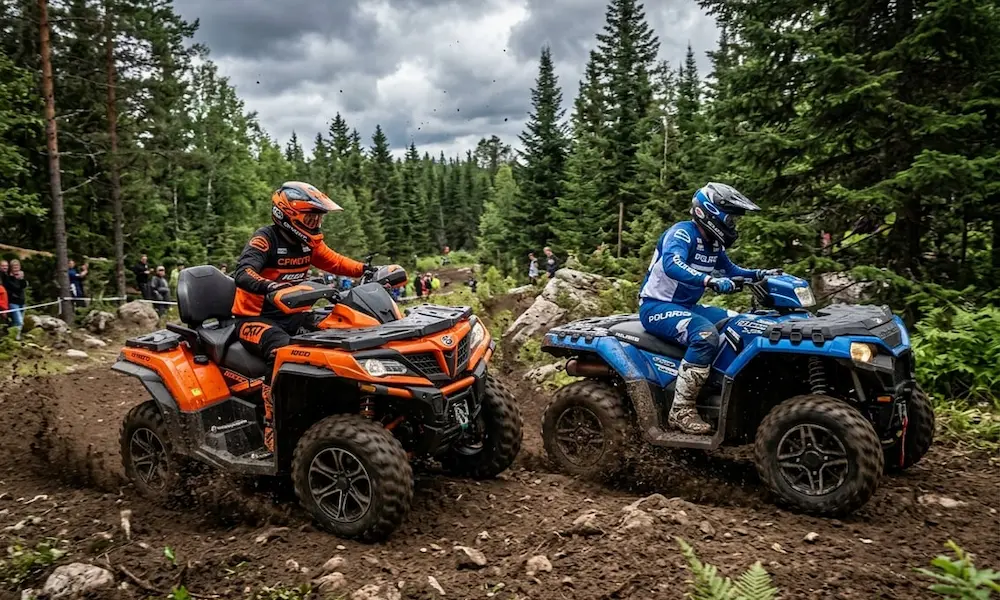
You’re staring at two price tags. One’s from a brand that built the off-road vehicle industry. The other’s offering more features for less money. So which one do you actually buy? This CFMOTO vs Polaris breakdown covers everything — specs, value, maintenance costs, and real ownership realities — so you can stop second-guessing and start riding.
The Short Answer Nobody Gives You
Both brands build genuinely capable machines. But they’re built for different buyers.
Polaris suits riders who want long-term refinement, massive dealer support, and strong resale value. CFMOTO suits buyers who want more machine for less money and don’t mind a steeper maintenance curve early on.
Everything below explains exactly why.
Who Makes These Machines?
Polaris: The Brand That Started It All
Polaris launched in Roseau, Minnesota, back in 1954. Three guys built a snowmobile using a grain silo conveyor belt, a Briggs and Stratton engine, and a Chevrolet bumper for skis. They sold it for $465 to cover payroll.
That scrappy start turned into a $7 billion powersports empire. Today, Polaris employs over 14,000 people, trades on the NYSE (ticker: PII), and sells everything from ATVs to military transports. Its DAGOR military vehicle carries nine crew members and runs 800 kilometres on a single tank.
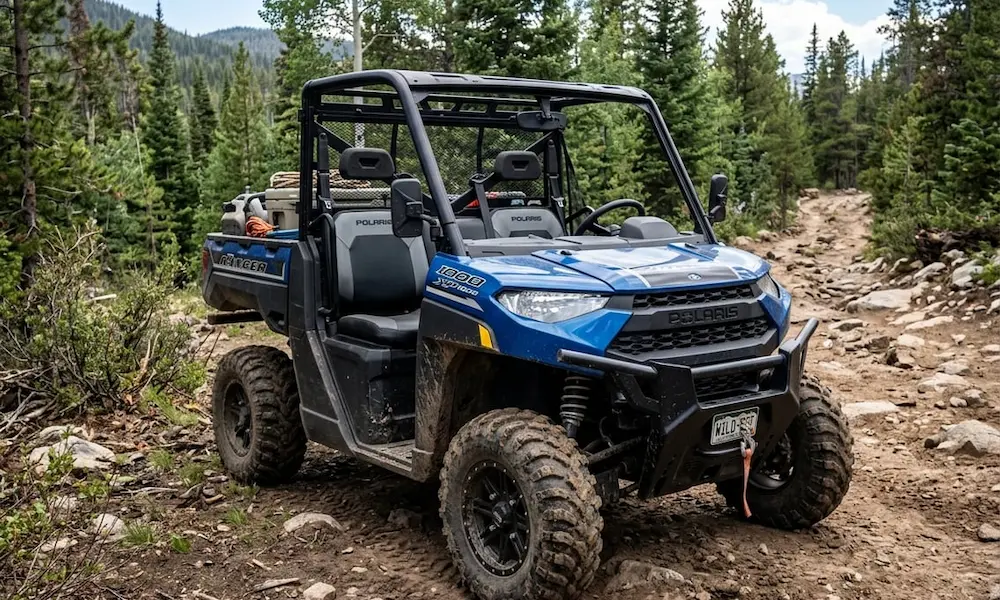
The Ranger side-by-side — now the backbone of American agriculture — came from a simple idea: Edgar Hetteen wanted to ride off-road alongside his wife. That desire changed the entire UTV industry.
CFMOTO: The Challenger Nobody Saw Coming
CFMOTO started in Hangzhou, China, in 1989 as a spare motorcycle parts maker. Fast forward to today and it’s the third-largest off-road vehicle brand in the United States and holds 15% of the European ATV market.
The game-changer was partnerships. CFMOTO linked up with Austrian motorcycle giant KTM in 2011, eventually forming the KTMR2R joint venture. Then came a strategic alliance with Yamaha in Zhuzhou, China. Both deals injected European and Japanese engineering discipline directly into CFMOTO’s manufacturing DNA.
The proof? CFMOTO’s Aspar MotoGP team won the Moto3 constructors’ title. That’s not a budget brand playing dress-up — that’s genuine racing pedigree.
| Metric | Polaris Inc. | CFMOTO |
|---|---|---|
| Founded | 1954 | 1989 |
| HQ | Medina, Minnesota, USA | Hangzhou, China |
| Stock Exchange | NYSE (PII) | Shanghai (603129) |
| Key Partnerships | Independent conglomerate | KTM (KTMR2R), Yamaha |
| Annual Revenue | $7+ billion | Growing global presence |
| US Market Position | ~35% market share | #3 overall brand |
Where Are They Built?
Polaris Manufacturing
Polaris runs a large North American production network. Key sites include:
- Roseau, Minnesota — Sportsman ATVs and snowmobiles
- Osceola, Wisconsin — Engines and powertrains
- Huntsville, Alabama — Ranger side-by-sides and Slingshot
- Spirit Lake, Iowa — Indian Motorcycle assembly
- Monterrey, Mexico — Ranger production (three assembly lines, saving $30M annually)
- Opole, Poland — European, Middle Eastern, and African markets
CFMOTO Manufacturing
CFMOTO’s production hub is a 280,000 square-metre complex in Hangzhou that produces roughly 600,000 vehicles and 800,000 engines per year. Unlike many brands, CFMOTO designs and casts its own engines entirely in-house. That vertical integration keeps quality tight and costs low.
CFMOTO also invested $46 million in an assembly facility in Apodaca, Mexico. That plant handles 100,000 units annually and cuts shipping time to the US dramatically. The company’s North American HQ sits in Plymouth and Watkins, Minnesota — practically in Polaris’s backyard.
Dealer Networks: Can You Get Service?
This matters enormously if you’re riding somewhere remote.
Polaris operates through 1,500+ dealers in North America and 1,700 internationally. For Sportsman ATVs alone, there are over 1,100 dealer locations across 49 states. Texas hosts 83, Wisconsin has 55, and Pennsylvania runs 54. If you break down in a rural area, a certified Polaris tech is rarely far away.
CFMOTO has built a network of 700+ US dealerships — the largest footprint of any Chinese-origin off-road brand in America. It’s still roughly half the size of Polaris’s network, but CFMOTO aggressively targets open markets in cities like Phoenix, Miami, and Cedar Rapids.
Verdict: Polaris wins on dealer density. But CFMOTO’s coverage is solid enough for most riders.
Head-to-Head Specs: The Numbers That Matter
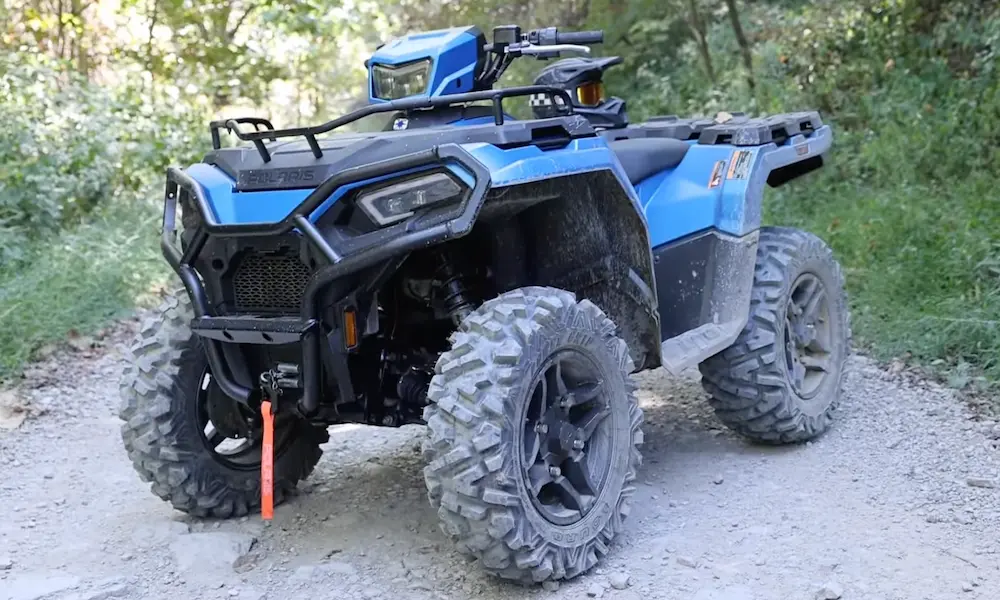
Mid-Size Utility ATVs: Sportsman 570 vs. CFORCE 600
This is the most popular comparison in the CFMOTO vs Polaris debate.
| Specification | Polaris Sportsman 570 | CFMOTO CFORCE 600 Touring |
|---|---|---|
| Engine | 567cc Single DOHC | 580cc Single SOHC |
| Horsepower | 44 HP | 45 HP |
| Front Suspension | MacPherson Strut (8.2 in.) | Double A-Arm (6.3 in.) |
| Rear Suspension | Dual A-Arm (9.5 in.) | Trailing Arm (8.3 in.) |
| Ground Clearance | 11.5 inches | 10.6 inches |
| Towing Capacity | 1,350 lbs | 1,500 lbs |
| Standard Features | Steel wheels, halogen lights | EPS, alloy wheels, winch, LED lights |
| Base MSRP | ~$7,999 | ~$7,899 |
The prices look almost identical at first glance. But look at what the CFORCE includes from the factory: electronic power steering, a winch, LED lighting, and cast alloy wheels. To get a Sportsman 570 to that spec, you’re buying higher trim levels or paying for each accessory separately — easily adding $1,500–$2,500 to the total.
The Sportsman wins on ride quality. Its MacPherson Strut front suspension absorbs rough trails better than the CFORCE’s double A-arm setup. But the CFMOTO delivers more standard equipment per dollar, full stop.
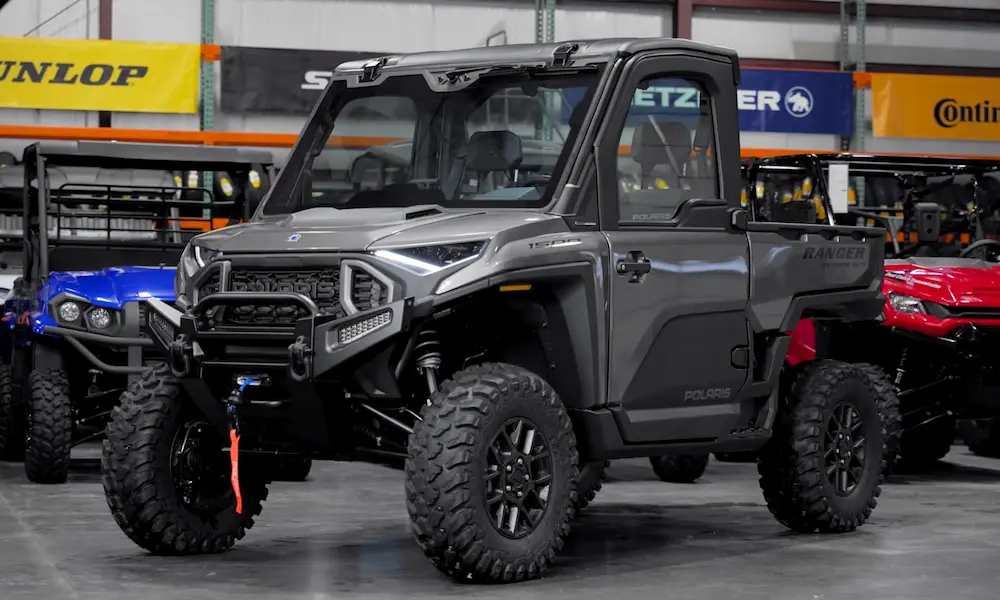
Heavyweight Utility UTVs: Ranger XP 1000 vs. UFORCE U10 Pro
This is where the CFMOTO disruption gets serious.
| Specification | Polaris Ranger XP 1000 Premium | CFMOTO UFORCE U10 Pro |
|---|---|---|
| Engine | 999cc Twin DOHC | 998cc Three-Cylinder DOHC |
| Horsepower | 82 HP | 88 HP |
| Drivetrain | AWD / 2WD / VersaTrac Turf Mode | Selectable 2WD/4WD, Locking Diff |
| Ground Clearance | 14.0 inches | 12.9 inches |
| Towing Capacity | 2,500 lbs | 2,499 lbs |
| Cargo Bed Capacity | 1,000 lbs | 1,000 lbs |
| Standout Tech | Three throttle modes | 8-inch touchscreen with Apple CarPlay |
The UFORCE U10 Pro undercuts a comparably equipped Ranger by up to $5,000 and ships with an 8-inch Apple CarPlay touchscreen as standard. The inline three-cylinder engine also pumps out more peak horsepower than the Ranger’s twin.
Yet long-term operators consistently note that the Ranger feels more settled and precise during multi-hour work days over brutal terrain. The Polaris ProStar engine’s throttle response — especially at low speeds when reversing trailers in tight spaces — is smoother and more predictable than the CFMOTO.
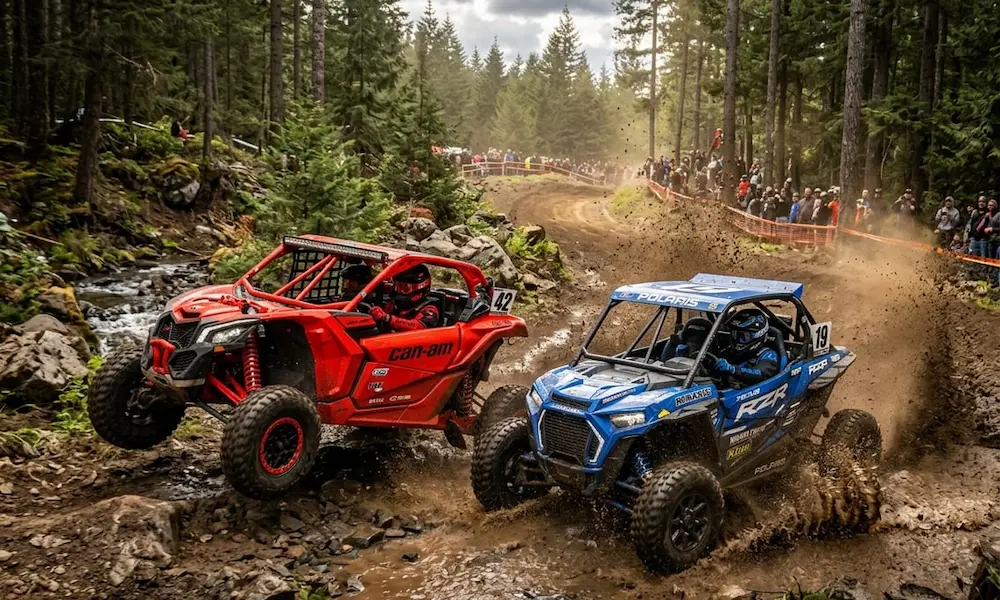
Sport UTVs: RZR Trail Sport vs. ZFORCE 950 Sport
| Specification | Polaris RZR Trail Sport | CFMOTO ZFORCE 950 Sport |
|---|---|---|
| Engine | 875cc Twin DOHC | 963cc V-Twin SOHC |
| Front Suspension Travel | 10.0 inches | 12.1 inches |
| Rear Suspension Travel | 10.0 inches | 13.1 inches |
| Wheelbase | 79.0 inches | 90.0 inches |
| Width | 50.0 inches | 60.0 inches |
| Ground Clearance | 11.0 inches | 12.0 inches |
Important note: these aren’t exact apples-to-apples. The RZR Trail is a 50-inch-wide machine built for restricted forest trails where wider vehicles can’t legally go. The ZFORCE 950 is a wider 60-inch platform — faster in open terrain, but excluded from narrow trail systems.
RZR owners on enthusiast forums do flag a real issue: significant heat intrusion from the rear firewall during extended rides. The ZFORCE runs cooler and delivers more suspension travel per dollar. But when it comes to high-speed chassis balance and sustained abuse over rough terrain, the RZR’s proven platform still holds an edge.
Drivetrain Tech: Turf Mode vs. Locking Diff
Polaris uses a system called VersaTrac Turf Mode on many utility vehicles. It uses a solenoid on the rear differential to disengage the left rear wheel, letting both wheels spin at different speeds. That protects your lawn during tight turns instead of tearing it up.
It’s clever, but it has a catch. At higher speeds, sudden traction changes in one-wheel drive can spike uneven torque through the axles. The aftermarket offers solid-state relay replacements — like the Moose Offroad unit — for older models where the solenoid wears out.
CFMOTO takes a simpler route: standard selectable 2WD/4WD with manually locking differentials. When unlocked, it functions like an open differential — same surface-saving effect as Turf Mode, minus the solenoid complexity.
CVT Clutches: Who’s Got Better Power Delivery?
Polaris uses its proprietary PVT (Polaris Variable Transmission). It transfers peak power effectively but the stock clutches feel abrupt at initial engagement. Many Polaris owners upgrade to aftermarket clutch kits from STM or Aftermarket Assassins to smooth things out, especially after adding larger tires.
CFMOTO historically used CVTech Trailbloc clutches from a respected Canadian engineering firm. This system runs up to 50% fewer internal parts than standard clutches, making it 15–20% lighter and excellent at shedding mud. Newer CFMOTO platforms are moving to their in-house OmniDrive system. Some UFORCE owners report a jerky low-speed throttle feel, which aftermarket clutch kits from tuners like Main Street Cycle resolve.
Warranties and Maintenance Costs
Warranty Coverage
Polaris generally provides six months on ATVs and sport UTVs, 12 months on the Ranger lineup. Extended coverage through the Polaris Protection Plan typically carries a $50 deductible per dealer visit.
CFMOTO offers a 12-month limited warranty across all off-road models. Heads-up though: batteries, spark plugs, and filters are only covered for 30 days. Belts, clutches, brake pads, and suspension bushings get just 90 days. For longer coverage, CFMOTO Care Extended Protection stretches up to 72 months, with zero deductible and unlimited mileage.
Scheduled Maintenance: The Real Cost Difference
This is where CFMOTO vs Polaris ownership diverges most sharply.
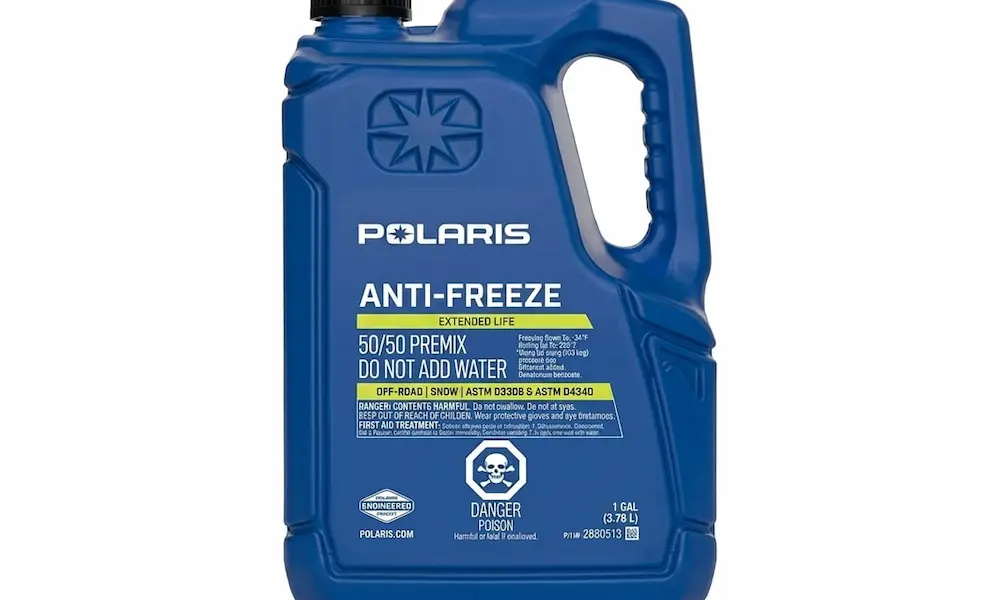
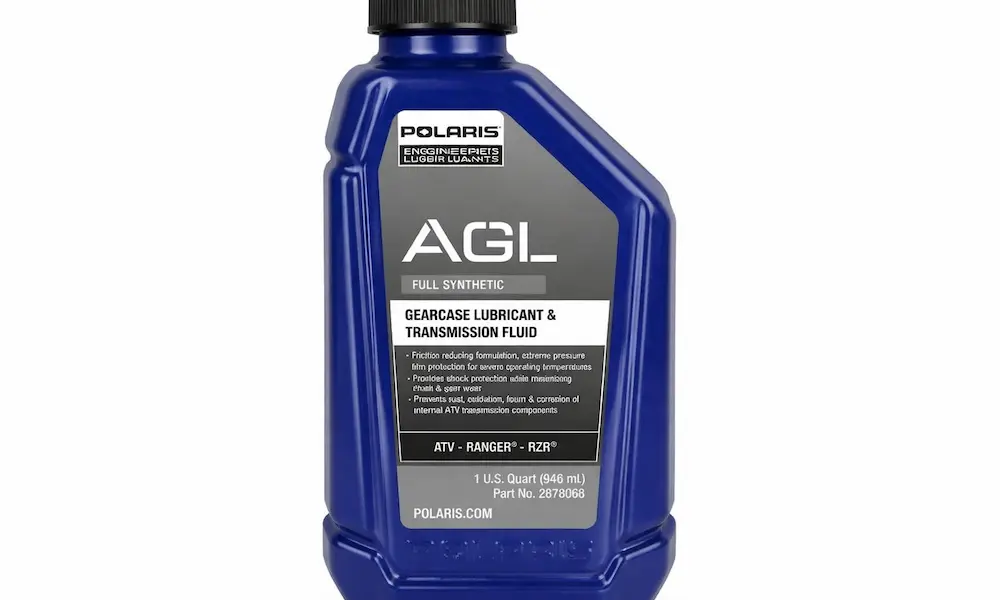
Polaris maintenance at the 100-hour service mark involves fluid changes (0W-50 oil, AGL gearcase fluid, Demand Drive fluid) and filter swaps. Many owners handle it themselves for under $100. Dealer service quotes can reach $885 for a full inspection service — steep, but skippable for mechanically confident riders.
CFMOTO requires a comprehensive first service at just 20 hours or 200 miles. That service includes a manual valve clearance adjustment — an invasive procedure that means pulling into the engine head. At a dealership, that first service can run $300–$1,000. Subsequent valve checks hit more frequently than industry norms. That cost partially offsets CFMOTO’s lower purchase price, so factor it into your budget upfront.
Reliability: Hype vs. Reality
Early CFMOTO exports had real issues — electrical gremlins, stiff suspension, rough fit and finish. That reputation stuck around longer than the problems did.
CFMOTO models from 2018 onward represent a genuine step forward. Bosch fuel injection, Timken bearings, and KTM-derived engine architecture all contribute to measurably better build quality. Well-maintained units regularly surpass 20,000 miles. Some utility machines push past 50,000 miles without catastrophic failure.
Polaris isn’t failure-proof either. High-performance machines take serious abuse, and stock CVT belts plus certain suspension bushings are well-known wear points — hence the massive aftermarket ecosystem. But Polaris’s advantage is long-term refinement. High-mileage owners point to consistent ride quality, ergonomic comfort, and global parts availability as the reasons they keep coming back.
Depreciation and Resale Value
Polaris holds value well. A used Ranger or RZR sells quickly because everyone understands how to maintain it and the aftermarket parts supply is endless. That makes it a highly liquid asset when you’re ready to trade up.
CFMOTO depreciates faster. The brand hasn’t fully built long-term trust in the used market yet. Used CFMOTO machines fetch lower prices and can sit on classifieds longer.
But here’s the nuance: because a new CFMOTO costs thousands less upfront — and includes accessories worth $1,500–$3,000 that Polaris charges extra for — the absolute dollar amount lost over five years may actually be similar. If you’re the type to ride a machine into the ground, CFMOTO’s value proposition is hard to beat. If you upgrade every two to three years, Polaris’s resale strength probably saves you more money long-term.
The Final Verdict: CFMOTO vs Polaris
Buy Polaris if you:
- Prioritize long-term ride refinement and ergonomic comfort
- Work long days on a farm or job site needing precise, low-speed throttle control
- Want 1,500+ dealers within reach for quick service and warranty support
- Plan to sell or trade in within a few years and need strong resale value
- Ride narrow trails that demand a 50-inch-wide machine
Buy CFMOTO if you:
- Want the most features per dollar without compromise on core performance
- Plan to own the machine for its full mechanical life
- Don’t mind a demanding early maintenance schedule (budget for that first valve check)
- Are a recreational trail rider or agricultural user who doesn’t need ultra-precise low-speed drivability
- Ride in an area with solid CFMOTO dealer coverage
The off-road vehicle market is better for this fight. CFMOTO forcing Polaris to justify its pricing is a win for every rider. And both brands now build machines that’ll genuinely handle whatever you throw at them.