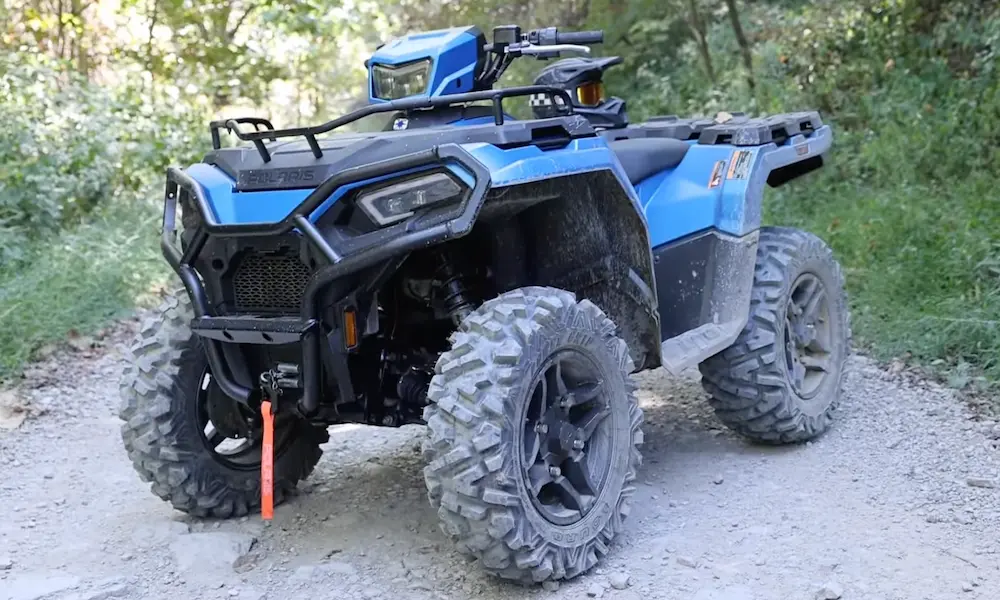
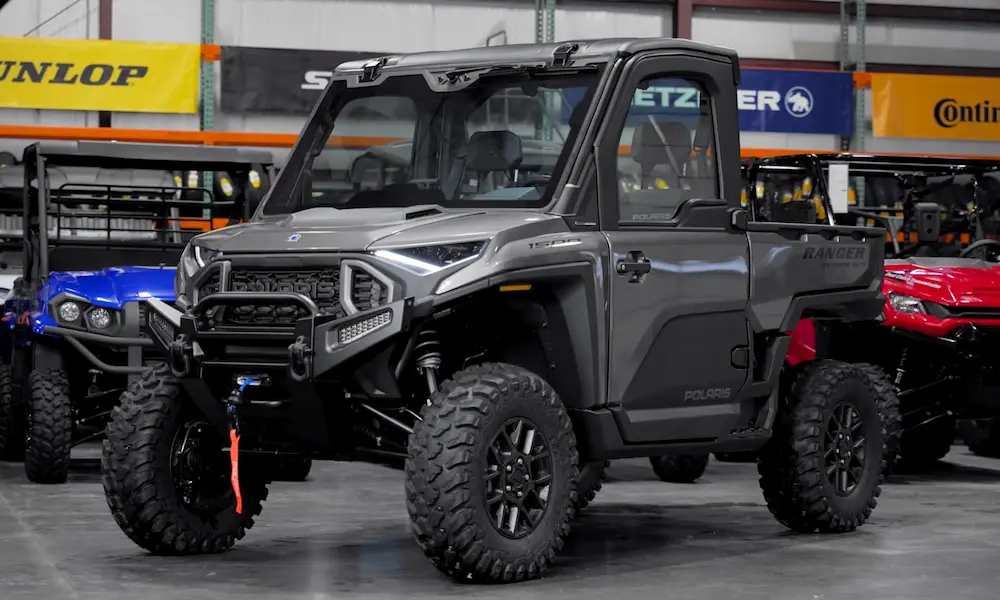
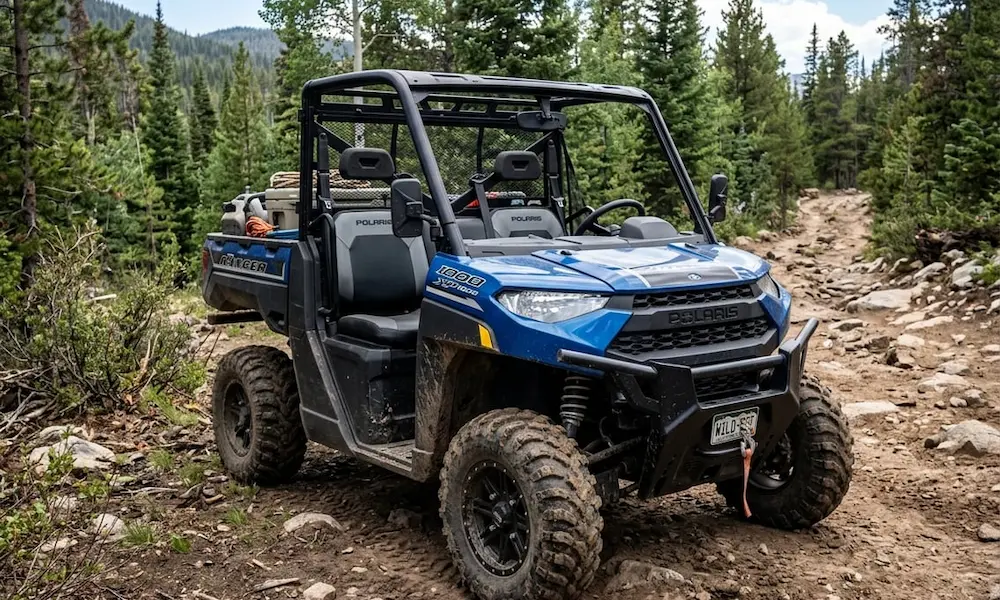
Doing a Polaris Ranger oil change yourself saves money and keeps your machine running strong. Whether you’re hauling feed, tackling trails, or running a work crew, fresh oil is what keeps your engine alive. This guide covers every Ranger model, the right fluids, exact torque specs, and how to ditch your old oil legally. Stick around — the disposal section alone could save you from a nasty fine.
Why Your Ranger’s Engine Demands Fresh Oil
Your Ranger isn’t a weekend toy. It’s moving serious weight through brutal conditions.
Take the Ranger 570 Full-Size — it carries up to 1,500 pounds of combined load and tows another 1,500 pounds on the hitch. That single-cylinder engine pushing nearly 3,000 pounds of gross combined weight generates intense heat and pressure on internal bearings.
When oil degrades, the polymer chains shear apart. Viscosity drops. Metal touches metal. By the time you notice a problem, the damage is done.
Fresh oil does four things your engine can’t live without:
- Reduces friction between moving parts
- Pulls heat away from the combustion zone
- Stops internal rust and oxidation
- Suspends metal particles until the filter catches them
Skip the oil change, and you’re gambling with an expensive engine rebuild.
Polaris Ranger Oil Type and Capacity by Model
Getting the fluid volume right matters as much as using the correct oil. Overfilling causes crankshaft windage — the crank whips excess oil into foam, starving the oil pump. Underfilling causes thermal overload during steep off-camber runs.
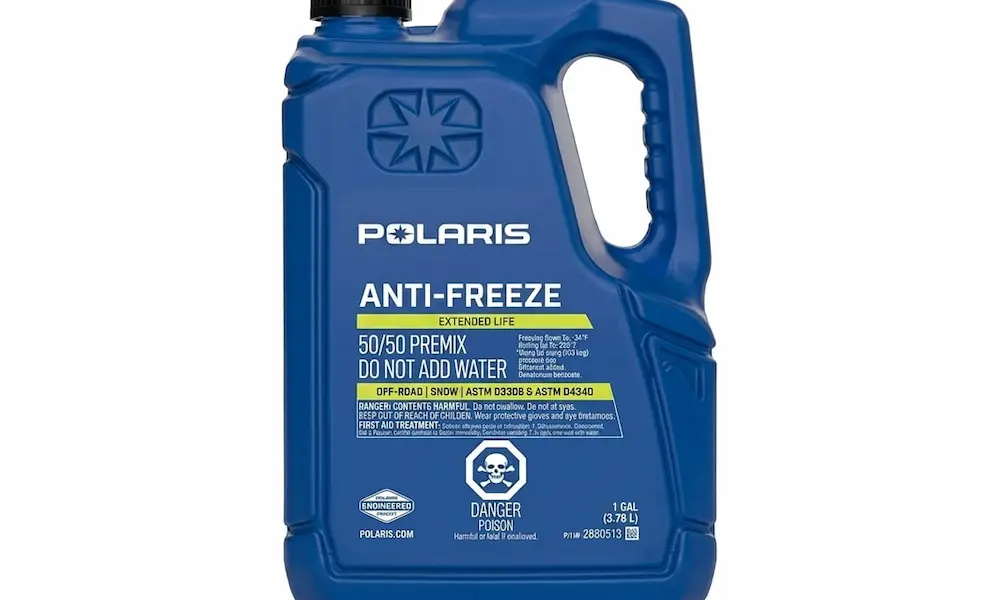
Most gas-powered Rangers run Polaris PS-4 Full Synthetic 5W-50. Heavy-duty use calls for the Extreme Duty 10W-50 variant. Diesel models need a dedicated 5W-40 diesel formula.
Here’s the full breakdown:
| Model / Engine Family | Oil Capacity (Quarts) | Oil Type | Filter Part # | Oil Change Kit # |
|---|---|---|---|---|
| Ranger 400 / 500 | 2.0 | Full Synthetic 5W-50 | 2540086 | 2202166 / 2877473 |
| Ranger 570 (Mid, Full, Crew) | 2.0 | Full Synthetic 5W-50 | 2540086 | 2202166 |
| Ranger 700 / 800 | 2.0 | Full Synthetic 5W-50 | 2540086 | 2202166 |
| Ranger 900 | 2.5 | Full Synthetic 5W-50 | 2540086 | 2879323 |
| Ranger 1000 / XP 1000 | 2.5 | Full Synthetic 5W-50 | 2540086 | 2879323 / 2830556 |
| Ranger XD 1500 | 4.25 | Full Synthetic 5W-50 | 2521728 | Consult Dealer |
| Ranger Diesel / Pro XD | 3.9 | Diesel HD 5W-40 | 3070549 | 2891117 |
The XD 1500’s massive 1,500cc engine uses a unique high-capacity filter (part 2521728) to manage its higher oil flow rate. Don’t swap it for the standard filter.
PS-4 Full Synthetic is available as a one-quart (part 2876244) or one-gallon (part 2876245). Extreme Duty 10W-50 comes in one-quart (2889395) and one-gallon (2889396) sizes.
Tools You Need Before You Start
Don’t skip the tool prep. Aluminum crankcases strip easily with the wrong socket.
Here’s what to grab:
- 6mm Allen socket — fits most gas-powered Ranger drain plugs
- 22mm socket — diesel Pro XD models only
- 2.5-inch (64mm) cap-style oil filter wrench — strap wrenches crush the filter housing
- Torque wrench — calibrated, not optional
- T40 Torx socket — Ranger 900 series heat shield removal
- Low-profile drain pan — high-velocity hot oil flows fast
- Clean funnel with an extended neck
- Nitrile gloves and safety glasses
- Shop rags — place one under the pan to control splashing
One critical torque reminder: the standard 6mm Allen drain plug torques to 12 ft-lbs (16 Nm). The legacy Ranger 800 uses a different plug design requiring 20 ft-lbs (27 Nm). Using the wrong spec strips the soft aluminum threads.
Step-by-Step Polaris Ranger Oil Change
Step 1 — Warm the Engine First
Cold oil clings to engine walls. You won’t drain it all out without warming up first.
Put the transmission in PARK. Let the engine idle for 2–3 minutes. This lowers oil viscosity so it flows freely and keeps metal particles suspended in the fluid so they drain out with it.
Shut the engine off and let the exhaust headers cool before you put your arms near them.
Step 2 — Access the Fill Cap and Drain Plug
Tilt the cargo bed up and remove the fill cap first. This breaks the internal crankcase vacuum. Oil drains faster and cleaner with it open.
Position your drain pan under the drain hole in the skid plate. Wipe the outside of the drain plug clean before breaking the seal — you don’t want grit pushed into the threads.
Use the correct Allen or socket size to crack the plug loose and let it drain completely. Don’t rush this. The most contaminated, metal-laden oil sits at the very bottom.
Step 3 — Install the New Crush Washer and Drain Plug
Don’t reuse the old crush washer. A work-hardened washer is a primary cause of slow oil leaks. The soft metal needs to deform fresh to seal properly.
Replacement washer part numbers vary by model: 5812232, 7556005, or 3070504 — check your specific Ranger before ordering.
Wipe both the plug and the mating surface on the block completely clean. Thread the plug in by hand first — never start it with a tool or you risk cross-threading the aluminum. Torque to spec with your calibrated wrench.
Step 4 — Change the Oil Filter
Position a rag under the filter to catch residual oil. Use your 2.5-inch cap wrench and turn counterclockwise.
Before installing the new filter, run your finger around the engine’s sealing flange. Look for the old O-ring. Under heat, it sometimes bonds to the block and pulls off the old filter. Installing a new filter over a stuck O-ring creates a double-gasket situation that blows out on startup and drains the engine instantly.
Wipe the flange clean with a lint-free cloth.
Coat the new filter’s O-ring with a thin film of fresh oil. Spin it on by hand until the gasket touches the flange. From that point, turn it exactly three-quarters of a turn more. No wrenches. Over-tightening deforms the housing and makes future removal a nightmare.
Step 5 — Add Fresh Oil and Check the Level
Pour the correct volume slowly through the fill neck using a clean funnel. Rushing causes oil to back up into the breather tubes.
Secure the fill cap and start the engine. Let it idle for 30–60 seconds to prime the pump and fill the new filter. This drops the level slightly in the sump.
Shut it off. Wait at least 15 seconds for oil in the head to drain back down.
Pull the dipstick, wipe it dry, reinsert it fully — but don’t lock the cam lever on modern Rangers during the reading. For Ranger 800 models, read the upper surface of the stick due to the angled dipstick tube. Fluid should sit between the MIN and MAX marks.
Step 6 — Reset the Service Indicator
Modern Rangers track service hours and display a wrench icon when it’s time.
- Standard digital cluster: Hold the MODE button, navigate to “Service Hours,” and reset the counter
- 7-inch Ride Command touchscreen: Go to Settings → Vehicle → Oil Life/Service → tap the red reset button
Don’t skip this step. The counter won’t reset itself.
While You’re Under There — Quick Ancillary Checks
The Ranger’s already tilted up. Use the time wisely.
Prop-shaft grease zerk: Located through the driver’s side rear wheel well. Pump in lithium grease until fresh purge appears at the seal. This protects the front gearcase from water intrusion.
Spark arrestor: The exhaust mesh screen traps carbon soot over time, restricting flow and cutting power. Pull it, clean it with a wire brush, and reinstall. Torque the fastener to 7 ft-lbs (10 Nm).
These small tasks keep your Ranger running between major service intervals.
Polaris Ranger Oil Change Intervals
New Machine? Don’t Skip the Break-In Change
Brand-new engines shed metal debris as piston rings seat and gears mesh. Assembly lubricants and casting residue also contaminate the factory fill.
The break-in oil change is mandatory at 25 hours, 500 miles, or 1 month — whichever comes first. This applies to most Rangers including the XD 1500 and XP 1000. Skipping it risks voiding your warranty and accelerating internal wear permanently.
Ongoing Service Schedule
After break-in, here’s what Polaris recommends:
| Usage Type | Oil Change Interval |
|---|---|
| Standard use | Every 100 hours / 1,000 miles / 6–12 months |
| XD 1500 (larger sump) | Every 200 hours / 2,000 miles |
| Severe use (mud, dust, water, heavy towing) | Every 50 hours / 500 miles |
Polaris defines severe use as continuous mud operation, hub-deep water crossings, heavy-load towing, or riding in dense airborne dust. If that’s your daily routine, cut the interval in half — no exceptions.
Disposing of Used Ranger Oil the Right Way
Here’s where most DIY maintainers get careless — and where the consequences get expensive.
Used motor oil is a persistent pollutant. A single gallon can contaminate millions of gallons of drinking water. The EPA regulates it under Title 40 of the Code of Federal Regulations, Part 279, and every state adds its own layer of rules on top.
You’re a “Used Oil Generator” — Here’s What That Means
Anyone who changes oil — individual owner or commercial fleet — is legally a used oil generator. That title comes with specific obligations.
Used oil stays exempt from hazardous waste rules only if you keep it clean. Mix it with any chlorinated solvent — brake cleaner, carburetor spray — and you’ve crossed into hazardous waste territory. The threshold: 1,000 ppm total halogens triggers the presumption of hazardous contamination.
Heavy metal limits for oil burned for energy recovery are strict: Arsenic under 5 ppm, Cadmium under 2 ppm, Chromium under 10 ppm, Lead under 100 ppm.
Keep your used oil segregated. Don’t let anything else near it.
Storage Rules You Need to Follow
- Store only in structurally sound containers — no rust, no visible damage, no open-top buckets
- Label every single container with the exact words “Used Oil” — no variations
- Keep containers on impervious surfaces like concrete, not bare soil
- Store under cover or indoors to prevent rainwater mixing in
The Washington State Department of Ecology and Illinois EPA both recommend secondary containment trays under storage containers as a fail-safe against spills.
Oil Filter Disposal
You can’t throw an undrained filter in the trash. The EPA’s approved method is hot draining:
- Remove the filter while oil is still warm (above 60°F)
- Puncture the dome or anti-drain back valve to break the vacuum
- Invert over a drain pan for a minimum of 12 hours
Once fully drained, the filter qualifies as scrap metal and can go to a scrap recycler or auto parts store collection point.
Where to Drop Off Used Oil
Individual owners and small businesses can transport up to 55 gallons at a time to a registered collection center without needing a hazardous waste transporter license. Most auto parts stores (AutoZone, O’Reilly, Advance Auto) accept it for free.
Dumping used oil on dirt roads as a dust suppressant is federally illegal. The heavy metals leach directly into groundwater. So is dumping it in storm drains, septic systems, or landfills.
One gallon of recycled used oil produces the same amount of lubricating base stock as 42 gallons of crude oil. Re-refining it is genuinely worth the 10-minute trip to a drop-off site.