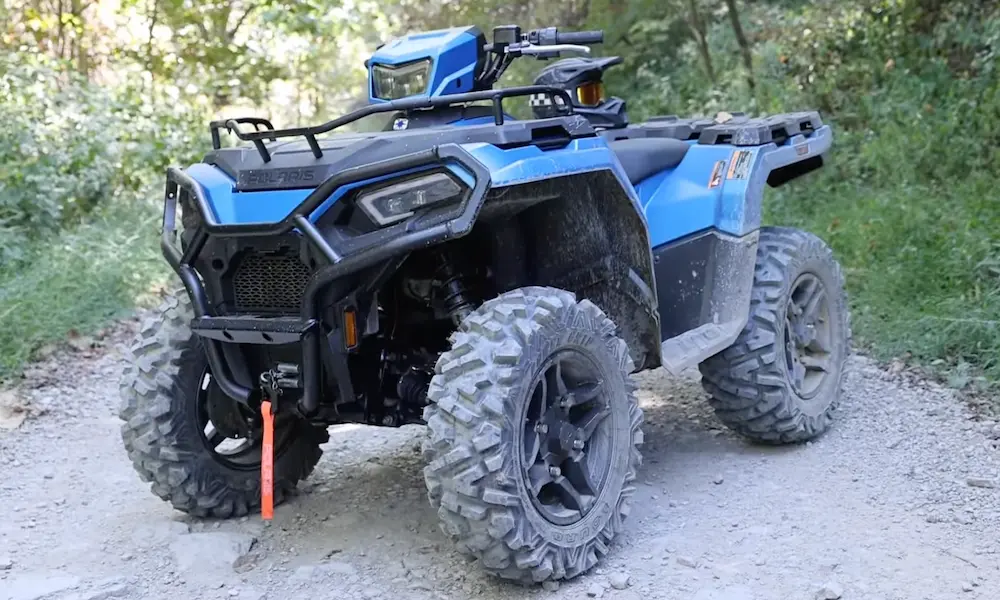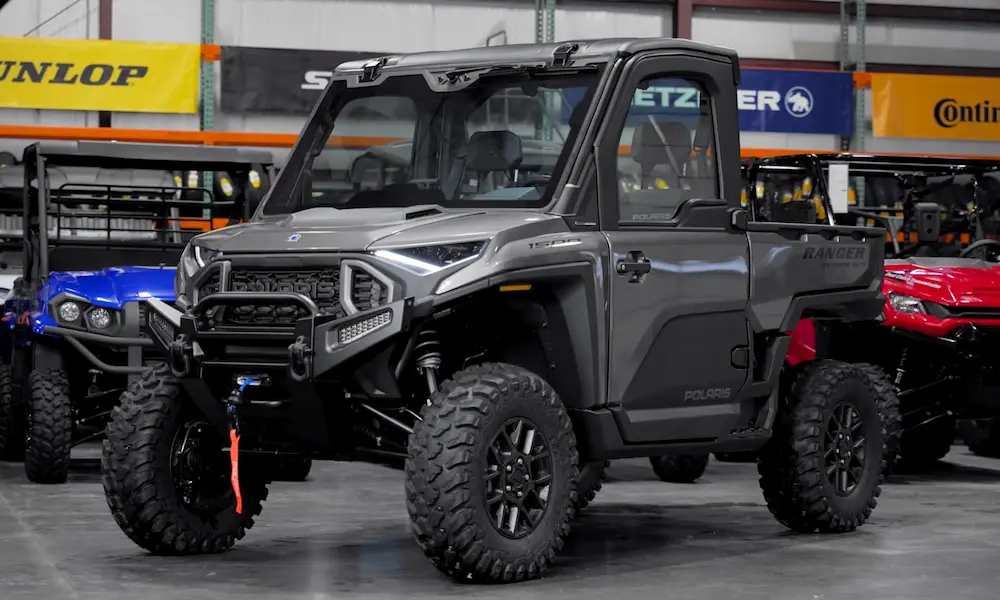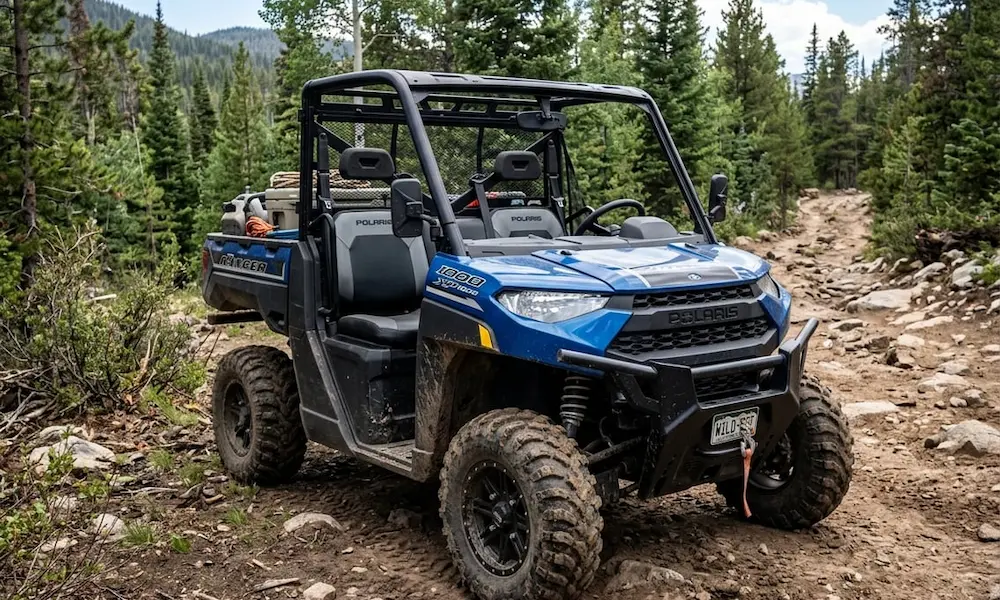
Got a Polaris RZR, Ranger, Sportsman, or snowmobile? Picking the wrong coolant can crack your engine block, destroy your water pump seals, or turn your cooling system into a gelatinous mess. This guide breaks down the exact Polaris antifreeze equivalent you need, why the chemistry matters more than the color, and how to change it without airlocking your engine.
What Polaris Actually Puts in the Bottle
Before you grab any coolant off the shelf, you need to understand what Polaris specifies for their engines.
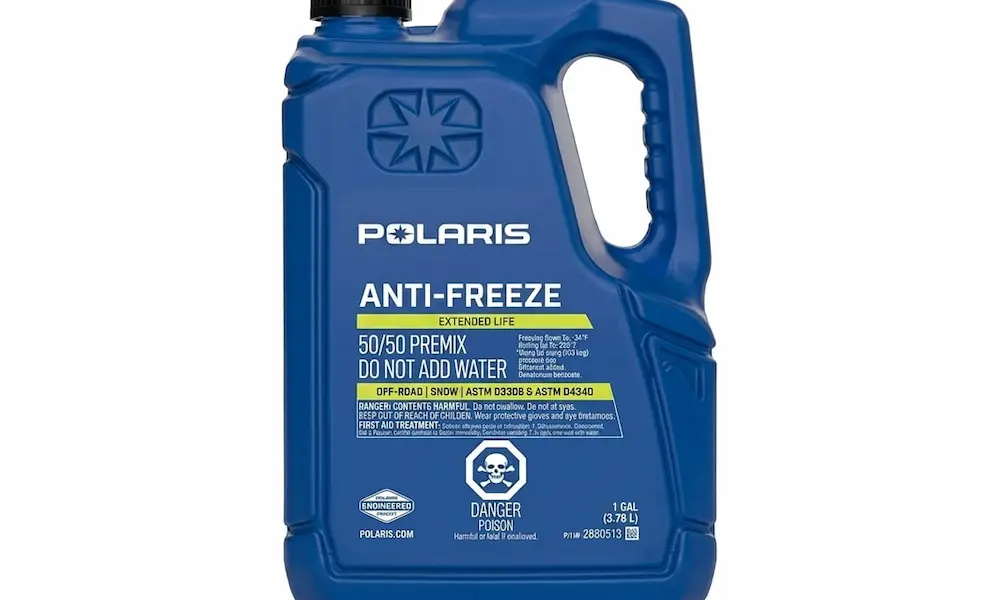
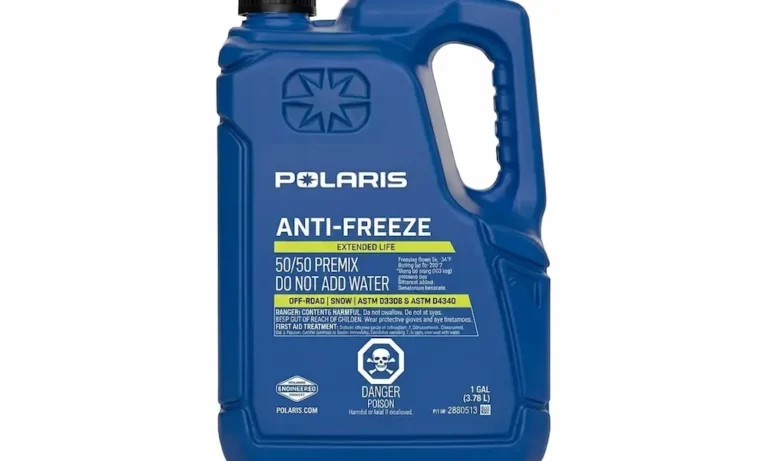
Polaris Extended Life Antifreeze (part number 2880513 for one gallon, 2880514 for one quart) is the factory standard across the RZR, Ranger, Sportsman, and snowmobile lineups. It’s an ethylene glycol fluid, pre-mixed 50/50 with deionized water.
Here’s what makes it special — and non-negotiable:
- Pure Organic Acid Technology (OAT) inhibitor package
- Zero silicates, phosphates, nitrites, borates, or amines
- Freeze protection down to -34°F
- Boil-over protection up to 226°F with the factory pressure cap
- 5-year / 60-month service interval
- Contains a bittering agent to prevent accidental ingestion by pets and kids
Polaris engineers these specs specifically for aluminum cooling systems. The ProStar and Patriot engines rely heavily on aluminum alloys and silicone rubber seals — components that react very poorly to the wrong chemical package.
Why You Can’t Just Grab Any Green Jug
The Old-School Coolant Problem
Traditional green coolants use Inorganic Additive Technology (IAT). They rely on silicates and phosphates to coat the entire inside of your cooling system with a protective layer.
That sounds fine, but here’s the problem. Those silicates wear out fast — you’re looking at a coolant change every 2 years or 30,000 miles. Worse, as silicates break down, they fall out of suspension and turn into abrasive particles. Those particles grind against your water pump seals like liquid sandpaper.
Polaris explicitly bans silicated coolants from all their modern aluminum engines. This isn’t a suggestion — it’s an engineering requirement.
The Dex-Cool Trap
Here’s the sneaky one. You’ve probably seen orange or yellow OAT coolants marketed as “extended life” at your local auto parts store. Many of them contain an organic acid called 2-ethylhexanoic acid (2-EHA) — the primary ingredient in GM’s Dex-Cool formula.
2-EHA is great at protecting cast iron engine blocks. But it’s a plasticizer. When it touches silicone, it chemically attacks the elastomer matrix — softening it, shrinking it, and eventually cracking it.
Polaris engines use silicone seals extensively. Silicone head gaskets, water pump seals, and radiator hoses. Research by Fleetguard engineers confirmed that 2-EHA caused catastrophic silicone heater hose failures in commercial fleets — and the same risk applies to your Polaris.
A weeping water pump is annoying. A blown head gasket because you used the wrong coolant is a $2,000+ mistake.
The Coolant Color Myth That Gets People in Trouble
Stop picking coolant by color. Seriously.
Color means nothing about the chemistry inside the bottle. It’s just dye — added for marketing, leak detection, and to make the toxic fluid look unnatural so people don’t accidentally drink it.
Polaris itself has changed its factory coolant color multiple times — from dark green to translucent blue to bright yellow. The chemistry stayed the same. The dye changed for aesthetic reasons.
Mixing coolants based on color is dangerous. Incompatible inhibitor packages can drop out of suspension and form a thick gelatinous sludge that clogs your radiator passages. That sludge causes rapid overheating and engine failure.
Always read the technical data sheet. Never match by color.
The Three Types of OAT Coolants — And Why Two Don’t Qualify
There are three OAT variations on the market. Only one meets Polaris specs.
| OAT Type | Contains Silicate? | Contains Phosphate? | Polaris Compatible? |
|---|---|---|---|
| Pure OAT (no 2-EHA) | No | No | ✅ Yes |
| Silicated HOAT (European style) | Yes (low dose) | No | ❌ No |
| Phosphated HOAT (Asian vehicle style) | No | Yes (low dose) | ❌ No |
European-style HOAT coolants add a small dose of silicates for rapid aluminum protection. Asian-vehicle coolants (Zerex Asian Vehicle in red or blue) use phosphates instead of silicates. Both intentionally introduce inorganic salts that Polaris strictly prohibits.
They’re excellent products for passenger cars. They’re wrong for your Polaris.
Your Best Polaris Antifreeze Equivalent Options
Here’s a full breakdown of what works, what’s compatible with caveats, and what to avoid entirely.
| Coolant Brand / Category | Inhibitor Tech | Silicate/Phosphate | Contains 2-EHA | Polaris Equivalent Status |
|---|---|---|---|---|
| Polaris OEM Extended Life (2880513) | Pure OAT | No | No | ✅ Original Standard |
| AMSOIL Powersports Antifreeze | Pure OAT | No | No | ✅ Exact Equivalent |
| Fleetguard ES Compleat OAT | Pure OAT | No | No | ✅ Heavy-Duty Equivalent |
| PEAK Global Lifetime | Pure OAT | No | No | ✅ Automotive Equivalent |
| Engine Ice (Standard) | Propylene Glycol | No | No | ⚠️ Compatible, different base |
| Zerex Asian Vehicle | Phosphated HOAT | Yes (Phosphate) | No | ❌ Not an equivalent |
| Dex-Cool Compatible | Pure OAT | No | Yes | ❌ Hazardous to silicone seals |
| Traditional Green (IAT) | Inorganic | Yes (High) | No | ❌ Destroys water pump |
AMSOIL Powersports Antifreeze and Coolant — Best Direct Equivalent
AMSOIL Powersports Antifreeze and Coolant is the closest aftermarket match you’ll find. Its technical data sheets confirm:
- Ethylene glycol base, pre-mixed 50/50 with high-purity water
- Pure OAT chemistry, free of silicates, phosphates, nitrites, and borates
- Explicitly free of 2-ethylhexanoic acid
- Identical thermal specs: freeze protection to -34°F, boil-over protection to 226°F
- 5-year extended service life
AMSOIL designed this fluid specifically for powersports engines with the high aluminum content and silicone seals found in Polaris vehicles. It’s not a passenger car formula repurposed — it’s built for these exact applications.
Fleetguard Extended Service Compleat OAT — Best Bulk Option
Commercial heavy-duty diesel engines solved the 2-EHA silicone degradation problem decades ago because they also rely on silicone hoses and aluminum components. Products like Fleetguard ES Compleat OAT are pure OAT fluids engineered without 2-EHA, silicates, or phosphates.
They’re packaged in large quantities, so they’re cost-effective if you maintain a fleet of UTVs or multiple Polaris vehicles. The underlying chemistry is a perfect chemical match for the Polaris factory spec.
Engine Ice — Use With Caution
Engine Ice is popular in the powersports community and has no silicates, phosphates, or 2-EHA. It won’t harm your aluminum engine or silicone seals.
The catch? It uses propylene glycol instead of ethylene glycol. Propylene glycol is less toxic — better for pets and the environment. But it transfers heat slightly less efficiently, meaning your engine may run marginally hotter under extreme load.
More importantly, you can’t mix propylene glycol and ethylene glycol. Mixing the two base fluids makes your freeze point completely untestable with a standard hydrometer and reduces overall thermal efficiency. If you switch to Engine Ice, do a complete drain and distilled water flush first.
PEAK Global Lifetime — Viable Automotive Option
PEAK Global Lifetime has largely moved away from 2-EHA in favor of safer carboxylate inhibitors. It’s free of phosphates and silicates, making it a genuinely viable crossover option from the automotive world.
Still — verify the safety data sheet for your specific batch before using it in a Polaris engine. Formulations can vary by production run, and you need to confirm 2-EHA is absent before committing.
How System Pressure Affects Boiling Point
Your Polaris cooling system isn’t just filled with coolant — it’s sealed and pressurized. Polaris pressure caps typically hold 13-15 PSI before venting.
That pressure matters enormously. At 15 PSI, the boiling point of your 50/50 coolant rises well above 260°F. That’s a critical safety margin during deep sand runs, heavy towing, or low-speed rock crawling where airflow across the radiator is minimal.
A weak pressure cap spring changes everything. It fails to hold pressure, the coolant boils prematurely, and your engine shows all the symptoms of a failed cooling fan or blown head gasket. Check the pressure cap every time you service your coolant.
How to Change and Bleed Your Polaris Cooling System
Picking the right fluid is only half the job. A bad coolant change can airlock your engine and destroy a cylinder head within minutes.
Complete System Flush First
If you’re switching from OEM to an aftermarket equivalent, flush the system first even if both fluids are chemically compatible. Exhausted inhibitors from old fluid will dilute your new additive package and shorten its service life.
Here’s the flush process:
- Drain from the lowest accessible point — the lower radiator drain plug or the water pump housing
- Fill the system with pure distilled water only (never tap water — dissolved minerals bake into scale that insulates your aluminum engine walls)
- Run the engine until the thermostat opens fully
- Drain completely
- Repeat until the drained water runs clear
- Fill with your new pre-mixed 50/50 coolant
Polaris recommends a full coolant replacement every 60 months or whenever major internal engine work is performed.
How to Properly Bleed the Air Out
An air pocket trapped in the cylinder head will superheat the aluminum faster than you can shut the engine off. This is the most common cause of post-service overheating.
Polaris builds dedicated bleeder screws into the cooling system — typically located directly on top of the thermostat housing, the highest point in the fluid path.
Bleeding procedure:
- Slightly elevate the front of the vehicle to help air migrate toward the radiator neck
- Slowly fill the radiator to the brim
- Locate and carefully loosen the bleeder screw on the thermostat housing
- Watch for air to hiss out, followed by a sputtering air-and-coolant mix
- Leave the bleeder open until a solid, bubble-free stream of coolant flows out continuously
- Tighten the bleeder screw to the factory torque spec
- Start the engine and idle until the cooling fan engages
- Shut off, let cool completely, top off the radiator and overflow reservoir
Skip this step and you risk an airlock — the water pump spins uselessly in air, thermal transfer stops, and the cylinder head warps. Here’s a visual guide to the process if you want to see it in action.
Coolant Capacity by Model
Knowing your system capacity prevents over-purchasing or coming up short mid-service.
| Polaris Model | Engine | Approximate Coolant Capacity |
|---|---|---|
| Sportsman 570 ATV | 567cc Single Cylinder | 2.7 Quarts (2.5L) |
| RZR 900 Trail | 875cc Twin Cylinder | 5.0 Quarts (4.7L) |
| RZR XP Turbo (2-Seat) | 925cc Turbocharged Twin | 10.8 Quarts (10.2L) |
| RZR XP 4 Turbo (4-Seat) | 925cc Turbocharged Twin | 11.7 Quarts (11.0L) |
The turbocharged four-seat models need nearly three gallons. The coolant runs from the rear engine, through aluminum lines under the floorboard, to the front-mounted radiator, and back. That long transit path creates more air entrapment risk — so bleeding these systems carefully is non-negotiable.
Safe Handling and Disposal
Ethylene glycol tastes sweet, which makes it dangerous to pets and children. A lethal dose for an adult human is roughly 4 ounces. The Polaris safety data sheet confirms the factory fluid contains a bittering agent to trigger rejection reflex — but don’t rely on that for safety.
Handle coolant with nitrile or neoprene gloves and splash goggles. Spilled glycol on a concrete floor creates an immediate slip hazard — absorb it immediately with spill pads before mopping.
Never pour spent coolant down a storm drain or into bare soil. Ethylene glycol dissolves into groundwater rapidly. Collect it in sealed, labeled containers and take it to an authorized automotive recycling facility or municipal hazardous waste collection point.
The Bottom Line
The right Polaris antifreeze equivalent isn’t just any OAT coolant — it’s a pure OAT, ethylene glycol, silicate-free, phosphate-free, and 2-EHA-free fluid pre-mixed 50/50 with deionized water. AMSOIL Powersports Antifreeze matches every single one of those requirements and is purpose-built for powersports engines. Fleetguard Compleat OAT is an excellent bulk alternative. PEAK Global Lifetime works with verification of the data sheet.
Don’t gamble on color. Don’t assume “universal” means Polaris-safe. Read the specs, use the right fluid, bleed your system properly, and your engine will stay cool for years.