That mysterious ticking sound from your 6.4 Hemi isn’t something to ignore. It could be the early warning sign of a very expensive problem. This guide breaks down the most common 6.4 Hemi problems, what causes them, and what you can actually do about it — read to the end, because the last section could save your engine.
The “Hemi Tick”: Your Engine’s Cry for Help
The Hemi tick is the most talked-about 6.4 Hemi problem, and for good reason. It starts as a faint metallic tapping when the engine is cold. Many owners mistake it for normal engine noise. It isn’t.
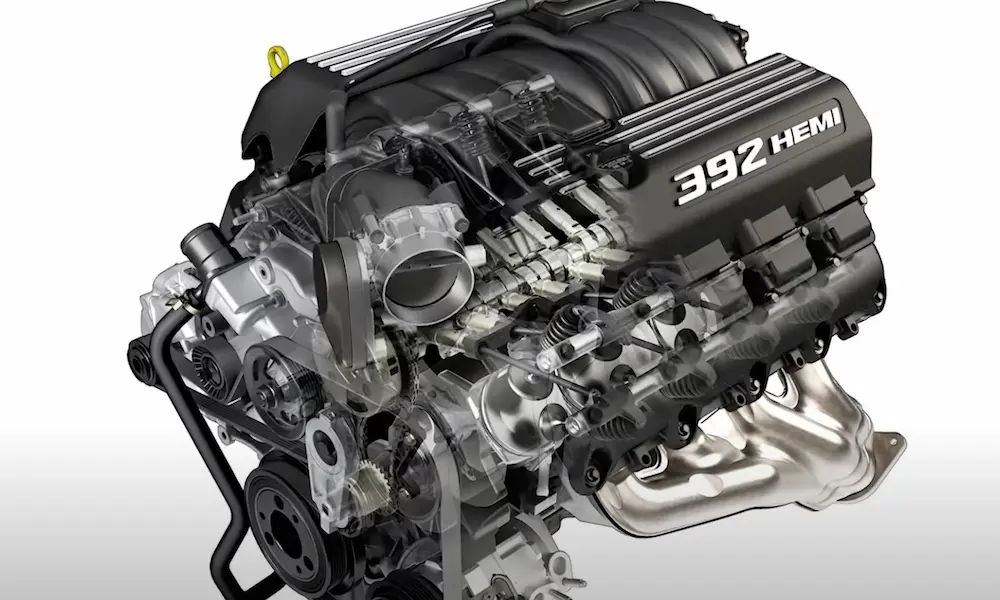
The tick usually means one thing: the needle bearings inside your hydraulic lifters are starting to seize. When that roller stops spinning, it starts grinding directly against the camshaft lobe. Metal grinds on metal. The lobe flattens. Shavings enter your oil system. If you ignore it long enough, those shavings reach your main bearings and rod bearings — and then you’re looking at a full engine replacement.
Here’s how the failure progresses:
| Failure Stage | What You Hear | What’s Happening Inside |
|---|---|---|
| Stage 1: Early Wear | Faint cold-start tick that disappears | Potential early lifter play or minor exhaust leak |
| Stage 2: Bearing Seizure | Constant rhythmic tick, warm or cold | Roller stopped spinning; camshaft erosion begins |
| Stage 3: Lobe Flattening | Loud clacking; rough idle; P0300 codes | Valve lift reduced; metal entering oil |
| Stage 4: Engine Failure | Loss of oil pressure; terminal knock | Main bearing damage; engine replacement required |
Why the 6.4 Hemi’s Oiling Design Makes This Worse
The Gen III Hemi uses what engineers call a backward oiling path. Oil travels from the block up to the cylinder heads, through the rocker shafts, and then down through hollow pushrods to reach the lifters. That’s the opposite of how many traditional V8s work.
The result? During cold starts — especially in winter — there’s a delay before oil reaches the lifters. At low RPM and extended idle, pressure can drop just enough that the lifter roller doesn’t get the lubrication it needs. For fleet trucks that idle constantly, this is a slow killer.
Multi-Displacement System (MDS) Problems
The MDS shuts down four of the eight cylinders during light cruising. It can improve highway fuel economy by 10–20%, but it adds a layer of complexity that many owners have learned to distrust.
The system relies on four solenoids in the engine valley to pressurize specialized collapsible lifters. When those solenoids clog with sludge or the internal locking pins stick, things go wrong fast:
- Stuck in deactivation mode: The cylinder stays “dead” even under hard acceleration, causing severe vibration
- Solenoid failure: The MDS system fails to activate or deactivate properly, triggering a Check Engine Light
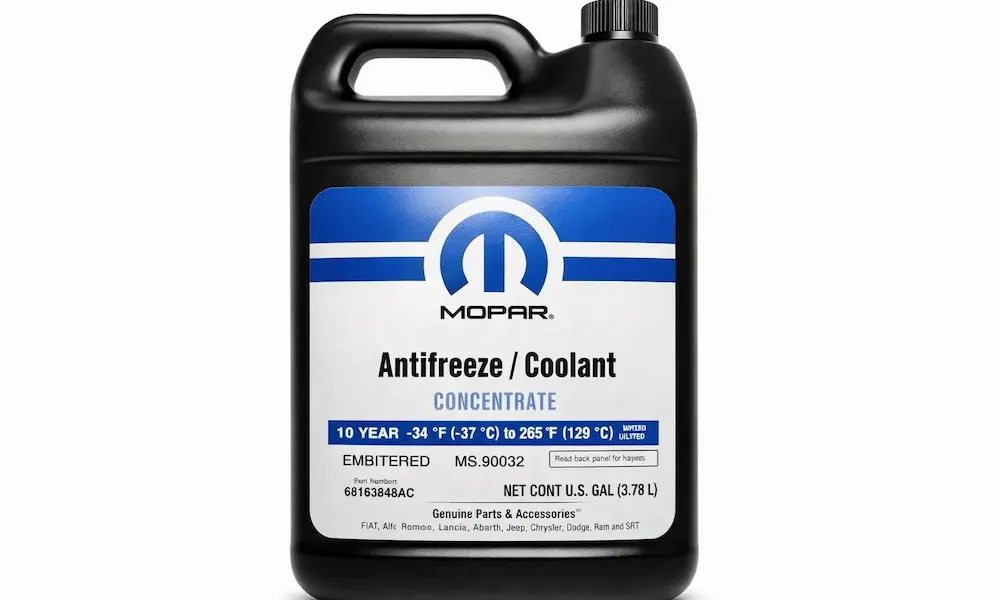
- Wrong oil viscosity: The MDS is highly sensitive to oil type. Using anything other than the manufacturer-recommended 0W-40 can prevent the system from working correctly
Many performance enthusiasts believe the MDS system contributes to camshaft wear by altering oil flow to deactivated cylinders. The popular fix is an MDS delete — swap the MDS lifters for standard Hellcat-spec lifters, replace the camshaft with a non-MDS version, and disable the system through an ECU tuner.
Cooling System: Where Things Get Expensive Fast
The 6.4 Hemi runs hot, and its cooling system has a few weak points that tend to show up between 60,000 and 100,000 miles.
Water Pump Failure
The water pump’s shaft seal is the first thing to go. You’ll notice coolant weeping from the small “weep hole” on the pump body. Catch it early, and it’s a straightforward repair. Ignore it, and the bearings wear out next — you’ll hear grinding or chirping from the front of the engine. Once the pump seizes completely, you lose the serpentine belt, the alternator, and the power steering all at once, plus a rapid overheat condition.
Radiator End-Tank Cracking
The 6.4 Hemi’s radiator uses an aluminum core with plastic end-tanks. Every heat cycle, these materials expand and contract at different rates. Over time, cracks form in the plastic tanks or the crimp seams start leaking. The cooling system runs at 16–21 PSI, so once a crack opens, coolant exits fast.
Don’t try to glue or weld the plastic. It won’t hold under heat and pressure. Replace the radiator.
In 2022, Dodge issued Rapid Service Update RSU 22-232 for the Durango SRT after discovering the oil cooler coolant hose could contact the serpentine belt and rub through — another cooling system issue to watch in high-performance Hemi bays.
| Cooling Component | Common Symptoms | When to Expect It |
|---|---|---|
| Water Pump | Coolant at weep hole; grinding bearing noise | 60k–100k miles |
| Radiator | Cracks in plastic tanks; seam leaks | Varies; heat-cycle dependent |
| Coolant Hoses | Rub-through near serpentine belt | Specific 2022 build years |
| Thermostat | Engine won’t reach temp, or overheats fast | Moderate frequency |
Exhaust Manifold Bolt Breakage
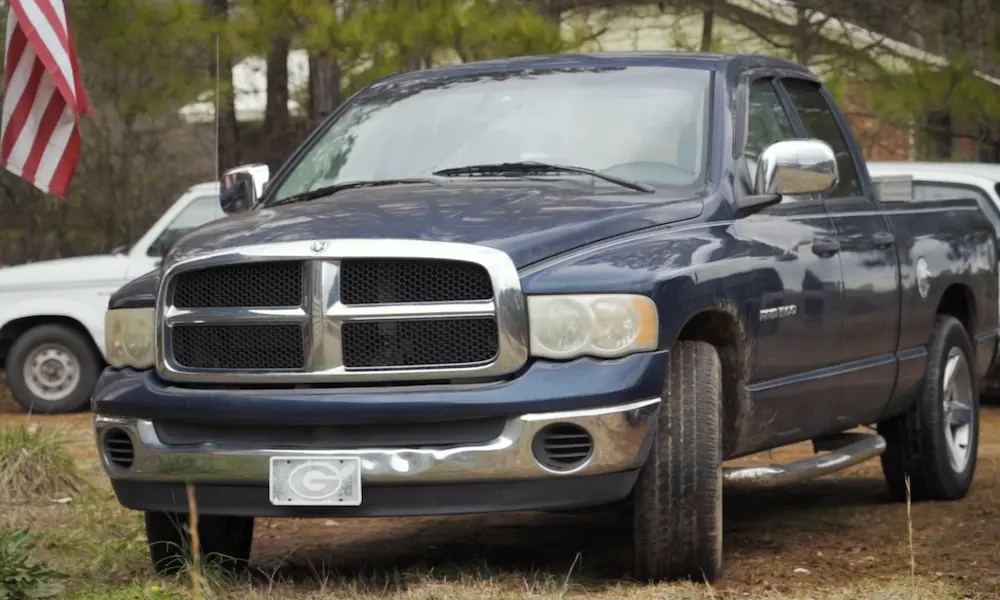
Here’s a sneaky one that mimics the Hemi tick and confuses a lot of owners. The exhaust manifold bolts — especially on RAM 2500 and 3500 trucks — break off due to thermal stress.
The manifolds expand significantly when hot. The steel bolts are anchored into aluminum heads. Over hundreds of heat cycles, those bolts shear off, most often at the rear cylinders (7 and 8). Once they break, the manifold warps slightly and exhaust gases escape through the gap.
The key diagnostic clue: the ticking starts loud on a cold start and fades as the engine warms up and the manifold expands to seal the gap. A true lifter tick usually persists or worsens with heat.
Broken exhaust bolts cause more than noise:
- Oxygen sensor errors from exhaust leaks upstream of the O2 sensors trigger a rich-running condition and Check Engine Lights
- Persistent leaks can score the aluminum cylinder head surface, requiring expensive machining
- Reduced overall exhaust efficiency in modified or heavy-duty setups
Your repair options:
| Repair Option | Pros | Cons |
|---|---|---|
| OEM Replacement | Maintains factory spec and emissions compliance | Bolts will likely break again eventually |
| Aftermarket Headers | Better heat dissipation; less bolt stress | Higher cost; potential warranty implications |
| High-Strength Studs | Much stronger than factory bolts | Difficult if bolts are already snapped in the head |
Transmission Issues Paired With the 6.4 Hemi
The 6.4 Hemi’s torque output puts real strain on whatever transmission sits behind it.
Earlier RAM 2500 models with the 66RFE or 68RFE six-speed automatics have a reputation for rough shifting and poor gear-ratio optimization for the Hemi’s power band. The reverse gear and torque converter are common failure points — high-load reversals like backing a heavy trailer uphill can damage internal components.
Newer models use the ZF-sourced 8HP75 eight-speed automatic, which is a significant improvement in both shift speed and durability. The most demanding RAM Chassis Cab configurations use the Aisin AS69RC, a medium-duty unit built for maximum towing loads.
Common transmission complaints across the 6.4 Hemi lineup:
- Slipping gears — usually caused by low fluid or worn clutch packs under sustained towing
- Rough shifting — often resolved through TCM software updates
- Overheating — especially in 2019–2024 RAM 2500 trucks during extreme summer towing; many owners upgrade to a larger aftermarket cooler
Ignition and Misfire Problems
The 6.4 Hemi uses 16 spark plugs — two per cylinder — for a more complete combustion burn. That doubles the maintenance and doubles the potential misfire points.
In 2014, Chrysler issued Technical Service Bulletin TSB 09-002-15 covering 6.4 Hemi engines built between June and October of that year. Some of these engines left the factory with incorrect piston wrist pins, causing a loud knock after overnight cold starts. The only fix was a complete engine assembly replacement.
Common misfire causes and fixes:
| Misfire Cause | Symptom | Fix |
|---|---|---|
| Fouled spark plugs | Rough idle; worse fuel economy | Replace all 16 plugs |
| Failing ignition coils | Hesitation under load; CEL on | Replace affected coil packs |
| Clogged fuel injectors | Lean misfire codes; reduced power | Injector cleaning or replacement |
| Crankshaft position sensor | Random stalling; no-start condition | Sensor replacement |
When a plug fails to fire, unburnt fuel can damage the catalytic converters — turning a $30 plug into a $1,500+ repair.
The Hellcat Oil Pump Upgrade: Proactive vs. Reactive
A growing number of Hemi owners and mechanics recommend upgrading to the Hellcat-spec oil pump (or an aftermarket equivalent like the Melling M452HV) as a preventative measure. It bolts directly onto the 6.4L block and delivers approximately 12–25% more oil volume than the stock pump.
Benefits include:
- Higher idle pressure — lifter rollers get proper lubrication even during extended idling
- Better thermal management — increased oil flow carries heat away from the camshaft and bearings more effectively
- More consistent MDS operation — better pressure prevents solenoid lag
One critical point: this is a prevention tool, not a cure. If your engine already has a loud tick, the camshaft is likely already damaged. A new pump won’t undo that wear.
The Class Action Lawsuit You Should Know About
The Petro et al. v. FCA US LLC lawsuit (Case No. 1:22-cv-00621-GBW), filed in the U.S. District Court for the District of Delaware, alleges that 5.7L and 6.4L Hemi engines built between 2014 and 2022 have a design defect in the valvetrain causing premature failure.
The plaintiffs claim FCA knew about the Hemi tick and its connection to lifter failure, failed to disclose it at the point of sale, and denied warranty claims by calling failures “normal wear and tear.” As of late 2024, the case is still pending after plaintiffs were allowed to amend their claims. No formal recall on the valvetrain has been issued.
Preventative Maintenance Schedule That Actually Matters
Diligent maintenance is your best defense against every 6.4 Hemi problem listed above. Use full synthetic 0W-40 oil and don’t stretch your intervals.
| Mileage | Service Item | Why It Matters |
|---|---|---|
| Every 5,000 miles | Oil and filter change (Full Synthetic 0W-40) | Prevents sludge; protects lifter bearings |
| Every 30,000 miles | Inspect spark plugs; clean throttle body | Maintains combustion efficiency |
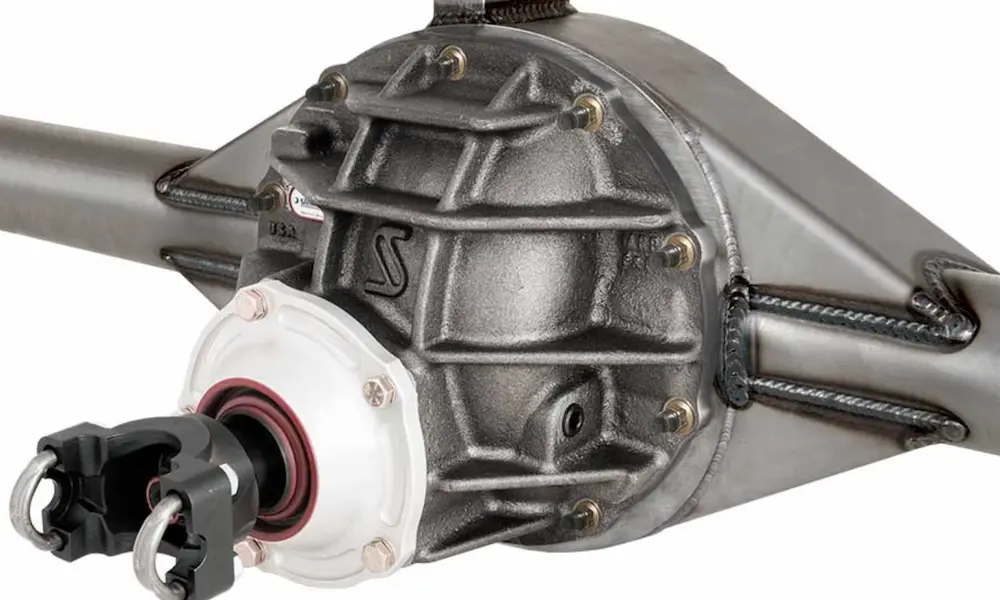
| Every 60,000 miles | Transmission and differential fluid | Protects gears under high-torque loads |
| Every 80,000 miles | Water pump inspection | Catches seal leaks before they overheat the engine |
| Every 100,000 miles | Replace all 16 spark plugs; flush coolant | Ignition reliability; radiator protection |
One last tip for commercial or fleet owners: track idle hours, not just miles. One hour of idling puts roughly the same wear on your valvetrain as 25–30 miles of driving. That changes your oil change schedule significantly if your truck sits and idles on job sites regularly.